Source Golf Bags for Golf Clubs, Racing, and Outdoor Sport
Explore 30 verified Golf Bag options including Sunday and standard styles made from PU material. Buyers can compare customization features, capacities ranging from 20 to 55 liters, and logo printing methods for men and women.
Key considerations
Products List


Large Capacity Premium Disc Golf Backpack Bag Durable Design Disc Golf Bag
$10.99 - $13.99
MOQ: 500 Pieces


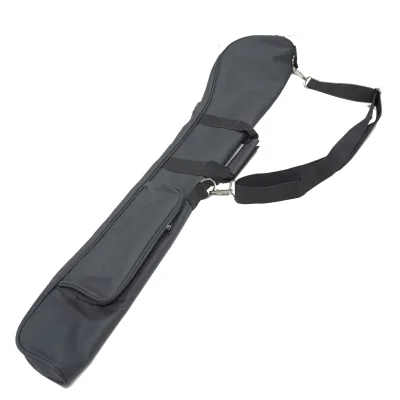

Comprehensive Sourcing Guide
Strategic Sourcing Guide for Golf Bag Procurement
Understanding Product Variations and Technical Specifications
The global market for golf bags presents a diverse array of configurations, each tailored to specific usage scenarios ranging from professional tournaments to casual weekend play. When initiating a procurement strategy, buyers must first distinguish between the primary product categories observed in current supply chains. The data indicates a clear segmentation between "Golf Sunday Bags" and "Standard Golf Bags," alongside specialized accessories like "Golf Covers." These distinctions are not merely nominal; they dictate the structural integrity, capacity, and material composition required for the final product.
A critical technical parameter is the physical dimension of the bag. Market observations reveal a significant variance in size specifications, ranging from compact units measuring less than 8 inches to larger configurations reaching 9 inches in width. Furthermore, capacity metrics are equally diverse, with observed ranges spanning from 20-35 liters to more substantial 36-55 liter options. This variation suggests that a single SKU cannot satisfy all buyer needs. Procurement teams must align the bag's physical footprint with the intended transport method. For instance, a Sunday bag designed for carrying a single set of clubs differs fundamentally from a standard bag intended for full club sets and extensive storage.
Material composition is another non-negotiable specification. The predominant material identified in the current supply landscape is Polyurethane (PU). This material choice offers a balance between durability and weight, which is essential for golfers who carry their bags. The hardness rating of these products is generally categorized as "Medium Soft," a characteristic that provides a degree of flexibility while maintaining the structural shape necessary to protect golf clubs. Buyers should verify that the PU grade used by potential suppliers meets specific abrasion resistance standards, as the material will be subjected to repeated friction against cart surfaces and vehicle trunks.
Compliance, Certification, and Standardization Protocols
In the B2B procurement of sporting goods, adherence to standards and certifications is paramount for risk mitigation. While specific third-party certifications were not explicitly detailed in the available product data, the existence of defined product standards is evident. One observed standard specification lists dimensions of 90 centimeters by 40 centimeters by 50 centimeters, which likely refers to the packaging or shipping standard rather than the bag's operational dimensions. Another entry lists this same standard as "Customized," indicating that flexibility in compliance is a common market feature.
Buyers must rigorously verify the origin of these standards. The majority of the observed supply originates from Shenzhen, China (Mainland), with some entries simply citing "China." This geographic concentration implies a specific supply chain ecosystem. When evaluating suppliers, procurement officers should request documentation that confirms the manufacturing facility's compliance with international quality management systems, such as ISO 9001, even if not explicitly listed in the initial product catalog. The absence of explicit certification data in the provided facts necessitates a proactive verification process where the buyer requests proof of compliance from the supplier directly.
Furthermore, the concept of "Customized" appears frequently in the product attributes. This ranges from logo printing and embroidery to full customization of the product standard. When a supplier claims a product is "Customized," the buyer must define the scope of this customization in the contract. Does it involve only the aesthetic application of a logo, or does it extend to structural modifications? The standard "90cm40cm50cm" appears to be a baseline packaging requirement, but the "Customized" standard suggests that packaging dimensions can be altered to fit specific logistics needs. This flexibility is a key advantage for buyers with unique shipping constraints but requires clear communication to avoid fulfillment errors.
Cost Drivers and Pricing Dynamics
The pricing landscape for golf bags is influenced by a complex interplay of material costs, customization levels, and order volume. The observed price range in the market spans from $3.99 to $110 USD. This wide disparity is not indicative of random pricing but rather reflects the segmentation between basic utility items and premium, highly customized units. The lower end of the spectrum likely corresponds to standard models with minimal customization, such as basic PU construction with simple logo printing. Conversely, the upper end of the price range is associated with complex configurations, such as those requiring embroidery, specific capacity adjustments, or specialized packaging requests.
Minimum Order Quantity (MOQ) is a significant driver of unit cost. The observed MOQ range is extensive, stretching from 1 unit to 1,000 units. This flexibility allows buyers to test the market with small orders or secure economies of scale with large volume purchases. However, the relationship between MOQ and price is inverse; as the order volume increases, the unit cost typically decreases. Buyers must calculate the total landed cost, which includes the unit price, shipping, and any tariffs, rather than focusing solely on the FOB price.
Another cost driver is the packaging specification. The data indicates options ranging from standard cartons (CTN) to custom requests like "1 PC/PE Bag, Then Put Into One Carton." Custom packaging solutions often incur additional tooling or labor costs, which are reflected in the final price. Additionally, the "Customized" attribute suggests that any deviation from the standard model—whether in color, logo application, or material hardness—will impact the cost structure. Buyers should negotiate based on the specific attributes required, understanding that a "Medium Soft" PU bag with embroidery will command a higher price than a basic black model with simple printing.
Typical Applications and Usage Scenarios
The versatility of golf bags is evident in the diverse usage scenarios identified in the market data. The primary application is, of course, the sport of golf, but the data reveals specific sub-segments. "Golf Sunday Bags" are typically designed for lightweight carrying, often used by golfers who prefer to walk the course rather than use a cart. These bags often feature the "Simplicity" style and are available in colors like Black and White. In contrast, "Standard Golf Bags" are designed for broader utility, often accommodating more accessories and offering greater storage capacity.
Beyond traditional golf play, the data highlights applications in "Racing" and "Entertainment." This suggests that certain Golf Bag models are marketed for promotional events, corporate giveaways, or specialized sporting events where the bag serves as a branded item rather than just functional equipment. The attribute "Usage: Gift" appears frequently, indicating that these products are often sourced for corporate gifting, trade shows, or customer appreciation programs. In these scenarios, the aesthetic appeal, such as the "Logo Printing" or "Embroidery" options, becomes as important as the functional durability.
The target demographic also varies. While "Male" and "Men" are prominent categories, there is a distinct segment for "Woman" and "People" in general. This gender segmentation influences design choices, including color palettes, handle ergonomics, and overall styling. Buyers sourcing for a specific demographic must ensure the product attributes align with the intended user base. For example, a bag marketed for women might feature different color options or a more streamlined profile compared to a unisex or men's standard bag.
Supplier Evaluation and Capacity Assessment
Evaluating suppliers in the Golf Bag sector requires a focus on their ability to handle customization and maintain consistent quality. The data indicates that most suppliers are located in Shenzhen, China (Mainland), a hub known for its manufacturing capabilities. However, the presence of suppliers simply listing "China" or "Cn" as the origin suggests a fragmented supply chain. Buyers should prioritize suppliers who provide transparent origin details and can demonstrate a track record of exporting to their specific target markets.
Capacity is a critical factor in supplier selection. The observed capacity ranges from 20-35 liters to 36-55 liters, but this refers to the product volume, not the supplier's production capacity. Buyers must inquire about the supplier's monthly output capabilities to ensure they can meet demand during peak seasons. The ability to handle "Customized" orders is a key differentiator. Suppliers who offer "Accept Custom" packaging and "According to Customer's Request" packing options demonstrate a higher level of flexibility.
When assessing suppliers, buyers should also look for consistency in product models. The data lists specific model numbers such as GB0120, TAL01, TIT02, GB-021, GB-3128, T-9028, and GB-034. A supplier with a diverse portfolio of model numbers may offer a wider range of options, but it is essential to verify that the specific model matches the required specifications. For instance, a supplier offering the GB-0120 model must be able to confirm that it meets the <8 inch size requirement and the PU material specification.
Quality Control and Long-Term Procurement Considerations
Quality control in the Golf Bag industry must address both the material integrity and the functional performance of the product. The "Medium Soft" hardness rating and PU material suggest that the bags must withstand repeated loading and unloading without tearing or losing shape. Buyers should implement a quality control protocol that includes random sampling of finished goods to test for seam strength, zipper functionality, and the durability of the logo application. The "Condition: New" attribute is a baseline expectation, but buyers must ensure that the "New" condition is maintained throughout the supply chain, particularly during shipping and storage.
Long-term procurement considerations involve building a sustainable relationship with suppliers who can adapt to changing market demands. The "Customized" nature of many products means that specifications may evolve over time. A supplier who can accommodate changes in logo placement, color, or packaging without significant lead time increases is invaluable. Additionally, the "Usage Scence: Outdoor Sport" attribute highlights the need for products that can withstand environmental factors. Buyers should verify that the PU material has UV resistance and water-proofing capabilities, as the "Waterproof" attribute is listed as a key feature.
Finally, buyers must consider the lifecycle of the product. A Golf Bag is an investment for the end-user, and a poor-quality product can damage the brand reputation of the buyer. By focusing on suppliers who offer transparent standards, consistent quality, and flexible customization, buyers can ensure a steady supply of high-quality golf bags that meet the diverse needs of the market. The ability to source from a range of models, from the compact Sunday bag to the full-featured standard bag, allows buyers to diversify their inventory and cater to a broader customer base.
FAQs
What customization options are available for golf bags?
Customization is available for logo printing, embroidery, and packaging. Buyers can request specific colors like black or white, and the product standard can be customized to fit unique logistics needs beyond the baseline dimensions.
Which Golf Bag types are offered in the supply chain?
The market offers Golf Sunday Bags and Standard Golf Bags alongside Golf Covers. Sunday bags feature simplicity and smaller capacities, while standard bags provide larger storage for full club sets and accessories.
How does the material affect Golf Bag durability?
Most products use Polyurethane with a medium soft hardness rating for flexibility and shape retention. This material balances weight and durability, though buyers should verify abrasion resistance standards for long-term use.
What are the typical capacity ranges for these bags?
Observed capacities range from 20-35 liters for compact models to 36-55 liters for larger bags. Select the capacity based on whether the bag is intended for lightweight carrying or full club storage.
Can I find golf bags with waterproof features?
Yes, waterproof attributes are listed for specific models in the current supply. This feature is essential for outdoor sports, ensuring protection against rain and environmental factors during play or transport.
What is the minimum order quantity for golf bags?
The minimum order quantity ranges from 1 unit to 1000 units depending on the supplier and customization level. Smaller orders allow for market testing, while larger volumes typically secure better unit pricing.
Where are these golf bags manufactured?
The majority of products originate from Shenzhen, China, with some listings simply citing China. Buyers should verify specific factory locations and compliance documentation to ensure quality and reliable shipping.