Source Grain Transport Bucket Elevator for Feed, Grain, and Mining
Find 30 Grain Transport Bucket Elevator options for feed, grain, and mining applications. Compare specifications including capacity, power, and material to select the right equipment for your operations.
Key considerations
Products List


Bucket Elevator High Efficient Grain Chain Bucket Elevator Machine Equipment
$800.00 - $3000.00
MOQ: 1 Pieces


High Quality Bucket Conveyor Cement Bucket Elevator
$5600.00 - $5800.00
MOQ: 1 Pieces
Botou City Zecheng Environmental Protection Machinery Equipment Co., Ltd

Belt Bucket Elevator for Corn Wheat Cereal Grain Transportation Grain Elevator
$500.00 - $9999.00
MOQ: 1 Pieces


Grain Poultry Feed Seeds Vertical Transportation Conveyor Grain Bucket Elevator
$500.00 - $9999.00
MOQ: 1 Pieces

High Quality Vertical Lifting Bucket Elevator Transporter Grain Bucket Elevator for Sale
$5000.00 - $42000.00
MOQ: 1 Pieces


Factory Customized Vertical Transport Bucket Elevator Grain Bucket Elevator Conveyor
$1500.00 - $8000.00
MOQ: 1 Pieces


Premium Vertical Grain Lifting Bucket Elevator for Efficient Transport
$5000.00 - $30000.00
MOQ: 1 Pieces


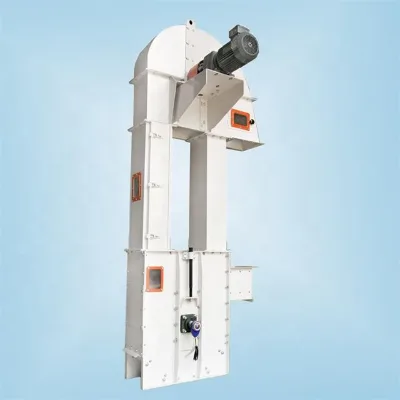


Industrial Grain Bucket Elevator for Efficient Wheat and Rice Handling
$2400.00 - $2500.00
MOQ: 1 Sets

Comprehensive Sourcing Guide
Strategic Sourcing Guide for Grain Transport Bucket Elevators
The global demand for efficient grain handling infrastructure has elevated the bucket elevator from a simple mechanical component to a critical asset in agricultural processing, feed manufacturing, and bulk material logistics. For procurement professionals, sourcing a Grain Transport Bucket Elevator requires a nuanced understanding of technical configurations, material compatibility, and operational constraints. The market offers a diverse array of vertical lifting solutions, ranging from compact units for small mills to high-capacity systems designed for large-scale grain terminals. This guide synthesizes available product data and industry standards to provide a disciplined framework for evaluating suppliers and selecting equipment that aligns with specific operational requirements.
Technical Configuration and Mechanical Specifications
The fundamental architecture of a Grain Transport Bucket Elevator dictates its efficiency and suitability for specific commodities. Based on observed market data, the vertical configuration is the predominant design for these applications, optimized for space-constrained facilities where floor space is at a premium. The structural integrity of these units is often derived from carbon steel, a material choice that balances durability with cost-effectiveness for heavy-duty industrial environments. Buyers must scrutinize the base height and overall dimensions, as these parameters directly influence the integration of the elevator into existing silo or hopper systems.
Capacity is a primary differentiator among available models. The observed market range indicates that bucket elevators can handle capacities varying from 10 tons per hour (tph) to as high as 200 tph. Specific models, such as the TDTG40/28, represent mid-range configurations, while other units are rated for 30 tph or 10 tph depending on the intended throughput. The power requirements for these systems are equally variable, with observed specifications ranging from 0.55 kW for smaller, low-speed units to 2.2 kW for more robust configurations. The selection of motor power must be matched precisely to the material density and the required lifting speed to prevent motor overload or inefficient energy consumption.
The internal mechanics of the elevator are equally critical. The belt material is a key observation point; some units feature belts with nylon linings to reduce friction and wear, while others utilize belts that are specifically engineered to be oil-resistant, heat-resistant, and fire-resistant. These properties are essential for environments where grain dust or incidental oil spills may occur. Furthermore, the speed of the elevator operation is a vital specification. Low-speed elevators are often preferred for fragile grains to minimize breakage, with some data indicating breakage rates as low as 0.01% for optimized units. In contrast, high-speed units may be selected for robust materials where throughput speed is the priority over grain integrity.
Processing Integration and Operational Context
Grain transport bucket elevators rarely operate in isolation; they are integral nodes within larger processing chains. The observed data highlights two distinct processing technics that influence elevator selection: "Crushing-before-Mixing" and "Mixing-before-Crushing." This distinction is crucial for buyers planning a complete feed or grain processing line. If the workflow involves crushing grains before mixing, the elevator must handle the specific particle size and flow characteristics of the crushed material. Conversely, if the process requires mixing before crushing, the elevator may need to transport bulk, unprocessed grains.
The processing objects identified in the market data include mixed feed, cereals, beans, wheat, and rice. The versatility of the equipment is further evidenced by applications spanning the chemical industry, grain transport, and mining transport. For feed mills, the elevator serves as the primary transport mechanism for moving raw materials between grinding equipment, such as feed hammer mills or roll crushers, and mixing or pelleting stages. The compatibility with ring die pelleters is also noted, suggesting that these elevators are often part of a complete feed production line.
Buyers should verify the sensor integration capabilities of the equipment. The presence of speed sensors is a standard feature in modern units, providing critical data for monitoring operational health and preventing belt slippage or mechanical failure. The inclusion of a screen mesh in the associated processing equipment often correlates with the elevator's role in the system, ensuring that only properly sized material proceeds to the next stage. Understanding the specific workflow of the facility is essential to selecting an elevator that complements the crushing and mixing stages without creating bottlenecks.
Compliance, Certification, and Safety Standards
Navigating the regulatory landscape is a non-negotiable aspect of B2B procurement. The market data explicitly references the CE standard for certain models, indicating compliance with European safety, health, and environmental protection requirements. However, it is important to note that not all listed products carry this certification; some specifications list "customized" standards, implying that compliance may be negotiated or tailored to specific regional regulations. Buyers must not assume universal certification status but should request valid documentation for the specific model under consideration.
Safety features are paramount in grain handling, where dust explosion risks and fire hazards are significant concerns. The observation of belts that are fire-resistant and heat-resistant directly addresses these risks. Additionally, the material construction, typically carbon steel, must be evaluated for its resistance to corrosion, especially in humid grain storage environments. The "Nude or Wooden Box" packing options and "Woven Bag, Carton, Pallet" packaging for smaller components suggest that the manufacturer considers logistics and protection during transit, but buyers should verify that the packaging standards meet the destination country's import requirements.
Cost Drivers and Economic Considerations
The pricing landscape for grain transport bucket elevators is highly variable, reflecting the diversity in capacity, material, and customization. The observed price range spans from $0.10 to $42,000 USD. This wide disparity is not indicative of a single product line but rather reflects the spectrum from small auxiliary components to fully integrated, high-capacity industrial systems. The lower end of the range likely corresponds to smaller, standardized units or specific components, while the upper end represents large-scale, custom-engineered solutions with high capacity and advanced safety features.
Minimum Order Quantity (MOQ) is another economic factor to consider. The market data shows an MOQ range of 1 to 100 units. This flexibility allows small-scale operations to procure single units for pilot projects or small mills, while larger enterprises may benefit from bulk purchasing to secure better unit economics. The "Customization" attribute is available across the market, which is a significant cost driver. Customized units, which may include specific voltage requirements (e.g., 380V), unique base heights, or tailored packing solutions, will invariably command a higher price than off-the-shelf models.
Supplier Evaluation and Geographic Origins
When evaluating potential suppliers, geographic origin and production capacity are key indicators of reliability. The data points to Jiangsu, China, and Shijiazhuang, China, as primary manufacturing hubs for these units. These regions are known for their established industrial bases in agricultural machinery. The "New" condition of the products confirms that the market is dominated by manufacturers producing fresh equipment rather than refurbished units.
Suppliers should be evaluated based on their ability to provide the specific attributes observed in the market data. For instance, a supplier claiming to offer a "Twin Screw Bulking Machine" alongside a bucket elevator may indicate a broader capability to supply complete processing lines. The "Customized" and "Customization: Available" attributes suggest that many suppliers are willing to adapt their products to specific client needs. Buyers should verify the supplier's capacity to deliver the required capacity (e.g., 10-200 tph) and power specifications (e.g., 2.2 kW) without compromising on the structural integrity of the carbon steel frame.
Quality Control and Long-Term Procurement Strategy
Ensuring long-term operational success requires a focus on quality control and after-sales support. The "12 months After Delivery" packing or warranty period mentioned in the data highlights the importance of post-purchase support. Buyers should clarify the scope of this warranty, specifically regarding the motor, belt, and structural components. The "No Broken" attribute for elevators is a strong quality indicator, suggesting that the design minimizes grain damage, which is critical for maintaining product value in the feed and grain industries.
For long-term procurement, the availability of spare parts and the robustness of the design are essential. The use of carbon steel and nylon belts suggests a design focused on longevity, but the specific tensile strength and wear resistance should be verified. The "Strong" tensile strength attribute is a positive sign, but buyers should request detailed material test reports to confirm these claims. Additionally, the "Widely Use" designation for grains and cereals implies a proven track record, but buyers should seek references from similar facilities to validate performance claims.
Comparative Analysis of Key Specifications
To facilitate decision-making, the following table summarizes the key technical and operational attributes observed in the market for grain transport bucket elevators. This comparison helps buyers identify the specific configuration that best matches their operational needs.
| Attribute Category | Observed Specification Range | Key Variations |
|---|---|---|
| Capacity | 10 tph to 200 tph | Models range from 10t/H to 30t/H and up to 200tph |
| Power | 0.55 kW to 2.2 kW | Low power for small units; higher power for heavy loads |
| Material | Carbon Steel | Primary structural material; Nylon for internal belts |
| Belt Properties | Oil, Heat, Fire Resistant | Critical for safety in grain and feed environments |
| Processing Object | Mixed Feed, Cereals, Beans, Wheat | Versatile for various agricultural commodities |
| Voltage | 380V | Standard industrial voltage for most units |
| Certification | CE (Selected Models) | Customized standards available for other models |
| Origin | Jiangsu, Shijiazhuang (China) | Primary manufacturing hubs identified |
| Packing | Wooden Package, Nude, Woven Bag | Varies by unit size and shipping requirements |
| Breakage Rate | 0.01% (Specific Models) | Indicates high-quality handling for fragile grains |
Final Procurement Recommendations
Sourcing a Grain Transport Bucket Elevator is a complex decision that balances technical performance, regulatory compliance, and economic efficiency. Buyers must move beyond generic specifications and engage deeply with the specific attributes of the equipment. The presence of "Customization" options allows for tailored solutions, but this requires clear communication of requirements regarding capacity, voltage, and processing technics. The wide price range necessitates a careful cost-benefit analysis, ensuring that the selected unit offers the necessary durability and efficiency without unnecessary expenditure.
Ultimately, the success of the procurement lies in verifying the claims against the actual product data. Whether selecting a low-speed, low-breakage unit for delicate grains or a high-capacity, fire-resistant system for a large feed mill, the buyer must ensure that the supplier can deliver a product that meets the rigorous demands of modern agricultural processing. By focusing on the verified attributes of capacity, material, and safety features, buyers can secure a reliable asset that supports their operations for years to come.
FAQs
What capacity range is available for grain transport bucket elevators?
Available capacities range from 10 to 200 tons per hour depending on the specific model. Units like the TDTG40/28 offer mid-range options, while others are rated for 10 or 30 tons per hour to suit different throughput needs.
Which material is used for the main structure of these elevators?
The primary structural material is carbon steel, chosen for its durability in heavy-duty industrial environments. Internal belts often feature nylon linings to reduce friction and wear during operation.
Can the equipment be customized for specific voltage requirements?
Yes, customization is available for various specifications including voltage. Standard units often operate at 380V, but buyers can request tailored configurations to match their facility's power infrastructure.
What certifications are typically associated with these industrial units?
Some models carry the CE standard for European safety compliance, while others offer customized standards. Buyers should verify specific certification documents for the exact model they intend to purchase.
How is the grain transport elevator typically packed for shipping?
Packing options vary by unit size and include wooden packages, nude shipping, or woven bags on pallets. This ensures protection during transit while accommodating different logistical requirements for delivery.
What processing objects can this equipment handle effectively?
The elevators are designed to transport mixed feed, cereals, beans, wheat, and rice. They are versatile enough for applications in the chemical industry, grain transport, and mining transport sectors.
Which origin locations are known for manufacturing these elevators?
Primary manufacturing hubs are located in Jiangsu and Shijiazhuang, China. These regions are established centers for producing new agricultural machinery with verified production capabilities.