Source Grain Sachet Filling Machine for Rice, Flour, and Seasoning
Find and compare 30 Grain Sachet Filling Machine options for packaging rice, flour, and seasonings. These automatic units support powder, granule, and liquid materials with electric or pneumatic driving types to streamline your production line.
Key considerations
Products List

Sachet Filling Powder Packaging Equipment, Sachet Powder Filling Packing Machine
$4800.00 - $5800.00
MOQ: 1 Pieces


Small Sachet Packing Machine Powder Packing Machine Powder Filling Machine
$2000.00 - $3000.00
MOQ: 1 Pieces
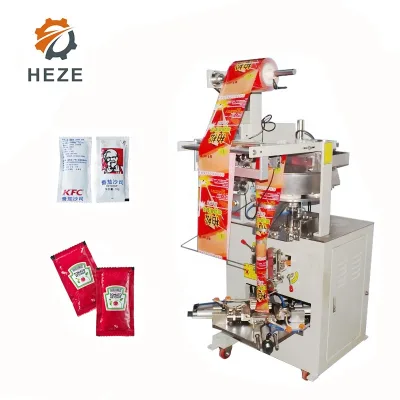


Food Granule Powder Sachet Weighing Machine Filling Machine Packing Machine Packaging Machine
$36000.00 - $36900.00
MOQ: 1 Pieces


Automatic Salt Sugar Packing Machine for Sachet and Bag Granule Filling
$4726.43 - $5019.38
MOQ: 1 Pieces


Stick Sachet Granule Packing Machine/Paper Sugar Stick Bag Packing Machine4
$2199.00 - $2799.00
MOQ: 1 Pieces

Stick Sachet Granule Packing Machine/Paper Sugar Stick Bag Packing Machine1
$2999.00 - $4888.00
MOQ: 1 Pieces

Stick Sachet Granule Packing Machine/Paper Sugar Stick Bag Packing Machine5
$2199.00 - $2799.00
MOQ: 1 Pieces

Stick Sachet Granule Packing Machine/Paper Sugar Stick Bag Packing Machine3
$2199.00 - $2799.00
MOQ: 1 Pieces
Comprehensive Sourcing Guide
Grain Sachet Filling Machine Sourcing Guide
Selecting the right Grain Sachet Filling Machine requires a clear understanding of the specific packaging technology and operational capabilities that align with your production volume and product characteristics. The market offers a variety of automated solutions, ranging from simple form-fill-seal units to complex packaging production lines, each designed to handle different material types such as powders, granules, and liquids. Buyers must carefully evaluate the machine’s forming species, whether it utilizes bag molding for flexible packaging or blister forming for rigid containers, to ensure compatibility with your desired sachet format. This initial alignment between machine type and packaging requirement is critical for minimizing downtime and maximizing throughput efficiency in a high-speed production environment.
Beyond the basic mechanical function, the automation level and driven type of the equipment significantly impact long-term operational costs and labor requirements. Most modern units in this category are automatic and electrically driven, often incorporating computerized controls and PLC systems for precise operation. However, some advanced models may also integrate pneumatic components for specific functions, requiring buyers to assess their facility’s air supply capacity alongside electrical needs. Understanding these core components and the mode of operation, whether for single packing or continuous rolled film processing, allows procurement teams to make informed decisions that balance initial capital expenditure with ongoing maintenance and utility expenses.
Product Scope and Observed Listing Signals
The current market landscape for grain sachet filling machines reveals a diverse range of product listings with significant variation in pricing and specifications. Observed price points span from approximately $1,000 to $74,000, reflecting the wide spectrum of capabilities available, from basic semi-automatic units to fully integrated, high-speed packaging lines. This broad range indicates that buyers should not rely solely on price as an indicator of quality or capacity; instead, they must correlate cost with specific technical attributes such as packing speed, which can range from 25 to 40 bags per minute in some observed models. The minimum order quantity (MOQ) for these machines is typically one unit, suggesting that procurement can be tailored to specific pilot production needs or full-scale deployment without excessive inventory commitment.
Listing signals also highlight the versatility of these machines in handling various applications, including rice, flour, seasoning, and other granular or powdered goods. Many suppliers emphasize customization options, allowing buyers to tailor the machine to specific film roll widths, such as 240mm or 300mm, or to accommodate different packaging materials like plastic, film, or composite materials. Additionally, the observed listings often mention specific models like the MQC-300F or GZM-1l, which may indicate standardized configurations within certain manufacturing lines. Buyers should pay close attention to these model identifiers and associated specifications, such as dimensions and power requirements, to ensure that the selected machine fits within their existing factory layout and utility infrastructure.
Technical Specifications to Verify
When evaluating technical specifications, buyers must prioritize the machine’s ability to handle the specific physical properties of grain products, including particle size, flowability, and moisture content. The material type supported by the machine, whether powder, granule, or liquid, must match your product profile to prevent clogging, bridging, or inaccurate filling. It is essential to verify the forming species, such as bag molding or blister forming, and ensure that the machine can process the specific packaging material you intend to use, whether it is flexible plastic film or composite materials. Additionally, the packing speed should be assessed against your production targets, keeping in mind that higher speeds may require more robust construction and advanced control systems to maintain accuracy.
Power and utility requirements are another critical area for verification, as they directly impact installation costs and operational feasibility. Most machines operate on standard electrical frequencies, such as 50/60 Hz, with voltages like 220V or 380V, but buyers must confirm the exact requirements for their specific model. If the machine utilizes pneumatic components, the air consumption and required pressure, such as 0.65MPa, must be compatible with your facility’s compressed air system. Furthermore, the dimensions of the machine, including length, width, and height, should be checked to ensure it fits within your designated production space, and the weight should be considered for floor load capacity and transportation logistics.
Compliance and Safety Documentation
Compliance with international safety and quality standards is non-negotiable for industrial machinery, particularly when operating in environments with high-speed moving parts and electrical components. Buyers should verify that the machine holds relevant certifications, such as CE marking, which indicates conformity with health, safety, and environmental protection standards for products sold within the European Economic Area. While CE is a common certification observed in listings, buyers must request valid certificates and ensure they are issued by recognized bodies. Additionally, documentation should include detailed user manuals, electrical schematics, and maintenance guides that comply with local regulations in your operating region, ensuring that the machine can be legally installed and operated.
Safety features and documentation are equally important to protect operators and minimize liability. The machine should be equipped with appropriate safety guards, emergency stop buttons, and interlocks that prevent operation when access panels are open. Buyers should also inquire about the warranty coverage for core components, such as the motor, PLC, and pneumatic systems, as these are critical to the machine’s functionality. A standard warranty period of one year for core components is often observed, but buyers should negotiate terms that cover both parts and labor, and clarify the process for obtaining technical support and spare parts in the event of a malfunction.
Cost Drivers and Commercial Terms
The total cost of ownership for a Grain Sachet Filling Machine extends beyond the initial purchase price to include installation, training, maintenance, and energy consumption. High-speed models with advanced computerized controls and multiple core components, such as motors, pumps, and gearboxes, typically command higher prices but offer greater efficiency and precision. Buyers should evaluate the trade-off between upfront cost and long-term operational savings, considering factors like packing speed, material waste reduction, and labor requirements. Additionally, the type of packaging material and film roll width compatibility can influence ongoing costs, as some machines may be more efficient with specific film types or widths.
Commercial terms and logistics also play a significant role in the overall procurement cost. Buyers should clarify the packaging method for the machine, whether it is shipped in a plywooden crate, wood box, or with imported anti-static film for protection, as this affects shipping costs and risk of damage during transit. Lead times, payment terms, and after-sales service agreements should be negotiated carefully to ensure a smooth transaction. It is advisable to include clauses for on-site installation support, operator training, and a clear warranty claim process in the contract, as these services can significantly impact the machine’s time-to-value and operational reliability.
Supplier Qualification and Quality Control
Selecting a qualified supplier is crucial for ensuring the reliability and longevity of your Grain Sachet Filling Machine. Buyers should verify the supplier’s manufacturing capabilities, including their facility location, production capacity, and quality control processes. Suppliers based in industrial hubs like Shanghai, China, often have established supply chains and expertise in packaging machinery, but buyers should conduct due diligence to confirm their reputation and track record. Requesting references from existing customers, particularly those in the food or consumer goods industry, can provide valuable insights into the supplier’s performance and support quality.
Quality control measures should be implemented throughout the procurement process, from initial specification review to final acceptance testing. Buyers should request detailed technical drawings, bill of materials, and component lists to verify the quality of parts used in the machine. It is advisable to conduct a factory acceptance test (FAT) before shipment, where the machine is run with actual packaging materials and products to verify performance, accuracy, and safety features. Additionally, buyers should establish clear communication channels with the supplier for ongoing technical support and spare parts supply, ensuring that any issues can be resolved promptly to minimize production downtime.
Long-Term Procurement Checks
Long-term procurement success depends on establishing a robust maintenance and spare parts strategy for your Grain Sachet Filling Machine. Buyers should identify critical spare parts, such as seals, bearings, and control modules, and maintain an inventory to prevent extended downtime in case of failure. Regular maintenance schedules should be developed in collaboration with the supplier, covering routine inspections, lubrication, and calibration of filling and sealing mechanisms. Investing in operator training programs ensures that your staff can perform basic troubleshooting and maintenance, reducing reliance on external service calls and extending the machine’s operational life.
Continuous improvement and technology upgrades are also important considerations for long-term procurement. As packaging trends evolve, such as a shift towards more sustainable materials or higher speed requirements, buyers should assess whether their current machine can be upgraded or if a replacement is necessary. Building a strong relationship with the supplier can facilitate access to new models, retrofitting options, and technical updates. Regularly reviewing the machine’s performance metrics, such as packing speed, error rate, and maintenance frequency, allows buyers to make data-driven decisions about future procurement and optimization strategies, ensuring that their packaging operations remain competitive and efficient.
FAQs
What is the typical packing speed of a Grain Sachet Filling Machine?
The typical packing speed for these machines ranges from 25 to 40 bags per minute. This capacity is suitable for medium-scale production lines handling granular materials. Actual speed may vary depending on the specific product viscosity and bag size.
What film roll width is supported by the MQC-300F model?
The MQC-300F model supports film roll widths of 240 or 300 millimeters. This specification allows for flexible packaging of various sachet sizes. Buyers should verify their specific film dimensions against this standard to ensure compatibility.
Can grain sachet filling machines handle both powder and liquid materials?
Yes, many machines are designed to handle powder, liquid, and granule materials. The specific model must be selected based on the material type. For example, the GZM-1l is often associated with liquid handling, while others support powders.
What power supply requirements are needed for automatic grain filling machines?
These machines typically require a power supply of 220V or 380V at 50 or 60 Hz. The driven type is usually electric, with some models incorporating pneumatic components. Ensure your facility's electrical infrastructure matches these specifications before installation.
What is the standard warranty for core components of these machines?
The standard warranty for core components is typically one year. This covers parts such as motors, pumps, and PLCs. Buyers should review the specific warranty terms provided by the supplier to understand coverage limits and maintenance requirements.
Which packaging materials are compatible with grain sachet filling machines?
These machines are compatible with plastic, film, and composite materials. The packaging type is usually flexible, allowing for moisture-proof packaging. This ensures the integrity of grain, flour, and other sensitive products during storage and transport.
What is the physical size of the GZM-1l grain filling machine?
The GZM-1l model has dimensions of 1080mm in length, 1300mm in width, and 1400mm in height. This compact size is suitable for facilities with limited floor space. Buyers should measure their production area to ensure adequate clearance for operation.