Source Graphite Furnace Atomic Absorption Spectrometer for Lab Analysis
Find 30 Graphite Furnace Atomic Absorption Spectrometer options from verified suppliers. Compare specifications like wavelength range, detection limits, and resolution to select the right laboratory apparatus for your needs; compare the available evidence and request quotations based on your requirements.
Key considerations
Products List

Flame Atomic Absorption Spectrophotometer Graphite Furnace Atomic Absorption Spectrometer
$6500.00 - $6900.00
MOQ: 1 Pieces

Flame and Graphite Furnace Atomic Absorption Spectrometer for Metal Analysis
$6500.00 - $6900.00
MOQ: 1 Pieces

Laboratory Aas Price Graphite Furnace Atomic Absorption Spectrometer
$4990.00 - $6990.00
MOQ: 1 Pieces


Drawell Lab Flame Graphite Furnace Atomic Absorption Spectrophotometer Aas
$5000.00 - $8897.00
MOQ: 1 Pieces
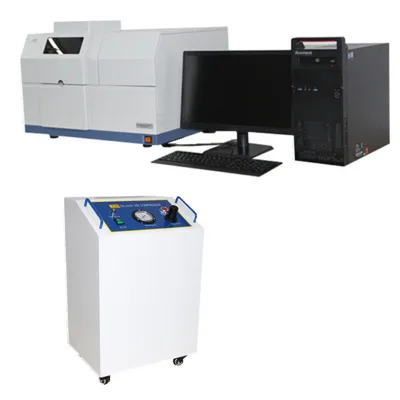

Factory Flame Graphite Furnace Atomic Absorption Spectrometer for Metal Analyzer
$14743.00 - $19600.00
MOQ: 1 Pieces

Factory Flame Atomic Absorption Spectrometer Graphite Furnace Heavy Metal Elements Measurement
$12599.00 - $13999.00
MOQ: 1 Sets


Lab Flame and Graphite Furnace System Atomic Absorption Spectrometer for Element Analysis
$16279.00 - $20065.00
MOQ: 1 Sets

Manufacture Flame Graphite Furnace Atomic Absorption Spectrophotometer for Metal Element Analysis
$14200.00 - $16300.00
MOQ: 1 Sets


Aas Atomic for Metal Analysis Graphite Furnace Atomic Absorption Spectrometer
$26000.00 - $28000.00
MOQ: 1 Pieces

Atomic Absorption Spectrometer with Graphite Furnace for Laboratory Test
$5000.00 - $20000.00
MOQ: 1 Pieces


AA2610 Atomic Absorption Spectrometer Device for Metal Analysis Graphite Furnace Spectrometer
$10000.00 - $30000.00
MOQ: 1 Pieces

LS-9916 Flame graphite furnace AAS atomic absorption spectrophotometer
$30000.00 - $60000.00
MOQ: 1 Pieces

Nanbei Instruments Metal Testing Aas Flame Graphite Furnace Atomic Absorption Spectrophotometer
$11642.00 - $18005.00
MOQ: 1 Pieces

Nanbei Instruments Aas Double Beam Atomic Absorption Spectrophotometer with Graphite Furnace
$11642.00 - $18005.00
MOQ: 1 Pieces


Comprehensive Sourcing Guide
Graphite Furnace Atomic Absorption Spectrometer Sourcing Guide
Procuring a Graphite Furnace Atomic Absorption Spectrometer (GFAAS) requires careful evaluation of optical stability and detection limits, as these instruments are critical for trace metal analysis in laboratory settings. Buyers must distinguish between flame atomic absorption models and those equipped with graphite furnace attachments, which offer superior sensitivity for elements like copper at microgram-per-milliliter levels. The decision hinges on whether the application demands high-throughput screening or ultra-trace quantification, as the latter necessitates rigorous verification of background calibration abilities and baseline stability metrics.
Sourcing decisions should also account for the physical footprint and integration capabilities of the main instrument, including optional printers and RS232 connectivity for data management. Given that origins are primarily in China, buyers need to assess the reliability of supply chains and the availability of customized versus non-customized configurations. Understanding the specific wavelength ranges, such as 190-900nm or 190-1100nm, ensures compatibility with the target analytes, while verifying the number of lamp turrets confirms the instrument’s capacity for multi-element analysis without frequent hardware changes.
Product Scope and Observed Listing Signals
The market for atomic absorption spectrometers presents a wide variance in pricing, ranging from approximately one thousand to ninety thousand USD, reflecting differences in optical design, detector sensitivity, and included accessories. This broad spectrum indicates that buyers will encounter both basic flame AAS units and advanced graphite furnace systems with enhanced resolution and stability features. The observed minimum order quantities typically start at one unit, allowing laboratories to procure single instruments for immediate deployment, though bulk purchases for institutional networks may benefit from negotiated terms.
Listing signals often highlight advantages such as high resolution and high sensitivity, which are critical for detecting low-concentration metals in complex matrices. Buyers should note that some listings specify a wavelength accuracy of 0.5nm and repeatability of 0.3nm, which are essential for precise quantitative analysis. Additionally, the presence of a monochromator and grating dispersive element is standard, but the specific spectrum bandwidth options, ranging from 0.2nm to 5.0nm, allow for tailored performance depending on the required spectral purity and signal-to-noise ratio for specific applications.
Technical Specifications to Verify
When evaluating technical specifications, the wavelength range is a primary consideration, with common ranges spanning 190-900nm or extending to 1100nm for broader elemental coverage. Buyers must verify the focal length and slit width settings, as these directly impact the resolution and light throughput of the instrument. For graphite furnace applications, the detecting limit for copper is a key performance indicator, with some models claiming limits as low as 0.004μg/ml, which is significantly more sensitive than flame methods and suitable for ultra-trace analysis.
Baseline stability and background calibration ability are equally critical for ensuring data integrity over long analytical runs. Specifications such as 0.004ABS/30min for baseline stability and a background calibration ability greater than 30 times indicate a robust instrument capable of correcting for matrix interferences. Additionally, the number of lamp turrets, often eight, allows for rapid switching between different hollow cathode lamps, enhancing workflow efficiency. Buyers should also confirm the power supply requirements, typically 220V 50/60Hz, to ensure compatibility with local laboratory infrastructure.
Compliance and Safety Documentation
Compliance with international safety standards is mandatory for laboratory equipment, with CE certification being a common requirement for instruments sold in global markets. Buyers must request valid CE certificates to ensure that the electrical and mechanical components meet European health, safety, and environmental protection standards. This certification is particularly important for instruments involving high temperatures, such as graphite furnaces, and high-voltage power supplies, ensuring that operational risks are mitigated through proper design and insulation.
Beyond certification, documentation should include detailed user manuals, calibration certificates, and maintenance guidelines that align with the manufacturer’s warranty terms. Most suppliers offer warranties exceeding one year, providing assurance against manufacturing defects and ensuring support for critical components like detectors and lamps. Buyers should verify that the warranty covers both parts and labor, and clarify the process for claiming service, especially if the instrument is shipped from international origins like China, where logistics can complicate after-sales support.
Cost Drivers and Commercial Terms
The total cost of ownership for an atomic absorption spectrometer is influenced by several factors, including the complexity of the optical system, the inclusion of graphite furnace accessories, and the level of customization required. High-resolution models with advanced background correction capabilities command higher prices due to the precision engineering involved in their construction. Buyers should also consider the cost of consumables, such as graphite tubes and hollow cathode lamps, which are recurring expenses that impact the long-term budget for laboratory operations.
Commercial terms often include specific packaging requirements, such as wooden cases or standard packages, to protect the instrument during transit. The gross weight of these instruments can reach 160kg, necessitating careful planning for logistics and installation. Buyers should negotiate clear terms regarding shipping responsibilities, insurance, and customs clearance, especially when importing from international suppliers. Additionally, the availability of optional printers and data interfaces should be confirmed to avoid unexpected costs for essential laboratory connectivity and reporting tools.
Supplier Qualification and Quality Control
Supplier qualification is a critical step in ensuring the reliability of the purchased instrument, particularly when sourcing from international manufacturers. Buyers should verify the supplier’s production capabilities, quality control processes, and after-sales service network to ensure long-term support. The place of origin, such as Chongqing, China, may indicate specialized manufacturing hubs, but buyers must assess the supplier’s reputation and track record in delivering high-quality analytical instruments.
Quality control measures should include factory acceptance tests that verify key performance metrics, such as wavelength accuracy, resolution, and detection limits. Buyers should request test reports or certificates of conformity that demonstrate the instrument meets the specified technical parameters. Additionally, understanding the supplier’s return policy and warranty claim process is essential for mitigating risks associated with potential defects or performance issues. Establishing a clear communication channel with the supplier’s technical support team can facilitate quicker resolution of any operational challenges.
Long-Term Procurement Checks
Long-term procurement success depends on the availability of spare parts and the continuity of technical support for the atomic absorption spectrometer. Buyers should confirm the supplier’s inventory of critical components, such as detectors, lamps, and graphite furnaces, to minimize downtime during maintenance or repairs. The warranty period, often exceeding one year, provides an initial buffer, but buyers should consider extended service contracts for ongoing support beyond the standard warranty term.
Regular calibration and maintenance are essential for maintaining the instrument’s performance and accuracy over time. Buyers should establish a preventive maintenance schedule that includes cleaning the optical path, checking the graphite furnace integrity, and verifying the baseline stability. Additionally, staying informed about software updates and firmware improvements can enhance the instrument’s functionality and data management capabilities. By proactively managing these aspects, laboratories can ensure the longevity and reliability of their atomic absorption spectrometers.
FAQs
What is the wavelength range for this spectrometer?
The wavelength range spans from 190 to 900 nanometers for standard models, while some variants extend up to 1100 nanometers. This broad range allows for versatile laboratory analysis of various chemical elements using the Graphite Furnace Atomic Absorption Spectrometer technology.
Can the product be customized for specific needs?
Customization is available for certain models, though some units are sold as non-customized standard configurations. Buyers should verify the specific product model, such as the DW-AA320N or AAS320N, to confirm if tailored specifications or features can be arranged for their laboratory requirements.
Which certifications does the equipment hold?
The equipment holds CE certification, ensuring compliance with relevant safety and performance standards for laboratory apparatus. This certification is a key attribute for the Graphite Furnace Atomic Absorption Spectrometer, providing assurance of quality and regulatory adherence for international buyers sourcing this analytical instrument.
How long is the warranty period for the device?
Warranty periods vary by model, with some units offering coverage greater than one year while others provide a standard one-year warranty. Buyers should check the specific product details to confirm the exact duration of protection included with their purchase of the Graphite Furnace Atomic Absorption Spectrometer.
What is the detection limit for copper analysis?
The detection limit for copper is as low as 0.004 micrograms per milliliter, ensuring high sensitivity for trace element analysis. This performance metric highlights the capability of the Graphite Furnace Atomic Absorption Spectrometer to detect minute concentrations of copper in various laboratory sample types effectively.
What is the minimum order quantity for this item?
The minimum order quantity ranges from one unit up to one hundred units depending on the supplier and specific product configuration. This flexibility allows buyers to procure single units for testing or larger batches for facility-wide deployment of the Graphite Furnace Atomic Absorption Spectrometer.
Where is the product manufactured and shipped from?
The product originates from China, with specific manufacturing locations noted in Chongqing. This origin information is critical for logistics planning, as the goods are shipped from Chinese factories to international destinations, affecting lead times and shipping costs for the Graphite Furnace Atomic Absorption Spectrometer.