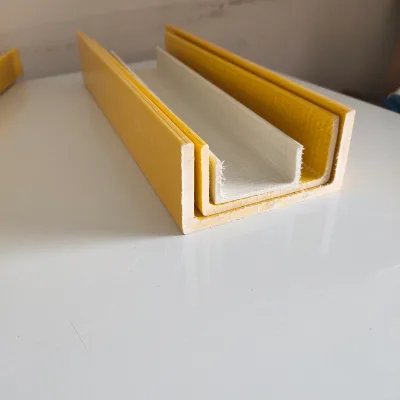
Source GRP Corrosion Resistant C Channel for Industry Construction
Compare 30 listings of GRP Corrosion Resistant C Channel from verified Chinese manufacturers. Buyers can evaluate specifications, certifications, and pricing for cable laying, industrial construction, and general infrastructure projects. Detailed product attributes include material types, surface treatments, and customization options available from suppliers in Shandong, Shanxi, and Jiangsu provinces.
Key considerations
Products List




Comprehensive Sourcing Guide
GRP Corrosion Resistant C Channel Sourcing Guide
Procuring GRP C channels requires a clear understanding of the material advantages over traditional metal alternatives, particularly in harsh industrial environments. These profiles are manufactured using a pultrusion process, which aligns continuous fiberglass strands with resin to create high-strength, lightweight structural components. Buyers must recognize that while the core keyword emphasizes corrosion resistance, the specific performance depends heavily on the resin system and fiber type selected. The observed market signals indicate a strong focus on applications involving cable laying and general construction, where durability and ease of installation are paramount.
Sourcing decisions should be guided by the specific environmental challenges of the project site. Unlike steel, GRP does not rust, making it ideal for chemical plants, wastewater treatment facilities, and coastal infrastructure. However, buyers must verify the UV stability of the product, as prolonged exposure to sunlight can degrade the resin matrix if not properly inhibited. The availability of customized colors and surface treatments allows for better integration into existing facility aesthetics, but this customization can impact lead times and unit costs. Understanding these trade-offs is essential for effective budgeting and project planning.
Product Scope and Observed Listing Signals
The current market landscape for GRP C channels reveals a diverse range of product offerings, primarily originating from manufacturing hubs in Shandong, Shanxi, and Jiangsu provinces in China. Listings frequently highlight key attributes such as "Alkali Free" E-Glass fibers and "Plain Woven" construction, which are critical for maintaining structural integrity in alkaline environments. Buyers will observe variations in surface treatments, including continuous surface veils and finished coatings, which serve to enhance weather resistance and provide a smooth, cleanable exterior. These signals suggest that suppliers are catering to both standard industrial needs and specialized, high-corrosion scenarios.
Commercial signals indicate a flexible approach to order quantities and delivery, with observed MOQs ranging from single pieces to larger batches of one thousand units. This flexibility supports both prototype testing and large-scale infrastructure projects. The observed price range is broad, reflecting differences in material grade, profile dimensions, and surface finishing requirements. Delivery times are typically cited as seven to fifteen days, suggesting that while customization is accepted, standard profiles may be available for quicker shipment. Buyers should note that some listings offer samples freely, which is a valuable opportunity to physically assess the material quality before committing to a bulk order.
Technical Specifications to Verify
When evaluating technical specifications, the first priority is confirming the fiberglass type and resin composition. The supplied data points to the use of E-Glass, which offers good electrical insulation and mechanical strength, but buyers must verify if the specific grade meets their load-bearing requirements. The pultrusion process ensures consistent cross-sectional properties, but the exact sectional dimensions must be confirmed, as listings often direct buyers to check specific chats for detailed measurements. It is crucial to determine if the channel is a standard C-profile or a customized shape, as this affects compatibility with existing mounting hardware and structural designs.
Surface treatment and color options are also critical technical considerations. While many products offer customized colors, often adhering to the RAL color system, buyers should inquire about the specific UV inhibitors used, such as UV-9, to ensure long-term color stability and material protection. The presence of holes in the channel design facilitates easy installation and cable management, but the size, spacing, and reinforcement of these holes must be verified to prevent stress concentration points. Additionally, the form of the channel, whether flat or U-profile, must match the intended application, as this dictates how the channel will interact with other structural elements and load distributions.
Compliance and Safety Documentation
Compliance documentation is a non-negotiable aspect of sourcing GRP C channels, particularly for projects in regulated industries. Buyers should request certificates such as ISO 9001 for quality management systems, which indicates a standardized approach to manufacturing and quality control. Some listings mention additional certifications like CE, RoHS, and CCC, which are essential for market access in Europe and China. It is vital to verify that these certifications are current and applicable to the specific product line being purchased, as certification status can vary between different manufacturing facilities or product grades.
Safety data sheets and material safety information should also be obtained to ensure safe handling and installation. While GRP is generally non-conductive and resistant to many chemicals, buyers must confirm the chemical resistance profile against specific substances present in their operating environment. Documentation regarding fire resistance ratings may be required for construction applications, so buyers should ask for test results or compliance statements related to flame spread and smoke density. Ensuring that all safety and compliance documents are provided in English and are legally valid in the destination country is a critical step in the procurement process.
Cost Drivers and Commercial Terms
Several factors influence the final cost of GRP C channels, with material composition and surface treatment being primary drivers. The use of high-quality E-Glass and specialized resins increases the base cost but offers superior durability and performance. Customization options, such as specific colors, hole patterns, or non-standard dimensions, add to the manufacturing complexity and can lead to higher unit prices. Buyers should also consider the impact of packaging on cost; standard carton packaging is common, but iron frame pallets may be required for heavy loads or international shipping, adding to the overall expense.
Commercial terms, including payment methods and delivery schedules, vary among suppliers. The observed delivery time of seven to fifteen days suggests that production is often made-to-order, which can affect cash flow planning. Buyers should negotiate clear terms regarding sample availability, as some suppliers offer them freely, while others may charge a fee that is refundable upon bulk order. It is also important to clarify who bears the cost of shipping and insurance, especially for international orders. Understanding these commercial nuances helps in creating a realistic budget and avoiding unexpected costs during the procurement lifecycle.
Supplier Qualification and Quality Control
Supplier qualification begins with verifying their manufacturing capabilities and quality control processes. Buyers should inquire about the specific pultrusion equipment used and the experience of the production team, as these factors directly impact product consistency. Requesting references from previous clients in similar industries can provide insight into the supplier’s reliability and after-sales support. It is also advisable to ask for details on their raw material sourcing, ensuring that the fiberglass and resins used meet industry standards for strength and durability.
Quality control measures should be transparent and well-documented. Buyers should ask for information on in-process inspections and final product testing, including tensile strength, flexural strength, and impact resistance tests. Some suppliers may offer third-party testing reports, which add an extra layer of assurance. Additionally, buyers should verify the supplier’s ability to handle custom orders, including their process for design validation and prototype approval. Establishing a clear communication channel for addressing quality issues is essential, as it ensures that any defects are identified and resolved promptly, minimizing project delays.
Long-Term Procurement Checks
Long-term procurement success depends on establishing a robust relationship with the supplier and implementing regular performance reviews. Buyers should schedule periodic audits or site visits to ensure that the supplier’s quality control processes remain consistent over time. Monitoring the supplier’s ability to meet delivery deadlines and handle changes in order volume is crucial for maintaining project timelines. Additionally, buyers should stay informed about any updates in industry standards or regulations that may affect the product’s compliance status, ensuring that future orders remain valid for their intended applications.
Continuous improvement and feedback loops are also key to long-term procurement success. Buyers should provide constructive feedback on product performance and supplier service, which can help the supplier refine their offerings and processes. Regularly reviewing the total cost of ownership, including maintenance and replacement costs, can reveal opportunities for optimization. By maintaining a proactive approach to supplier management, buyers can ensure a steady supply of high-quality GRP C channels, supporting the long-term integrity and efficiency of their infrastructure projects.
FAQs
What certifications do the C channels have?
The products hold CE, ISO, RoHS, CCC, and ISO9001 certifications. Some listings also include ABS and Dnv certificates. These ensure compliance with international safety and quality standards for industrial applications.
Can I get customized colors for the channels?
Yes, customized colors are available for these channels. Options include specific RAL color system selections or multi-color finishes. Buyers can request tailored color solutions to match their specific project requirements.
What is the typical delivery time for orders?
The standard delivery time ranges from 7 to 15 days. This timeframe applies to most orders once production begins. Buyers should confirm specific schedules based on their order volume and customization needs.
Which materials are used for the C channels?
Materials include Aluminum Alloy, Stainless Steel 304/316, and Fiberglass. The fiberglass type is E-Glass with alkali-free properties. These materials provide corrosion resistance and light weight for various construction and industry uses.
How are the channels packed for shipping?
Packaging options include standard cartons, cartons with hard film, and iron frame pallets. The specific packing method depends on the product type and order requirements. This ensures safe transport and protection during international shipping.
What is the minimum order quantity for purchase?
The minimum order quantity is 100 pieces for most items. Some listings indicate an MOQ range from 1 to 1000 pieces. Buyers should verify the specific MOQ with the supplier before placing an order.
Are samples available for testing before bulk orders?
Samples are supplied freely for buyer evaluation. This allows customers to verify product quality and specifications before committing to larger quantities. Buyers can request samples to ensure the product meets their project standards.