Source GSM Mobile Phone for Retail, Field Work, and Backup Needs
Find 30 GSM Mobile Phone options for wholesale buyers. Compare features like dual SIM, GPS navigation, and battery capacity across models with Symbian or Android systems to meet diverse business requirements.
Key considerations
Products List


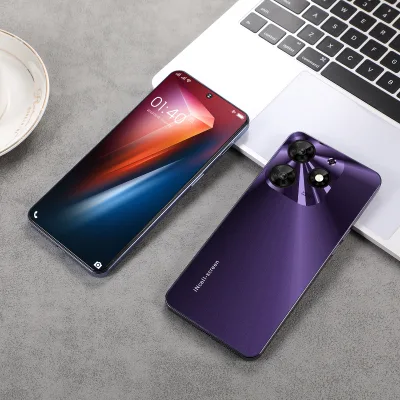
Mobile Phone Second-Hand Phone S7 with GSM and LTE Cellular Mobile Phone
$49.00 - $53.00
MOQ: 2 Pieces




Comprehensive Sourcing Guide
Strategic Sourcing Guide for GSM Mobile Phones
Understanding the Technical Landscape of GSM Devices
The global market for GSM mobile phones encompasses a diverse array of devices ranging from legacy feature phones to modern smartphones. When sourcing these devices, buyers must first navigate the specific technical specifications that define the product's utility and compatibility. The core keyword "GSM Mobile Phone" implies a device operating on Global System for Mobile Communications networks, though modern listings often indicate support for multiple network standards including CDMA, WCDMA, and LTE.
A critical observation in the current supply landscape is the variation in screen specifications. Buyers may encounter devices with screen sizes under 2.0 inches, often categorized as compact feature phones, while others may feature 2-inch displays. The screen material is another significant differentiator; some units utilize TFT (Thin Film Transistor) technology, which offers a balance of cost and performance, while others employ IPS (In-Plane Switching) panels that provide superior viewing angles and color reproduction. Display types can vary from plastic-based screens to more advanced configurations, with color capabilities ranging from simple black-and-white displays to 65k color screens.
Connectivity and processing power are equally vital. The data interface is frequently Type-C in newer models, facilitating faster charging and data transfer, whereas older or specific feature phone models may rely on proprietary connectors. The operating system is a primary determinant of software ecosystem compatibility. Sourcing lists reveal a split between legacy systems like Symbian and modern platforms such as Android. Furthermore, the CPU architecture often varies, with some devices utilizing Single Core processors suitable for basic tasks, while others may support more complex operations.
The following table summarizes the key technical attributes observed in the current market, highlighting the diversity available to buyers:
| Attribute Category | Observed Specifications |
|---|---|
| Screen Size | <2.0", 1.77", 2.0" |
| Screen Material | TFT, IPS |
| Display Type | Plastic, IPS |
| Color Capability | Black/White, 65k Color |
| Operating System | Symbian, Android, MTK |
| CPU Architecture | Single Core |
| Network Standards | GSM, CDMA, WCDMA, LTE, 3G, 4G |
| SIM Configuration | 1 SIM, 2 SIM (Dual SIM) |
| Camera | Without Camera, 2MP, 5.01MP-8MP |
| Battery | Removable, <800mAh |
| Storage | 512MB ROM, Expansion Supported |
| Navigation | GPS |
Compliance and Certification Verification
When procuring GSM mobile phones, verifying compliance with international and regional standards is non-negotiable. The supply chain for these devices often originates from major manufacturing hubs, with China being a prominent place of origin. However, the country of origin does not guarantee compliance; buyers must independently verify that the specific units meet the regulatory requirements of their target market.
Network standards are a primary area of compliance. While the keyword is "GSM Mobile Phone," actual products may support GSM, CDMA, WCDMA, LTE, 3G, and 4G. Buyers must ensure that the device's supported frequency bands align with the local carrier infrastructure. For instance, a device listing "Quad-band" support offers broader compatibility, but specific band allocations vary by region. The standard "LTE" and "GSM" designations indicate the underlying technology, but the physical implementation must be validated against local spectrum regulations.
Certification checks should extend beyond network compatibility to include safety and environmental standards. While specific certification names are not universally listed for every unit, buyers should request documentation proving compliance with relevant safety standards for electronic devices. This includes verifying that the battery capacity, often listed as less than 800mAh for certain models, meets safety guidelines for lithium-ion or similar battery chemistries. Additionally, the packaging dimensions, such as 14x5.5x8 cm or 20x15x10 cm, must be considered for logistics compliance, particularly regarding hazardous materials transport if batteries are included.
Buyers should also scrutinize the "Standard" field in product specifications. Some listings reference specific dimensions (e.g., 14X5.5X8 cm) under the "prod_standard" attribute, which may refer to packaging or physical form factors rather than regulatory standards. It is essential to distinguish between physical specifications and regulatory certifications. Requests for test reports, such as FCC, CE, or RoHS compliance, should be mandatory before finalizing any bulk order to mitigate the risk of customs delays or market rejection.
Cost Drivers and Pricing Dynamics
The pricing of GSM mobile phones is influenced by a complex interplay of factors, including hardware specifications, customization levels, and order volume. The observed price range in the market spans from $0.10 to $155.00 USD, indicating a vast disparity between entry-level feature phones and more advanced units. This wide range suggests that price is not a linear function of the "GSM" label but is heavily dependent on the specific configuration of the device.
Several key drivers impact the final cost. First, the screen technology is a significant cost factor. Devices with IPS screens and 65k color capabilities generally command a higher price point compared to those with basic TFT or black-and-white displays. Similarly, the inclusion of a rear camera with higher pixel counts (e.g., 5.01MP-8MP) versus a "Without Camera" configuration will directly influence the unit price.
Second, the operating system and processing power play a crucial role. Android-based devices with support for 4G and LTE networks typically cost more than Symbian-based or single-core devices limited to 2G or 3G networks. The presence of advanced features like GPS navigation and Type-C interfaces also adds to the manufacturing cost.
Third, customization is a major variable. The availability of customization options, such as custom operating languages or specific branding, can alter the price structure. Buyers should note that while customization is available, it often requires meeting a Minimum Order Quantity (MOQ). The observed MOQ range is extensive, spanning from 1 unit to 10,000 units. High-volume orders may benefit from economies of scale, potentially lowering the per-unit cost, whereas small orders or samples may incur a premium.
Finally, packaging and accessories contribute to the cost. Products listed with "Gift Box" packaging may have a higher unit price compared to those in standard bulk packaging. The physical dimensions of the product and its packaging also affect shipping costs, which should be factored into the total landed cost calculation.
Typical Applications and Use Cases
The versatility of GSM mobile phones allows them to serve a wide range of applications, from personal communication to specialized industrial uses. Understanding these use cases helps buyers select the right device for their specific needs.
One primary application is the market for feature phones in developing regions or among demographics that prefer simplicity. Devices with "Big Button" functional selling points, removable batteries, and long battery life are ideal for users who require basic calling and texting capabilities without the complexity of smartphones. These phones, often featuring dual SIM slots and support for multiple network standards like GSM and CDMA, are highly valued for their reliability and ease of use.
Another significant application is in the realm of rugged or specialized devices. The presence of GPS navigation technology and support for various network standards makes certain models suitable for field workers, logistics personnel, and emergency services. Devices with larger screens, such as the 2-inch models, may be preferred for better readability in outdoor environments. The "Bar" design, which is a common form factor, offers durability and ease of handling.
For businesses, these phones can serve as dedicated communication tools. The ability to customize the operating language and the availability of dual SIM slots allow companies to manage multiple network connections efficiently. Additionally, the support for storage expansion makes these devices suitable for applications requiring local data storage, such as inventory management or data logging, although the ROM capacity of 512MB observed in some models may limit the scope of such applications.
The "Mobile Phone Type" classification as a "Bar Feature Phone" or a smartphone variant dictates the intended user base. Feature phones are often used as backup devices or for specific demographic groups, while Android-based models with higher specifications cater to users requiring internet access, app usage, and multimedia capabilities.
Supplier Evaluation and Selection Criteria
Selecting the right supplier is critical to ensuring the quality and reliability of the GSM mobile phones procured. Buyers should adopt a rigorous evaluation process that goes beyond price comparisons. The first step is to verify the supplier's ability to provide the specific technical attributes required. For example, if a buyer needs a device with an IPS screen and Android OS, they must confirm that the supplier can consistently deliver units with these specifications, as the market contains a mix of different configurations.
Supplier transparency regarding the "Place of Origin" is essential. While China is a noted origin for many of these devices, buyers should request detailed information about the manufacturing facility, including its capacity and quality control processes. The ability to customize the product, such as offering custom operating languages or branding, is a strong indicator of a supplier's flexibility and capability.
The supplier's responsiveness to compliance requirements is another key metric. A reliable supplier should be willing to provide documentation for network standards, safety certifications, and battery specifications. They should also be able to clarify the meaning of any "Standard" or "prod_standard" attributes listed in their catalog, ensuring there is no ambiguity regarding regulatory compliance.
Furthermore, the supplier's track record regarding lead times and order fulfillment should be assessed. The observed MOQ range of 1 to 10,000 units suggests that suppliers cater to various order sizes. Buyers should evaluate whether the supplier can accommodate their specific volume requirements without compromising on quality or delivery schedules. The availability of samples, indicated by the low end of the MOQ range, allows buyers to physically inspect the product before committing to a larger order.
Quality Control and Inspection Protocols
Implementing a robust quality control (QC) protocol is essential to mitigate risks associated with bulk procurement. Given the diversity of specifications in the GSM Mobile Phone market, a one-size-fits-all QC approach is insufficient. Buyers must tailor their inspection criteria to the specific attributes of the ordered units.
Visual inspection should be the first line of defense. This includes verifying the screen material (TFT vs. IPS), the display color (Black/White vs. 65k Color), and the physical condition of the device. Buyers should check for defects in the "Bar" design, ensuring that the buttons, ports, and casing are free from damage. The "Functional Selling Point" attributes, such as "Big Button" or "Bluetooth," should be tested to ensure they function as advertised.
Functional testing is equally important. This involves verifying the network connectivity, ensuring the device supports the claimed standards (GSM, CDMA, LTE, etc.) and operates on the correct frequency bands. The camera functionality, if present, should be tested for resolution and image quality. For devices with GPS, navigation accuracy should be validated. The battery performance, particularly the capacity and the "Removable Battery" feature, should be checked to ensure it meets the specified requirements.
Software and system checks are necessary for devices with operating systems like Android or Symbian. Buyers should verify the stability of the OS, the responsiveness of the CPU, and the functionality of the data interface (Type-C). The storage capacity, including the 512MB ROM and expansion support, should be tested to ensure data can be stored and retrieved correctly.
Finally, packaging and labeling checks are crucial. The "prod_packing" attribute, such as "Gift Box," should be verified to ensure the packaging is intact and matches the order specifications. The dimensions of the packaging should be confirmed to ensure they align with the logistics requirements.
Long-Term Procurement Considerations
Sourcing GSM mobile phones is not merely a transactional activity but a strategic decision that impacts long-term operations. Buyers should consider the lifecycle of the devices, including software support, spare parts availability, and the potential for obsolescence.
The operating system is a critical factor in long-term viability. Android-based devices may receive updates and support for a longer period compared to legacy systems like Symbian. Buyers should inquire about the supplier's policy on software updates and the availability of technical support. For devices used in critical applications, the availability of spare parts, such as batteries or screens, is essential to maintain operational continuity.
The scalability of the supply chain is another consideration. As the buyer's needs grow, the supplier should be able to increase production volumes without compromising quality. The observed MOQ range suggests that suppliers can handle both small and large orders, but buyers should confirm the supplier's capacity to scale up production in response to demand fluctuations.
Finally, buyers should monitor market trends and technological advancements. The shift towards 4G and LTE networks, as well as the increasing demand for smartphones, may render certain feature phones obsolete. Buyers should plan for a transition strategy that allows them to upgrade their fleet as technology evolves. By maintaining a flexible procurement strategy and fostering strong relationships with suppliers, buyers can ensure a steady supply of reliable GSM mobile phones that meet their evolving needs.
FAQs
What screen materials are available for these GSM phones?
The available screen materials include TFT and IPS technologies. Some models feature plastic display types while others offer IPS panels with 65k color capabilities or simple black and white displays depending on the specific unit configuration.
Can I find GSM phones with dual SIM card slots?
Yes, dual SIM card slots are available on specific models like the SP58. While some units support only one SIM, others are explicitly designed with dual SIM functionality to allow for multiple network connections on a single device.
Which operating systems are supported on these devices?
Supported operating systems include Symbian, Android, and MTK-based platforms. Buyers can select from legacy systems suitable for basic tasks or modern Android configurations depending on the specific model and its intended use case.
How does the battery capacity vary across the product range?
Battery capacity is listed as less than 800mAh for certain models in the current supply. The batteries are generally removable, allowing for easy replacement and ensuring the device remains functional even if the primary unit degrades over time.
What is the minimum order quantity for custom GSM phones?
The minimum order quantity ranges from 1 to 10,000 units depending on the supplier and customization needs. Customization options such as operating languages are available, but specific volume requirements must be confirmed with the manufacturer before ordering.
Do these phones support GPS navigation technology?
Yes, GPS navigation technology is supported on several models within the GSM Mobile Phone range. This feature is integrated into devices that also support network standards like GSM, CDMA, and LTE for enhanced location services.
What network standards are compatible with these mobile phones?
Compatible network standards include GSM, CDMA, WCDMA, LTE, 3G, and 4G. Some units are quad-band capable, offering broad frequency support, while others may be limited to specific standards like GSM and CDMA based on the model.