Source HACCP Certified Greens Superfood Tablets for Wellness
Find 30 verified listings for HACCP Certified Greens Superfood Tablets suitable for immunity support, weight management, and daily nutrition. Compare OEM options, GMP certifications, and bulk pricing from Chinese manufacturers to streamline your procurement process; compare the available evidence and request quotations based on your requirements.
Key considerations
Products List


Private Label Nutritional Supplements Herbal Green Chlorella 200mg Organic Spirulina Tablets
$5.90 - $30.00
MOQ: 25 kilogram


Comprehensive Sourcing Guide
HACCP Certified Greens Superfood Tablets Sourcing Guide
Buyers must first distinguish between effervescent and compressed tablet formats, as the supplied data indicates a market split between "Super Green Effervescent Tablet" and standard "Superfood Greens Tablets." This distinction dictates the required dissolution testing protocols and packaging integrity standards, since effervescent forms demand moisture-proof blister or bottle sealing to prevent premature reaction. Procurement teams should verify the specific dosage form listed in the product specification, as the "2 tablets per serving" instruction applies to compressed forms, while effervescent variants may require different reconstitution instructions.
The observed product attributes reveal a strong focus on "Natural" and "Vegan" dietary specialities with an "Organic Greens Blend" as the primary ingredient. Sourcing strategies must align with these claims by requesting batch-specific certificates of analysis that confirm the absence of non-compliant fillers. Buyers should note that while some listings specify "Medicine Grade" standards, others are categorized strictly as "Food," which influences the regulatory pathway for importation and the required labeling language for the target market.
Product Scope and Observed Listing Signals
The market data indicates a wide variance in minimum order quantities, ranging from a single unit to 300,000 units, which suggests a supply chain capable of serving both prototype development and large-scale distribution. Procurement teams must carefully evaluate the "MOQ" listed against their inventory strategy, as some suppliers offer "Bulk Packing" or "Blister Pakcing" options that may alter the effective unit cost at different volume tiers. The presence of "OEM" branding and "Logo Printing" capabilities confirms that private label customization is a standard service feature rather than a premium add-on.
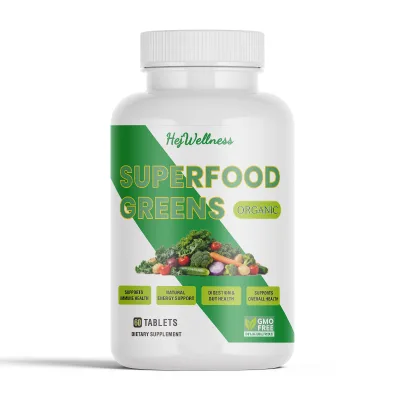
Buyers should observe that the "Place of Origin" varies between Guangdong and Shaanxi, which may impact logistics costs and lead times depending on the final destination port. The "Single package size" of 8x8x12 cm and a "Single gross weight" of 0.600 kg provide critical data for calculating freight consolidation efficiency. When evaluating listings, verify if the "Bottle Capacity" is consistently 60 tablets per unit, as this standardization simplifies shelf-space planning and inventory management for retail partners.
Technical Specifications to Verify
Technical due diligence requires confirming the "Model Number" and "Product Specification" to ensure the physical tablet matches the intended application. The data lists specific identifiers like "S-251126" and "Asrn-Super Green Effervescent Tablet," which serve as unique fingerprints for quality control. Buyers must verify that the "Standard" matches the "Grade Standard" claimed, particularly when "Medicine Grade" is cited, as this implies stricter purity thresholds than standard food-grade supplements.
The "Nutrient Composition" and "Feature" lists highlight "Vitamins," "Low-Fat," and "Sugar-Free" attributes that must be validated against the actual ingredient profile. Procurement teams should request a detailed breakdown of the "Organic Greens Blend" to ensure the "Main Ingredient" aligns with the "Natural" and "Vegan" claims. Additionally, the "Dosage Form" and "Dose" of "2 tablets" must be cross-referenced with the "Shelf-Life" of 24 months to ensure stability testing covers the entire claimed duration under the specified "Storage Method."
Compliance and Safety Documentation
Compliance verification is critical given the diverse certification landscape, which includes "KOSHER," "QS," "HACCP," "GMP," and "ISO" standards. Buyers must ensure that the specific facility producing the order holds the active certifications listed, as the presence of a certificate does not guarantee that every batch is covered. The "Certificate" field also lists "USP" and "Bp," which are pharmacopeial standards; verifying these requires checking the specific edition and scope of the certificate against the product's intended regulatory classification.
Safety documentation must address the "Not Applicable People" category, which explicitly excludes "Newborn" and "Children," necessitating clear labeling to prevent misuse. The "Storage Note" regarding "Mildew Proof" requirements and the "Storage" instruction for a "Cool Dry Place" must be reflected in the supplier's packaging design and logistics handling procedures. Buyers should also confirm that the "Test" results, such as "HPLC Super Green Effervescent Tablet," are available for the specific batch being purchased to validate purity and potency.
Cost Drivers and Commercial Terms
Cost structures are heavily influenced by the "Customization" options available, such as "OEM ODM Private Label" services and "Logo Printing." While the observed price range spans from $0.01 to $30, this variance likely reflects differences in packaging complexity, certification levels, and order volume rather than a simple per-unit cost. Buyers should analyze the "Selling Units" and "prod_packing" options to understand how bulk versus blister packaging affects the final landed cost per tablet.
Commercial terms must account for the "Service" capabilities, which include full private label development. The "Sample" availability for "Super Green Effervescent Tablet" allows for cost-effective quality verification before committing to larger orders. Procurement teams should negotiate based on the "MOQ" flexibility, noting that some suppliers list a minimum of 100 boxes, while others may accommodate smaller trial runs, which impacts the initial capital outlay and risk exposure.
Supplier Qualification and Quality Control
Supplier qualification should prioritize facilities that demonstrate a robust "Service" model including both OEM and ODM capabilities. The "Feature" list, which includes "Organic" and "Low-Fat," requires suppliers to maintain strict segregation of organic ingredients to prevent cross-contamination. Buyers must verify that the "Resource" is truly "Natural" and that the "Main Ingredient" sourcing is traceable, as this is a key differentiator in the superfood market.
Quality control protocols must be validated through the "Test" results and "Certificate" documentation provided. The "Grade Standard" of "Medicine Grade" implies a higher level of scrutiny than standard food production, requiring suppliers to demonstrate rigorous in-process controls. Buyers should request evidence of the "Storage Method" compliance, ensuring that the "Cool and dry place" requirement is maintained throughout the supply chain to preserve the "Shelf-Life" and prevent degradation of the "Organic Greens Blend."
Long-Term Procurement Checks
Long-term procurement success depends on monitoring the consistency of the "Product Specification" and "Model Number" across multiple production cycles. Variations in the "Single package size" or "Bottle Capacity" can disrupt retail operations, so buyers must enforce strict change control procedures. The "Shelf-Life" of 24 months requires ongoing stability testing to ensure that the "Storage Note" and "Storage" conditions remain effective over time.
Buyers should also track the "Certification" status of the supplier, ensuring that "HACCP," "GMP," and "ISO" certifications remain current and valid for the specific production lines. The "Function" claims, such as "Improve Immunity" or "Reduce Weight," must be supported by updated scientific data or regulatory approvals to avoid compliance risks. Regular audits of the "Not Applicable People" labeling and "Age Group" restrictions are essential to maintain brand integrity and consumer safety.
FAQs
What certifications do these superfood tablets hold?
These tablets hold HACCP, GMP, ISO, KOSHER, QS, USP, and BP certifications. This ensures compliance with international quality and safety standards for dietary supplements. Buyers can verify these credentials to ensure regulatory alignment for their target markets and distribution channels.
Can I customize the product with my own logo?
Yes, logo printing and private labeling are available for these tablets. The OEM service allows buyers to customize packaging and branding. This supports distinct market positioning and brand identity development for distributors and retailers seeking unique product offerings.
What is the minimum order quantity for these tablets?
The minimum order quantity starts at 100 boxes. Some listings indicate an MOQ range up to 300,000 units. This flexibility accommodates both small-scale testing and large-volume commercial distribution requirements for global buyers and wholesale partners.
How should these tablets be stored to maintain quality?
Store them in a cool, dry place to ensure stability. The shelf life is 24 months when kept in mildew-proof conditions. Proper storage preserves the potency of the organic greens blend and vitamins contained within the effervescent tablet formulation.
What are the main ingredients in these superfood tablets?
The main ingredient is an organic greens blend. These tablets are formulated as natural and vegan dietary supplements. They provide essential vitamins and are designed to support immunity and overall health for adult consumers seeking plant-based nutrition options.
Are these tablets suitable for children or newborns?
No, these tablets are not applicable for newborns or children. They are specifically formulated for adults and men. The dosage and nutrient composition are tailored for mature physiological needs, ensuring safety and efficacy for the intended adult demographic.