Source Organic Vegetable Super Greens Powder for Health, Beauty, and Weight Loss
Compare 30 listings for Organic Vegetable Super Greens Powder from verified Chinese manufacturers. Buyers can evaluate specifications like particle size, extraction methods, and certifications including FDA and GMP to find suitable suppliers for health food and cosmetic applications; compare the available evidence and request quotations based on your requirements.
Key considerations
Products List


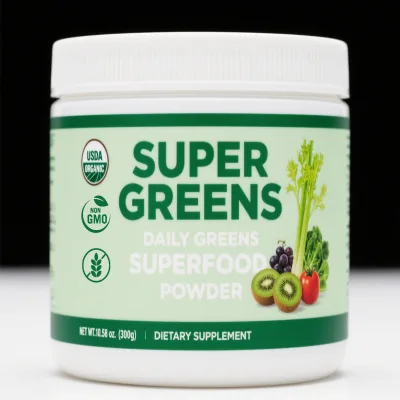
Private Label Super Greens Powder Nutrition Supplement Supergreens Powder
$5.00 - $10.00
MOQ: 200 Bottle




Comprehensive Sourcing Guide
Organic Vegetable Super Greens Powder Sourcing Guide
Procuring Organic Vegetable Super Greens Powder requires a disciplined approach to verifying raw material integrity and processing consistency. Buyers must distinguish between simple vegetable blends and complex superfood formulations that include probiotics or specific mineral profiles. The primary challenge lies in confirming that the "organic" claim is substantiated by third-party audits rather than relying solely on supplier self-declarations. This guide outlines the critical technical, compliance, and commercial factors that influence procurement decisions for this category.
Understanding the specific composition of the powder is essential before negotiating terms. Listings often vary significantly in their ingredient base, ranging from standard mixed vegetable powders to specialized superfood blends containing collagen or probiotics. Buyers should clarify whether the product is intended for direct consumption, use in health food formulations, or as an ingredient in beauty products. Each application dictates different purity requirements and stability expectations. Establishing these parameters early prevents costly rework or rejection of shipments that do not meet the specific functional needs of the end product.
Product Scope and Observed Listing Signals
Market listings for this category reveal a wide spectrum of product configurations, from basic mixed vegetable powders to complex superfood blends. Observed data indicates that products are frequently categorized under model numbers such as "Mixed Vegetable Powder" or "Superfood Powder," with some listings specifying additional ingredients like probiotics or collagen. The appearance is typically a green powder, though the exact shade can vary based on the vegetable mix and processing method. Buyers should note that "Superfood" is a marketing term that does not guarantee a specific nutrient profile, so detailed ingredient lists are necessary to verify the actual content.
Packaging and presentation also vary significantly across suppliers, impacting logistics and shelf-life management. Common packaging formats include drums for bulk industrial use and smaller units for retail or sample distribution. Single package sizes observed in listings range from 15x15x20 cm to 23x15x15 cm, with gross weights around 1.5 kg for single items. The form is consistently powder, with particle sizes often specified at a minimum of 80 mesh. Understanding these physical attributes helps buyers assess compatibility with their own packaging lines and storage facilities. It is crucial to confirm whether the supplier offers customized packaging options, as this can affect the total landed cost and brand presentation.
Technical Specifications to Verify
Technical specifications must be rigorously verified to ensure the powder meets the required functional and safety standards. Key parameters include particle size, which is often specified at a minimum of 80 mesh, ensuring a fine texture suitable for various applications. The extraction type is frequently listed as solvent extraction, which can impact the retention of heat-sensitive nutrients. Buyers should request detailed certificates of analysis (COA) that specify the assay method, such as HPLC or TLC, used to determine the concentration of active ingredients. The specification level, often cited as 99%, refers to the purity of the main ingredient, but buyers must clarify what constitutes the "main ingredient" in a mixed vegetable powder context.
Storage and stability are critical technical aspects that affect product quality over time. The shelf life is typically listed as two years or 24 months, provided the product is stored in a dry, cool place. Buyers should verify the recommended storage conditions and ensure that the packaging material provides adequate protection against moisture and light. The condition of the product is generally brand new, but buyers should confirm that the supplier maintains proper inventory rotation to avoid receiving near-expiry stock. Additionally, the dose information is often listed as OEM, indicating that the supplier can customize the dosage recommendations based on the buyer's specific product formulation.
Compliance and Safety Documentation
Compliance documentation is a non-negotiable aspect of sourcing Organic Vegetable Super Greens Powder, particularly for international trade. Suppliers typically provide certifications such as FDA, GMP, MSDS, and HACCP, which attest to the safety and quality of the product. Buyers should verify that these certifications are current and issued by recognized regulatory bodies. The presence of additional certifications like ISO, BRC, or Halal can be beneficial for specific markets or customer segments. It is important to request copies of these certificates and cross-reference them with the supplier's official records to ensure authenticity.
Safety documentation also includes Material Safety Data Sheets (MSDS) that detail the chemical composition and handling instructions for the product. Buyers should review these documents to ensure that the powder does not contain any prohibited substances or allergens that could affect their end consumers. The test method, such as TLC or HPLC, should be clearly documented in the COA to provide transparency on how the product's quality was assessed. Buyers should also confirm that the supplier adheres to good manufacturing practices (GMP) throughout the production process, from raw material sourcing to final packaging.
Cost Drivers and Commercial Terms
Cost drivers for Organic Vegetable Super Greens Powder are influenced by several factors, including the source of raw materials, processing complexity, and packaging requirements. The cultivation method, often listed as artificial planting, can impact the cost of raw vegetables, especially if organic certification is required. Buyers should request detailed quotes that break down the cost of the powder, packaging, and shipping. The minimum order quantity (MOQ) is typically 1 kg, but this can vary depending on the supplier and the specific product configuration. Understanding the MOQ helps buyers plan their inventory levels and avoid overstocking.
Commercial terms, including payment methods and trade assurance, play a significant role in the procurement process. Common payment methods include PayPal, Western Union, TT, and Trade Assurance, which provide different levels of security for both buyers and suppliers. Buyers should negotiate terms that align with their cash flow and risk tolerance. The availability of samples is a standard practice, allowing buyers to test the product before committing to a large order. Buyers should also clarify the lead time for production and shipping, as this can affect their supply chain planning.
Supplier Qualification and Quality Control
Supplier qualification is a critical step in ensuring the reliability and consistency of the Organic Vegetable Super Greens Powder. Buyers should conduct thorough due diligence on potential suppliers, including reviewing their business licenses, production facilities, and quality control processes. The place of origin, often listed as Shaanxi or Guangdong, China, can provide insights into the supplier's expertise and local regulatory environment. Buyers should verify that the supplier has the necessary infrastructure to produce the product at scale while maintaining high quality standards.
Quality control measures should be integrated into the supplier's production process to ensure consistency and safety. Buyers should request information on the supplier's quality control procedures, including raw material inspection, in-process checks, and final product testing. The use of standardized test methods, such as HPLC or TLC, helps ensure that the product meets the specified quality parameters. Buyers should also consider conducting third-party inspections or audits to verify the supplier's claims and ensure that the product meets their requirements.
Long-Term Procurement Checks
Long-term procurement checks are essential for maintaining a stable and reliable supply of Organic Vegetable Super Greens Powder. Buyers should establish clear performance metrics and key performance indicators (KPIs) to monitor the supplier's performance over time. These metrics can include on-time delivery rates, product quality consistency, and responsiveness to customer inquiries. Regular reviews and feedback sessions with the supplier help identify areas for improvement and strengthen the business relationship.
Sustainability and ethical sourcing are increasingly important considerations in long-term procurement. Buyers should verify that the supplier adheres to sustainable practices in raw material sourcing and production. This includes ensuring that the vegetables are grown using environmentally friendly methods and that the production process minimizes waste and energy consumption. By prioritizing sustainability, buyers can align their procurement strategy with their corporate social responsibility goals and meet the expectations of environmentally conscious consumers.
FAQs
What certifications do the Organic Vegetable Super Greens Powder products have?
The products hold FDA, GMP, MSDS, HACCP, ISO, BRC, and RoHS certifications. These credentials ensure compliance with international safety and quality standards for food-grade ingredients used in health supplements and functional foods.
How is the Organic Vegetable Super Greens Powder extracted and processed?
Extraction is performed using solvent extraction methods to preserve active compounds. The final product appears as a green powder with a minimum particle size of 80 mesh, suitable for various health food applications and manufacturing processes.
Can I request custom packaging or logo printing for this superfood powder?
Yes, customized packaging and logo printing services are available for buyers. The single package size is typically 15x15x20 cm, and drums are used for bulk shipping to ensure product integrity during international transport and storage.
What is the shelf life and storage requirement for the mixed vegetable powder?
The product has a shelf life of two years or 24 months when stored correctly. Buyers must keep the powder in a dry and cool place to maintain its quality, potency, and safety for adult consumption throughout the period.
Which main ingredients are included in the Organic Vegetable Super Greens Powder?
Main ingredients include organic vegetable powder, probiotics, and vitamins. These components are formulated to support immune function, digestive health, and weight management, making the product suitable for adults seeking natural health and wellness solutions.
What is the minimum order quantity for purchasing this vegetable powder?
The minimum order quantity is 1 kg for sample or trial orders. Bulk orders can range up to 1000 units, allowing flexible procurement strategies for small businesses or large manufacturers requiring specific quantities of food-grade ingredients.
Where are the Organic Vegetable Super Greens Powder manufacturers located?
Manufacturers are located in Shaanxi and Guangdong provinces in China. These regions are known for their agricultural output and manufacturing capabilities, ensuring a steady supply of high-quality organic vegetable powders for global export markets.