Source HACCP Certified Sweet Chili Powder for Sauces, Marinades, and Snacks
Compare 30 listings of HACCP Certified Sweet Chili Powder from verified Chinese suppliers. Buyers can evaluate spice levels, mesh sizes, and packaging options for sauces, marinades, and snack applications.
Key considerations
Products List


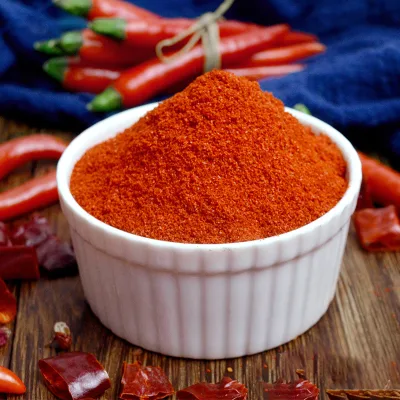


Powdered Paprika Wholesale Price Sweet Paprika Powder Hot Chili Powder on Sale
$750.00 - $800.00
MOQ: 1 Tons


Wholesale Top Dried Sweet High Quality Red Paprika Powder Chili Powder
$1000.00 - $4000.00
MOQ: 1 Tons


Comprehensive Sourcing Guide
Strategic Sourcing Guide for HACCP Certified Sweet Chili Powder
Understanding Product Specifications and Variability
When sourcing HACCP Certified Sweet Chili Powder, buyers must first navigate the inherent variability in product attributes found within the global spice market. The term "sweet chili powder" often encompasses a spectrum of formulations, ranging from pure paprika to blends containing varying degrees of heat. Based on observed market data, the product category includes items classified specifically as "Paprika Crushed" or general "pepper" models, where the primary distinction lies in the Scoville Heat Unit (SHU) rating. While the core keyword implies a sweet profile, the observed data indicates that products in this segment can exhibit pungency levels ranging from 3,000 to 15,000 SHU, with some specific listings noting a maximum of 500 SHU or even 450 SHU. This variance necessitates a precise definition of "sweet" for the procurement team, as a powder with 15,000 SHU may be too hot for certain applications despite being marketed as a sweet chili variant.
Physical specifications are equally critical for formulation consistency. The market offers products in various mesh sizes, with common observations including 50/60/70 mesh for fine powders, while other listings specify size ranges of 4-6cm and up, or custom sizes dependent on customer requests. The state of the product is consistently observed as "Powder," but the moisture content varies significantly between batches, with observed values of 8%, 10% maximum, and 11%. These moisture differentials directly impact shelf life and microbial stability. Buyers should verify that the specific lot selected aligns with their processing requirements, as a higher moisture content of 11% may require different storage conditions compared to the 8% variant. Furthermore, the color profile is typically observed as "Red," and the Asta value, a measure of color intensity, ranges from 20 to 240 Asta, with some specific models showing a range of 30-220. Understanding these technical baselines is the first step in ensuring the raw material meets the sensory and functional needs of the final food product.
Compliance Framework and Certification Verification
The requirement for HACCp certification is a non-negotiable baseline for many B2B buyers in the food industry, yet the certification landscape often includes multiple overlapping standards. In the observed product data, certifications frequently listed alongside HACCP include ISO, FDA, Kosher, Halal, and BRC (British Retail Consortium). Specifically, one observed listing details a certification suite of "Brc a, HACCP, ISO, Kosher, Halal," while another notes "HACCP, ISO, BRC." It is crucial for buyers to understand that while HACCP is a process control system, BRC and ISO represent broader management system standards that often encompass food safety protocols.
Buyers must verify the validity of these certifications through direct communication with the supplier rather than relying solely on product descriptions. The presence of "ISO" as a generic term requires clarification; while background knowledge suggests ISO 22000 or ISO 9001, the supplied facts do not explicitly confirm these specific standard numbers for every product. Therefore, procurement teams should request current, valid certificates from the supplier to confirm the scope of the certification. Additionally, regulatory compliance extends beyond the factory floor to the product's adherence to safety limits. The data indicates that compliant products must meet EU and FDA regulations regarding pesticides, with specific limits observed for contaminants such as Ochratoxin (<20ppb), Aflatoxin (<10ppb), and Tpc (<100,000cfu/G). Furthermore, the absence of color dyes is a common specification, with "Negative" results for color dye observed in several listings, ensuring the product relies on natural pigmentation.
Cost Drivers and Pricing Dynamics
The pricing structure for HACCP Certified Sweet Chili Powder is influenced by a complex interplay of factors, including origin, processing level, and packaging requirements. The observed price range in the market is vast, spanning from $0.70 to $4,000 USD. This extreme variance suggests that the lower end of the spectrum likely represents bulk commodity grades or smaller packaging units, while the higher end may reflect specialized, high-Asta, or organic-certified variants with stricter quality controls. Buyers should not assume that a higher price guarantees superior quality without verifying the specific Asta value, SHU rating, and certification status of the specific lot.
Minimum Order Quantity (MOQ) is another significant cost driver. The observed MOQ range spans from 1 unit to 10,000 units. For smaller buyers or those testing new formulations, an MOQ of 1 may be accessible, but this often comes with a higher unit cost. Conversely, bulk purchasing at the 10,000-unit level typically secures a lower price point but requires significant capital commitment and storage capacity. Packaging also influences cost; observed packaging options include 25kg bags, 10kg cartons, and Kraft paper bags with inner plastic liners. The choice between a simple 25kg bag and a more complex multi-layer packaging solution can impact the final landed cost. Additionally, the origin of the product, observed as "China," plays a role in logistics costs. While the domestic production in China offers competitive pricing, international buyers must factor in freight, insurance, and potential tariffs, which can significantly alter the total cost of ownership.
Supplier Evaluation and Operational Reliability
Evaluating a supplier for HACCP Certified Sweet Chili Powder requires a deep dive into their operational capabilities and reliability metrics. The supply chain data indicates that lead times can vary based on order size and customization. For specific product models, such as those with sizes of 14cm and up, the delivery time is noted as 15 days after prepayment. Other general listings suggest a broader delivery window of 15-20 days after prepayment. Buyers must confirm these timelines during the negotiation phase, as delays in raw material delivery can disrupt production schedules in the food manufacturing sector.
Customization is a key differentiator among suppliers. The observed data confirms that customization is available for this product category, allowing buyers to tailor specifications such as mesh size, moisture content, and packaging. However, the ability to customize often extends the lead time and may require a higher MOQ. Suppliers must also demonstrate their ability to maintain consistency in critical attributes like the "Kind" of pepper used (e.g., Long Pepper or Paprika) and the "Cultivation Type" (observed as Common). A reliable supplier will provide detailed batch records and traceability documentation, ensuring that the "100% natural" standard claimed in the product specifications is met. Furthermore, the storage method is a critical operational factor; while some products are stored under "Normal" conditions, others require "Frozen" storage. Buyers must ensure their own logistics infrastructure can support the supplier's recommended storage conditions to prevent quality degradation before the product reaches the manufacturing facility.
Quality Control and Safety Standards
Quality control (QC) for sweet chili powder involves rigorous testing against multiple safety parameters to ensure the product is safe for consumption. The observed data highlights several critical quality metrics that must be verified. Microbiological safety is paramount, with limits set for Total Plate Count (Tpc) at less than 100,000cfu/G. Contaminant testing is equally important, with specific thresholds for Aflatoxin (<10ppb) and Ochratoxin (<20ppb). These mycotoxins are common concerns in dried spice products and require strict monitoring during the drying and storage phases.
Chemical safety is another pillar of QC. The product must be free from excessive pesticide residues, adhering to EU and FDA regulations. Specific heavy metal and chemical limits are observed, such as Chromate (<0.1ppm) and Chlorate (<3ppm). The sterilization process is also a vital component of quality assurance, with "Steam Sterilization" noted as a method used in the supply chain. Buyers should request sterilization validation reports to ensure the process effectively reduces microbial load without compromising the flavor profile or color intensity. Additionally, allergen management is critical; the product data notes that allergens are managed "Following EU and FDA Regulation." This implies that the facility must have robust cross-contamination controls, especially if the production line handles other allergens. The "GMO Free" status is another quality attribute that many buyers prioritize, and verification of this claim through third-party testing or supplier declarations is essential.
Long-Term Procurement and Application Strategy
Sourcing HACCP Certified Sweet Chili Powder is not merely a transactional activity but a strategic partnership that impacts long-term product stability. The shelf life of the product is a critical factor in inventory management. Observed shelf life data indicates a range from "No More Than 450" (likely referring to a specific batch code or date constraint) to ">12 Months" and a specific "24 Months" for certain grades. Buyers must align their procurement cycles with these shelf life constraints to minimize waste. For products with a 24-month shelf life, buyers can plan for larger, less frequent orders, whereas shorter shelf-life variants require a Just-In-Time (JIT) approach.
The application of sweet chili powder varies widely across the food industry, from seasoning blends to marinades and sauces. The "Hot" taste profile and specific pungency levels (3,000-15,000 SHU) make this ingredient suitable for products requiring a balance of sweetness and heat. However, the variability in SHU means that a single batch may not be suitable for all applications. Buyers should consider a dual-sourcing strategy or maintain a buffer stock of different SHU grades to accommodate product formulation changes. The "100% natural" standard observed in the product specifications appeals to consumers seeking clean-label ingredients, making this a strong selling point for marketing teams.
In conclusion, successful procurement of HACCP Certified Sweet Chili Powder requires a meticulous approach to verifying technical specifications, ensuring compliance with international safety standards, and managing the logistical complexities of the supply chain. By focusing on the observed data points regarding certifications, moisture content, and shelf life, buyers can mitigate risks and secure a reliable supply of high-quality ingredients. The vast price and MOQ ranges observed in the market offer flexibility, but they also demand careful analysis to ensure that the chosen supplier and product grade align with the buyer's specific operational and quality requirements.
FAQs
What certifications does the product hold?
The product holds HACCP, ISO, Kosher, FDA, and BRC certifications. Some listings also include Halal certification, ensuring compliance with international food safety and management standards for global distribution.
How long is the shelf life of the powder?
The shelf life is typically 24 months for specific grades, with some variants exceeding 12 months. Buyers should verify the specific lot date as storage conditions like normal or frozen storage impact longevity.
What is the heat level of the chili powder?
The pungency ranges from 3,000 to 15,000 Scoville Heat Units, though some specific models have a maximum of 500 SHU. This variability requires precise definition of sweetness versus heat for procurement teams.
Can the product be customized for specific needs?
Yes, customization is available for mesh size, moisture content, and packaging requirements. Buyers can request specific sizes like 50/60/70 mesh or 4-6cm ranges, though customization may affect lead times and minimum order quantities.
What are the packaging options for bulk orders?
Common packaging includes 25kg bags, 10kg cartons, and Kraft paper bags with inner plastic liners. The specific packaging material, such as paper or carton, depends on the customer request and product model.
Where is the product sourced from?
The product origin is China, offering competitive pricing for international buyers. Sourcing from this location involves considering freight, insurance, and potential tariffs that affect the total landed cost of the shipment.
What are the moisture content limits?
Moisture content varies between 8% and 11% maximum depending on the batch. Lower moisture levels like 8% generally offer better stability, while 11% may require different storage conditions to maintain quality.