Source Hair Tape for wigs, extensions, and medical applications
Explore 30 listings of Hair Tape suitable for double-sided wig attachment, extension bonding, and general hair styling. Buyers can compare specifications like material, hold strength, and customization options from suppliers in China and America.
Key considerations
Products List


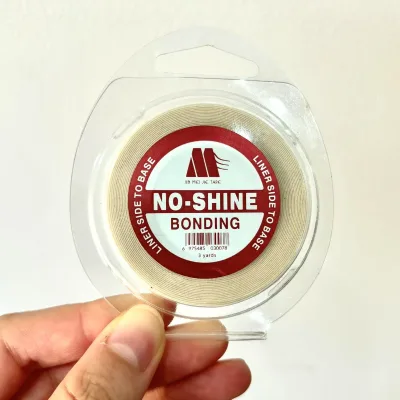
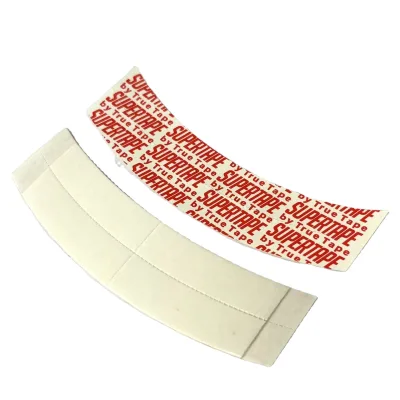
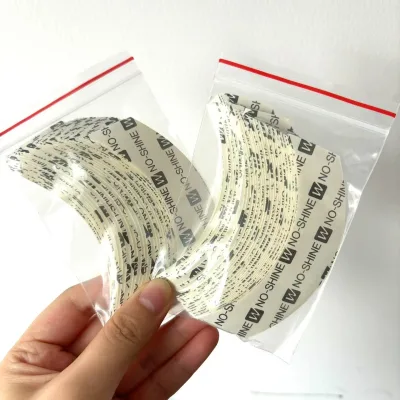
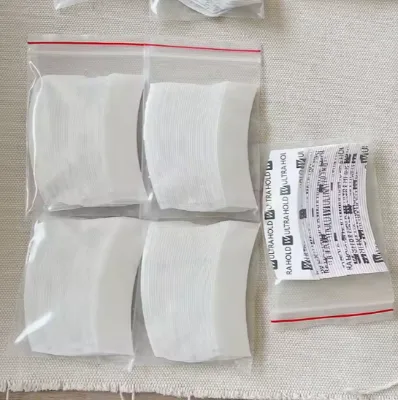




Comprehensive Sourcing Guide
Strategic Sourcing Guide for Hair Tape Procurement
The global market for Hair Tape and adhesive wig accessories has evolved into a sophisticated segment within the beauty and personal care supply chain. For B2B buyers, navigating this sector requires a disciplined approach that balances technical performance with supply chain reliability. The core product, often categorized as adhesive double-sided tape for wigs or hair extensions, serves a critical function in securing hairpieces while maintaining a natural appearance. This guide synthesizes observed market data and technical attributes to provide a robust framework for sourcing decisions, ensuring that procurement strategies are grounded in verifiable facts rather than speculative claims.
Technical Specifications and Material Composition
Understanding the physical and chemical properties of Hair Tape is the first step in defining procurement requirements. The fundamental material composition for these products is consistently identified as adhesive-based, designed to bond securely to both the hairpiece and the scalp or cap. In the current market, the primary material is explicitly noted as "Adhesive" or "Adhesive Tape," indicating a polymer-based formulation that offers the necessary tackiness without immediate residue.
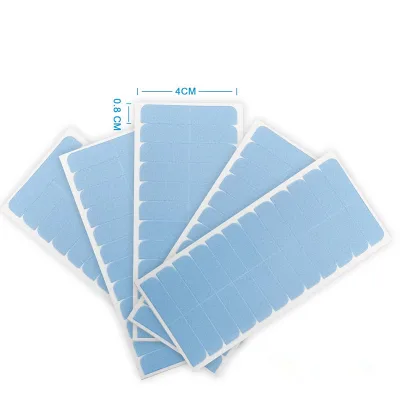
A critical technical observation involves the dimensional specifications. While some product listings indicate a standard length of 1000 meters, buyers must recognize that this figure represents a specific batch or model rather than a universal standard. Other entries suggest that width and specific dimensions are variables that require direct consultation with the customer service team. This variability implies that customization is a standard feature of the supply chain, allowing buyers to tailor the tape to specific wig widths or application areas.
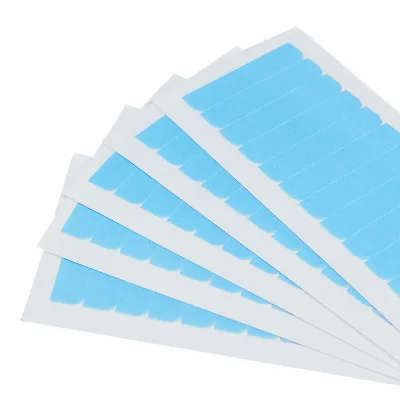
The physical form factor is equally important. The product is frequently described as "Double-sided wig tape," which necessitates a liner on both sides to protect the adhesive until application. The color profile is predominantly white, a choice likely made to ensure invisibility under light-colored wigs or to provide a neutral base for various skin tones. Furthermore, the packaging specifications reveal a single gross weight of approximately 1.900 kg for a single package size of 25x25x25 cm. This data point is vital for logistics planning, as it allows procurement teams to calculate shipping volumes and freight costs accurately. The unit weight of individual items varies, with some listings noting 0.005 kg and others 0.025 kg, suggesting a range of product densities or packaging configurations that must be verified during the sampling phase.
Compliance, Certification, and Safety Standards
In the realm of personal care and medical-adjacent products like wig adhesives, compliance is non-negotiable. The supply chain data indicates that certain products adhere to the ISO 9000 standard. This certification is a crucial indicator of a supplier's commitment to quality management systems, ensuring that production processes are consistent and controlled. However, buyers should not assume that every listed product automatically possesses this certification; it must be verified on a per-supplier basis.
Safety and ingredient transparency are paramount. The ingredient list for some products identifies the composition as "Chemical," which is a broad descriptor. For B2B buyers, this necessitates a deeper inquiry into the specific chemical compounds used in the adhesive formulation. Questions regarding hypoallergenic properties, skin compatibility, and the absence of harmful solvents are essential. The market also notes that the product is suitable for "Any skin color" and "Any face shape," implying a broad safety profile, but this claim requires validation through dermatological testing data or supplier-provided safety sheets.
Furthermore, the "Long-term temperature resistance" is listed as a variable to be consulted with customer service. This is a significant compliance and performance factor. Adhesives used in hair applications must withstand varying environmental conditions, from high humidity in tropical regions to temperature fluctuations in transit. Buyers must request specific thermal stability data to ensure the tape does not degrade, lose adhesion, or cause skin irritation under expected usage conditions. The "Processing customization" attribute being marked as "is" suggests that suppliers may offer tailored formulations to meet specific regional safety standards or customer-specific chemical restrictions.
Cost Drivers and Pricing Dynamics
The pricing landscape for Hair Tape is characterized by a wide range, with observed values spanning from $0.03 to $86 USD. This disparity is not merely a reflection of brand markup but is driven by several distinct cost factors. The primary driver is the customization level. Products with standard dimensions and generic packaging tend to cluster at the lower end of the spectrum, while those offering bespoke widths, specialized adhesive strengths, or custom branding will command higher prices.
The Minimum Order Quantity (MOQ) is another significant cost determinant. The observed MOQ range spans from 1 to 1000 units. Suppliers with low MOQs often charge a premium per unit to cover the administrative and setup costs of small-batch production. Conversely, bulk orders that meet higher MOQ thresholds can significantly reduce the unit cost, making them attractive for large retailers or distributors. The "Selling Units" attribute, which often lists "Single item" or pack quantities like 10, 20, 30, and 50 packs, further influences the final price. Buyers must calculate the total cost of ownership, including the cost of the adhesive itself, the liner material, and the packaging complexity.
Additionally, the origin of the product plays a role in cost structure. The data highlights origins in Zhejiang Province, Guangdong, and Shenzhen in China, as well as America. Manufacturing in China often offers competitive pricing due to established supply chains for adhesive materials, while American-sourced products may carry a premium due to labor costs and stricter domestic regulatory environments. The "Whether the source of cross-border expo" attribute being "no" for some items suggests that certain suppliers may not be optimized for international trade logistics, potentially affecting shipping costs and import duties.
Typical Applications and Market Segmentation
Hair Tape serves a diverse array of applications, primarily centered around the wig and hair extension industry. The "Scope of application" is explicitly defined as "Double-sided wig tape," indicating its primary use in securing wigs, toupees, and hairpieces. The "Styling effect" of "Anti-Frizz" suggests that the tape also contributes to the aesthetic finish of the hair, smoothing edges and preventing flyaways.
The target demographic is remarkably broad. The "Age Group" is listed as "All Ages" and "Children," while the "Gender" is "Unisex." This universality expands the market potential significantly, allowing buyers to source a single product line that can serve a wide customer base. The "Hair Type" is noted as "All," including specific mentions of "CURLY HAIR," and the "Wig Hairstyle" includes "Short curly hair with fringe." This indicates that the adhesive must be versatile enough to handle various textures and styles without compromising the hold or causing damage to the hair fibers.
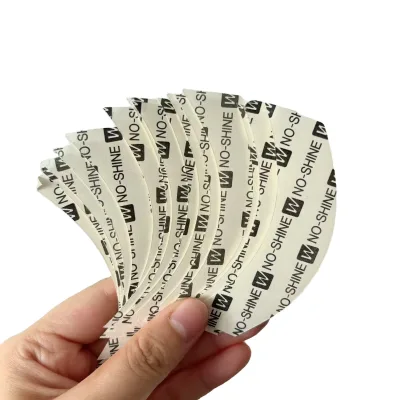
The "Applicable crowd" is described as "Be common," which implies a mass-market appeal rather than a niche luxury segment. However, the "Item No." variations (e.g., NO-SHINE, 001, 003, 009) suggest that manufacturers produce specialized SKUs for different needs, such as specific hold strengths or application methods. The "Hold strength" is categorized as "Strong Hold," which is a critical performance metric for buyers targeting professional wig stylists or users requiring long-term wear.
Supplier Evaluation and Origin Verification
When evaluating potential suppliers, buyers must scrutinize the "Country/Region of Origin" and "Place of Origin" data. The supply chain for Hair Tape is heavily concentrated in China, with specific hubs in Zhejiang Province, Guangdong, and Shenzhen. These regions are known for their manufacturing capabilities in adhesives and packaging. However, the presence of products originating from America introduces a layer of complexity regarding quality expectations and regulatory compliance.
The "Brand name" "Nabony" appears in the data, serving as a reference point for established market players. While buyers should not rely on a single brand, the existence of named brands suggests that there are established entities with track records. Buyers should verify the "Logo/graphic design" capabilities, as the attribute "other" indicates flexibility in branding. This is crucial for private label opportunities where the buyer's brand identity is paramount.
Supplier reliability can also be assessed through their "Packing quantity" and "Item No." consistency. The "Packing quantity" is often listed as "consult," which is a red flag for standardized procurement. Reliable suppliers should provide clear, consistent packaging data. The "Single package size" of 25x25x25 cm provides a baseline for logistics, but buyers must confirm if this is a standard or a custom dimension. The "Whether the source of cross-border expo" attribute being "no" for some items may indicate that the supplier is primarily domestic or lacks experience with international export documentation, which could complicate the import process for foreign buyers.
Quality Control and Long-Term Procurement Considerations
Ensuring consistent quality in Hair Tape procurement requires a rigorous quality control (QC) protocol. The "Material" being "Adhesive" necessitates testing for shear strength, peel adhesion, and residue levels. The "Unit weight" variations observed (0.005 kg vs. 0.025 kg) highlight the need for precise weighing and consistency checks during the QC process. Buyers should implement incoming inspection protocols that verify the weight, dimensions, and adhesive performance of each batch.
Long-term procurement considerations must address the "Long-term temperature resistance" and "Hold strength" over time. Adhesives can degrade due to exposure to heat, humidity, and UV light. Buyers should request stability data and shelf-life information from suppliers to ensure the product remains effective throughout its intended use period. The "Processing customization" being "is" suggests that suppliers can adapt their formulations, which is a valuable asset for long-term partnerships where product requirements may evolve.
Finally, the "Standard" of ISO 9000 serves as a benchmark for quality management. Buyers should verify that this certification is current and applicable to the specific product line being sourced. The "Item No." system, with entries like "NO-SHINE" and "001," should be used to track product iterations and ensure that any changes in formulation or packaging are communicated and documented. By maintaining a disciplined approach to these technical and operational details, B2B buyers can secure a reliable supply of high-quality Hair Tape that meets the diverse needs of the global market.
FAQs
What is the primary material used for this Hair Tape?
The primary material is adhesive tape designed for securing hairpieces. It is formulated to bond securely to both the hairpiece and the scalp while maintaining a natural appearance without immediate residue.
Can I customize the dimensions of the Hair Tape?
Yes, customization is available for specific product models. While some listings show a standard length of 1000 meters, other dimensions like width often require direct consultation with customer service to meet specific needs.
Which certifications do the manufacturers typically hold?
Some products adhere to the ISO 9000 standard for quality management. Buyers should verify that this certification is current and applicable to the specific product line being sourced from the supplier.
How does the price range vary for different orders?
Prices range from 0.03 to 86 USD depending on customization and order volume. Lower unit costs are typically achieved through bulk orders meeting higher minimum order quantity thresholds compared to single items.
Where are the main manufacturing origins for this product?
Manufacturing origins include Zhejiang Province, Guangdong, and Shenzhen in China. Some products also originate from America, which may affect cost structures and regulatory compliance requirements for international buyers.
What is the typical hold strength of the adhesive tape?
The product is categorized as having a strong hold strength suitable for various hair types. It is designed to secure wigs and hairpieces effectively while offering an anti-frizz styling effect for a natural finish.