Source Hair Perm Machine for Salon, Retail, and Repair
Compare 30 Hair Perm Machine options from Guangdong suppliers with varying voltages, temperatures, and capacities. Buyers can evaluate automatic curlers for professional salon use, private label needs, and damaged hair repair applications.
Key considerations
Products List


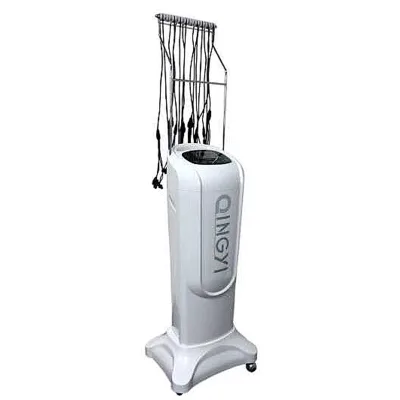
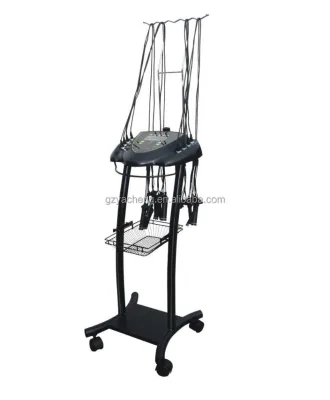
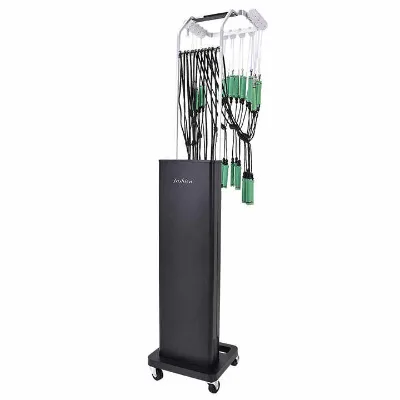
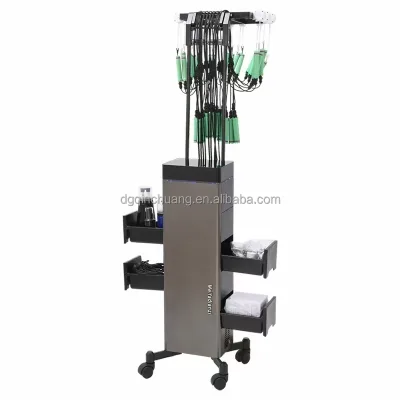
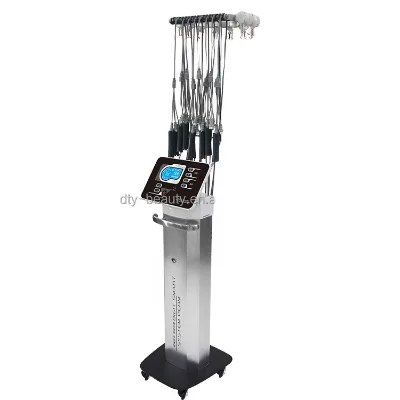
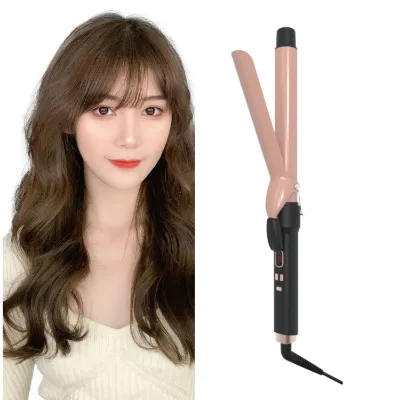
DTY Smart Hair Digital Perm Machine Digital Hair Perm Machine Salon Equipment
$165.91 - $213.75
MOQ: 1 sets




Comprehensive Sourcing Guide
Strategic Sourcing Guide for Professional Hair Perm Machines
The global market for professional hair care equipment has seen a significant shift toward automated solutions that enhance salon efficiency and consistency. For procurement professionals and salon owners, the core keyword "Hair Perm Machine" represents a category of specialized electrical devices designed to apply heat and tension to hair strands to create permanent curls or waves. Unlike manual styling tools, these machines often integrate digital controls, precise temperature regulation, and automated timing mechanisms to ensure uniform results across large volumes of clients. This guide provides a comprehensive framework for sourcing these devices, focusing on technical specifications, operational safety, cost structures, and supplier evaluation criteria based on verified industry data.
Technical Specifications and Operational Parameters
When evaluating hair perm machines, the primary focus must be on the technical capabilities that directly impact service quality and salon throughput. The core functionality of these devices revolves around the ability to maintain consistent heat and precise timing. Based on observed market data, effective units typically feature a temperature range capable of adapting to various hair types, often spanning from 40°C to 160°C. This wide operational window allows stylists to adjust settings for delicate, damaged hair versus thick, resistant textures without risking thermal damage.
Digital control interfaces are now a standard expectation in professional-grade equipment. Modern units frequently incorporate LCD display types that provide clear visibility of current settings, including time and temperature. The time setting capability is critical for the perm process, with standard models offering a range of 0 to 30 minutes. This duration allows for the necessary chemical processing time required for permanent waving solutions to take effect. Furthermore, the voltage compatibility is a vital specification for international procurement. Units are often designed for specific regional standards, such as 110V, which necessitates careful verification against the electrical infrastructure of the target market to prevent equipment failure or safety hazards.
The physical design of the machine also plays a role in its utility. Professional units are often described as "Automatic Professional Salon Hair Curlers," indicating a mechanism that reduces manual labor. The color options, typically white, black, or red, are secondary to the functional design, which prioritizes ergonomics and durability. The single package size for these machines is substantial, often measuring approximately 92 cm in length, 42 cm in width, and varying heights between 26 cm and 46 cm depending on the specific model configuration. This dimensioning is crucial for logistics planning, as it affects shipping costs and storage requirements within a salon environment.
Compliance, Safety, and Certification Verification
In the B2B procurement of electrical beauty equipment, compliance with safety standards is non-negotiable. While specific certification marks vary by region, buyers must verify that the manufacturer adheres to international electrical safety standards. The product origin is frequently identified as Guangdong, China, a major manufacturing hub for beauty tools. However, the location of origin does not guarantee compliance; buyers must explicitly request documentation regarding electrical safety certifications, such as CE, UL, or RoHS, depending on the destination market.
The "Use Place" attribute for these machines is consistently listed as "for Professional Salon Use Only." This designation implies that the devices are built for high-frequency, continuous operation typical of commercial salons, rather than occasional home use. Consequently, the electrical components and heating elements must be robust enough to withstand daily usage cycles. Buyers should verify that the product specifications include clear warnings and safety protocols for high-temperature operation. The presence of a digital interface suggests the need for electronic safety features, such as overheat protection or automatic shut-off mechanisms, which should be confirmed through technical datasheets or third-party test reports.
Additionally, the formula used in conjunction with the machine is a critical compliance factor. Many perm machines are marketed alongside "Mild Herbal Formula" or "Repairing Damaged Hair Collagen" solutions. While the machine itself is a hardware device, the procurement strategy often involves sourcing compatible chemical systems. Buyers must ensure that the chemical formulas used with the machine do not produce fumes that violate local ventilation standards or pose health risks to salon staff and clients. The "Agent A & B" packaging standard, often cited in 1000ml or customized 500ml/800ml sizes, indicates a two-step chemical process that requires careful handling and storage compliance.
Cost Drivers and Pricing Structures
The pricing of hair perm machines is influenced by several distinct factors, including technological complexity, branding, and customization capabilities. The observed price range in the market spans from approximately $0.90 to $260.00 USD. This wide disparity suggests a market segmentation between basic manual tools and advanced, fully automated digital units. The lower end of the spectrum may represent basic components or accessories, while the higher end likely encompasses full machines with digital displays, precise temperature control, and advanced automation features.
Customization is a significant cost driver in this category. Suppliers offering "OEM and ODM Design" support allow buyers to brand the equipment with their own logos or modify the design to fit specific salon aesthetics. This level of customization typically incurs additional costs and may affect the Minimum Order Quantity (MOQ). The observed MOQ range varies from 1 piece to 720 pieces. A low MOQ of 1 piece allows for sample testing and small-scale procurement, which is ideal for verifying quality before committing to larger orders. Conversely, higher MOQs are often associated with customized branding or bulk pricing tiers.
Supply ability is another factor influencing cost and availability. Manufacturers with a supply ability of 500 to 1000 pieces per month can generally handle standard orders without significant delays. However, for large-scale procurement requiring hundreds of units with custom branding, buyers must negotiate lead times and production schedules well in advance. The delivery time is typically around 10 days for standard orders, but this can extend for customized requests. Understanding these cost drivers helps buyers budget effectively and avoid unexpected expenses related to expedited shipping or last-minute customization fees.
Typical Applications and Salon Integration
The primary application of hair perm machines is in professional salon environments where consistency and efficiency are paramount. These devices are designed to deliver a "Long Lasting Curly Effect," ensuring that the results meet client expectations and reduce the need for frequent touch-ups. The "Main Function" of keeping hair with a lasting curl is achieved through the precise application of heat and tension, which restructures the hair's disulfide bonds.
The versatility of these machines allows them to be used for various hair types, including "All Hair" categories. This inclusivity makes them a valuable asset for salons serving diverse client bases. The "Natural Hair Curl Perm" and "Wavy Hair Perm" keywords highlight the machine's ability to create different styles, from tight curls to loose waves, depending on the rod size and processing time. The "Repairing Damaged Hair" aspect suggests that some models are optimized for use with collagen-infused solutions, catering to clients with previously treated or damaged hair.
Integration into salon workflows is streamlined by the digital nature of these machines. The "Time setting" feature allows stylists to set precise intervals, reducing the risk of under-processing or over-processing. The "Automatic Professional Salon Hair Curler" designation indicates that the machine handles much of the mechanical work, allowing the stylist to focus on sectioning and chemical application. This automation increases the number of clients a stylist can serve in a day, directly impacting revenue potential. The "Single package size" and "Gross weight" of 13.2 kg per carton are considerations for salon layout, ensuring that the equipment fits within the available workspace without obstructing movement.
Supplier Evaluation and Quality Control
Selecting the right supplier is critical for ensuring product reliability and long-term support. Buyers should prioritize suppliers who offer "Free Design Service" and support "OEM and ODM" requests, as this indicates a willingness to collaborate and adapt to specific brand needs. The "Brand" attribute, such as "YABOLI," serves as a reference point for market reputation, but buyers should not rely solely on brand names. Instead, they should evaluate the supplier's track record, production capacity, and quality control processes.
Quality control should be a multi-stage process. First, buyers must verify the "Product Standard," which often involves checking the volume of the chemical agents (e.g., 1000ml or customized 500ml/800ml) and the integrity of the packaging. The "Cardboard Carton" packaging must be robust enough to protect the machine during transit, especially given the "Single gross weight" of 13.2 kg. Second, buyers should request samples to test the "Temperature" accuracy and "Time setting" precision. The "LCD" display should be clear and responsive, and the "Voltage" compatibility must be confirmed against local electrical standards.
Third-party testing reports are essential for verifying safety and performance claims. Buyers should ask for test results related to the "Digital" components and the heating elements to ensure they meet safety standards. The "Port of dispatch," typically Guangzhou or Shenzhen, should be considered in logistics planning, as these are major shipping hubs that can affect transit times and costs. Finally, the "Supply Ability" of 500 to 1000 pieces per month should be cross-referenced with the buyer's order volume to ensure the supplier can meet demand without compromising quality.
Long-Term Procurement and Maintenance Considerations
Sourcing hair perm machines is not a one-time transaction but a long-term investment in salon infrastructure. Buyers should consider the "Shelf Life" of the equipment, which is typically around 3 years for professional-grade machines. This timeline influences the total cost of ownership and the frequency of equipment replacement. Regular maintenance is essential to extend the lifespan of the machine and ensure consistent performance. Buyers should inquire about the availability of spare parts, such as heating elements or control boards, to minimize downtime.
The "Customization" aspect offers long-term benefits for brand building. By working with suppliers who support "OEM and ODM," salons can create a unique identity that differentiates them from competitors. This customization can extend to the packaging, branding, and even the design of the machine itself. However, buyers must balance customization with cost and lead time. The "Delivery time" of 10 days is a baseline, but customized orders may require longer production cycles.
Finally, buyers should plan for the evolution of technology. The "Digital" and "LCD" features of current models suggest a trend toward more advanced, user-friendly interfaces. As technology advances, older models may become obsolete, so buyers should consider the scalability of their procurement strategy. Investing in machines that can be updated or upgraded may provide better long-term value. Additionally, the "Keywords" associated with the product, such as "Hair Beauty Tools" and "Salon Private Label," indicate a growing market for specialized equipment. Staying informed about these trends will help buyers make informed decisions that align with future market demands.
Comparative Analysis of Product Models
To assist in decision-making, the following table summarizes key specifications observed across different models in the market. This comparison highlights the variations in model numbers, packaging, and specific attributes that buyers should consider.
| Feature | Model wy-tct-jz01-2024-40 | Model YBL-QY008(110V) | Model YC-2803 |
|---|---|---|---|
| Primary Function | Permanent Professional Hair Curly Perm | Automatic Professional Salon Hair Curler | Hair Beauty Tool |
| Voltage | Not Specified | 110V | Not Specified |
| Display Type | Not Specified | LCD | Not Specified |
| Temperature Range | Not Specified | 40~160°C | Not Specified |
| Time Setting | Not Specified | 0~30 Min | Not Specified |
| Packaging Size | 924246cm/1ctn | 924246cm/1ctn | 884240cm |
| Gross Weight | Not Specified | 13.2 kg | Not Specified |
| Origin | Guangdong | Guangdong, China | Not Specified |
| Customization | Available | Support OEM/ODM | Not Specified |
This table illustrates that while core functions remain consistent, specific technical details like voltage and display type vary by model. Buyers must carefully match these specifications to their operational needs and local regulations. The consistency in packaging dimensions across models suggests a standardized logistics approach, which can simplify shipping and storage planning. However, the variation in model numbers and specific attributes underscores the importance of verifying individual product datasheets before making a final procurement decision.
FAQs
What is the temperature range for hair perm machines?
The temperature range typically spans from 40 to 160 degrees Celsius. This wide window allows stylists to adjust settings for delicate, damaged hair versus thick, resistant textures without risking thermal damage during the permanent waving process.
How long is the delivery time for standard orders?
The standard delivery time is approximately 10 days for most orders. This timeline applies to units with standard specifications, though customized requests involving OEM or ODM design support may require extended production schedules.
Can I customize the packaging size for bulk orders?
Yes, customization is available for packaging dimensions and chemical agent volumes. Suppliers often support Agent A and B in 1000ml or customized 500ml and 800ml sizes, with standard cartons measuring roughly 92 by 42 by 46 centimeters.
What is the minimum order quantity for samples?
The minimum order quantity can be as low as one piece for sample testing. This low threshold allows buyers to verify quality and functionality before committing to larger orders that might involve higher MOQs for custom branding.
Which voltage standards are supported by these machines?
Many units are designed for 110V voltage standards to ensure compatibility with specific regional electrical infrastructures. Buyers must verify this specification against their local power requirements to prevent equipment failure or safety hazards during salon use.
How long is the shelf life of the equipment?
The shelf life for professional-grade hair perm machines is typically around three years. This duration influences the total cost of ownership and indicates the expected operational lifespan for high-frequency commercial salon environments.