Source Hand Electric Strapping Tool for Steel Pipes, Medical, and Oil
Compare 30 Hand Electric Strapping Tool options featuring semi-automatic and manual grades for diverse industries like steel coils and cosmetics. View specifications including tension force, battery capacity, and compatible tape types to find the right equipment for your packaging needs.
Key considerations
Products List


Hand Cord Strapping Tools Manual 25-50mm Composite Strap Strapping Tools
$70.00 - $100.00
MOQ: 10 Pieces


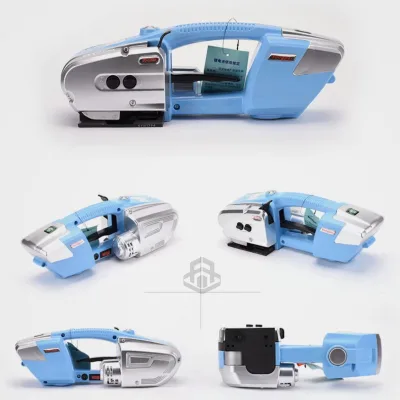
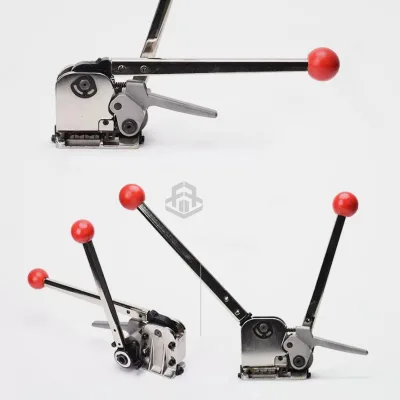


Hotsell High Efficiency Electric Strapping Tool for Logistic Carton Packing
$50.00 - $490.00
MOQ: 1 Pieces

Integrated Strapping Tool Allowing One Hand Operation for Mobile Packaging Tasks
$50.00 - $325.00
MOQ: 1 Pieces


Precision Engineered Manual Steel Strapping Tool for Rapid Strapping Operations
$220.00 - $275.00
MOQ: 1 Pieces


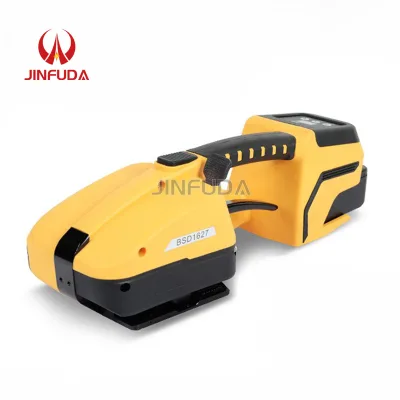

High Quality Hand Held Strapping Tool Manual Carton Box Strapping Tools
$15.00 - $20.00
MOQ: 100 Pieces
Comprehensive Sourcing Guide
Strategic Sourcing Guide for Hand Electric Strapping Tools
The global supply chain relies heavily on secure unitization to ensure product integrity during transit. Among the various methods available, the Hand Electric Strapping Tool has emerged as a critical piece of equipment for operations requiring speed, consistency, and reduced physical strain. This guide provides a comprehensive, evidence-based framework for buyers evaluating these tools. It focuses on interpreting technical specifications, understanding cost drivers, and establishing robust supplier evaluation criteria without relying on unverified marketing claims. The objective is to equip procurement professionals with the knowledge to select equipment that aligns with specific operational demands, whether for light-duty packaging or heavy industrial applications.
Technical Specifications and Operational Capabilities
When sourcing a Hand Electric Strapping Tool, the primary focus must be on the intersection of mechanical power, material compatibility, and operational autonomy. The market offers a diverse range of configurations, from semi-automatic units to fully manual or electric-driven variants. A critical observation in current product listings is the variation in "Automatic Grade." Some units are classified as semi-automatic, requiring manual feeding but offering automated tensioning and sealing, while others are designated as manual or fully automatic. Buyers must verify the specific grade against their production line speed requirements.
The strapping mode is another fundamental technical differentiator. The data indicates the existence of tools utilizing a "Welding Type" mode, which typically involves heat sealing, alongside "Sealless" modes that may use friction welding or mechanical interlocking. The choice between these modes dictates the type of strap material required. For instance, specific models are designed to work with "Pet/PP" (Polyethylene Terephthalate/Polypropylene) straps, with width specifications ranging from 13mm to 19mm and thicknesses between 0.6mm and 1.1mm. Selecting a tool that does not match the available strap inventory can lead to immediate operational failure.
Power delivery systems vary significantly across the product range. High-performance units often feature a "Pure Copper Motor" with maximum power ratings up to 3000W, ensuring sufficient torque for high-tension applications. The tension force capability is a key metric, with observed specifications reaching up to 3800N. This level of force is essential for securing heavy loads such as steel coils or pipes. Furthermore, the integration of a rechargeable battery system is a defining feature of modern hand tools. Specifications indicate a 3000mAh 18V battery capacity, which supports approximately 260 loops on a single charge. The charging time is noted to be around 100 minutes, utilizing a charger compatible with 110-240V input. Buyers must ensure their facility's power infrastructure supports these voltage requirements to avoid compatibility issues.
Material Compatibility and Application Scope
The versatility of a Hand Electric Strapping Tool is often defined by the materials it can secure and the industries it serves. The application scope is remarkably broad, spanning from consumer goods to heavy industrial sectors. Observed applications include "Fruit Drinks," "Carbonated Drinks," "Alcoholic Beverages," "Pure Water," "Yogurt," "Milk," and various "Hair Care" and "Skin Care" products. This suggests that these tools are equally effective for light-duty beverage packaging and heavier household chemicals or cosmetics.
In the industrial sector, the application extends to "Steel Pipe," "Steel Coil," "Steel Plates," and "Waste Paper." The ability to handle such diverse loads implies that the tool's structural integrity and tensioning mechanism must be robust. The machine material itself is often a composite of "Engineering Plastic" and "High-Strength Alloy" to balance weight and durability. Some listings also mention "Metal" or "Carbon Steel" as primary construction materials for specific components, while others utilize "Aluminum" and "Plastic" for lighter frames.
The "Strapping Material" is another critical consideration. While some tools are designed for "Strip" materials, others explicitly support "Plastic Tape" or "PP/Pet Strap." The "Packaging Material" of the tool itself, often "Cartons" or "Pallets" for shipping, should be considered for logistics planning. Buyers should verify that the tool's tensioning mechanism is compatible with the specific friction and elasticity properties of the strap material they intend to use. For example, a tool optimized for PET straps may not perform optimally with PP straps due to differences in melting points and tensile strength.
Compliance, Certification, and Safety Standards
In the realm of industrial equipment, compliance and certification are non-negotiable elements of the procurement process. While specific certification statuses can vary by manufacturer, the market generally references standards such as "CE" and "SGS." These certifications indicate that the product meets specific safety, health, and environmental protection requirements. However, buyers must treat these as observations rather than universal guarantees. It is essential to request current certification documentation for the specific model being purchased, as standards can change, and certifications are often model-specific.
The "prod_standard" for some units is listed as "made of carbon steel," which refers to the material composition rather than a safety standard. Conversely, other listings explicitly mention "CE, SGS" as standards. Buyers should verify if the tool complies with local electrical safety regulations in their region, particularly regarding the voltage requirements (110-220V or 110-240V). The "Control System," often a combination of "Button+Digital Display," should also be evaluated for user safety features, such as emergency stop functions or overload protection.
Cost Drivers and Pricing Dynamics
The pricing for hand electric strapping tools is influenced by a complex array of factors, including motor power, battery capacity, material quality, and the level of automation. The observed price range in the market is substantial, spanning from $8.8 to $1200 USD. This wide disparity reflects the difference between basic manual or low-power electric units and high-end semi-automatic or fully automatic models with advanced features like digital displays and high-tension motors.
The "Automatic Grade" is a significant cost driver. Semi-automatic models, which require some manual intervention but offer automated sealing, often occupy a mid-range price point. Fully automatic or high-power electric models with pure copper motors and large battery capacities command premium prices. Additionally, the "Strapping Mode" plays a role; welding-type mechanisms may be more expensive to manufacture than sealless alternatives due to the complexity of the heating elements.
The "MOQ" (Minimum Order Quantity) also impacts the unit cost. The observed range is 1 to 100 units. Buyers purchasing small quantities may face higher per-unit costs, while bulk orders can leverage economies of scale. The "prod_packing" method, whether in cartons or on pallets, can also influence the final landed cost, particularly for international shipments where packaging weight and volume affect freight charges.
Supplier Evaluation and Origin Verification
Selecting the right supplier is as critical as selecting the right tool. The "prod_origin" data indicates that many of these tools are manufactured in China, with specific hubs in "Hefei" and "Zhejiang." While these locations are known for manufacturing, buyers should not assume quality based solely on origin. Instead, they should evaluate the supplier's track record, production capacity, and after-sales support.
Key evaluation criteria should include the supplier's ability to provide detailed technical documentation, including motor specifications, battery life data, and warranty terms. The "Machine Size" and "Machine Weight" are also important for logistics; for example, a tool weighing 3.6kg with a battery is designed for portability, while larger models may be stationary. Buyers should verify the "Model" numbers, such as "Bdh-Jdcsplus," "A333," or "P323," to ensure they are comparing like-for-like products.
Supplier reliability can be assessed by their response to inquiries regarding "Lead Time" and "Customization" availability. The data confirms that "Customization" is available, which is a valuable feature for buyers with specific branding or functional requirements. However, buyers must clarify the scope of customization and any associated costs or lead time extensions before placing an order.
Quality Control and Long-Term Procurement Strategy
Implementing a rigorous quality control (QC) process is essential to mitigate the risks associated with purchasing industrial equipment. Buyers should establish clear acceptance criteria based on the technical specifications provided. For instance, verifying that the "Welding Time" falls within the 1-3 second range and that the "Tension Force" meets the required 3800N limit is crucial. Regular testing of the "Rechargeable Battery" performance is also necessary to ensure the tool can consistently deliver the claimed 260 loops per charge.
Long-term procurement considerations extend beyond the initial purchase price. The availability of spare parts, such as motors, batteries, and sealing dies, is a critical factor. The "Motor" type, specifically "Pure Copper," suggests a focus on durability, but buyers should confirm the expected lifespan and replacement costs. The "Charger" compatibility with different voltage standards (110-240V) ensures global usability, reducing the need for multiple power adapters.
Furthermore, the "Application" diversity suggests that a single tool may not suffice for all operations. Buyers should consider a mixed fleet strategy, where different models are deployed for different tasks. For example, a high-tension tool for steel coils and a lighter, portable unit for beverage packaging. This approach optimizes efficiency and reduces wear and tear on equipment.
Comparative Analysis of Tool Configurations
To facilitate decision-making, it is helpful to compare the distinct configurations available in the market. The following table summarizes the key differences observed in the product data, highlighting the trade-offs between power, weight, and application.
| Feature | High-Power Electric Model | Semi-Automatic Model | Manual/Light-Duty Model |
|---|---|---|---|
| Automatic Grade | Semi-Automatic | Semi-Automatic | Manual |
| Strapping Mode | Welding Type | Sealless | Sealless |
| Motor Power | Up to 3000W (Pure Copper) | Variable | Low/None |
| Battery Capacity | 3000mAh 18V | Variable | N/A |
| Tension Force | ≤3800N | Variable | Low |
| Strap Width | 13-16mm | 13-19mm | Variable |
| Weight | 3.6kg (with Battery) | Variable | Light |
| Primary Application | Steel, Heavy Industrial | General Packaging | Light Goods |
| Material | Engineering Plastic/Alloy | Metal/Plastic | Plastic/Metal |
This comparison illustrates that while high-power models offer superior tension and speed, they come with increased weight and complexity. Semi-automatic models provide a balance, suitable for a wide range of applications, while manual models are best for low-volume or intermittent use. Buyers should align their selection with their specific throughput requirements and the nature of the loads they secure.
Final Procurement Considerations
In conclusion, sourcing a Hand Electric Strapping Tool requires a meticulous approach that balances technical specifications, cost, and supplier reliability. The market offers a wide array of options, from basic manual tools to advanced electric units with digital controls and high-tension capabilities. Buyers must carefully verify the "Automatic Grade," "Strapping Mode," and "Strap Material" compatibility to ensure the tool meets their operational needs.
The price range of $8.8 to $1200 USD reflects the diversity of the market, and buyers should not equate lower prices with inferior quality without thorough due diligence. Certification checks, particularly for "CE" and "SGS," are essential to ensure safety and compliance. Additionally, the availability of "Customization" and the specific "prod_origin" should be factored into the decision-making process.
By adhering to a structured evaluation framework that prioritizes technical data over marketing claims, buyers can secure equipment that enhances productivity, ensures safety, and delivers long-term value. The key lies in understanding the specific requirements of the application, whether it is for "Fruit Drinks" or "Steel Coils," and selecting a tool that is engineered to meet those demands with precision and reliability.
FAQs
What strapping modes are available for hand electric tools?
Hand electric strapping tools offer both welding type and sealless modes. Welding modes typically use heat sealing, while sealless modes may use friction welding or mechanical interlocking to secure the strap without additional seals.
Which strap materials and sizes are compatible with these tools?
These tools are designed to work with PET and PP straps. The compatible strap widths range from 13mm to 19mm, and thicknesses typically fall between 0.6mm and 1.1mm for optimal performance.
Can the tool operate with a rechargeable battery system?
Yes, the tool features a 3000mAh 18V rechargeable battery. A single full charge supports approximately 260 strapping loops, with a charging time of about 100 minutes using a 110-240V charger.
What is the maximum tension force these tools can generate?
The maximum tension force capability reaches up to 3800N. This high force is essential for securing heavy industrial loads such as steel coils, pipes, and large waste paper bales effectively.
How does the automatic grade affect the tool operation?
Tools are available in semi-automatic, manual, and automatic grades. Semi-automatic units require manual feeding but offer automated tensioning, while manual models rely entirely on operator effort for the strapping process.
Which industries can utilize these hand electric strapping tools?
These tools serve diverse sectors including beverage, cosmetics, and medical industries. They are also suitable for heavy industrial applications involving steel plates, coils, and household chemicals requiring secure unitization.