Find Hand Made Patina Bronze Sculpture for Home, Gallery, Souvenir
Source 30 Hand Made Patina Bronze Sculpture options from verified manufacturers. Compare specifications including size, material, and customization for home decoration, gallery display, and business gifts.
Key considerations
Products List


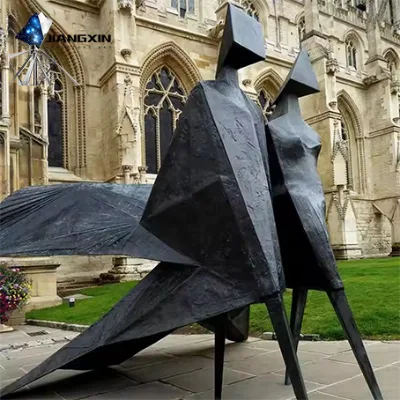
Street Decoration Abstract Patina Bronze Three People Talking Sculpture
$1290.00 - $3660.00
MOQ: 1 Pieces

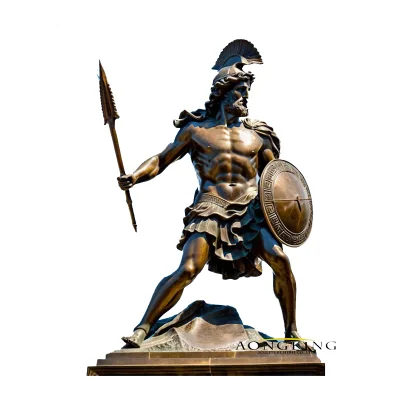
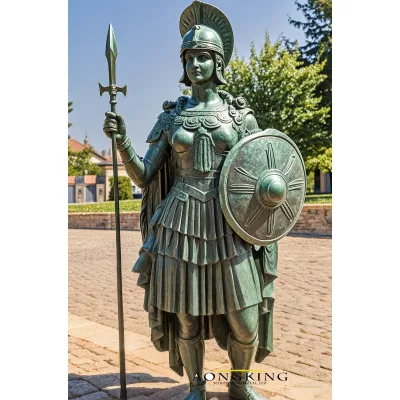

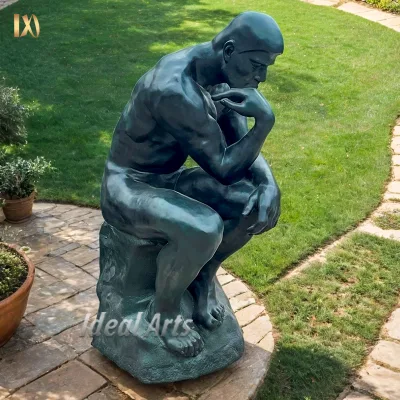


Modern Gold Abstract Art Garden Sculpture Cast Bronze Female Body Sculpture
$800.00 - $4000.00
MOQ: 1 Pieces


Customizable Public Art Patina Bronze Finish Bronze Statue Sculpture
$1999.00 - $9999.00
MOQ: 1 Pieces


Comprehensive Sourcing Guide
Strategic Sourcing Guide for Hand-Made Patina Bronze Sculptures
Understanding the Artisanal Bronze Casting Process
The procurement of hand-made patina bronze sculptures requires a deep appreciation for the specific manufacturing techniques that define their value. The core of this product category relies heavily on the lost-wax casting process, also known as investment casting. This method is distinct from mass-produced metal fabrication because it allows for the creation of complex, organic forms that are difficult to achieve through other means. In the context of high-end art and architectural carving, the "hand-made" designation is not merely a marketing term but a technical specification indicating that the wax model, the investment mold, and the final finishing stages involve significant manual intervention by skilled artisans.
When sourcing these items, buyers must verify that the "Hand Craft" attribute aligns with the "Lost Wax Process" specification. This process typically involves creating a wax replica of the desired figure or abstract form, which is then encased in a ceramic shell. The wax is melted out, leaving a cavity into which molten bronze is poured. The resulting casting is then broken from the shell, and the sprues and gates are removed. The critical phase for a buyer is understanding that the "Hand-Made" nature extends to the chasing and finishing stages, where the surface texture is refined to match the original artist's intent. The observed "Carving Technique" of investment casting confirms that the structural integrity and detail resolution are dependent on the skill of the foundry team.
Furthermore, the "Surface Treatment" and "Finishing" stages are where the "Patina" is applied. This chemical process alters the color of the bronze, creating a protective layer that can range from the observed "Coffee" tones to "Silver" or "Colorful Patina" variations. The "Honed" surface treatment mentioned in specific product profiles suggests a polished or smoothed finish prior to the application of the patina, which is essential for achieving the desired aesthetic in both "Abstract" and "Antique" styles. Buyers should ensure that the supplier's process documentation explicitly details the steps taken to apply the patina, as this is the primary factor influencing the final visual impact and the "Symbolically" peculiar nature of the artwork.
Technical Specifications and Dimensional Standards
When evaluating hand-made patina bronze sculptures, technical specifications are the primary filter for compatibility with the intended installation site. The market offers a wide range of sizes, from small souvenirs to monumental architectural pieces. Buyers must carefully distinguish between the "Size" attributes observed in product listings, which can range from "Medium" to "Large" or even "H: 6 meters." A "Large" designation often implies a piece suitable for "Outdoor" application or grand "Gallery Display," whereas "Medium" sizes might be more appropriate for "Home Decoration" or "Business Gift" scenarios.
The dimensional standards are critical for logistics and structural planning. For instance, specific product models may be defined by a height of "1.6m (5.25 FT)" or "Height 1.6m," which dictates the spatial requirements for the installation area. In contrast, other profiles may list a "prod_standard" of "H: 6 meters," indicating a monumental scale that requires specialized engineering for "Site Installation." The "Installation Method" is typically "Free-Standing," which means the sculpture must have a stable base capable of supporting its weight without additional anchoring, unless specified otherwise.
Material composition is another non-negotiable technical factor. The primary material is consistently identified as "Bronze," specifically "Silicon Bronze" in some high-quality profiles. This alloy choice is significant because it offers superior corrosion resistance compared to traditional copper-tin bronzes, supporting the "Rust Free" advantage often cited. The "Made of" attribute confirms the use of bronze, but the specific alloy composition should be verified to ensure it meets the "Class a" quality standard. The "Dimension" and "Size" attributes must be cross-referenced with the "Application" field; for example, an "Outdoor" application requires dimensions and material properties that can withstand environmental exposure, whereas "Home Decoration" pieces may prioritize aesthetic detail over extreme weather resistance.
Cost Drivers and Pricing Dynamics
The pricing of hand-made patina bronze sculptures is influenced by a complex interplay of factors, primarily driven by the labor intensity of the lost-wax process and the scale of the piece. The observed price range in the market spans from $12.5 to $500,000, reflecting the vast difference between small souvenir items and large-scale architectural commissions. The "MOQ" (Minimum Order Quantity) range of 1 to 500 units indicates that buyers can source single custom pieces or larger batches, but the unit cost will fluctuate significantly based on volume and customization.
One of the primary cost drivers is the "Customization" level. Products listed with "Customized" attributes or specific "prod_model" numbers often command a premium due to the unique design work required. The "Hand Craft" nature of the "Lost Wax Process" means that labor costs are a substantial portion of the final price. Unlike machine-molded items, each sculpture requires individual attention during the wax modeling, mold making, casting, and patina application stages. The "Fabrication Time" of 2018 in some historical data suggests that production cycles can be lengthy, and current lead times, such as the observed "90 Days," must be factored into the total cost of ownership.
Additional cost factors include the "Surface Treatment" complexity and the "Packing" requirements. A "Colorful Patina" or specific "Honed" finish requires more chemical processing and skilled labor than a standard finish. The "Packing" method, which often involves "Plywood Box," "PE Foam," "Air Bubble Film," and "Crate," adds to the shipping cost, especially for large items. Transportation via "Sea or Land" or "by Air" also impacts the final price, with air freight being significantly more expensive but faster. Buyers should note that "Class a" quality items, which imply superior craftsmanship and material purity, will sit at the higher end of the price spectrum. The "Warranty" of 1 year and "After-sales Service" provisions, such as "Maintenance Advice," are also value-added components that influence the overall cost structure.
Compliance, Certification, and Quality Verification
Ensuring compliance and verifying quality are paramount when sourcing high-value bronze sculptures. While specific certification names may not be universally standardized across all suppliers, buyers must verify that the manufacturer adheres to recognized quality benchmarks. The "Quality" attribute of "Class a" suggests a tier of excellence that should be backed by internal quality control protocols. Buyers should request documentation that confirms the "Material" is indeed "Bronze" and specifically "Silicon Bronze" where claimed, to ensure the "Rust Free" performance characteristic is met.
For outdoor applications, compliance with environmental and safety standards is essential. The "Application" field often lists "Outdoor," which implies the need for materials that can withstand UV exposure, rain, and temperature fluctuations. The "Maintenance Requirement" is listed as "Medium" in some profiles, despite the "Maintenance Free" claim in others, indicating a need for periodic cleaning or re-patinaing. Buyers should verify the specific maintenance instructions provided, such as "Maintenance Instructions" or "Maintenance Advice," to understand the long-term care required to preserve the "Patina" finish.
Certification checks should focus on the manufacturing origin and the "General Manufacturer" location. The "prod_origin" is frequently cited as "Xiamen" or "China," regions known for a concentration of bronze foundries. While specific certification bodies are not always listed, buyers should inquire about the factory's adherence to international safety and environmental standards. The "Standard" field, such as "H: 6 meters" or "Height 1.6m," serves as a dimensional compliance metric, but buyers must also verify that the structural integrity of the sculpture meets local building codes, especially for "Site Installation" of large pieces. The "Warranty" period of 1 year is a standard industry benchmark, and buyers should ensure that the warranty terms are clearly defined in the contract, covering defects in casting and patina application.
Typical Applications and Usage Scenarios
Hand-made patina bronze sculptures serve a diverse range of applications, from intimate home settings to grand public spaces. The "Usage" attributes observed in the market include "Home Decoration," "Art & Collection," "Gallery Display," "Holiday Decoration," "Souvenir," and "Business Gift." This versatility allows buyers to source pieces that fit specific aesthetic and functional needs. For "Home Decoration," the "Size" is often "Medium," and the "Style" may be "Abstract" or "Antique," designed to complement interior design schemes.
In the realm of "Art & Collection" and "Gallery Display," the "Type" of sculpture, such as "Figure" or "Architectural Carving," becomes a critical selection criterion. These pieces often feature "Symbolically" peculiar designs and are intended to be focal points in a collection. The "Color" variations, ranging from "Coffee" to "Silver" and "Colorful Patina," allow curators to match the sculpture with the lighting and ambiance of the gallery space. For "Business Gift" and "Souvenir" applications, the "Purpose" is often to convey prestige or cultural significance, making the "Hand Craft" and "Lost Wax Process" attributes valuable selling points.
The "Application" field also highlights "Outdoor" usage, which requires sculptures with robust "Surface Treatment" and "Material" properties. These pieces are often installed in public parks, corporate plazas, or private gardens. The "Installation Method" of "Free-Standing" is common for outdoor pieces, but large-scale "Site Installation" may require professional engineering. The "Transportation" method, whether "Sea or Land" or "by Air," must be selected based on the fragility of the piece and the urgency of the delivery. The "Packing" requirements, such as "Crate" or "Plywood Box," are essential for protecting the "Patina" finish during transit to these varied locations.
Supplier Evaluation and Long-Term Procurement Strategy
Selecting the right supplier for hand-made patina bronze sculptures requires a rigorous evaluation of their capabilities, reputation, and after-sales support. The "General Manufacturer" location, such as "Xiamen," provides a geographical context for the supply chain, but buyers should not rely solely on location. Instead, they must assess the supplier's "Hand Craft" capabilities and their ability to execute the "Lost Wax Process" with precision. The "Brand" identity, such as "Sino Sculpture," can be an indicator of market presence, but the specific "prod_model" and "Key Words" associated with the supplier should be analyzed to ensure alignment with the buyer's needs.
Long-term procurement considerations include the "Lead Time" and "Fabrication Time." With lead times observed at 90 days, buyers must plan their projects well in advance to avoid delays. The "Fabrication Time" of 2018 in historical data suggests that production cycles can be lengthy, and current timelines should be confirmed with the supplier. The "After-Sales Service" is another critical factor, with options like "Maintenance Advice" and "Maintenance Instructions" available. Buyers should ensure that the supplier provides clear guidance on how to maintain the "Patina" finish and address any potential issues that may arise over the "Warranty" period.
Quality control should be an ongoing process, with regular inspections of the "Surface Treatment" and "Finishing" stages. The "Maintenance Requirement" of "Medium" indicates that the sculpture will need periodic care, and the supplier should be able to provide the necessary resources or expertise to support this. The "Transportation" and "Packing" methods should be reviewed to ensure that the "Rust Free" and "Class a" qualities are preserved during shipping. Finally, buyers should establish a clear communication channel with the supplier to address any "Customization" requests or changes in the "Style" and "Color" of the sculpture. By focusing on these strategic elements, buyers can secure high-quality hand-made patina bronze sculptures that meet their aesthetic and functional requirements.
Comparative Analysis of Product Attributes
To facilitate informed decision-making, the following table summarizes key attributes observed across different product profiles, highlighting the variations in specifications and applications.
| Attribute | Profile A (Souvenir/Small) | Profile B (Art/Gallery) | Profile C (Outdoor/Monumental) |
|---|---|---|---|
| Size | Small/Medium | Medium/Large | Large (H: 6 meters) |
| Style | Abstract | Antique | Architectural Carving |
| Color | Coffee | Silver | Colorful Patina |
| Application | Home Decoration, Souvenir | Gallery Display, Art & Collection | Outdoor, Site Installation |
| Material | Bronze | Silicon Bronze | Bronze |
| Process | Lost Wax Process | Hand-Made, Investment Casting | Hand-Made, Lost Wax Process |
| Lead Time | Variable | 90 Days | Variable |
| Packing | PE Foam, Air Bubble Film | Crate, Plywood Box | Plywood Box, Crate |
| Maintenance | Low | Medium | Medium |
| Warranty | 1 Year | 1 Year | 1 Year |
This comparison illustrates the diversity within the category. Buyers must align their specific needs with the appropriate profile, considering factors such as the intended "Usage," the "Installation Method," and the "Surface Treatment" required for the environment. By carefully evaluating these attributes, buyers can ensure that the selected sculpture meets both their aesthetic vision and practical requirements.
FAQs
How is the hand-made patina bronze sculpture produced?
The sculpture is produced using the lost-wax casting process, also known as investment casting. This method involves creating a wax model, encasing it in a ceramic shell, and pouring molten bronze to achieve complex organic forms with high detail resolution.
What is the typical lead time for custom orders?
The typical lead time for custom orders is approximately 90 days. This duration accounts for the labor-intensive wax modeling, mold making, casting, and finishing stages required to ensure Class A quality and proper patina application.
Which installation methods are supported for these sculptures?
These sculptures support free-standing installation and site installation methods. The specific approach depends on the size, ranging from medium pieces suitable for home decoration to large architectural carvings that may require professional engineering for outdoor placement.
Can buyers request customized designs for these sculptures?
Yes, buyers can request customized designs as customization is available for these products. The process allows for unique abstract or antique styles, with options for specific dimensions like 1.6 meters or 6 meters in height depending on the project needs.
What material is used for the rust-free advantage?
Silicon bronze is the primary material used to provide a rust-free advantage. This alloy offers superior corrosion resistance compared to traditional copper-tin bronzes, making it suitable for outdoor applications and ensuring long-term durability without maintenance issues.
How are the sculptures packed for sea or land transportation?
The sculptures are packed in plywood boxes, crates, or with PE foam and air bubble film. This robust packaging protects the patina finish and structural integrity during transit via sea or land transportation to destinations worldwide.