Source Handpainted Under Glaze Ceramic Bowl and Plate Set for Home, Restaurant, Hotel
Compare 30 listings of Handpainted Under Glaze Ceramic Bowl and Plate Set from verified Chinese manufacturers. Evaluate options based on material, certification, and customization capabilities for home, restaurant, and hotel applications.
Key considerations
Products List
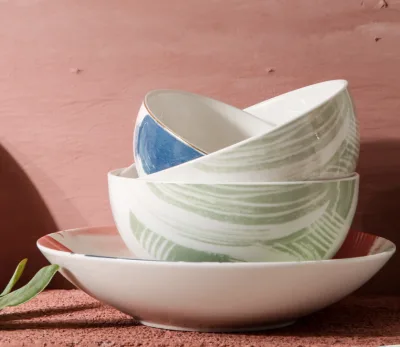


Wholesale Ceramic Dinnerware Sets, Handmade Reactive Glaze Stoneware Plates and Bowls Sets
$0.50 - $0.90
MOQ: 2000 Pieces

Ceramic Dinnerware Set Reactive Glazed Bowl and Plate Porcelain Dinner Set
$0.35 - $0.90
MOQ: 1000 Pieces


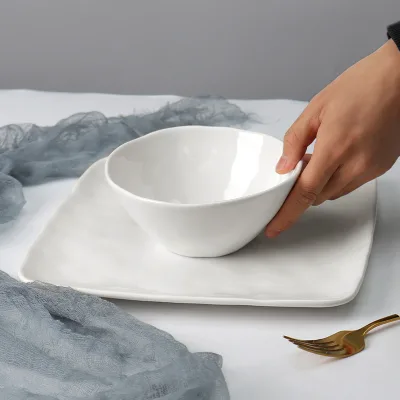

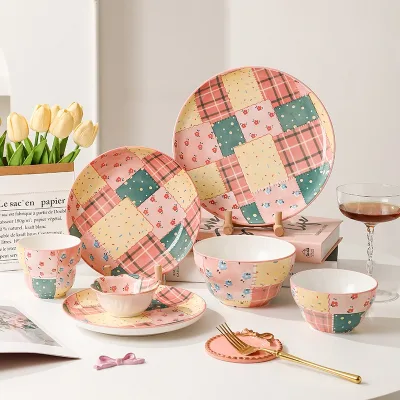

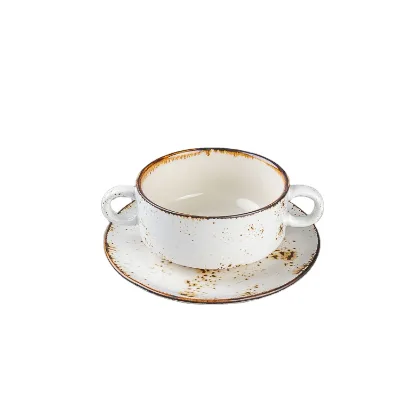


Comprehensive Sourcing Guide
Strategic Sourcing Guide for Handpainted Under Glaze Ceramic Bowl and Plate Sets
Understanding the Technical Architecture of Under Glaze Ceramic Tableware
When sourcing handpainted under glaze ceramic bowl and plate sets, buyers must first distinguish the specific manufacturing technique that defines the product's durability and aesthetic profile. The core keyword implies a process where decorative pigments are applied directly to the clay body before the application of a transparent glaze, followed by a single high-temperature firing. This method, often categorized under "under glazed" techniques in industry specifications, ensures that the design is permanently sealed beneath the glass-like surface. Unlike over-glaze decoration, which sits on top of the glaze and is more susceptible to scratching, under glaze designs are integral to the piece.
The material composition is a critical technical variable. The supplied data indicates that the primary raw materials are ceramic and porcelain, with specific references to "Ceramics" and "Porcelain" as distinct but related material classes. Porcelain, typically characterized by a finer particle size and higher firing temperature, offers a denser, less porous structure compared to standard earthenware. This distinction is vital for applications requiring high thermal shock resistance or food safety compliance. The technical specification for the product often includes a "Single package size" of approximately 40x35x10 cm, which suggests a specific dimensional constraint for the finished set, likely accommodating bowls of varying diameters such as 12cm, 16cm, and 18cm. The "Single gross weight" of 5.000 kg per package provides a baseline for logistics planning, indicating a substantial mass that influences shipping costs and handling requirements.
The design style is another technical parameter that buyers must align with their market needs. The observed "Modern Art Style" suggests a contemporary aesthetic, potentially featuring abstract patterns or bold color palettes, distinct from traditional or rustic designs. The "Under Glazed" technique allows for a wide range of colors, including white and multicolor options, which are observed in the product attributes. The "Dinnerware Type" is explicitly identified as bowls, but the "plate set" aspect of the keyword implies a comprehensive tableware collection. Buyers should verify if the supplier offers matching plates with the specified bowl diameters to ensure a cohesive set. The "Application" is listed as "Home," "restaurant," and "hotel," indicating that the technical robustness of the under glaze process is sufficient for both domestic and commercial high-volume use.
Compliance Framework and Certification Verification Protocols
Navigating the regulatory landscape for ceramic tableware requires rigorous verification of certifications, as food contact materials are subject to strict international standards. The observed data highlights a range of certifications, including CE/EU, FDA, CIQ, LFGB, and EEC. These acronyms represent different regulatory bodies and safety standards that must be validated for the specific batch of goods being procured.
The CE/EU certification indicates compliance with European Union safety, health, and environmental protection requirements. For ceramic tableware, this often involves testing for the migration of heavy metals like lead and cadmium, which can leach from the glaze or pigments into acidic foods. The FDA certification is the standard for the United States Food and Drug Administration, ensuring the material is safe for food contact within the American market. LFGB (Lebensmittel- und Futtermittelgesetzbuch) is the German Food and Feed Code, known for its stringent testing protocols that often exceed general EU requirements. CIQ (China Inspection and Quarantine) and EEC (European Economic Community) further reinforce the product's adherence to international trade and safety norms.
Buyers must understand that the presence of a certification on a product listing does not automatically guarantee that every unit in a shipment is compliant. The "Certification" attribute in the source data varies between listings, with some showing "CE/EU" and others showing a comprehensive list including "FDA, CIQ, LFGB, EEC." This variation suggests that compliance is not a universal attribute of all suppliers but a specific capability of certain manufacturers. Therefore, procurement teams should request current, batch-specific test reports from the supplier rather than relying solely on general certification claims. The "Standard" attribute is listed as "Ceramic" or "Customized," which implies that the material standard itself may be flexible, but the safety standards (FDA, LFGB) must remain non-negotiable for food-contact applications.
Cost Drivers and Economic Factors in Ceramic Procurement
The economic landscape of sourcing ceramic tableware is influenced by several distinct cost drivers, primarily material composition, production technique, and order volume. The observed price range of 0.35 to 50 USD represents a significant variance, reflecting differences in quality, brand positioning, and order size. The lower end of this spectrum likely corresponds to basic, mass-produced items with simpler designs, while the higher end may reflect hand-painted intricacies, premium porcelain materials, or smaller, boutique-style sets.
A primary cost driver is the Minimum Order Quantity (MOQ). The data reveals a wide MOQ range, from 1 piece to 5000 pieces, with specific instances of 1200 pieces, 3000 pieces, and 1000 pieces. High MOQs, such as 3000 PCS, are typical for factories aiming to optimize kiln usage and labor efficiency. Conversely, an MOQ of 1 piece suggests a supplier catering to sample buyers or very small retailers, which often carries a premium unit price. The "Selling Units" are listed as "Single item," which can complicate bulk pricing calculations if the supplier does not offer tiered discounts for larger quantities.
Material costs also play a pivotal role. The distinction between "Ceramic" and "Porcelain" affects the raw material expense. Porcelain generally requires higher quality clay and higher firing temperatures, increasing the production cost. The "Handpainted" aspect of the core keyword adds a labor-intensive layer to the cost structure. While the "Under Glazed" technique is durable, the hand-painting process requires skilled artisans, making it more expensive than machine-printed alternatives. The "Customization" attribute, including "Custom Logo" and "Accept Customized Designs," introduces additional costs for mold creation, design setup, and potentially longer lead times.
Logistics costs are another significant factor. The "Single gross weight" of 5.000 kg and the "Single package size" of 40x35x10 cm indicate that shipping is not trivial. Buyers must calculate the cost per cubic meter (CBM) and weight, as ceramic is heavy and fragile. The "Delivery time" of 45-60 days for production, combined with a "Sample Time" of 7-15 days, means that the total lead time from order placement to delivery can be substantial. This long lead time ties up capital and requires careful inventory planning to avoid stockouts.
Typical Applications and Usage Scenarios for Ceramic Tableware
The versatility of handpainted under glaze ceramic bowl and plate sets makes them suitable for a diverse range of applications, from residential dining to commercial hospitality. The "Usage" attribute explicitly lists "Home," "restaurant," and "hotel," confirming their broad applicability. In a domestic setting, these sets serve as functional dinnerware for daily meals while also acting as decorative pieces due to their "Modern Art Style" and "Handpainted" aesthetic. The "Occasion" is noted as "All," suggesting they are appropriate for casual dining, formal gatherings, and everyday use.
For commercial applications, the durability of the under glaze technique is a key selling point. In restaurants and hotels, tableware undergoes rigorous washing cycles and frequent handling. The fact that the design is sealed under the glaze means it will not fade or scratch during industrial dishwashing, a critical factor for maintaining brand image and reducing replacement costs. The "Feature" of being "Eco-Friendly" and "Non-Disposable" aligns with the sustainability goals of modern hospitality businesses that aim to reduce waste. The "Health Care" function mentioned in the attributes further supports their use in settings where food safety and material purity are paramount.
The "Color" options, including "White" and "Multicolor," allow for customization to match specific interior design themes. A "Modern Art Style" set with multicolor patterns might be ideal for trendy cafes or boutique hotels, while a white set with subtle under glaze designs could suit more formal or minimalist dining environments. The "Design" attribute noting "Accept Customized Designs" allows businesses to create unique branding opportunities, such as embedding a logo or specific pattern into the tableware for a cohesive brand experience.
Supplier Evaluation and Origin Analysis
Evaluating suppliers for ceramic tableware requires a deep dive into their geographic origins and production capabilities. The data indicates multiple production locations, including "Guangdong, China," "Zhangzhou," and "Liling, Hunan, China." Each of these regions has a distinct reputation in the ceramics industry. Guangdong is known for its advanced manufacturing capabilities and export infrastructure, often associated with higher quality control standards. Zhangzhou and Liling, Hunan, are also significant hubs for ceramic production, with Liling historically known for its porcelain and ceramic tableware industry.
When evaluating a supplier, buyers should verify the "Brand Name" associated with the product. The presence of a brand like "LovingHome" suggests a focus on consumer-facing products, which may imply better packaging and customer service. However, buyers should also consider OEM (Original Equipment Manufacturer) capabilities, as the "Custom Logo" and "Customized" attributes indicate that many suppliers are willing to produce private label goods. The "Model Number" variations, such as "LH0992," "CP-DHBL-056," "4271," and "4270," suggest a diverse product portfolio. Buyers should ensure that the specific model number they are interested in matches their technical requirements, particularly regarding size and capacity.
The "Production Standard" is listed as "Ceramic" or "Customized," which requires clarification. Buyers should ask for detailed specifications on the firing temperature, clay composition, and glaze formulation to ensure the product meets their specific durability and safety needs. The "Feature" of being "Stocked" indicates that some suppliers may have ready-to-ship inventory, which can reduce lead times, while others may operate on a made-to-order basis. Understanding the supplier's inventory status is crucial for planning.
Quality Control and Long-Term Procurement Strategies
Implementing a robust quality control (QC) strategy is essential when sourcing ceramic tableware to mitigate the risks of breakage, color inconsistency, and non-compliance. Given the "Single gross weight" and "Single package size," the packaging method is a critical QC point. The "prod_packing" is listed as "Cartons" or "Carton," but buyers should verify the internal packaging, such as the use of foam inserts, dividers, or bubble wrap, to prevent damage during transit. The "Delivery time" of 45-60 days allows for a window to conduct pre-shipment inspections, which should include visual checks for cracks, chips, and glaze defects, as well as dimensional verification.
Long-term procurement considerations involve building a sustainable supply chain. The "Eco-Friendly" feature and "Non-Disposable" nature of the product align with long-term sustainability goals. Buyers should assess the supplier's commitment to environmental standards, such as waste management and energy efficiency in the kiln process. The "Customization" capability offers a strategic advantage for long-term partnerships, allowing brands to evolve their product lines without changing suppliers. However, the "Lead time" of 45-60 days requires careful inventory management to prevent stockouts.
Buyers should also consider the "Sample Time" of 7-15 days as a benchmark for the supplier's responsiveness. A supplier that can provide high-quality samples quickly is often more reliable for larger orders. The "MOQ" flexibility, ranging from 1 to 5000 pieces, allows buyers to start with small test orders before committing to larger volumes. This approach minimizes risk and allows for the evaluation of product quality and supplier reliability over time.
Final Procurement Considerations and Verification Checklist
To conclude the sourcing process, buyers should compile a verification checklist based on the observed data and industry best practices. This checklist should include:
| Verification Category | Key Attributes to Confirm |
|---|---|
| Material & Technique | Confirm "Ceramic" or "Porcelain" raw material; verify "Under Glazed" technique; check "Handpainted" authenticity. |
| Dimensions & Weight | Validate bowl diameters (12cm, 16cm, 18cm); confirm gross weight (5.000 kg) and package size (40x35x10 cm). |
| Compliance | Request batch-specific reports for FDA, LFGB, CE/EU, CIQ, and EEC; verify "Eco-Friendly" claims. |
| Production Capacity | Confirm MOQ (1000-3000 PCS); check "Delivery time" (45-60 Days) and "Sample Time" (7-15 Days). |
| Customization | Verify "Custom Logo" availability; confirm "Accept Customized Designs" capability. |
| Origin & Brand | Identify production location (Guangdong, Zhangzhou, or Liling); check brand name (e.g., LovingHome) or OEM status. |
By systematically addressing these factors, buyers can ensure a successful procurement experience for handpainted under glaze ceramic bowl and plate sets. The combination of technical precision, regulatory compliance, and strategic supplier evaluation will lead to a high-quality product that meets the demands of both domestic and commercial markets. The observed data provides a solid foundation for these decisions, but continuous verification and communication with suppliers remain essential for maintaining quality and reliability in the long term.
FAQs
What certifications do these ceramic bowl sets hold?
These sets hold CE, EU, FDA, CIQ, LFGB, and EEC certifications. Buyers should verify batch-specific test reports rather than relying solely on general claims, as compliance varies between suppliers.
How long does it take to receive a sample?
Sample time ranges from 7 to 15 days depending on the supplier. This period covers the preparation and shipping of the initial unit before bulk production begins.
Can I request a custom logo on the ceramic set?
Yes, custom logos and designs are available for these ceramic sets. Suppliers accept customized designs, though this may increase the minimum order quantity and extend the lead time.
What is the typical minimum order quantity for these bowls?
Minimum order quantities vary from 1 piece up to 5000 pieces. Specific listings show thresholds like 1200, 3000, or 1000 pieces depending on the manufacturer and customization level.
Where are these ceramic tableware sets manufactured?
Manufacturing locations include Guangdong, Zhangzhou, and Liling in Hunan, China. Each region offers distinct production capabilities, with Guangdong known for advanced export infrastructure.
What material is used to make these dinnerware sets?
The sets are made from ceramic and porcelain materials. Porcelain offers a denser structure suitable for high thermal shock resistance and food safety compliance in commercial settings.
How long is the delivery time for bulk orders?
Delivery time for bulk orders typically spans 45 to 60 days. This duration includes production, quality control, and packaging before the goods are ready for shipment.