Source HDF Haemodialysis Machine for Hospitals, Clinics, and Treatment Centers
Compare 30 HDF Haemodialysis Machine models featuring HD, HDF, and sequential dialysis capabilities. Buyers can evaluate specifications like 15-inch touch screens, sodium profiling, and safety features from verified Chinese manufacturers.
Key considerations
Products List

Medical Cheap Kidney Dialysis Machine Price HD HDF Hemodialysis Machine
$4200.00 - $8500.00
MOQ: 1 Pieces

Medical Equipment Blood Hemodialysis Machine Kidney Dialysis Machine
$9300.00 - $9800.00
MOQ: 1 Pieces

Medical Cheap Kidney Dialysis Machine Price Hemodialysis Machine for Hospital
$9300.00 - $9800.00
MOQ: 1 Pieces


Medical Hot Sale Kidney Treatment Hemodialysis Blood Dialysis Machine
$5000.00 - $9999.00
MOQ: 1 Pieces


Hot Sale HD HDF Peritoneal Hemodialysis Kidney Equipment Machines Cost Dialysis Machine
$6500.00 - $9750.00
MOQ: 1 Pieces


Hot Sale HD HDF Kidney Hemodialysis Haemodialysis Machines Renal Blood Dialysis Machine
$6400.00 - $7000.00
MOQ: 1 Pieces

Medical Hemodialysis Machine HDF Machine Kidney Dialysis Machine Manufacturer
$7200.00 - $8500.00
MOQ: 1 Pieces

Medical Equipment Hospital Kidney Dialysis Hemodialysis Machine HD Machine
$7800.00 - $12500.00
MOQ: 1 Pieces

Hot Sale HD HDF Hemodialysis Machines Prices Kidney Cost Price Dialysis Machine
$6500.00 - $9750.00
MOQ: 1 Pieces
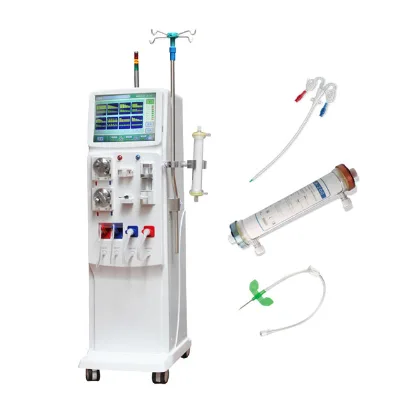


Medical Blood HD Hemodialysis Dialysis Machine for Kidney Treatment in Hospital
$8000.00 - $9500.00
MOQ: 2 Pieces

Hemodialysis Machine for Hospital Use Renal Failure Hemofiltration Instrument
$8000.00 - $9500.00
MOQ: 2 Pieces


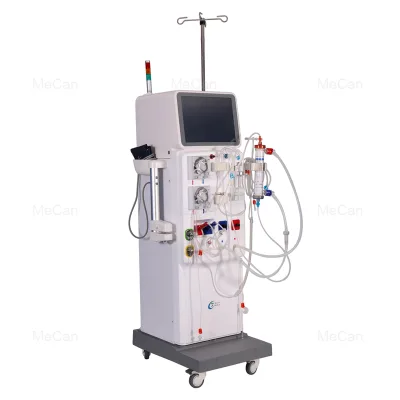

Comprehensive Sourcing Guide
Strategic Sourcing Guide for HDF Haemodialysis Machines
The procurement of high-flux dialysis (HDF) haemodialysis machines represents a critical investment for medical facilities aiming to enhance patient outcomes through advanced therapeutic profiles. These devices are engineered to remove middle molecules more effectively than standard hemodialysis, utilizing convective clearance mechanisms. For procurement officers and clinical engineers, navigating the market requires a disciplined approach that prioritizes technical verification, regulatory compliance, and total cost of ownership over initial price points. The following guide outlines the essential factors for sourcing these complex medical devices, grounded in observed market data and technical specifications.
Technical Specifications and Operational Capabilities
When evaluating HDF haemodialysis machines, the core technical architecture must align with the specific therapeutic needs of the facility. Modern units are distinguished by their ability to perform on-line HDF, standard HD, and on-line HF treatments. A primary observation in the current market is the prevalence of high-definition (HD) and high-flux (HDF) capabilities as standard features. Buyers should verify that the machine's control system supports multiple therapeutic profiles, allowing for the customization of treatment parameters such as sodium concentration and ultrafiltration (UF) curves.
The user interface is a critical component of operational efficiency. Market data indicates a shift toward advanced visual intelligence systems integrated into large-format displays. Specifications observed include 12.1-inch, 15-inch, and standard 88KG unit configurations, often featuring LCD touch screens ranging from 12.1 to 15 inches. These interfaces facilitate humanized operation, reducing the cognitive load on medical staff during complex procedures. Furthermore, the resolution ratio of the machine's fluid handling system is paramount; observed specifications cite a resolution of 1ml, ensuring precise fluid management. For thermal control, units typically maintain dialysate temperatures within a range of 35.0℃ to 39.0℃ with a resolving rate of 0.1℃, ensuring patient safety and comfort.
Power requirements are another technical constraint that must be verified against facility infrastructure. Standard units operate on AC220V±10% at 50Hz or 60Hz with a current draw of approximately 10A and an input power consumption of 1500W. Crucially, the inclusion of a back-up battery is often an optional but highly recommended feature, with observed capacities providing up to 30 minutes of operation during power interruptions. The water input temperature must also be compatible with the machine's internal heating systems, typically requiring an input range of 10℃ to 30℃.
Compliance and Certification Verification
In the medical device sector, certification is not merely a formality but a prerequisite for market entry and patient safety. Procurement teams must rigorously verify that the supplier possesses valid certifications for the specific models under consideration. Observed market data highlights the presence of ISOCE and CE certifications among available units. These certifications indicate that the device meets specific international safety and performance standards. However, buyers must not assume that every listed product holds these credentials; verification against the specific model number is essential.
Beyond general certifications, the standard of the device's construction and the quality of its components must be scrutinized. The dialysate filter is a critical safety component, with some units offering ultra-pure dialysis capabilities to ensure the safety of the dialysis process. The device classification often falls under "Haemodialysis Equipment" or "Ingredients Blood Transfusion Device," depending on the specific regulatory framework of the importing country. Buyers should request documentation proving that the device meets the relevant national and international standards for medical electrical equipment. The origin of the product, often cited as Jiangsu, China or general China origin, should be cross-referenced with the manufacturer's quality management system audits to ensure consistent production standards.
Cost Drivers and Pricing Structures
Understanding the cost drivers for HDF haemodialysis machines is vital for budget planning. The observed price range in the market spans from $4,200 to $18,000 USD. This significant variance is driven by several factors, including the size of the display, the complexity of the visual intelligence system, the inclusion of optional features like back-up batteries, and the specific therapeutic profiles offered. Higher-priced units often feature larger touch screens (15 inches) and more advanced profiling capabilities for sodium and UF curves.
The Minimum Order Quantity (MOQ) is another financial consideration. Market observations indicate an MOQ range of 1 to 2 units, suggesting that facilities can often procure single units for pilot programs or small clinics. However, the unit price may fluctuate based on volume. Buyers should also consider the "Customized" attribute. While some models are listed as "Non-Customized," others offer customization options. Customization typically incurs additional costs and may extend lead times. The packaging standards, ranging from standard export packing to carton packaging, also influence logistics costs. Additionally, the weight of the unit, observed around 88kg to 90kg, impacts shipping and installation expenses, particularly if the facility requires specialized flooring or transport equipment.
Typical Applications and Clinical Utility
The primary application of these devices is dialysis treatment within medical hospitals and clinical settings. The versatility of HDF haemodialysis machines allows them to be used for on-line HDF, HD, and on-line HF treatments, making them suitable for a wide range of patient needs. The ability to conduct conductivity monitoring, with ranges observed between 13ms/Cm and 15.5ms, ensures the safety of the dialysate mixture.
These machines are designed to handle the complexities of chronic kidney disease management. The "Humanized Operation" feature is particularly relevant for clinical environments where staff turnover is high or where rapid training is necessary. The visual intelligence system aids in real-time monitoring of patient vitals and machine status, reducing the risk of human error. The inclusion of a safety and efficiency feature set ensures that the device can operate reliably in high-volume clinical settings. For facilities specializing in acute care, the rapid setup and precise fluid control (1ml resolution) are critical for managing patients with unstable hemodynamics.
Supplier Evaluation and Product Attributes
Evaluating a supplier requires looking beyond the product name and examining the specific attributes of the model. The market offers various model numbers, such as THR-HM01, THR-HDF700, MCX0022, MCX0021, MCS0019, and MC-HD05. Each model may have distinct specifications regarding screen size, weight, and certification. For instance, the THR-HM01 is associated with specific dimensions (1460490715mm) and a 12.1-inch screen, while other models may feature 15-inch screens.
Buyers should verify the "Product Name" and "Category" to ensure the device matches the intended use. Discrepancies between the listed category (e.g., Haemodialysis Equipment) and the actual device type can lead to regulatory issues. The "Colour" attribute, often listed as transparent or standard, may seem minor but can impact the aesthetic integration of the machine into a clinical environment. Furthermore, the "Standard" attribute, which may refer to the screen type or physical dimensions, must be clearly defined. Suppliers offering "Standard Package" or "Carton" packing should be evaluated on their ability to protect the device during transit, given the sensitive nature of the internal components.
Quality Control and Long-Term Procurement Considerations
Long-term procurement success depends on the quality control measures implemented by the manufacturer and the supplier's after-sales support. The presence of a "Back-up Battery" as an optional feature suggests that the manufacturer anticipates power instability in certain regions, but the reliability of this component must be tested. Quality control should also extend to the "Dialysate Filter," ensuring that the ultra-pure dialysis capability is maintained over the device's lifespan.
Buyers should establish a protocol for regular maintenance and calibration. The "Resolution Rate" of 0.1℃ for temperature control and the "Resolution Ratio" of 1ml for fluid handling indicate high-precision engineering that requires specialized service tools. The "Weight" of the unit, approximately 88kg to 90kg, necessitates a robust installation plan to prevent structural damage or safety hazards.
Finally, the "Customized" attribute offers a pathway for long-term adaptation. If a facility has unique requirements, such as specific screen sizes or integrated software, the ability to order customized units can be a strategic advantage. However, this must be balanced against the potential for longer lead times and higher costs. Procurement teams should prioritize suppliers who demonstrate a commitment to continuous improvement and who can provide evidence of consistent quality across their product lines, regardless of the specific model number or origin.
Comparative Analysis of Key Models
To facilitate decision-making, the following table summarizes the key attributes of observed models. This comparison highlights the diversity in specifications and helps buyers identify the most suitable unit for their specific operational needs.
| Model Number | Screen Size | Certification | Weight (Approx.) | Power Supply | Key Features |
|---|---|---|---|---|---|
| THR-HM01 | 12.1 inch LCD | ISOCE | N/A | AC220V, 50Hz/60Hz | HD, HDF, Sequential Dialysis |
| THR-HDF700 | 15 inch LCD | N/A | N/A | AC220V, 50Hz/60Hz | On-Line HDF, HD, Visual Intelligence |
| MCX0022 | N/A | N/A | 88KG | AC220V, 50Hz/60Hz | Standard Export Packing |
| MCX0021 | N/A | CE | N/A | AC220V, 50Hz/60Hz | Sodium Concentration Profiling |
| MCS0019 | N/A | N/A | N/A | AC220V, 50Hz/60Hz | Customized Options Available |
| MC-HD05 | N/A | N/A | 90KG | AC220V±10% | Conductivity 13-15.5ms/Cm |
This table illustrates that while core power requirements remain consistent, screen sizes, certifications, and specific therapeutic features vary significantly. Buyers must align these attributes with their clinical protocols and regulatory requirements.
Conclusion
Sourcing HDF haemodialysis machines requires a meticulous approach that balances technical specifications, regulatory compliance, and cost considerations. By focusing on verified certifications like CE and ISOCE, understanding the nuances of power and fluid resolution, and evaluating the specific therapeutic profiles of each model, procurement teams can secure equipment that enhances patient care. The observed price range and MOQ flexibility offer opportunities for facilities of varying sizes to invest in advanced dialysis technology. Ultimately, the success of the procurement process depends on thorough due diligence, ensuring that the selected device meets the rigorous demands of modern clinical practice.
FAQs
What certifications are available for these machines?
Available certifications include ISOCE and CE for specific models. Buyers must verify the certification status for each model number like THR-HM01 or MCX0021 before purchase to ensure regulatory compliance.
Can the machines perform on-line HDF treatments?
Yes, the devices support on-line HDF, HD, and on-line HF treatments. They feature multiple therapeutic profiles including sodium concentration and UF curve profiling for versatile clinical applications.
Which screen sizes are offered for user interfaces?
Screen sizes range from 12.1-inch to 15-inch LCD touch displays. The specific size depends on the model, such as the 12.1-inch standard for THR-HM01 or 15-inch for THR-HDF700.
How much do these machines typically cost?
The observed price range is between 4200 and 18000 USD. Pricing varies based on features like screen size, customization options, and whether optional back-up batteries are included.
What is the minimum order quantity for purchase?
The minimum order quantity ranges from 1 to 2 units. This allows facilities to procure single units for pilot programs or small clinics without needing large initial inventory.
Where are these machines manufactured?
Products originate from Jiangsu, China or general China locations. Buyers should cross-reference the origin with the manufacturer's quality management system audits to ensure consistent production standards.
Can the machines be customized for specific needs?
Customization is available for some models while others are non-customized. Customized options may incur additional costs and extend lead times compared to standard package configurations.