Source head-mounted ip65 night vision monocular for Patrol, Security, and Hunting
Explore 28 listings of head-mounted ip65 night vision monocular devices suitable for civil and tactical applications. Buyers can compare specifications like magnification, aperture, and operation principles from verified manufacturers in China.
Key considerations
Products List


Lightweight Head Mounted Flexible Comfortable Night Vision Monocular
$2150.00 - $2500.00
MOQ: 10 Pieces


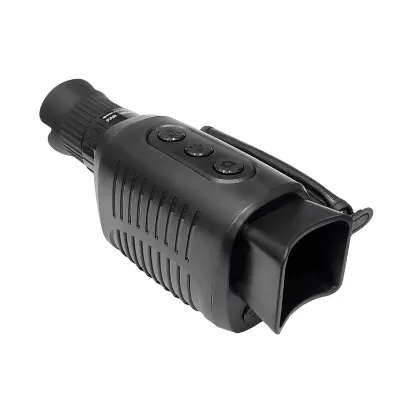


Monocular Head-Mounted Night Vision, Helmet-Type Night Vision for Hunting
$2000.00 - $4000.00
MOQ: 10 Pieces


Comprehensive Sourcing Guide
Strategic Sourcing Guide for Head-Mounted IP65 Night Vision Monoculars
The global demand for head-mounted night vision monoculars has surged across defense, law enforcement, and civil security sectors, driven by the need for hands-free operational capability in low-light environments. For procurement professionals, identifying a product that meets the specific intersection of "head-mounted," "IP65" (or equivalent) water resistance, and "monocular" form factor requires a disciplined approach to data verification. The market is populated with diverse configurations, ranging from image intensifier tubes to infrared systems, each with distinct supply chain implications. This guide synthesizes available product attributes and industry standards to provide a framework for evaluating potential suppliers and specifications without relying on unverified marketing claims.
Technical Architecture and Optical Specifications
When sourcing a head-mounted monocular, the primary technical differentiator lies in the operation principle and optical configuration. The product landscape includes devices utilizing "Image Intensifier Night Vision" technology, which amplifies available ambient light, as well as those based on "Infrared Night Vision" principles, which rely on active illumination. Buyers must distinguish between these two operational modes as they dictate the device's effectiveness in total darkness versus low-light conditions. For instance, observed market data indicates the existence of models employing "Low-light Night Vision" principles, which may differ significantly in performance from active infrared systems.
The optical aperture and magnification are critical parameters that directly influence the field of view and target acquisition speed. In the current market, monoculars frequently feature magnification levels such as 1X or 3X. A 1X configuration is often preferred for head-mounted applications to maintain a natural field of view and reduce neck strain during prolonged use, whereas 3X magnification may be selected for specific surveillance tasks. The objective aperture typically ranges between 30mm and 50mm, with some specifications noting an aperture of less than 50mm. The lens material is predominantly glass, often configured as a prime lens to ensure a fixed focal length and high light transmission.
The physical structure of the device is equally vital. While the core keyword specifies a "monocular," the market data reveals a significant presence of "binocular" structures in general night vision listings. Procurement teams must rigorously verify that the specific unit ordered is a single-tube monocular and not a binocular system, as the mounting hardware and weight distribution differ substantially. Furthermore, the style of operation is a key filter; "head-mounted" styles require specific mounting brackets and balance points, distinct from "handheld" variants which may have different weight tolerances, such as the 225g observed in some handheld models.
Environmental Durability and Protection Standards
The requirement for an IP65 rating or equivalent water resistance is a non-negotiable aspect of operational readiness for field use. The IP65 standard denotes protection against dust ingress and low-pressure water jets from any direction. While the provided data explicitly mentions an "IP66" waterproof performance for certain models, which offers a higher degree of protection against water jets, buyers must verify if the specific supplier can guarantee an IP65 rating for the head-mounted variant. It is crucial to understand that waterproof performance is not a universal attribute across all night vision products; some units may lack this certification entirely.
The shell material plays a pivotal role in achieving these environmental standards. Observed specifications indicate the use of both "Metal" and "Plastic" for shell construction. Metal shells generally offer superior durability and heat dissipation, which is beneficial for electronic components, while plastic shells may offer weight savings. The choice of material impacts the device's ability to withstand the rigors of field deployment, including exposure to rain, dust, and accidental impacts. Additionally, the operating voltage range, such as the 2.5-4.2V observed in some models, must be compatible with the power sources intended for field use, ensuring the device remains functional in varying environmental conditions.
Packaging, Logistics, and Supply Chain Parameters
Logistics planning for night vision equipment requires careful attention to packaging standards and shipping protocols. The observed data highlights a variety of packaging configurations, ranging from "Soft Protective Bags" and "Hard Shipping Cases" for individual units to bulk "Carton" packaging. For head-mounted devices, the packaging must provide adequate shock absorption to protect the delicate optical tubes and electronics during transit. Some suppliers offer specialized packing solutions, such as a specific carton size of 94.54536.5cm for bulk orders of five pieces, which impacts palletization and container utilization.
Origin and location data indicate that a significant portion of these products are manufactured in Guangdong and Jiangsu provinces in China. This geographic concentration suggests a mature supply chain but also necessitates verification of the specific factory's capabilities. The "prod_standard" dimensions, such as 1728260mm or 1156954mm, provide critical data for storage and transport planning. Buyers should note that shipping methods vary, with some products designated for "by Sea" transport, which influences lead times and cost structures. Understanding the specific dimensions and weight of the packaged unit is essential for calculating freight costs and ensuring compliance with carrier restrictions.
Customization and OEM Capabilities
A significant advantage in the current market is the availability of customization and Original Equipment Manufacturer (OEM) services. The data confirms that "Customization" is available and that "OEM" services are offered by suppliers. This allows procurement teams to tailor the product to specific organizational needs, such as modifying the mounting interface for specific helmets or adjusting the power requirements. The "Customized" attribute suggests that suppliers are willing to adapt the product's form factor or features, which is particularly relevant for head-mounted systems where ergonomics and compatibility with existing gear are paramount.
However, customization introduces complexity to the supply chain. Buyers must define the scope of customization clearly, including any changes to the shell material, lens type, or electronic interfaces. The presence of "All Removable" accessories in some models indicates a modular design that may facilitate easier customization or repair. When engaging with suppliers for OEM work, it is imperative to establish clear specifications regarding the "prod_model" numbers, such as HL550, D-B2021, or DT-NH8X1, to ensure that the customized product aligns with the intended technical requirements.
Supplier Evaluation and Quality Assurance
Evaluating suppliers for night vision equipment requires a multi-faceted approach that goes beyond price comparisons. The "High-confidence facts" regarding product attributes serve as a baseline for verification, but buyers must conduct their own due diligence to ensure consistency. The presence of "Image Intensifier Night Vision" and "Infrared Night Vision" technologies in the same market suggests a need for technical validation of the specific sensor technology being offered. Buyers should request detailed test results and performance data to confirm that the device meets the claimed specifications for resolution, field of view (e.g., 50+/-3 Deg), and resolution metrics (e.g., 57-64).
Quality control protocols should be established early in the procurement process. Given the sensitivity of optical components, suppliers must demonstrate a robust quality assurance system that includes testing for waterproof performance, optical clarity, and electronic stability. The "Application" field noting "Civil" use suggests that some products may be designed for non-military contexts, which could imply different regulatory requirements. Buyers must verify that the product complies with all relevant export controls and local regulations, especially when dealing with night vision technology which is often subject to strict trade restrictions.
Cost Drivers and Procurement Considerations
The cost of head-mounted night vision monoculars is influenced by several factors, including the operation principle, material quality, and customization level. The observed price range of 70.18 to 4000 USD reflects the vast diversity in the market, from basic handheld units to advanced, customized head-mounted systems. The Minimum Order Quantity (MOQ) ranges from 1 to 100 units, offering flexibility for both small-scale procurement and large-scale deployment. However, buyers should be aware that customization and OEM services may incur additional costs and longer lead times.
Long-term procurement considerations include the availability of spare parts, maintenance support, and the lifespan of the image intensifier tubes. The "Video Output: WiFi" feature observed in some models adds a layer of complexity to the system, requiring compatible software and network infrastructure. Buyers should assess the total cost of ownership, including the cost of batteries, replacement lenses, and potential repairs. The "prod_packing" and "prod_standard" details also play a role in long-term logistics, as efficient packaging reduces shipping costs and damage risks.
Comparative Analysis of Product Attributes
To facilitate decision-making, the following table summarizes key attributes observed in the market data, highlighting the variations that buyers must navigate.
| Attribute Category | Observed Variations | Procurement Implication |
|---|---|---|
| Operation Principle | Infrared Night Vision, Low-light Night Vision, Image Intensifier | Determines effectiveness in total darkness vs. low light; requires specific sensor verification. |
| Structure | Monocular, Binocular | Critical for form factor; "Monocular" is required for the specific keyword but "Binocular" exists in listings. |
| Style | Head-mounted, Handheld | Dictates mounting hardware and weight distribution requirements. |
| Waterproof Performance | IP66 (Observed), IP65 (Target) | Must verify specific rating; IP66 offers higher protection than the target IP65. |
| Shell Material | Metal, Plastic | Affects durability, weight, and heat dissipation capabilities. |
| Magnification | 1X, 3X | 1X preferred for head-mounted natural view; 3X for specific surveillance tasks. |
| Customization | Available, OEM Yes | Enables tailoring to specific operational needs but adds complexity. |
| Origin | Guangdong, China; Jiangsu, China | Indicates supply chain concentration; requires factory verification. |
Finalizing the Procurement Strategy
Sourcing a head-mounted IP65 night vision monocular requires a balance of technical precision and supply chain diligence. Buyers must move beyond generic product listings and focus on verifying the specific attributes that align with their operational requirements. The presence of diverse specifications, from different operation principles to varying waterproof ratings, underscores the importance of detailed technical validation. By leveraging the observed data on packaging, materials, and customization options, procurement teams can build a robust supplier evaluation framework that mitigates risk and ensures the acquisition of high-quality, reliable equipment. The final selection should be based on a comprehensive assessment of the product's technical capabilities, the supplier's ability to meet customization needs, and the long-term support infrastructure provided.
FAQs
What operation principles are available for head-mounted night vision monoculars?
Available operation principles include Infrared Night Vision and Low-light Night Vision. Some models also utilize Image Intensifier technology to amplify ambient light. Buyers must verify the specific sensor type as it dictates performance in total darkness versus low-light conditions.
Which magnification levels are commonly found in these monocular devices?
Common magnification levels observed in the market are 1X and 3X. A 1X configuration is often preferred for head-mounted applications to maintain a natural field of view. A 3X magnification may be selected for specific surveillance tasks requiring closer target acquisition.
Can these devices meet IP65 or higher waterproof performance standards?
Yes, some models explicitly offer IP66 waterproof performance, which exceeds the IP65 requirement. This rating ensures protection against dust ingress and water jets. Buyers must verify that the specific head-mounted variant guarantees this level of environmental durability before procurement.
What shell materials are used for constructing these night vision units?
Shell materials observed in the market include Metal and Plastic. Metal shells generally offer superior durability and heat dissipation for electronic components. Plastic shells may provide weight savings but require verification against field rigors and impact resistance.
How can I customize the product for specific organizational needs?
Customization and OEM services are available for these night vision products. Suppliers can adapt form factors, mounting interfaces, and power requirements to match specific gear. Buyers should define the scope of customization clearly to ensure alignment with operational requirements and model specifications.
What are the typical packaging configurations for shipping these monoculars?
Packaging options range from Soft Protective Bags and Hard Shipping Cases to bulk Cartons. Some suppliers offer specialized packing solutions like specific carton sizes for bulk orders. Proper packaging is essential to protect delicate optical tubes and electronics during transit and storage.