Source Heavy Duty Truck Tire Changer for fleet repair, maintenance, and workshops
Compare 30 Heavy Duty Truck Tire Changer models from verified suppliers. These units support electric and pneumatic power sources, handle wheel rims from 14 to 56 inches, and feature automatic disassembly for efficient automotive tire repair operations.
Key considerations
Products List


Professional Heavy Duty Truck Tire Changer Machine with Pneumatic System
$298.00 - $336.00
MOQ: 1 Pieces

Manual Portable Pneumatic Heavy Duty Dismounting Tire Changer Truck Tyre Changing Tools
$220.00 - $300.00
MOQ: 10 Pieces

Mobile Tyre Changer Machine Price Truck Tire Changer Tools for Large Wheels
$220.00 - $300.00
MOQ: 10 Pieces

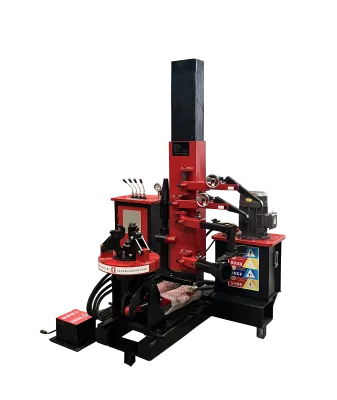
Machine to Tire Remove Automatic Heavy Duty Customized Truck Tire Changer
$6500.00 - $6843.00
MOQ: 1 Pieces

Automatic Truck Tire Changer/ Heavy Duty Tire Changer Machine for Trucks Tyre Changer Machine Car
$6500.00 - $6843.00
MOQ: 1 Pieces


Heavy Duty Truck Tire Changer Machine Truck Tyre Changer Car Maintenance Equipment
$1929.00 - $2507.00
MOQ: 1 Pieces


Automatic Truck Tire Changer Tyre Changer Machine Truck Tire Repair with CE
$3029.00 - $3378.00
MOQ: 1 Pieces

Low Price Truck Tire Changer Machine for Truck with Automatic Tool Rotation
$6966.00 - $7332.00
MOQ: 1 Pieces

Constructional Machinery Tyre Repair Heavy Duty Truck Wheel Maintenance Changer
$4900.00 - $6200.00
MOQ: 1 Pieces


Semi Automatic Wheel Remover Tire Changing Machine Tire Changer for Heavy Duty Truck
$2000.00 - $3000.00
MOQ: 1 Pieces

Semi Automatic Tire Changer Equipment Truck Tire Changer for Tire Changing
$2199.00 - $2499.00
MOQ: 1 Pieces



Comprehensive Sourcing Guide
Strategic Sourcing Guide for Heavy Duty Truck Tire Changers
Defining Technical Specifications for Heavy Duty Operations
When sourcing a heavy-duty truck tire changer, the primary focus must be on mechanical capacity and structural integrity rather than generic features. The equipment must be engineered to handle the significant mass and dimensions associated with commercial vehicle rims. Based on observed market data, a critical specification is the maximum wheel weight capacity, which should be verified to reach at least 1500kg to accommodate heavy truck axles and dual-wheel setups. The physical dimensions of the machine are equally vital; the maximum wheel diameter supported should be capable of handling large commercial tires, with observed specifications reaching up to 2300mm. Similarly, the maximum wheel width must be sufficient to manage wide-section tires, with reliable units offering a capacity of 1065mm or greater.
The operational structure of the tire changer dictates its efficiency and safety profile. Buyers should prioritize machines with a vertical structure, as this design often provides better leverage and stability for heavy-duty applications compared to horizontal alternatives. The disassembly mechanism is another key differentiator; while some units utilize simple disassembly methods, heavy-duty environments often require a flat disassembly type to ensure the rim is not damaged during the removal process. The power source is a fundamental decision point in this category. While pneumatic models are common for their simplicity and lower initial cost, electric models offer consistent torque and are often preferred for high-volume operations where air pressure fluctuations could affect performance. Observed data indicates that motor power for these units typically ranges around 1.1kw, with a specific emphasis on motors constructed with 100% copper wire to ensure durability and thermal efficiency under continuous load.
Compliance and Certification Verification Protocols
In the international B2B market, compliance is not merely a formality but a prerequisite for market access and operational safety. When evaluating potential suppliers, buyers must rigorously verify the certification status of the equipment. The most frequently observed certifications for heavy-duty tire changers include CE (Conformité Européenne), which indicates compliance with European health, safety, and environmental protection standards. Additionally, ISO certification is a strong indicator that the manufacturer adheres to international quality management systems. Some suppliers may also list GS (Geprüfte Sicherheit) and RoHS (Restriction of Hazardous Substances) certifications, which further validate the product's safety and environmental compliance.
It is crucial to distinguish between product-level certifications and general company claims. Buyers should request specific test reports or certificates of conformity that link directly to the model number being purchased. For instance, a model designated as BLS-TC5600T-5 or BLS-TC80M should have documentation explicitly stating its adherence to the relevant standards. The absence of these certifications should be treated as a red flag, particularly when importing equipment intended for use in regulated markets. Furthermore, the operating pressure requirements must align with the facility's infrastructure. Observed data suggests that pneumatic models typically operate within a pressure range of 0.6 to 1.2 MPa. Buyers must verify that their shop's compressed air system can sustain these pressures consistently, as fluctuations can lead to operational failures or safety hazards.
Cost Drivers and Pricing Structure Analysis
The pricing of heavy-duty truck tire changers is influenced by a complex interplay of factors, including material composition, automation level, and power source. The observed price range in the market spans from approximately 30 USD to 7332 USD, a variance that reflects the difference between basic manual or semi-automatic units and fully automatic, high-capacity industrial machines. The primary cost driver is the structural material; units with a steel body are generally more expensive than those with lighter alloys but offer superior longevity and resistance to the high forces exerted during heavy-duty tire changing.
Automation is another significant cost factor. Automatic tire changers command a premium over manual or simple disassembly models due to the integrated control systems, sensors, and motorized clamps that reduce labor time and physical strain on operators. The inclusion of specific features, such as a control handle, specific motor types (e.g., 100% copper wire motors), and advanced disassembly mechanisms, will also elevate the unit price. Buyers should be wary of prices that seem abnormally low, as they may indicate compromises in material quality, such as the use of inferior steel or non-copper motors, which can lead to premature failure. Additionally, the packaging method, whether it is a standard exporting package, a wooden box, or a pallet, can impact the final landed cost due to shipping and handling fees.
Typical Applications and Operational Scenarios
Heavy-duty truck tire changers are designed for specific high-volume and high-stress environments. The primary application is in automotive tire repair shops that service commercial fleets, including trucks, buses, and heavy construction vehicles. These machines are essential for removing and mounting tires that are significantly larger and heavier than passenger car tires. The observed data indicates applicability for tire models ranging from R16.5 to R22.5, covering a wide spectrum of commercial vehicle requirements. The equipment is also suitable for vacuum tires in the 13-21 inch range, making it versatile for mixed fleets.
The operational environment for these machines is typically a professional workshop or a dedicated tire service center. The vertical structure and automatic features are particularly beneficial in such settings, allowing for rapid turnover of vehicles. The color of the machine, often observed in red, blue, or yellow, is not merely aesthetic but serves as a safety indicator, ensuring the equipment is visible and distinct in a busy workshop. The ability to handle a maximum wheel weight of 1500kg ensures that the machine can manage the heaviest dual-wheel assemblies found on long-haul trucks. Furthermore, the scalability of the machine to handle wheel rims from 14 inches up to 56 inches (or even larger) allows a single unit to service a diverse range of vehicle types, from light trucks to heavy-duty haulers.
Supplier Evaluation and Origin Verification
Selecting the right supplier requires a thorough evaluation of their capabilities and origins. The majority of heavy-duty tire changers in the current market originate from China, a hub for manufacturing industrial machinery. Buyers should verify the product origin to ensure they are dealing with established manufacturing regions known for this specific equipment. When evaluating a supplier, the focus should be on their ability to provide customization options. Many manufacturers offer customization services, allowing buyers to tailor the machine to specific operational needs or branding requirements.
The supplier's ability to meet Order Minimum Quantity (MOQ) requirements is also a critical factor. Observed data shows an MOQ range of 1 to 50 units, indicating that buyers can source single units for testing or small workshops, as well as larger batches for fleet-wide deployments. The packaging standard is another indicator of supplier professionalism; options such as wooden boxes, cartons, or pallets suggest that the supplier understands the need for secure transportation. Buyers should also check for OEM (Original Equipment Manufacturer) acceptance, which indicates the supplier's willingness to produce goods under the buyer's brand, a common requirement for large tire service chains.
Quality Control and Long-Term Procurement Considerations
Ensuring the long-term reliability of a heavy-duty tire changer involves a robust quality control strategy. Buyers should prioritize units that are listed as "New" condition and come with a standard export package to minimize the risk of transit damage. The material composition, specifically the steel body, is a key quality indicator that should be verified through visual inspection or supplier documentation. The motor quality, particularly the use of 100% copper wire, is essential for preventing overheating and ensuring consistent performance over thousands of cycles.
Long-term procurement considerations include the availability of spare parts and the ease of maintenance. The standard nature of the equipment, often adhering to standard specifications like 2300*1065mm or specific tire model standards (17.5-19.5/16.5/22.5), suggests that parts should be readily available. However, buyers should confirm the availability of specific components like control handles and pneumatic fittings. The operating pressure range of 0.6-0.8 MPa or 0.8-1.2 MPa should be compatible with the buyer's existing infrastructure to avoid the need for costly upgrades. Finally, the shipping weight and net weight, such as a net weight of 44kg or a shipping weight of 52.5kg for smaller units, must be factored into logistics planning to ensure the equipment can be safely installed and operated in the intended facility.
Comparative Analysis of Model Specifications
To assist in the decision-making process, the following table compares key specifications observed across different heavy-duty tire changer models. This comparison highlights the variations in power source, capacity, and application scope that buyers should consider.
| Specification | Model A (Electric) | Model B (Pneumatic) | Model C (Universal) |
|---|---|---|---|
| Power Source | Electric | Pneumatic | Electric or Pneumatic |
| Max Wheel Weight | 1500kg | 1500kg | 1500kg |
| Max Wheel Diameter | 2300mm | 2300mm | Scalable to 56" |
| Motor Power | 1.1kw | N/A (Air driven) | Varies by Model |
| Operating Pressure | N/A | 0.6-0.8 MPa / 0.8-1.2 MPa | N/A |
| Applicable Tires | R16.5 to 22.5 | 17.5/19.5/22.5 | 14"-46" (Scalable) |
| Structure | Vertical | Vertical | Vertical |
| Certification | CE, ISO | CE, GS, RoHS | CE, ISO |
| Condition | New | New | New |
| Customization | Available | Available | Available |
This table illustrates that while the core capacity (1500kg) remains consistent across models, the power source and pressure requirements vary significantly. Buyers must align these specifications with their shop's power availability and air compression capabilities. The scalability of the wheel diameter and the range of applicable tire models are also critical factors in determining the versatility of the machine for a specific fleet. By carefully analyzing these specifications, buyers can select a heavy-duty truck tire changer that not only meets current operational needs but also provides the flexibility to adapt to future fleet changes.
FAQs
What is the maximum wheel weight capacity for heavy duty truck tire changers?
The maximum wheel weight capacity is 1500kg to accommodate heavy truck axles. This ensures the machine can handle dual-wheel setups and large commercial vehicle rims without structural failure during operation.
Which certifications are required for heavy duty truck tire changers?
Required certifications include CE, ISO, GS, and RoHS for international compliance. These documents verify that the equipment meets European health, safety, and environmental protection standards for industrial use.
How does the power source affect Heavy Duty Truck Tire Changer performance?
Electric models offer consistent torque while pneumatic models rely on 0.6 to 1.2 MPa operating pressure. Buyers must ensure their facility infrastructure supports the specific pressure requirements of the selected model.
Can heavy duty truck tire changers handle large commercial tire sizes?
Yes, these machines support wheel diameters up to 2300mm and widths of 1065mm. They are suitable for tire models ranging from R16.5 to R22.5 and vacuum tires up to 24.5 inches.
What is the typical price range for heavy duty truck tire changers?
The observed price range spans from 30 USD to 7332 USD depending on features. Higher costs reflect automatic operation, steel body construction, and advanced motor specifications like 100% copper wire.
Where are heavy duty truck tire changers typically manufactured?
The majority of these industrial machines originate from China. Buyers should verify the product origin to ensure they are sourcing from established manufacturing regions known for this specific equipment.
What is the minimum order quantity for heavy duty truck tire changers?
The minimum order quantity ranges from 1 to 50 units for different suppliers. This flexibility allows buyers to source single units for testing or larger batches for fleet-wide deployments.