Source Heavy Duty Wooden Box Latch for Shipping, Storage, and Transport
Compare 30 Heavy Duty Wooden Box Latch options from verified Chinese suppliers. Evaluate models like DK-080W1 and AK-18-37 based on material, size, and customization needs for secure packaging solutions.
Key considerations
Products List




Comprehensive Sourcing Guide
Strategic Sourcing Guide for Heavy Duty Wooden Box Latches
Procuring heavy-duty latches for wooden crates and industrial packaging requires a rigorous approach that balances mechanical strength with environmental resilience. The market for these components is diverse, ranging from simple toggle mechanisms to complex locking systems designed for international shipping. Buyers must navigate a landscape where product attributes vary significantly between suppliers, often mixing metal construction with specific functional requirements. This guide provides a structured framework for evaluating suppliers, verifying technical specifications, and ensuring compliance without relying on unverified claims.
Understanding Technical Specifications and Material Integrity
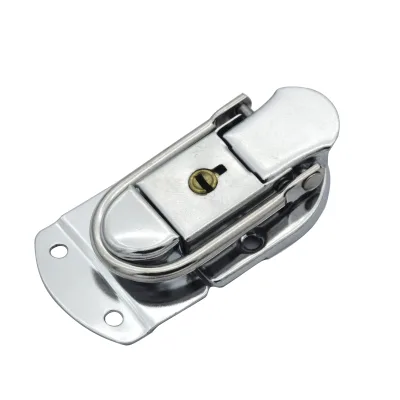
The foundation of a reliable heavy-duty latch lies in its material composition and structural design. In the current market, metal is the predominant material used for these components, ensuring the necessary tensile strength to withstand the stresses of transport. Observations of available products indicate that manufacturers offer latches in various configurations, such as G Clamps and Toggle Latches, each serving distinct mechanical functions. The structural integrity is often defined by the specific model number, which acts as a unique identifier for the design geometry and load-bearing capacity.
Buyers should verify that the material specification explicitly states "Metal" or "Stainless Steel" to prevent corrosion in humid environments. Some suppliers offer customization options where the material can be adjusted to specific alloy requirements, though this often impacts the Minimum Order Quantity (MOQ). The weight of the component is a critical indicator of its density and durability; observed product weights range from 36g to 54g for standard units, while larger industrial models may differ significantly. When evaluating a product, the buyer must cross-reference the listed weight against the physical dimensions to ensure the density is consistent with heavy-duty applications.
Furthermore, the structural design must accommodate the specific needs of the wooden box. Features such as adjustable mechanisms allow for fine-tuning the tension on the latch, ensuring a tight seal even if the wood expands or contracts due to moisture changes. The presence of a keyhole is another vital specification for security applications, distinguishing standard utility latches from those intended for high-value cargo. Buyers should request detailed engineering drawings that confirm the presence of these features, as the mere presence of a "Heavy Duty" label does not guarantee the inclusion of a keyhole or adjustable tensioning system.
Compliance, Certification, and Safety Standards
In the global supply chain, compliance with international standards is non-negotiable for heavy-duty hardware. While specific certification requirements depend on the destination market, certain certifications are widely recognized as indicators of quality and safety. For instance, RoHS and CE certifications are frequently cited in product listings, indicating that the materials used do not contain hazardous substances and that the product meets European safety standards. However, buyers must treat these certifications as observations that require verification rather than automatic guarantees.
The absence of a specific standard number in a product listing should not be interpreted as a lack of quality, but rather as a need for further inquiry. Buyers should ask suppliers to provide valid certificates from accredited third-party testing laboratories. It is crucial to distinguish between product standards, which might refer to manufacturing tolerances or weight specifications (such as a 130g standard), and safety certifications. A product labeled with a "Standard" classification often refers to general industry norms, but for heavy-duty applications, specific performance standards regarding load testing and impact resistance are necessary.
Additionally, environmental compliance is increasingly important. The IP Rating, often associated with electronic devices, can sometimes be applied to mechanical components to indicate resistance to dust and water. In some listings, this is noted as "IPMaterial:ABS," suggesting a composite construction that may offer water resistance. For wooden boxes used in outdoor logistics, verifying the water resistance and shock resistance features is essential. Buyers should ensure that the supplier can provide test data or a declaration of conformity that explicitly addresses the environmental conditions the latch will face during transit.
Cost Drivers and Pricing Dynamics
The pricing of heavy-duty wooden box latches is influenced by a complex array of factors, including material costs, manufacturing complexity, and order volume. The observed price range in the market spans from $0.09 to $100, a vast disparity that reflects the difference between simple, mass-produced units and highly engineered, custom-designed latches. The lower end of the spectrum typically corresponds to basic metal latches with standard finishes, while the higher end includes models with specialized coatings, custom logos, or complex locking mechanisms.
Material selection is a primary cost driver. Stainless steel or customized alloys will inherently cost more than standard carbon steel due to the raw material price and the additional processing required to prevent corrosion. Customization is another significant factor; while many suppliers offer customization for logos, colors, and dimensions, these services often come with a higher price point and a higher Minimum Order Quantity (MOQ). For example, a standard product might have an MOQ of 100 pieces, whereas a custom order with specific branding or dimensions could require an MOQ of 500 pieces or more.
The packaging method also affects the final cost. Products packed in simple polybags are generally cheaper than those requiring foam-lined cartons or specialized palletization. The "Package with Foam" option, often seen in high-value shipments, adds to the unit cost but provides superior protection against damage during transit. Buyers must balance the initial unit price against the total landed cost, which includes packaging, shipping, and potential insurance. Understanding the relationship between the MOQ and the unit price is essential for budgeting; smaller orders often carry a premium per unit, while larger volumes can significantly reduce the cost per piece.
Typical Applications and Functional Requirements
Heavy-duty latches are integral to various industries, serving as the primary security mechanism for wooden crates used in shipping, storage, and transport. The "Heavy Duty Clamp" classification suggests applications where the latch must withstand significant force, such as in the logistics of heavy machinery, automotive parts, or industrial equipment. The "Gate Latch" function is another common application, often used in temporary fencing or secure enclosures where quick access and robust locking are required.
The versatility of these latches is evident in their diverse model numbers, such as DK-080W1, DK 035S2, and AK-18-37. Each model is designed for specific use cases, ranging from small, portable containers to large, industrial-grade crates. The "Portable, Water Resistant, Shock Resistant" feature set indicates suitability for outdoor storage or transport in variable weather conditions. For wooden boxes, which are susceptible to warping and moisture damage, a latch that maintains tension despite wood movement is critical.
Buyers should also consider the installation requirements. Products described as "Very Easy" to install reduce labor costs and minimize the risk of installation errors that could compromise security. The "Keyhole" feature is particularly important for applications requiring audit trails or restricted access, such as in the transport of sensitive goods. When selecting a latch, the buyer must match the functional requirements of the specific application with the capabilities of the product, ensuring that the latch can handle the expected load and environmental stresses.
Supplier Evaluation and Quality Assurance
Evaluating a supplier for heavy-duty latches requires a focus on their production capabilities, quality control processes, and logistical reliability. The origin of the product, such as Shandong or Guangdong in China, can provide insights into the local manufacturing ecosystem, but it does not guarantee quality. Buyers should verify the supplier's ability to maintain consistent quality across large production runs. The "High Quality" attribute is a common claim, but it must be substantiated by the supplier's quality management systems and inspection protocols.
Lead time is a critical factor in procurement planning. Observed lead times range from 7-14 days after payment to 8-20 days, depending on the order size and customization requirements. Suppliers with shorter lead times may offer a competitive advantage, but buyers must ensure that speed does not compromise quality. The "Delivery Date" and "Lead time" should be clearly defined in the contract to avoid delays that could disrupt the supply chain.
Quality control should be a collaborative effort between the buyer and the supplier. Buyers should request pre-shipment inspections and ask for test results that verify the mechanical strength and durability of the latches. The "Sample MOQ" of 1 piece allows buyers to evaluate the product quality before committing to a large order. This is a crucial step in mitigating risk, as it allows for physical testing of the latch's performance under real-world conditions. Additionally, the supplier's willingness to accept custom logos and specific packaging requirements indicates a flexible and customer-focused approach.
Long-Term Procurement Considerations
Sourcing heavy-duty latches is not just a one-time transaction but a long-term partnership that requires careful planning. The ability to scale production, manage inventory, and adapt to changing market demands is essential. Buyers should consider the supplier's capacity to handle fluctuations in order volume and their ability to maintain consistent quality over time. The "Customization" availability is a key factor for long-term success, as it allows for product evolution and adaptation to new requirements.
Logistics and shipping are also critical long-term considerations. The availability of multiple shipping methods, such as by sea, air, or express, provides flexibility in managing inventory and responding to urgent needs. The "Port" of origin, such as Qingdao, should be considered in the context of the buyer's location and preferred shipping routes. Efficient logistics can reduce lead times and lower overall costs, making the supply chain more resilient.
Finally, buyers should maintain a focus on continuous improvement and feedback. Regular communication with the supplier can help identify areas for optimization, whether in product design, packaging, or delivery processes. By building a strong relationship with a reliable supplier, buyers can ensure a steady supply of high-quality heavy-duty latches that meet their evolving needs. The combination of technical expertise, compliance awareness, and strategic planning will enable buyers to navigate the complex market for heavy-duty wooden box latches effectively.
FAQs
What materials are used for heavy duty wooden box latches?
These latches are primarily constructed from metal, including stainless steel or customized alloys. This material choice ensures the necessary tensile strength to withstand transport stresses and prevents corrosion in humid environments.
Can I customize the logo and color of the latch?
Yes, customization is available for logos, colors, and dimensions. However, custom orders typically require a higher Minimum Order Quantity, such as 500 pieces, compared to standard orders which may start at 100 pieces.
What certifications do these heavy duty latches hold?
Many products carry RoHS and CE certifications, indicating compliance with safety and hazardous substance standards. Buyers should verify these certifications with third-party testing laboratories to ensure they meet specific destination market requirements.
How long does it take to receive the order?
Lead times typically range from 7 to 20 days after payment is received. The exact delivery date depends on the order size, customization requirements, and the specific supplier's production capacity and location.
What is the minimum order quantity for these latches?
The minimum order quantity varies, with standard products often requiring 100 pieces. Custom orders with specific branding or dimensions may require a higher MOQ, such as 500 pieces, while samples can sometimes be ordered as low as one piece.
Which features ensure the latch is suitable for outdoor use?
Features like water resistance, shock resistance, and specific IP ratings make these latches suitable for outdoor logistics. These attributes help the latch maintain functionality despite exposure to moisture, dust, and physical impacts during transit.
Where are these heavy duty latches manufactured?
Products originate from manufacturing hubs in China, specifically regions like Shandong and Guangdong. The location can influence shipping logistics and lead times, with ports like Qingdao often serving as the point of export.