Source Heavy Equipment Forklift LED Light for mining, warehouse, and port operations
Explore 30 listings for Heavy Equipment Forklift LED Light options featuring CREE LEDs, IP67/IP68 ratings, and various power outputs from 10W to 120W. Buyers can compare beam types, lumens, and customization availability across models like TB-51263 and TB-91201.
Key considerations
Products List




Comprehensive Sourcing Guide
Strategic Sourcing Guide for Heavy Equipment Forklift LED Lighting
The procurement of specialized lighting solutions for heavy equipment, particularly forklifts, requires a rigorous approach that balances technical performance with operational safety and regulatory compliance. When sourcing heavy equipment forklift LED lights, buyers must navigate a complex landscape of material specifications, power outputs, and certification requirements. The following guide outlines the critical factors for evaluating potential suppliers and products, ensuring that the selected lighting systems meet the demanding conditions of industrial environments.
Technical Specifications and Performance Metrics
When evaluating LED lights for forklift applications, the core technical specifications define the suitability of the product for specific operational tasks. The primary observation from current market data indicates a significant variance in power output and LED configuration. Buyers should expect to encounter products with power outputs ranging from low-intensity indicators at 10W to high-power work lights capable of 120W. For instance, specific models are documented with a power output of 30W utilizing six 5W CREE LEDs, while others in the same category may feature 24 LEDs of similar wattage, delivering a total output of 120W. This variation directly impacts the luminous flux, with observed lumens ranging from 900lm for smaller units to 10,200lm for high-intensity floodlights.
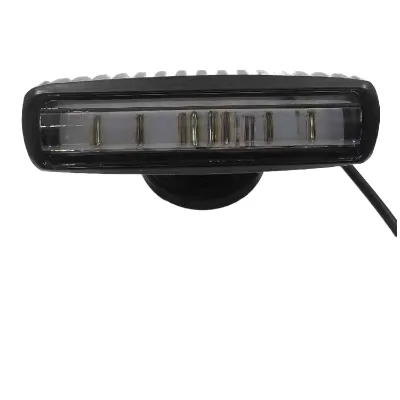
The beam pattern is another critical technical differentiator. Industrial forklifts often require distinct lighting modes depending on the task. Some units are engineered with a specific line beam, ideal for illuminating long, narrow aisles or providing clear boundary visibility. In contrast, other models offer an optional beam configuration that allows for a choice between a line beam and a spot point beam, providing versatility for both general illumination and focused task lighting. The emitting color is equally vital; while red is a common specification for warning lights and back-position lamps, other models support multi-color outputs including red, green, and blue, which are essential for complex signaling in busy warehouse environments.
Material construction plays a pivotal role in durability. The housing for these lights is frequently constructed from die-cast aluminum, a material chosen for its strength and heat dissipation properties. The lens material is typically polycarbonate (PC), which offers high impact resistance against debris and vibration common in forklift operations. The combination of die-cast aluminum and PC lenses ensures the unit can withstand the physical stresses of heavy machinery. Furthermore, the working temperature range is a crucial specification, with observed capabilities extending from -40 degrees to 85 degrees, ensuring functionality in both freezing outdoor yards and hot indoor storage facilities.
Compliance and Certification Verification
In the B2B procurement of industrial lighting, verifying compliance with international and regional standards is non-negotiable. The safety and reliability of forklift lighting depend heavily on the certifications held by the manufacturer. Buyers must scrutinize the product documentation for specific certification marks. Common certifications observed in the market include CCC (China Compulsory Certification), CE, RoHS, EMC, and FCC. The presence of these marks indicates that the product meets specific safety, electromagnetic compatibility, and environmental standards.
Waterproofing and ingress protection are paramount for equipment operating in varied environments. The IP rating is a standard metric for this purpose. Data indicates that forklift lights may carry ratings such as IP67 or IP68. An IP68 rating suggests a higher level of protection against dust and continuous immersion in water compared to IP67, which protects against temporary immersion. However, buyers must verify the specific IP rating for each model, as some listings may contain conflicting or generalized data regarding power output versus IP ratings. It is essential to confirm that the stated IP rating corresponds to the specific power output and model number to ensure the light will not fail under wet conditions.
Additionally, the life span of the LED components is a key compliance and performance metric. High-quality units are expected to offer a life span of at least 30,000 hours, with premium models reaching up to 50,000 hours. This longevity reduces the frequency of replacements and maintenance downtime. The LED brand is also a factor; CREE LEDs are frequently cited as a standard for high-performance output, ensuring consistent brightness and color temperature over the product's life. Buyers should request proof of these certifications and test reports to validate the manufacturer's claims before finalizing a purchase.
Cost Drivers and Pricing Structures
Understanding the cost drivers for heavy equipment forklift LED lights is essential for budgeting and total cost of ownership analysis. The price of these units is influenced by several factors, including power output, LED quantity, and the complexity of the beam optics. The observed market price range is broad, spanning from approximately $1.30 to $199.00 USD. This wide variance reflects the difference between simple indicator lights and high-power, multi-function work lights.
The minimum order quantity (MOQ) is another significant cost driver. Suppliers may set MOQs ranging from 1 unit to 100 units. For small-scale procurement or prototyping, a low MOQ is advantageous, though it may come with a higher per-unit cost. Conversely, bulk purchasing with a higher MOQ often secures a more favorable unit price. Buyers should also consider the packaging standards, which can affect shipping costs. Some products are packed in neutral packing with a standard of 20 pieces per carton, while others may have a lower density, such as 4 pieces per carton, impacting the efficiency of logistics and freight charges.
Customization is a variable that can significantly influence cost. Many suppliers offer customization options for forklift lights, which may include specific mounting brackets, custom beam angles, or tailored emitting colors. While customization adds value, it typically increases the unit price and may extend the lead time. Buyers must weigh the benefits of a tailored solution against the budget constraints. Additionally, the origin of the product, typically China for this category, influences shipping costs and import duties, which should be factored into the final landed cost calculation.
Typical Applications and Operational Use Cases
Heavy equipment forklift LED lights serve diverse functions within industrial settings, ranging from safety signaling to task illumination. The application of these lights is often dictated by the specific role of the forklift and the environment in which it operates. One primary application is the back position lamp and parking light, which are critical for visibility and safety when the forklift is stationary or moving in reverse. These lights often emit a red color to signal the rear of the vehicle, ensuring that other operators and pedestrians are aware of the forklift's presence.
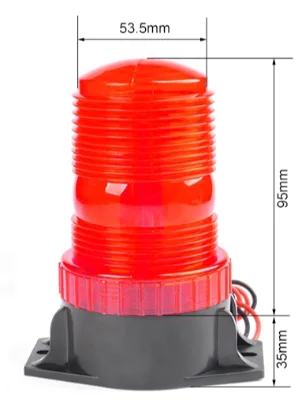
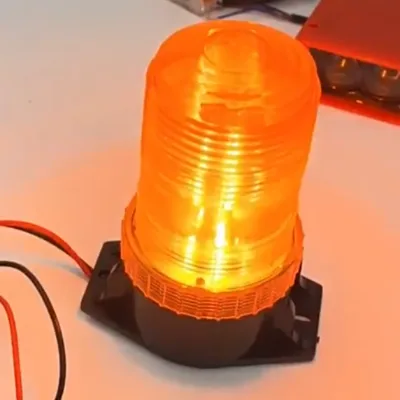
Another significant application is warning lighting. In high-traffic areas or environments with multiple moving vehicles, lights that emit red, green, or blue colors can be used to alert personnel to potential hazards or to designate specific zones. These lights are often mounted on the top or rear of the forklift to maximize visibility from all angles. The ability to switch between different beam types, such as line or spot, allows for versatile use in different scenarios. For example, a line beam is ideal for illuminating the path ahead in narrow aisles, while a spot beam can be used to highlight a specific load or work area.
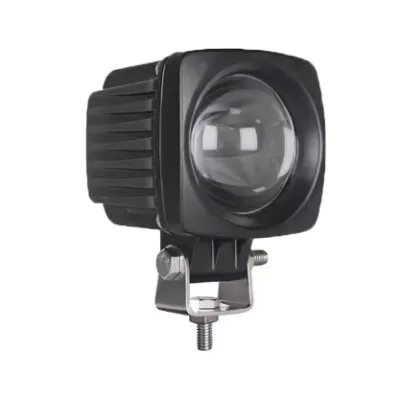
The versatility of these lights extends to their use in general applications where high-intensity illumination is required. Models with high lumens, such as those reaching 10,200lm, are suitable for large warehouses or outdoor yards where ambient light is low. The robust construction, including stainless steel mountain brackets and die-cast aluminum housings, ensures that these lights can withstand the vibrations and impacts associated with heavy equipment operation. Buyers should match the specific application requirements with the technical specifications of the light to ensure optimal performance and safety.
Supplier Evaluation and Quality Control
Evaluating suppliers for heavy equipment forklift LED lights requires a systematic approach to ensure quality and reliability. Buyers should prioritize suppliers who provide transparent documentation regarding their product specifications, certifications, and manufacturing processes. The presence of detailed product models, such as TB-51263 or TB-91201, indicates a structured product line, which is a positive sign of a professional supplier. However, buyers must verify that the specifications listed for these models are consistent and accurate, as discrepancies in data, such as conflicting IP ratings or power outputs, can indicate a lack of quality control.
Quality control measures should be a central part of the supplier evaluation process. Buyers should inquire about the supplier's testing protocols, including drop tests, vibration tests, and waterproofing verification. The use of high-quality components, such as CREE LEDs and die-cast aluminum, should be confirmed through material data sheets. Additionally, the supplier's ability to provide customization services should be assessed, as this often reflects their manufacturing flexibility and commitment to meeting specific client needs.
It is also important to evaluate the supplier's logistics and support capabilities. The standard of packing, such as neutral packing with specific carton densities, can impact the condition of the goods upon arrival. Buyers should ensure that the packaging is robust enough to protect the lights during transit. Furthermore, the supplier's location, typically in China, should be considered in terms of lead times and communication efficiency. While specific lead times and prices should not be assumed, buyers should establish clear expectations regarding delivery schedules and after-sales support to mitigate potential risks.
Long-Term Procurement Considerations
Sourcing forklift LED lights is not merely a transactional activity but a long-term strategic decision that impacts operational efficiency and safety. The life span of the lights, ranging from 30,000 to 50,000 hours, is a critical factor in determining the total cost of ownership. Investing in higher-quality lights with longer life spans can reduce maintenance costs and downtime over time. Buyers should also consider the scalability of their procurement strategy, ensuring that the supplier can meet future demand as the fleet expands.
The potential for customization and the availability of spare parts are also important long-term considerations. As operational needs evolve, the ability to adapt lighting solutions to new requirements is valuable. Buyers should maintain a relationship with suppliers who can provide ongoing support, including technical assistance and replacement parts. Additionally, staying informed about changes in industry standards and regulations is essential to ensure that the lighting solutions remain compliant over time.
In conclusion, the procurement of heavy equipment forklift LED lights requires a meticulous approach that integrates technical specifications, compliance verification, cost analysis, and supplier evaluation. By focusing on these key areas, buyers can secure lighting solutions that enhance safety, improve visibility, and support the efficient operation of their forklift fleets. The data provided highlights the diversity of available products, but the ultimate selection must be based on a thorough understanding of the specific operational requirements and the reliability of the supplier.
FAQs
What certifications do heavy equipment forklift led lights have?
These lights typically hold CCC, CE, RoHS, EMC, and FCC certifications. Some models also feature IP67 or IP68 ratings for waterproofing, ensuring compliance with safety and environmental standards for industrial use.
How much power do these forklift lights consume?
Power output varies significantly, ranging from 10W for small indicators to 120W for high-intensity work lights. Specific models include 30W units with six LEDs and 120W units with twenty-four LEDs for different illumination needs.
Which materials are used for the housing and lens?
Housings are constructed from die-cast aluminum for strength and heat dissipation, while lenses use polycarbonate for impact resistance. Stainless steel brackets are also common for secure mounting on heavy machinery.
Can these lights be customized for specific needs?
Yes, customization is available for various requirements including mounting brackets and beam angles. Buyers can often select specific emitting colors like red, green, or blue to match their operational signaling protocols.
What is the expected lifespan of the LED components?
High-quality units offer a lifespan between 30,000 and 50,000 hours. This longevity ensures reduced maintenance frequency and operational downtime for forklifts running in demanding industrial environments.
How are these lights packaged for shipping?
Packaging standards vary, with some products using neutral packing containing 20 pieces per carton. Other models may have fewer pieces per carton, such as four, which affects logistics efficiency and shipping costs.