Source HEPA Filter Air Filter Element for Medicine, Industry, and Food
Explore 30 verified listings for the HEPA Filter Air Filter Element designed for medicine, food and beverage, and industrial applications. Buyers can compare specifications, filtration grades, and customization options from multiple suppliers in China.
Key considerations
Products List


$5.00 - $6.00
MOQ: 500 Pieces
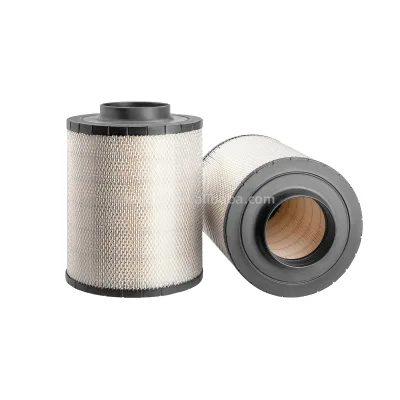


High Quality Air Filter Air Filter Element Hydraulic Oil Filter Element
$3.80 - $108.00
MOQ: 100 Pieces


Comprehensive Sourcing Guide
Strategic Sourcing Guide for HEPA and Air Filter Elements
Understanding Technical Specifications and Filtration Grades
When sourcing HEPA and air filter elements, the primary objective is to align technical specifications with specific operational requirements. The market offers a diverse array of filtration grades, ranging from coarse pre-filters to ultra-low penetration air (ULPA) filters. Buyers must distinguish between these categories based on the particle size they intend to capture. For instance, specific product listings indicate filtration grades such as H12 and H13, which are critical for high-efficiency applications. Other variations include G8 grades, typically serving as pre-filtration stages, and specialized grades like PF, Ao, Ar, AA, AAR, Ax, and Acs, which may denote specific chemical or particulate capture capabilities.
The physical construction of the filter element is equally vital. The filtering material often consists of glassfiber paper, providing a balance between efficiency and airflow resistance. The frame material is another critical specification, with aluminum or galvanised steel being common choices to ensure structural integrity under varying pressure conditions. The physical dimensions of the filter must be verified against the housing unit. Observed standards include specific metric dimensions such as 59559546mm, 25311830mm, and 1661219mm. Additionally, some models feature custom sizing capabilities, allowing for "Many Sizes Can Be Customized" to fit non-standard ductwork or equipment.
Filtration efficiency is often quantified by the micron rating of the particles captured. Data points suggest capabilities ranging from 0.3 microns up to 0.01 microns, with some filters rated for 1-micron filtration. The structure of the filter also plays a role in performance; multilayered designs and folding microporous structures are common to maximize surface area within a compact footprint. Certain designs feature hexagonal hole shapes, which may influence airflow dynamics and dust holding capacity. Understanding these granular details ensures that the selected filter meets the precise environmental control needs of the facility.
Compliance, Certification, and Material Standards
Verifying compliance with international and regional standards is a non-negotiable step in the procurement process. While specific certification bodies are not universally mandated for every product, buyers must demand documentation that confirms the filter meets recognized performance benchmarks. The supply chain often originates from specific manufacturing hubs, such as Jiangshu Suzhou and Guangdong in China, where production standards can vary. It is essential to request test reports that validate the filtration efficiency claims, particularly for grades like H12, H13, and ULPA.
Material composition is a key indicator of compliance and durability. The use of metal frames, paper media, and glassfiber paper must be verified to ensure they are suitable for the intended environment, especially in sensitive sectors like medicine and food and beverage. Some filters are designed to handle specific contaminants, with oil containment levels noted as low as 0.001 Mg/M³ or 0.6 Mg/M³. This data is crucial for applications where oil mist or aerosol contamination is a risk.
Buyers should also scrutinize the product standards listed on the datasheets. For example, specific model numbers like E0304* or SMF0410 may correspond to internal manufacturer standards or industry-specific norms. The presence of a standard designation like "AO" or specific dimensional standards (e.g., 59559546) suggests a level of standardization that facilitates replacement and compatibility. However, without explicit third-party certification data in the provided context, procurement teams must treat these as manufacturer declarations and verify them through independent testing or supplier audits before finalizing large orders.
Cost Drivers and Pricing Variables
The pricing of air filter elements is influenced by a complex matrix of factors, including filtration grade, material composition, frame construction, and customization requirements. The observed market range for these products spans from $0.45 to $108 USD, reflecting the vast difference between simple pre-filters and high-efficiency, custom-engineered HEPA or ULPA units. The cost is not merely a function of size but is heavily driven by the efficiency rating; filters rated at H13 or ULPA levels command a premium over G8 or standard air filters due to the complexity of the media and the rigorous testing required.
Material costs are a significant driver. Filters utilizing glassfiber paper and metal frames generally cost more than those with paper-only frames or lower-grade media. Customization is a major cost variable; while many suppliers offer "Many Sizes Can Be Customized," this flexibility often incurs additional tooling or setup fees. The minimum order quantity (MOQ) also impacts the unit price. The observed MOQ range is broad, from 1 unit to 10,000 units. Buyers purchasing small quantities may face higher per-unit costs, whereas bulk orders can leverage economies of scale to reduce the price significantly.
Packaging and logistics represent another layer of cost. Products are shipped in various configurations, including wooden crates, cartons, paper cartons, and neutral packaging. The dimensions of the packaging, such as 271333cm for 10 pieces or 181310cm for 10 pieces, affect shipping volume and weight. Buyers must calculate the total landed cost, including freight, which can be substantial for heavy metal-framed filters or large custom units. Additionally, the origin of the product, whether from Jiangshu Suzhou or Guangdong, may influence shipping timelines and associated logistics expenses.
Typical Applications and Industry Requirements
Air filter elements serve a critical role across a wide spectrum of industries, each with unique environmental control needs. The observed applications for these filters include medicine, food and beverage, general industry, metallurgy, and textile manufacturing. In the medical sector, the requirement for high-efficiency filtration is paramount to prevent contamination in sterile environments. Filters with H12 or H13 grades are typically deployed here to ensure the removal of microscopic pathogens and particulates.
The food and beverage industry also demands high standards, particularly regarding air purity to prevent spoilage and ensure product safety. Filters in this sector must often be constructed from materials that do not shed particles and are easy to clean or replace. The metallurgy and textile industries face different challenges, such as oil mist, dust, and fiber particles. Filters designed for these environments may feature specific oil containment ratings, such as 0.001 Mg/M³, and utilize materials resistant to chemical degradation.
General industrial applications encompass a broad range of uses, from HVAC systems to cleanrooms. The versatility of the product line, which includes double filters, compact activated carbon filters, and folding microporous filters, allows for tailored solutions. For instance, a compact activated carbon filter might be used to remove odors and volatile organic compounds (VOCs) in addition to particulates. The replacement frequency is another consideration; some filters are designed for 1-2 replacements per year, while others may require 3-4 replacements annually, impacting long-term operational costs and maintenance schedules.
Supplier Evaluation and Origin Verification
Evaluating potential suppliers requires a focus on their manufacturing capabilities, origin, and ability to meet customization needs. The primary manufacturing locations identified for these products are in China, specifically in Jiangshu Suzhou and Guangdong. These regions are known for their robust manufacturing ecosystems, but buyers must verify the specific factory's quality control processes. A supplier's ability to provide "Customization" is a strong indicator of their flexibility and technical capability.
When assessing suppliers, buyers should request detailed product datasheets that match the specific model numbers and standards observed in the market, such as W-HEPA-110 or W-P-110. The consistency of the product model and the clarity of the specifications are indicators of a reliable supplier. Additionally, the packaging methods, whether neutral, wooden, or carton, should be evaluated for their ability to protect the filter during transit. A supplier that offers multiple packaging options demonstrates a commitment to product integrity.
It is also crucial to verify the supplier's track record in the specific industries they serve. A supplier capable of providing filters for both medicine and metallurgy likely has a versatile production line and a deep understanding of diverse filtration requirements. Buyers should avoid suppliers who cannot provide clear information on the origin of their materials or the standards they adhere to. The presence of specific model numbers and standardized dimensions suggests a mature production process, but direct communication with the supplier to confirm these details is essential before placing an order.
Quality Control and Long-Term Procurement Considerations
Implementing a robust quality control (QC) protocol is essential to ensure that the purchased filter elements perform as expected. Buyers should establish clear acceptance criteria based on the filtration efficiency, material composition, and dimensional accuracy. The use of glassfiber paper and metal frames must be verified against the agreed specifications. For high-efficiency filters, independent testing of the filtration efficiency (e.g., 0.3 micron or 0.01 micron capture) is highly recommended to validate the manufacturer's claims.
Long-term procurement considerations extend beyond the initial purchase price. The replacement frequency, noted as 1-2 times or 3-4 times per year, should be factored into the total cost of ownership. Filters that require more frequent replacement may have a lower upfront cost but higher long-term expenses. Buyers should also consider the availability of spare parts and the lead time for restocking. The observed lead times and MOQs vary significantly, so maintaining a strategic inventory level is crucial to avoid production downtime.
Furthermore, the functional aspect of the filter, such as air purification, must be continuously monitored. In applications like medicine and food processing, a failure in filtration can have severe consequences. Therefore, establishing a regular maintenance schedule and a system for tracking filter performance is vital. Buyers should also evaluate the supplier's ability to provide technical support and troubleshooting assistance. A supplier that offers comprehensive support can help optimize filter performance and extend the lifespan of the equipment, ultimately reducing operational costs and ensuring compliance with industry standards.
Comparative Analysis of Filter Types
To assist buyers in making informed decisions, the following table compares key attributes of the different filter types observed in the market. This comparison highlights the variations in material, efficiency, and application, providing a clear overview of the options available.
| Feature | HEPA/ULPA Filter | Activated Carbon Filter | Pre-Filter (G8) |
|---|---|---|---|
| Filtration Grade | H12, H13, ULPA | Compact | G8 |
| Filtration Efficiency | 0.3u, 0.01 Micron | Odor/VOC Removal | 1 Micron |
| Material | Glassfiber Paper, Metal Frame | Compact Carbon | Paper, Metal Frame |
| Primary Application | Medicine, Food, Industry | Odor Control, General | Pre-filtration, Industry |
| Structure | Folding Microporous, Multilayered | Compact | Multilayered |
| Replacement Frequency | 1-2 Times Per Year | Variable | 3-4 Times Per Year |
| Oil Containment | 0.001 Mg/M³ (Specific Models) | Variable | 0.6 Mg/M³ (Specific Models) |
This comparison underscores the importance of selecting the right filter type for the specific application. While HEPA and ULPA filters offer the highest efficiency for particulate removal, activated carbon filters are essential for chemical and odor control. Pre-filters like the G8 grade serve as a cost-effective first line of defense, protecting more expensive downstream filters. By understanding these distinctions, buyers can optimize their filtration systems for maximum efficiency and cost-effectiveness.
FAQs
What filtration grades are available for these air filter elements?
Available grades include HEPA, ULPA, and specific chemical grades like PF and AA. These filters are constructed with glassfiber paper or metal frames to ensure durability and high efficiency for industrial and medical applications.
Can these filters be customized to fit specific equipment sizes?
Yes, many models offer customizable sizes to fit non-standard ductwork or equipment. Buyers can request specific dimensions beyond the standard 595*595*46mm or 253*118*30mm formats found in the product catalog.
Which industries commonly use these double filter air elements?
These filters are widely used in medicine, food and beverage, industry, metallurgy, and textile sectors. Their design supports applications requiring high air purification and protection against oil mist or particulate contamination.
How often should these air filter elements be replaced?
Replacement frequency typically ranges from one to four times per year depending on usage. Some models are designed for 1-2 replacements annually, while others in heavy industrial settings may require 3-4 replacements.
What is the typical minimum order quantity for these products?
The minimum order quantity varies significantly from 1 unit up to 10,000 units depending on the supplier. Bulk orders often leverage economies of scale, while small sample orders are also available for testing.
Where are these air filter elements manufactured?
These products are primarily manufactured in China, with key production hubs in Jiangshu Suzhou and Guangdong. Buyers should verify the specific factory location to ensure compliance with their regional sourcing requirements.
What packaging options are available for shipping these filters?
Packaging options include wooden crates, cartons, paper cartons, and neutral packaging. Specific dimensions like 27*13*33cm for 10 pieces are used to protect the filters during transit and optimize shipping volume.