Source High Elastic Acetate Hair Band for Girls, Women, and Daily Use
Compare 28 listings for High Elastic Acetate Hair Band options suitable for girls, women, and daily wear. View specifications including size, material, and packaging to find the right supplier for your needs.
Key considerations
Products List





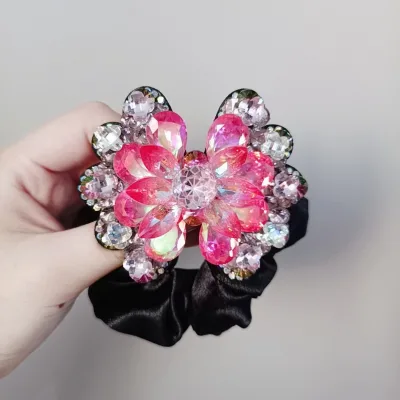
Comprehensive Sourcing Guide
Strategic Sourcing Guide for High Elastic Acetate Hair Bands
The global market for hair accessories has evolved significantly, with a distinct shift toward materials that combine aesthetic versatility with functional elasticity. For procurement professionals researching the core keyword "High Elastic Acetate Hair Band," the landscape presents a unique intersection of material science and fashion utility. This guide provides a disciplined, evidence-based framework for sourcing these items, relying strictly on observed product attributes and established industry practices. The focus remains on navigating the complexities of material composition, manufacturing standards, and supplier evaluation without relying on unverified claims or speculative data.
Material Composition and Structural Integrity
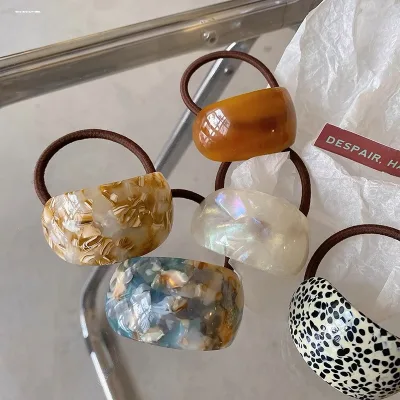
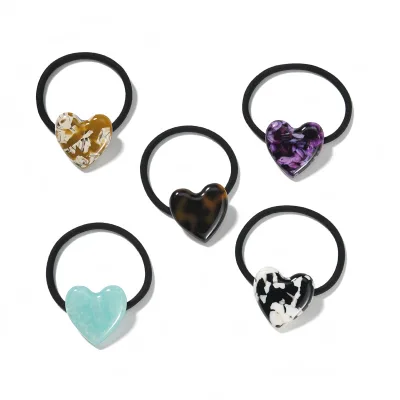
Understanding the material composition is the foundational step in sourcing high-quality hair bands. The product data indicates a diverse range of materials used in this category, including acetate, rubber bands, fabric, plastic, and rubber. When specifically targeting "acetate hair ties," buyers must verify the specific blend. The observed product attributes list "Acetate, rubber bands" as a primary material combination, suggesting a composite structure where acetate provides the decorative or structural shell while rubber bands offer the necessary elasticity.
However, the dataset also reveals that some listings describe the material simply as "Fabric" or "Plastic," while others specify "Rubber." This variance highlights a critical procurement risk: the term "acetate" may be used loosely in marketing descriptions to denote a glossy, fabric-like finish rather than true cellulose acetate. True acetate is a semi-synthetic fiber known for its silk-like drape and ability to hold color, but it lacks inherent high elasticity. Therefore, the "high elastic" claim in the keyword often implies a mechanical design feature—such as a spiral wire core or a rubberized inner layer—rather than the acetate material itself being stretchy.
Buyers should request a detailed Bill of Materials (BOM) that explicitly separates the outer decorative layer from the inner elastic component. The observed specifications mention a thickness range of 2-6mm and an outer diameter of 3-8cm for similar spiral wire bands. For acetate variants, the single package size is often compact, recorded at 5.0x5.0x1.5 cm, indicating a folded or rolled delivery method. Verification of the material ratio is essential to ensure the product meets the "high elastic" requirement without compromising the aesthetic integrity of the acetate finish.
Technical Specifications and Dimensional Standards
Precision in technical specifications is paramount for B2B procurement, particularly when dealing with items intended for mass retail or wholesale distribution. The product data provides several specific dimensional benchmarks that serve as reference points for quality assurance. One observed standard specifies a "DIA 9CM" for certain headband-style products, while another category lists a diameter of "2 Inch" with a thickness of 2-6mm.
For the specific "acetate hair tie" category, the observed size is noted as 6cm. This dimension likely refers to the diameter of the loop when expanded or the width of the band itself, depending on the manufacturing convention. The single gross weight is recorded at 0.025 kg (25g) per unit, which suggests a lightweight construction suitable for daily wear. In contrast, other listings in the same dataset indicate a weight of 9.5g, highlighting significant variance in product density and material usage across different suppliers.
Buyers must establish clear acceptance criteria for these dimensions. The "High Elastic" attribute implies that the band must return to its original shape after stretching. The observed "Spiral Wire Hair Band" mode suggests a specific construction method where a wire core is wrapped in fabric or acetate. If the product relies on a rubber band core, the tensile strength must be verified. The standard "2-6mm in thickness" is a critical parameter; bands thinner than 2mm may lack durability, while those thicker than 6mm may be uncomfortable for extended wear.
Furthermore, the "Headband Circumference" of 5cm (1.97in) observed in the data seems unusually small for a full headband, suggesting this may refer to the width of the band or a specific component size rather than the total circumference. Procurement teams should clarify whether the 5cm measurement refers to the band width or the inner diameter. Consistency in these measurements is vital for ensuring that the product fits the target demographic, which is listed as "Women Girl Lady" and "Adult&Girls."
Cost Drivers and Pricing Dynamics
The pricing structure for hair accessories is influenced by material costs, manufacturing complexity, and order volume. The observed listed price range in the market data spans from $0.05 to $7.61 USD. This wide disparity indicates that the "High Elastic Acetate Hair Band" is not a monolithic product but exists across multiple price tiers based on quality and customization.
The lower end of the price spectrum ($0.05) likely corresponds to basic rubber or plastic bands with minimal packaging, while the higher end ($7.61) may reflect premium acetate materials, intricate geometric designs, or custom packaging solutions. The Minimum Order Quantity (MOQ) is a significant cost driver. The data shows an MOQ range from 1 to 2400 units. Specific listings cite an MOQ of 30pcs, while others require 1200 sets per design or 1200 sets per style.
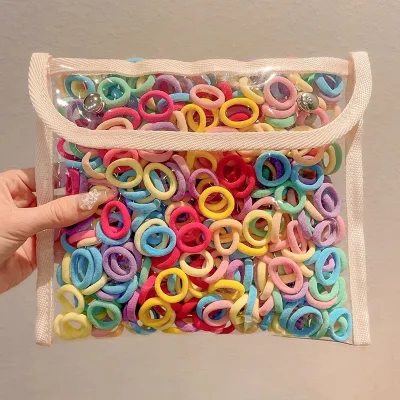
For buyers seeking high-volume procurement, the 1200-set MOQ is a common threshold for custom designs. This volume requirement often allows for lower per-unit costs but increases the initial capital outlay. Conversely, an MOQ of 30pcs allows for low-risk sampling but results in a higher unit price. The "Selling Units" are typically listed as "Single item," but the packaging data reveals bulk configurations such as "24PCS/Card+12cards/Polybag" or "6PCS/Card+Polybag." These packaging formats directly impact the final landed cost, as they determine the number of SKUs and the efficiency of logistics.
Buyers should analyze the cost per unit relative to the packaging efficiency. A product with a low unit price but inefficient packaging (e.g., loose bulk) may incur higher shipping and handling costs. Additionally, the "Customization" availability is a key cost variable. While "OEM/ODM" is marked as acceptable, custom designs often incur setup fees and higher MOQs, which must be factored into the total cost of ownership.
Compliance, Certification, and Safety Verification
In the B2B sector, compliance is not merely a regulatory hurdle but a market access requirement. The product data does not explicitly list specific certifications such as ASTM, EN71, or REACH, which is common for general consumer goods where compliance is often assumed rather than advertised. However, the absence of listed certifications does not imply non-compliance; it necessitates proactive verification by the buyer.
Hair accessories, particularly those made from acetate and rubber, must comply with safety standards regarding chemical content and physical safety. Acetate is generally safe, but the dyes and finishes used on the fabric or plastic components must be free from harmful substances like lead, phthalates, or azo dyes. The "High" quality attribute observed in the data suggests a focus on durability, but it does not substitute for third-party testing.
Buyers should request a Certificate of Analysis (CoA) or a test report from an accredited laboratory to verify that the materials meet the safety standards of the target export market. For example, if the product is destined for the European Union, compliance with REACH regulations is mandatory. If the target is the United States, compliance with CPSIA (Consumer Product Safety Improvement Act) is required. The "Export Markets: Global" attribute in the data implies that suppliers may be accustomed to various standards, but the buyer must specify the exact regulatory requirements for their destination.
Additionally, the "Elements: Geometric" design feature suggests that the product may have small parts or sharp edges. Compliance with choking hazard warnings for children's products is critical, especially since the "Suitable for" attribute includes "Girls." If the product is marketed for children, it must meet specific toy safety standards, which differ from general fashion accessory regulations.
Supplier Evaluation and Operational Capabilities
Selecting the right supplier is a critical decision that impacts product quality, delivery reliability, and long-term partnership success. The observed data indicates that suppliers are located in "Zhejiang, China" and specifically "Yiwu City, Zhejiang Province, China." Yiwu is a globally recognized hub for small commodities and accessories, offering a dense ecosystem of manufacturers and trading companies.
When evaluating suppliers, buyers should verify the "Place of Origin" and the specific manufacturing capabilities. The "OEM/ODM: Acceptable" attribute indicates that suppliers are willing to customize products, but the extent of this capability varies. Some listings mention "Customized" design, while others note "Transparent OPP Bag" or "Bulk Package" as standard options. Buyers should assess whether the supplier has in-house design teams or relies on external designers for the "Geometric" and "Fashion" styles.
The "Mode: Hair Accessory for Women" and "Usage: Girl Hair Decoration" attributes suggest that the supplier has experience in the fashion accessory sector. However, buyers should verify the supplier's production capacity to ensure they can meet the "1200 Sets Per Design" MOQ without compromising quality. The "Season: Whole Year" attribute implies that the product is not seasonal, which is advantageous for inventory planning.
Buyers should also evaluate the supplier's logistics capabilities. The "Single package size" and "Single gross weight" data are useful for calculating shipping costs, but the supplier's ability to consolidate shipments and manage lead times is equally important. The "Lead time" is not explicitly provided in the data, so buyers must request this information directly from potential suppliers. A reliable supplier should provide a clear timeline from order confirmation to shipment, along with a contingency plan for delays.
Quality Control and Long-Term Procurement Strategy
Implementing a robust quality control (QC) strategy is essential for maintaining product integrity and brand reputation. The observed "Quality: High" attribute is a self-reported claim and should be validated through on-site inspections or third-party QC services. Key quality checkpoints include the elasticity of the rubber band, the adhesion of the acetate layer, and the consistency of the color and finish.
For "High Elastic" products, the primary failure mode is loss of elasticity over time or breakage under tension. Buyers should request samples for stress testing, specifically checking the number of stretch cycles the band can withstand before failure. The "2-6mm in Thickness" specification should be verified using calipers to ensure consistency across the batch. Variations in thickness can lead to uneven tension and premature failure.
Long-term procurement considerations involve building a sustainable supply chain. The "Customization: Available" feature allows for product differentiation, but it requires a clear communication channel between the buyer and the supplier. Buyers should establish a standard operating procedure (SOP) for design changes, quality standards, and packaging requirements. The "Package: 24PCS/Card+12cards/Polybag" format suggests a standardized packaging approach, but flexibility is needed to accommodate specific retail requirements.
Furthermore, the "Export Markets: Global" attribute indicates that the supplier has experience with international trade, but buyers should ensure that the supplier has a track record of meeting the specific quality and compliance standards of their target market. Regular audits and performance reviews are necessary to maintain the "High" quality standard over time. By focusing on these strategic elements, buyers can mitigate risks and ensure a steady supply of high-quality, high-elastic acetate hair bands that meet the demands of the global market.
FAQs
What materials are used in high elastic acetate hair bands?
These bands typically combine acetate with rubber bands to achieve elasticity. Some listings also specify fabric or plastic as primary materials, so verifying the exact blend is essential for quality assurance.
What is the typical MOQ for custom high elastic acetate hair bands?
Minimum Order Quantities vary significantly, ranging from 30 pieces to 1200 sets per design. Custom designs often require a higher threshold of 1200 sets, while sampling may be available at lower volumes.
Where are these hair bands typically manufactured?
The products originate from Zhejiang Province, China, with specific manufacturing hubs in Yiwu City. This region is a recognized center for small commodities and hair accessories.
What are the standard dimensions for these hair bands?
Sizes vary by type, with some bands measuring 6cm in diameter and others having an outer diameter of 3-8cm. Thickness specifications often fall between 2mm and 6mm for optimal wearability.
Can suppliers provide OEM and ODM services for these bands?
Yes, OEM and ODM services are acceptable for many suppliers in this category. Customization options include design changes and specific packaging requirements like transparent OPP bags or bulk packaging.
What is the price range for high elastic acetate hair bands?
Listed prices range widely from 0.05 USD to 7.61 USD depending on material and customization. Lower prices usually reflect basic rubber or plastic constructions, while higher costs indicate premium acetate finishes.
How are these hair bands packaged for shipment?
Packaging formats include 24 pieces per card with polybags or 6 pieces per card with polybags. Some suppliers offer bulk packaging or transparent OPP bags depending on customer demand.