Source High-Performance Turbocharger Elbow for automotive, industrial, and agricultural use
Find 30 listings for the High-Performance Turbocharger Elbow suitable for automotive, industrial, and agricultural applications. Buyers can compare specifications, certifications, and pricing to identify the right component for their engine systems.
Key considerations
Products List


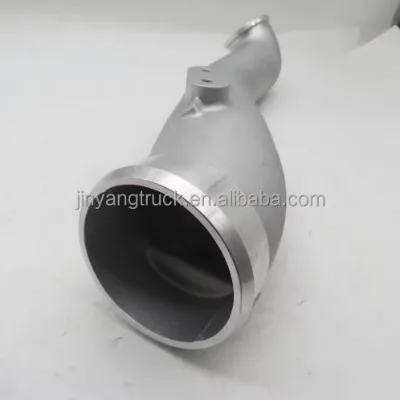


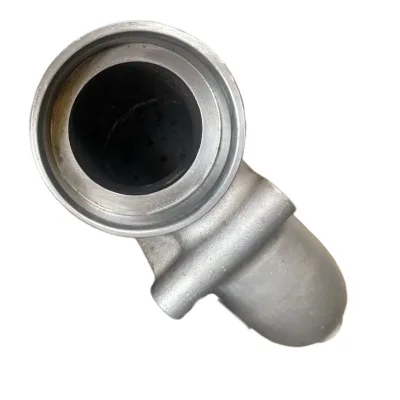


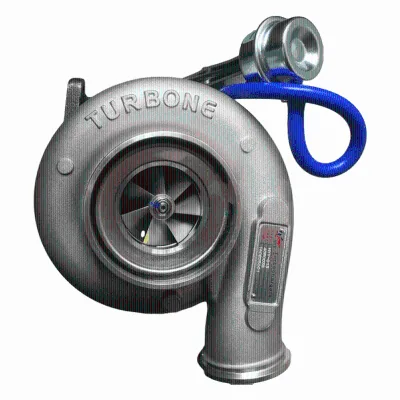


Comprehensive Sourcing Guide
Strategic Sourcing Guide for High Performance Turbocharger Elbows
Navigating the global market for high-performance turbocharger elbows requires a disciplined approach that balances technical precision with supply chain reliability. These components are critical for optimizing exhaust gas flow, reducing backpressure, and ensuring the longevity of the turbocharger system in demanding environments. For procurement professionals, the distinction between a standard component and a high-performance variant often lies in material selection, manufacturing tolerances, and compliance with specific industry standards. This guide synthesizes available market data to provide a framework for evaluating suppliers and specifications without relying on unverified claims or specific vendor recommendations.
Technical Specifications and Material Composition
The foundation of a reliable high-performance turbocharger elbow begins with the material properties. In the current market, two primary material categories dominate the supply chain: iron and aluminium. Iron-based components are frequently observed in applications requiring high structural integrity and heat resistance, often cited in standard component listings. Conversely, aluminium variants are noted for their lighter weight and superior thermal conductivity, which can be advantageous in performance tuning scenarios where weight reduction is critical. Buyers must verify the specific alloy composition and heat treatment processes, as these directly influence the component's ability to withstand the extreme thermal cycling inherent in turbocharged systems.
Beyond the base material, the geometric specifications of the elbow are paramount. The product models observed in the market, such as F500ZESM1.08.10.10 and F500ZESM1.08.20.10, suggest a complex coding system that likely encodes dimensions, flange types, and connection standards. High-performance applications often demand custom models, with suppliers indicating that "Customized Models: Yes" is a standard offering. This flexibility allows for the creation of elbows that fit specific engine bay constraints or optimize airflow paths for axialflow electric turbocharger types. The "Runoff" ETS type and "Axialflow" designations further indicate that the elbow must interface seamlessly with specific turbine architectures. Procurement teams should request detailed CAD drawings and dimensional tolerances to ensure compatibility with existing exhaust manifolds and turbine housings.
Compliance and Certification Verification
In the industrial and automotive sectors, certification is not merely a formality but a prerequisite for liability and safety. The market data confirms the presence of CE and CCC certifications for certain iron-based components, indicating compliance with European and Chinese safety standards respectively. For more specialized applications, such as those involving turbine components, ISOETS certification is a critical marker of quality and adherence to specific industry protocols. Buyers must rigorously verify that the certification applies to the specific batch or model being procured, as certifications can sometimes be generic to a manufacturer rather than specific to a product line.
Furthermore, the distinction between "Standard Component" and "Custom" standards is vital. While some products are listed as "Standard," others carry a "custom" standard designation, implying that they are manufactured to unique specifications rather than off-the-shelf norms. This distinction impacts the verification process; standard components may rely on established test data, whereas custom parts require a more thorough review of the supplier's quality management system and their ability to maintain consistency across custom runs. The presence of "Standard or Not: Standard" attributes in some listings suggests a binary classification that buyers should clarify during the initial inquiry phase to avoid misunderstandings regarding compliance expectations.
Cost Drivers and Pricing Dynamics
Understanding the cost structure of high-performance turbocharger elbows is essential for budgeting and negotiation. The observed price range in the market spans from 1 USD to 4700 USD, a variance that reflects the diversity of applications, from small auxiliary units to large industrial turbines. Several factors drive these costs. Material selection is a primary driver; aluminium components generally command a higher price point than iron equivalents due to raw material costs and processing complexity. Additionally, the level of customization significantly impacts pricing. Products with "Customization: Available" or "Customizable" attributes often incur higher unit costs due to the setup time, tooling requirements, and lower economies of scale compared to mass-produced standard parts.
The Minimum Order Quantity (MOQ) also plays a significant role in the total cost of ownership. The market shows an MOQ range from 1 to 500 units, with specific listings indicating an MOQ of 10 pieces for certain turbocharger types. Smaller orders may result in higher per-unit costs due to fixed setup fees, while larger orders can leverage volume discounts. Buyers should also consider the "Lowest" price attribute found in some listings; while attractive, this should be evaluated against the "High Level" quality claims to ensure that cost savings do not compromise performance. Payment terms, such as Tt/LC (Telegraphic Transfer/Letter of Credit), are standard in the industry and can influence cash flow planning, particularly for international transactions involving suppliers from China or Hebei.
Typical Applications and Industry Segments
High-performance turbocharger elbows serve a wide array of industries, each with unique operational demands. The automotive sector is a primary application area, with specific references to "BMW" indicating compatibility with high-end passenger vehicles. In this context, the elbows must meet strict emission standards and performance benchmarks. Beyond automotive, the market data highlights applications in agricultural, industrial, medical, and household sectors. This broad applicability suggests that the same core component technology is adapted for diverse environments, from heavy-duty farm machinery to precision medical equipment.
The specific engine types also dictate the elbow requirements. Listings mention "Diesel" fuel, "Air-Cooled" cylinders, and "Two-Stroke" piston movements, indicating that these elbows are designed for internal combustion engines with specific cooling and combustion characteristics. The "High Speed" attribute further narrows the application to engines operating at elevated RPMs, where vibration resistance and thermal stability are critical. For buyers in the medical or household sectors, the "Silicone Warm Air Tube" and "Multiple Customizable" color options suggest that aesthetic and material flexibility are also important, even if the core function remains the same. Understanding the specific end-use application is crucial for selecting the correct material and certification profile.
Supplier Evaluation and Operational Capabilities
When evaluating potential suppliers, buyers must look beyond the product listing to assess operational capabilities. The "Lead Time" is a critical metric, with observed ranges of "About 15-20 days" and "30 Days." These timelines can vary based on the complexity of the order and the level of customization required. Suppliers offering "Customization: Available" may have longer lead times due to the need for design validation and tooling setup. Buyers should verify these timelines against their project schedules to avoid delays.
Packaging and logistics are also key indicators of supplier professionalism. The market shows a variety of packaging methods, including "Plywood Box," "Carton Box," "Cardboard Boxes and Woven Bags," and "as Required" options. For high-performance components, robust packaging is essential to prevent damage during transit, especially for international shipments from origins like China or Hebei. The "Packing: as Customer's Request" attribute indicates a willingness to accommodate specific logistical needs, which can be a significant advantage for buyers with unique shipping requirements. Additionally, the "Quality: High Level" claim should be substantiated by the supplier's quality control processes and their ability to provide traceability for the materials used.
Quality Control and Long-Term Procurement Strategy
Ensuring long-term reliability requires a robust quality control strategy. Buyers should verify that suppliers adhere to recognized standards and have a track record of consistent production. The "Standard Component" and "Standard" attributes suggest that some products are manufactured to established norms, but for high-performance applications, buyers should demand specific test results and material certifications. The "Customized Models" capability implies that the supplier has the engineering expertise to handle non-standard requirements, but this also necessitates a more rigorous validation process.
Long-term procurement considerations include the stability of the supply chain and the supplier's ability to scale. The "Customize or Not: Support Customization" attribute indicates that suppliers are prepared to adapt to changing design requirements, which is vital for product development cycles. However, buyers should also consider the "Payment: Tt/LC" terms and ensure that the financial terms align with their risk management policies. Finally, the "Colour: Multiple Customizable" and "Depend on Customer" attributes highlight the importance of clear communication regarding aesthetic and functional specifications to ensure the final product meets all expectations. By focusing on these factors, buyers can build a resilient supply chain capable of delivering high-performance turbocharger elbows that meet the rigorous demands of modern engineering applications.
FAQs
What certifications are available for high performance turbocharger elbows?
Available certifications include CE, CCC, and ISOETS depending on the component type. Iron-based standard components often carry CE and CCC marks, while turbine-specific parts may feature ISOETS certification for industry compliance.
Which materials are used for high performance turbocharger elbows?
Primary materials observed in the market are iron and aluminium. Iron is common for standard components requiring structural integrity, whereas aluminium is selected for lighter weight and superior thermal conductivity in performance applications.
Can I request customization for high performance turbocharger elbows?
Yes, customization is available for many models with support for custom specifications. Suppliers offer custom models and flexible packing options like plywood or carton boxes to meet specific engineering and logistical requirements.
What is the typical lead time for high performance turbocharger elbows?
Lead times typically range from about 15 to 20 days or approximately 30 days depending on the order. These durations vary based on whether the item is a standard component or requires custom manufacturing and tooling setup.
Which minimum order quantities apply to high performance turbocharger elbows?
Minimum order quantities in the market range from 1 to 500 units, with some listings specifying 10 pieces. Specific MOQs depend on the product model and whether the order involves standard or customized configurations.
How are high performance turbocharger elbows packaged for shipment?
Packaging options include plywood boxes, carton boxes, and cardboard boxes with woven bags. Some suppliers offer packing as required by the customer to ensure safe transit of these precision components from China or Hebei.