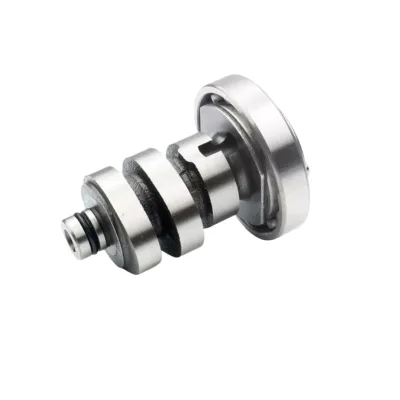
Source High Performance Racing Camshaft for Trucks, Motorcycles, and Engines
Find 30 listings for High Performance Racing Camshaft tailored for truck rear axles, motorcycle engines, and diesel racing assemblies. Compare specifications, certifications, and customization options from verified Chinese manufacturers.
Key considerations
Products List


$3.50 - $10.00
MOQ: 100 Pieces


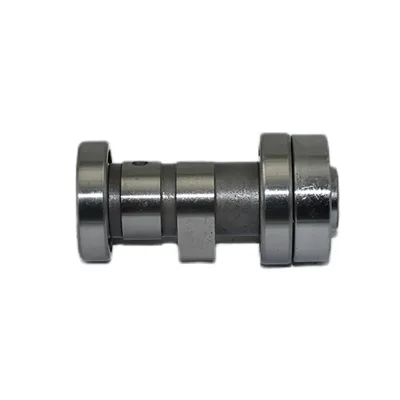
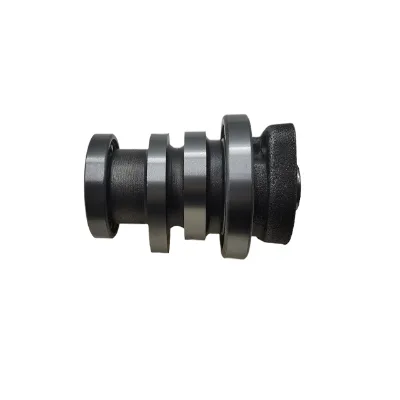


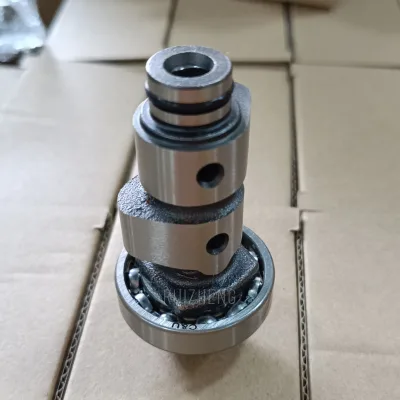


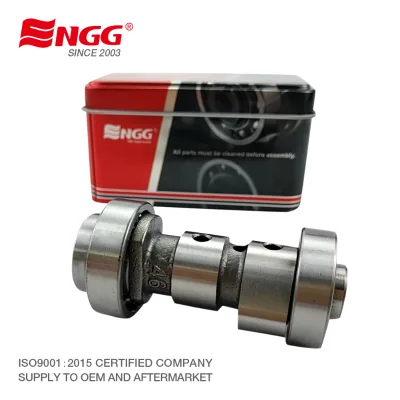

Comprehensive Sourcing Guide
Strategic Sourcing Guide for High Performance Racing Camshafts
Understanding the Technical Landscape of Racing Camshafts
Sourcing a high-performance racing camshaft requires a deep understanding of the specific mechanical attributes that distinguish these components from standard automotive parts. In the context of racing applications, the camshaft is not merely a timing device but a critical performance modulator that dictates valve lift, duration, and timing profiles. The available market data indicates that these components are often categorized under specific designations such as "S Camshaft" or "914 Model Parts," suggesting a high degree of specialization. Buyers must recognize that the "Descriptions" field often highlights "Racing Diesel Engine Camshaft Assembly," indicating that the technology extends beyond gasoline engines into high-torque diesel racing platforms.
The material composition is a primary technical differentiator. While standard camshafts may utilize various alloys, the observed supply chain frequently lists "Steel" as the primary material for axle and structural components, while "Rubber" appears in associated sealing or damping elements. However, for the camshaft itself, the metallurgy must be verified against the specific engine model, such as the "914" or "HKA2546S" designations found in current listings. The manufacturing process is equally critical; the data points to "Casting" and "Micro Machining" as key techniques. Micro machining is particularly relevant for high-performance applications where tolerances are measured in microns to ensure precise valve actuation. The "Technics" attribute is often listed as "as Required" or "as Per Design," signaling that off-the-shelf solutions are rare and that the procurement strategy must accommodate custom engineering workflows.
Compliance, Certification, and Regulatory Standards
Navigating the certification landscape is essential for ensuring that a sourced camshaft meets both safety and performance standards. The supply chain data reveals a mix of certification types, including "ISO," "TS16949," and "ISO9001-2008 SGS IAF." These certifications are not merely marketing labels; they represent adherence to specific quality management systems. TS16949, for instance, is a rigorous standard specific to the automotive industry, indicating that the supplier has processes in place to manage quality and risk in a production environment.
Buyers must verify that the "Standard Component" status aligns with the "Nonstandard" or "Custom Made" nature of the product. While some listings describe items as "Standard Component," others explicitly state "Custom products" or "Customized" standards. This dichotomy suggests that while the base design might follow a standard, the final product is often modified to meet specific racing requirements. The "Standard or Nonstandard" attribute is a crucial verification point; a high-performance racing camshaft is almost invariably nonstandard, requiring a supplier who can adhere to "According to drawing" or "as per drawings" specifications rather than generic catalog items.
Furthermore, the "Axle Number" and "Certification" fields often list multiple standards such as "ISO, DIN, ASTM." This implies that the component must meet international dimensional and material standards. When sourcing, buyers should not assume that a single certification covers all requirements. Instead, they must request documentation proving that the specific camshaft batch complies with the relevant standards for the target market, whether it be North America, Western Europe, or Southeast Asia. The "Main Market" data shows a global distribution, meaning that compliance with local regulations in these diverse regions is a mandatory step before finalizing a purchase.
Cost Drivers and Pricing Variables
The pricing structure for high-performance racing camshafts is influenced by several complex factors, ranging from material costs to the level of customization required. The observed price range in the market spans from $0.10 to $500 USD, a wide variance that reflects the difference between simple replacement parts and fully engineered, custom-machined racing assemblies. A camshaft priced at the lower end of this spectrum is likely a standard component or a basic replacement part, whereas the upper end likely encompasses custom-designed units with micro-machining, specialized heat treatments, and proprietary surface finishes.
Material costs are a significant driver. The use of high-grade steel for the shaft and rubber for associated seals or dampers affects the base cost. However, the "Surface" treatment, specifically "Rust Proofing," adds value and cost, ensuring longevity in harsh racing environments. The "Product Packing" also influences the final price; options like "Wooden Case" or "Polybag+Carton" with "PP Bubble Bag" inner protection represent different levels of logistics and packaging costs. For high-value racing components, the "Wooden Case Packing" is often preferred for heavy-duty protection during international shipping, which can add to the overall unit cost.
Lead time is another critical cost driver. The data indicates a "Delivery Time" of 10-25 days for samples and 20-35 days for batch goods. These timelines suggest that the manufacturing process is not instantaneous and involves significant lead time for custom orders. Buyers must factor these lead times into their procurement budget, as expedited shipping via "UPS, DHL, Air" will incur additional costs. The "MOQ" (Minimum Order Quantity) range of 1-500 units also plays a role; while some suppliers may accept single-unit orders for prototyping, larger batch orders often benefit from economies of scale, potentially lowering the per-unit cost.
Typical Applications and Engine Compatibility
The application of high-performance racing camshafts is highly specific, often tied to particular engine models and racing disciplines. The data explicitly mentions "Truck" applications and "Racing Diesel Engine Camshaft Assembly," indicating that these components are vital for heavy-duty racing trucks and diesel-powered racing vehicles. The "914 Model Parts" and "HKA2546S" designations suggest compatibility with specific engine architectures, likely from vintage or specialized racing series.
The "Position" attribute, listed as "Rear," and the "Type" as "Rear Axles" or "Rear" components, highlight that these camshafts are often part of a larger drivetrain system. In racing contexts, the rear axle camshaft configuration is critical for power delivery and traction control. The "Drum Brakes Classification" of "Brake Shoe" further contextualizes the component within a braking system, suggesting that the camshaft may be integrated with or adjacent to drum brake assemblies in certain racing truck configurations.
Buyers must ensure that the "Brand Name" or "Trading Mark," such as "Antaios" or "HK AA," aligns with their specific engine requirements. The "Keywords" field, which includes "Motorcycle Parts," indicates that the same technology or similar camshaft designs may be applicable to high-performance motorcycles. This cross-application potential requires careful verification of the "Engine Model" and "Model" specifications to ensure that a camshaft designed for a truck engine is not mistakenly applied to a motorcycle engine, or vice versa. The "Services" offered, including "OEM" and "ODM," suggest that suppliers can adapt these components for various vehicle types, provided the technical specifications match.
Supplier Evaluation and Capability Assessment
Evaluating a supplier for high-performance racing camshafts requires a rigorous assessment of their manufacturing capabilities and geographic footprint. The supply chain data indicates origins in "Shandong China," "Chengdu," "Beijing," and "Guangdong China." These regions are known for their manufacturing clusters, but buyers should verify the specific factory capabilities rather than relying solely on the province. The "Place of Original" and "prod_origin" fields provide a starting point, but the actual production facility must be capable of handling "Micro Machining" and "Casting" processes to the required tolerances.
The "Services" attribute, listing "OEM" and "ODM," is a strong indicator of a supplier's flexibility. A supplier offering these services is likely equipped to handle custom designs, which is essential for racing applications where off-the-shelf parts rarely suffice. Buyers should inquire about the supplier's experience with "Custom products" and their ability to adhere to "as per drawings" specifications. The "Technics" field, often listed as "as Required," implies that the supplier must be able to adapt their processes to the buyer's specific needs, whether that involves specific heat treatments, surface finishes, or dimensional tolerances.
Geographic location also impacts logistics and communication. Suppliers in "Shandong China" or "Guangdong China" may have different logistical advantages depending on the buyer's location. The "Main Market" data shows a global reach, including "South America," "North America," and "Eastern Europe," suggesting that experienced suppliers are accustomed to international trade. However, buyers should verify the supplier's track record in these specific regions to ensure they understand local regulatory and quality expectations.
Quality Control and Long-Term Procurement Strategy
Quality control is paramount when sourcing components for high-performance racing, where failure can result in catastrophic engine damage. The "Standard" attribute, often listed as "ISO9001-2008 SGS IAF," provides a baseline for quality management, but buyers must go further. They should request detailed test results and inspection reports for each batch, particularly for "Nonstandard" components. The "Surface" treatment of "Rust Proofing" must be verified through specific testing protocols to ensure durability under racing conditions.
Long-term procurement considerations involve building a relationship with a supplier who can provide consistent quality over time. The "Delivery Time" of 20-35 days for batch goods suggests a need for careful inventory planning. Buyers should establish a buffer stock strategy to mitigate the risk of supply chain disruptions. The "Package" specifications, such as "Standard Export Carton" with "PP Bubble Bag" inner protection, are critical for maintaining product integrity during transit. Any damage during shipping can render a high-performance camshaft unusable, so the packaging must be robust and verified.
Furthermore, the "Customization" attribute being "Available" means that the supply chain is flexible, but it also requires a clear communication channel. Buyers should establish a protocol for design changes and revisions to ensure that the "Custom Made" nature of the product is maintained without compromising quality. The "Lead Time" for samples (10-25 days) allows for a testing phase before committing to large batch orders, which is a prudent strategy for managing risk in high-stakes racing applications.
Comparison of Sourcing Options
To assist buyers in making informed decisions, the following table compares key attributes of the available sourcing options based on the observed data. This comparison highlights the trade-offs between standard and custom options, as well as the implications for cost and lead time.
| Attribute | Standard Component Option | Custom Made Option |
|---|---|---|
| Specification | "Standard Component" | "Custom Made" / "Custom products" |
| Design Basis | "According to drawing" (Generic) | "As Per Design" / "As Required" |
| Material | Steel, Rubber (Standard grades) | High-grade Steel, Specialized Alloys |
| Manufacturing | Casting, Standard Machining | Micro Machining, Custom Casting |
| Certification | ISO, TS16949 (General) | ISO, DIN, ASTM (Specific to drawing) |
| Lead Time | 20-35 Days (Batch) | 20-35 Days (Batch) + Design Time |
| MOQ | 1-500 Units | 1-500 Units (Often higher for custom) |
| Packaging | Polybag+Carton, PP Bubble Bag | Wooden Case, Standard Export Carton |
| Application | General Truck, Motorcycle | Racing Diesel Engine, Specific Models |
This table illustrates that while the lead times may appear similar, the "Custom Made" option involves a more complex design and verification process. The "Standard Component" option may be suitable for less critical applications, but for high-performance racing, the "Custom Made" route is often necessary to achieve the required performance metrics. Buyers must weigh the cost of customization against the performance benefits, ensuring that the investment aligns with their racing objectives.
Final Procurement Considerations
In conclusion, sourcing a high-performance racing camshaft is a multifaceted process that demands attention to technical specifications, certification compliance, and supplier capabilities. The observed data reveals a market rich in options, from standard components to fully customized racing assemblies. Buyers must navigate the complexities of material selection, manufacturing techniques, and quality control to ensure that the final product meets the rigorous demands of racing applications. By leveraging the available information on certifications, lead times, and customization options, buyers can make informed decisions that balance performance, cost, and reliability. The global nature of the supply chain, with origins in various regions of China and a wide range of target markets, offers significant opportunities for strategic sourcing, provided that due diligence is maintained throughout the procurement process.
FAQs
Can I get custom High Performance Racing Camshaft designs?
Yes, customization is available for these components. Buyers can request specific models like 914 or S Camshaft, with standards set according to drawings rather than generic catalogs.
What certifications do High Performance Racing Camshaft suppliers hold?
Suppliers often hold ISO, TS16949, and ISO9001-2008 SGS IAF certifications. These standards ensure quality management systems are in place for automotive components like steel or rubber parts.
How long is the delivery time for batch goods?
Batch goods typically require 20 to 35 days for delivery. Sample orders take 10 to 25 days, reflecting the custom manufacturing and micro-machining processes involved.
Which materials are used for high performance racing camshafts?
Steel is the primary material for structural components, while rubber is used for seals. Surface treatments include rust proofing to ensure durability in racing environments.
What is the price range for high performance racing camshafts?
The observed price range spans from 0.1 to 500 USD. Costs vary based on material grade, customization level, and packaging options like wooden cases or export cartons.
Where are High Performance Racing Camshaft manufacturers located?
Manufacturers are located in regions such as Shandong, Chengdu, Beijing, and Guangdong in China. These areas host factories capable of casting and micro-machining services.
Can suppliers provide OEM and ODM services?
Yes, suppliers offer both OEM and ODM services for custom designs. This allows buyers to adapt components like rear axles or camshafts to specific engine models and racing requirements.