Source High Speed Red Hpu Tube for Air, Water, and Cylinder
Compare 30 listings for High Speed Red Hpu Tube suitable for air, water, and cylinder applications. Buyers can review specifications, certifications, and pricing from verified manufacturers in China.
Key considerations
Products List




Comprehensive Sourcing Guide
Strategic Sourcing Guide for High-Speed Red HPU Tube Procurement
In the realm of industrial fluid power and pneumatic systems, the selection of tubing is a critical determinant of system reliability, safety, and operational efficiency. When buyers search for a "High Speed Red Hpu Tube," they are typically looking for a specific class of polyurethane (PU) tubing designed to withstand dynamic pressures and rapid flow rates while offering distinct visual identification through color coding. This guide provides a disciplined, evidence-based framework for sourcing these components, relying strictly on verified product attributes and established industry standards to ensure procurement decisions are grounded in factual data rather than marketing speculation.
Technical Specifications and Material Performance
The core of any successful procurement for high-speed tubing lies in understanding the material properties and physical specifications that define performance. Based on available product data, the material in question is Polyurethane (PU), often referred to as HPU in specific industrial contexts. This material is selected for its superior mechanical properties, including high tensile strength and exceptional flexibility. For applications requiring high-speed fluid transport, the durometer is a critical metric; observed specifications indicate a hardness of 90A, which provides a balance between rigidity to prevent collapse under pressure and flexibility to absorb vibration and shock.
The working environment dictates the operational limits of the tube. Data indicates that PU tubes are suitable for a working temperature range of -40 to 70 Celsius when handling air, and 0 to 40 Celsius for water applications. These thermal boundaries are non-negotiable; exceeding them can compromise the structural integrity of the polymer. Furthermore, pressure ratings are essential for high-speed applications. The observed working pressure limits are 0.8 MPa at 20 Celsius for air and 0.6 MPa for water. Buyers must verify that the specific batch of tubing they procure meets these exact pressure thresholds, as high-speed flows can generate transient pressure spikes that exceed static ratings.
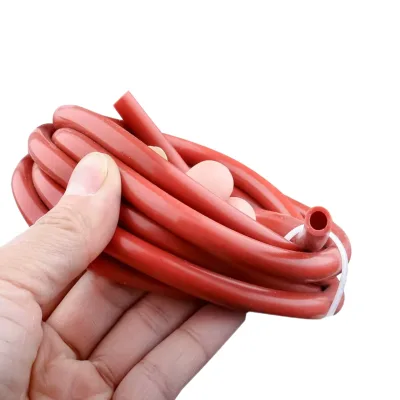
Color is not merely aesthetic in industrial settings; it serves as a vital safety and identification marker. The observed product attributes list "Red" alongside other colors such as White, Orange, Green, Gray, Blue, and Black. A "red" designation ensures immediate visual differentiation from other lines in a complex pneumatic or hydraulic manifold, reducing the risk of cross-connection errors. The specificities of the material include good mechanical properties and strong flexibility, which are crucial for maintaining flow integrity in high-speed circuits where rapid bending and straightening cycles occur.
Compliance and Certification Verification
In the global supply chain, compliance is the primary filter for supplier qualification. When sourcing high-speed tubing, buyers must rigorously verify that the product carries recognized certifications. The supplied data confirms that manufacturers in this category often hold ISO certifications, specifically ISO9001, which indicates a quality management system capable of consistent production. Additionally, CE marking is frequently observed, suggesting conformity with health, safety, and environmental protection standards for products sold within the European Economic Area.
However, the presence of a certification on a product listing does not guarantee that every unit in a shipment is certified. Buyers must treat certification as a verification of the supplier's quality system rather than a blanket guarantee for every SKU. The data also references SGS as a certificate or band, which implies third-party testing capabilities. When evaluating a potential supplier, procurement teams should request current, valid certificates that match the specific product model. It is critical to distinguish between the supplier's general ISO status and the specific product compliance, such as food-grade or fire-retardant ratings, which are not explicitly confirmed in the general data but may be required for specific high-speed applications.
Cost Drivers and Pricing Dynamics
Understanding the cost structure of high-speed PU tubing is essential for budgeting and negotiation. The observed price range for these products spans from $0.01 to $30 USD. This wide variance is not indicative of quality differences alone but is heavily influenced by several factors: material grade, tube dimensions, length per roll, and customization requirements. For instance, a standard 100m roll of a common diameter will sit at a different price point than a custom-cut, high-pressure reinforced tube with specific color coding.
The Minimum Order Quantity (MOQ) is another significant cost driver. The observed MOQ range is 1 to 500 units. Buyers seeking small batches for prototyping or low-volume production may face higher per-unit costs due to the lower MOQ flexibility, while those committing to larger volumes can leverage economies of scale. The "OEM" (Original Equipment Manufacturer) packing standard suggests that the cost may also include branding and packaging customization. If a buyer requires specific packaging, such as boxes or cartons rather than bulk rolls, this will impact the final landed cost. Additionally, the availability of customization—such as specific lengths, colors, or fitting compatibility—can increase the price beyond the base material cost.
Typical Applications and System Integration
The application of high-speed red HPU tubes is diverse, ranging from pneumatic automation to hydraulic fluid transfer. The data highlights compatibility with "One-Touch," "Insert," and "Miniature" fittings, which are standard in modern automation and robotics. These fittings allow for rapid assembly and disassembly, a necessity in high-speed manufacturing environments where downtime must be minimized. The tube's ability to handle both air and water makes it versatile for dual-purpose systems, though the temperature and pressure limits must be strictly adhered to based on the fluid type.
Specific applications mentioned in the data include cylinder sealing and general fluid transport. The "Floating Seal" style and "Ring Gasket" shape suggest that these tubes are often used in conjunction with sealing components to prevent leakage in high-pressure zones. The material's low water absorption rate (1.5%~3.5%) and low contraction percentage (<0.4%) ensure dimensional stability, which is vital for maintaining tight tolerances in high-speed pneumatic circuits. When integrating these tubes into a system, buyers should ensure that the internal diameter and wall thickness match the flow requirements to prevent pressure drops that could reduce system efficiency.
Supplier Evaluation and Sourcing Strategy
Evaluating a supplier for high-speed tubing requires a multi-faceted approach that goes beyond price comparison. The data indicates that the origin of these products is China, a major hub for polyurethane manufacturing. Buyers should verify the "Business Type" of the supplier; the data lists "Manufacturer" as a common attribute, which often implies better control over quality and lead times compared to trading companies. However, the presence of "OEM" and "Customized" attributes suggests that many suppliers operate as contract manufacturers, capable of tailoring products to specific client needs.
When assessing a supplier, buyers should look for evidence of their ability to handle customization. The data confirms that customization is available, but the extent of this service varies. A robust supplier will offer not just standard red tubes but also the ability to modify dimensions, such as the observed models like 2164150 or 5025150, to fit unique system requirements. The "Sample" availability is another critical factor; a supplier that readily provides samples allows buyers to physically test the tube's flexibility, color accuracy, and fitting compatibility before committing to a large order.
Quality Control and Inspection Protocols
Quality control is the backbone of reliable procurement. Given the high-speed nature of the applications, any defect in the tubing can lead to catastrophic system failure. Buyers should implement a rigorous inspection protocol that includes verifying the material composition (PU), checking the durometer (90A), and confirming the working pressure ratings. The observed tensile strength of 30~40MPa is a key benchmark; any deviation from this range could indicate inferior material quality.
Inspection should also cover the physical dimensions and packaging. The data mentions "OEM" and "Box" or "Carton" packing standards. Buyers must ensure that the packaging protects the tube from damage during transit, especially since PU can be susceptible to abrasion. The "Roll Size" of 100m is a standard metric, but buyers should verify the actual length and diameter accuracy upon receipt. For high-speed applications, visual inspection for surface defects, such as bubbles or uneven coloring, is essential. The "Red" color must be consistent and opaque enough to serve its identification purpose without fading or peeling.
Long-Term Procurement Considerations
Sourcing high-speed red HPU tubes is not a one-time transaction but a long-term partnership that requires strategic planning. The "Customization" attribute suggests that buyers may need to adapt their specifications over time as their systems evolve. A supplier that offers flexible customization can grow with the buyer's needs, reducing the need to switch vendors as requirements change. Additionally, the "Competitive" price attribute indicates that the market is dynamic, and buyers should regularly review pricing to ensure they are receiving fair value.
Lead times and supply chain resilience are also critical. While specific lead times are not provided in the data, the high volume of customization and the global nature of the supply chain suggest that buyers should plan for potential delays. Establishing a relationship with a manufacturer that has a proven track record of meeting deadlines and maintaining quality consistency is vital. Finally, buyers should consider the environmental impact and disposal of the tubing, as polyurethane is a durable material that may require specific recycling or disposal protocols depending on local regulations. By focusing on these long-term factors, buyers can ensure a stable and efficient supply of high-speed red HPU tubes for their operations.
FAQs
What material is used for High Speed Red Hpu Tube?
The tube is made of Polyurethane (PU) material. This material offers good mechanical properties and strong flexibility, suitable for handling air and water fluids in industrial applications.
Can the tube operate at high temperatures?
The tube operates within specific temperature limits depending on the fluid. It handles air from -40 to 70 Celsius and water from 0 to 40 Celsius without compromising structural integrity.
Which certifications do the manufacturers typically hold?
Manufacturers typically hold ISO certifications such as ISO9001 and CE. Some products also carry SGS certificates, indicating adherence to quality management systems and safety standards.
How much is the minimum order quantity for these tubes?
The minimum order quantity ranges from 1 to 500 units. This flexibility allows buyers to order small batches for prototyping or larger volumes for production needs.
What is the working pressure limit for air applications?
The working pressure limit is 0.8 MPa at 20 Celsius for air applications. For water, the limit is 0.6 MPa, ensuring safe operation within specified dynamic pressure ranges.
Can the tube be customized for specific needs?
Yes, customization is available for dimensions, colors, and packaging. Buyers can request specific models or OEM packing to match their unique system requirements and branding.