Source High Strength Wire Bag Webbing for Apparel, Sports, Medical
Compare 30 listings of High Strength Wire Bag Webbing with features like high tenacity and abrasion resistance. Buyers can evaluate customization options, material types including nylon and polyester, and MOQs ranging from 500 meters to 2000 yards for apparel, sports, and medical applications.
Key considerations
Products List


High Tenacity Braided Strap Garment Polypropylene Webbing for Bags Handles
$0.20 - $0.30
MOQ: 300 Meters

High Tenacity Integrated Loop Webbing for Backpack Load Expansion Straps
$0.11 - $0.55
MOQ: 500 Meters


Multi Color 15mm Width 1mm Thickness Bag Straps Handle PP Webbing Belt Rolls
$0.19 - $0.30
MOQ: 1000 Meters
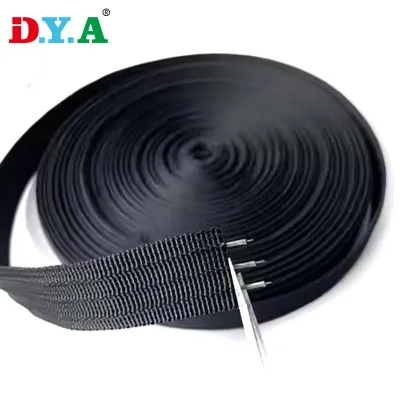


Reinforced Buckles Herringbone Webbing for Luggage Belts Climbing Sling Webbing
$0.05 - $0.10
MOQ: 1000 Meters


Colorful Jacquard Polyester Nylon Logo Webbing Woven Belt Strap Webbing for Bags
$0.40 - $0.50
MOQ: 1000 Meters


Comprehensive Sourcing Guide
Strategic Sourcing Guide for High-Strength Wire Bag Webbing
Understanding the Technical Landscape of High-Strength Webbing
When sourcing high-strength wire bag webbing, buyers must first distinguish between the structural requirements of the wire reinforcement and the textile properties of the webbing itself. The supplied product data indicates a diverse range of materials suitable for heavy-duty applications, including Nylon, Polyester, PP (Polypropylene), and Cotton. Among these, Nylon and Polyester are frequently highlighted for their high tenacity and abrasion resistance, which are critical for wire-reinforced structures that undergo significant tensile stress. The observed product attributes reveal that high tenacity is a recurring feature, often paired with low shrinkage and chemical resistance. These properties ensure that the webbing maintains its dimensional stability and structural integrity even when subjected to harsh environmental conditions or chemical exposure during industrial washing or outdoor storage.
The manufacturing techniques for these webbing products vary significantly, influencing the final strength and flexibility. The data lists Woven, Braided, and Jacquard techniques as available options. Woven webbing typically offers superior load-bearing capacity and is often preferred for heavy lifting or securing applications. Braided webbing, conversely, provides greater flexibility and a smoother surface, which can be advantageous for applications requiring frequent knotting or bending. The presence of "High Temperature Resistant" and "Water Resistant" features in the product specifications suggests that certain variants are engineered for extreme environments. Buyers should verify if the specific wire integration method aligns with these material properties, as the wire core must be compatible with the textile's thermal and moisture resistance profiles to prevent delamination or corrosion.
Critical Technical Specifications and Customization Parameters
Defining the precise technical specifications is the cornerstone of a successful procurement strategy for wire bag webbing. The provided facts highlight a wide spectrum of customizable dimensions, with widths ranging from 10mm to 100mm and thicknesses specified as 1.5mm or customized. This flexibility allows buyers to tailor the webbing to specific load requirements and bag geometries. Length specifications are equally variable, with standard rolls often cited as 50 meters or 100 meters, though "as your request" options are common. This indicates that the supply chain is capable of accommodating bulk orders with specific length requirements, reducing waste during the bag manufacturing process.
Color and pattern customization are also prominent features in the market data. Products are available in standard colored options as well as fully customized designs, including printed and jacquard patterns. For wire-reinforced bags, the color coding can serve a functional purpose, such as indicating load capacity or identifying specific product lines. The availability of "Customized Logo" and "Custom Design Logo" suggests that branding is a significant driver for many buyers. However, the integration of wire reinforcement must not compromise the aesthetic quality of the printed or woven patterns. Buyers should request samples to ensure that the wire insertion process does not distort the weave or cause uneven printing, particularly in high-tension areas of the bag.
Compliance, Certification, and Material Standards Verification
In the B2B procurement of industrial webbing, verifying compliance with international standards is essential, even when specific certification names are not explicitly listed in the product data. The supplied information mentions "Customization accepted" as a standard and references various width standards (20mm, 25mm, 30mm, 38mm, 50mm). While these are dimensional standards, they often imply adherence to broader industry norms for webbing construction. Buyers must actively verify if the webbing meets specific safety standards for lifting, packaging, or medical applications, as the intended use dictates the necessary compliance level.
The "Eco-Friendly" attribute appears frequently across multiple product entries, suggesting a market trend toward sustainable materials. However, "Eco-Friendly" is a broad term that requires clarification. Buyers should request documentation regarding the specific environmental certifications, such as recycled content percentages or compliance with REACH and RoHS regulations, particularly if the webbing is intended for export to the European Union or North America. The presence of "Chemical Resistance" and "Water Resistant" features also necessitates verification of the chemical treatments used. Buyers should ask for Material Safety Data Sheets (MSDS) to understand the chemical composition of any coatings or treatments applied to the Nylon, Polyester, or PP fibers.
Furthermore, the origin of the products, primarily noted as Dongguan and Xiamen in China, implies a specific manufacturing ecosystem. While these regions are known for textile production, buyers should not assume automatic compliance with Western safety standards. The "Condition: New" attribute confirms that the products are not refurbished, but it does not guarantee quality control consistency. Therefore, a rigorous supplier audit focusing on their quality management systems (e.g., ISO 9001) is recommended to ensure that the "High Tenacity" and "Abrasion Resistance" claims are backed by consistent manufacturing processes and third-party testing.
Cost Drivers and Economic Factors in Webbing Procurement
The cost of high-strength wire bag webbing is influenced by a complex interplay of material costs, customization levels, and order volumes. The observed price range in the market data spans from $0.05 to $5.00 per unit, a significant variance that reflects differences in material composition, width, and the complexity of the wire integration. Nylon and Polyester, being high-performance fibers, generally command a higher price point compared to PP or Cotton. The inclusion of wire reinforcement adds a substantial material and processing cost, as it requires specialized machinery and additional labor to weave or insert the wire without damaging the textile fibers.
Minimum Order Quantities (MOQs) are a critical economic factor, with observed ranges from 10 to 3,000 units, and specific product entries citing MOQs of 500 meters, 1,000 meters, or 2,000 yards. These thresholds directly impact the unit price; larger orders typically benefit from economies of scale, reducing the cost per meter. However, the "Customized" nature of many products means that buyers may face higher MOQs for non-standard colors, widths, or wire configurations. The "7-Day Delivery Time for Sample Orders" and "1 week" sampling time suggest that the supply chain is responsive, but buyers must account for lead times in their production planning.
Additionally, packaging costs can vary. The data lists options such as "Plastic Bag, Carton," "Sacks," and "50yds/Roll." The choice of packaging affects the final landed cost, especially for international shipping. Bulky or heavy wire-reinforced webbing may require reinforced cartons to prevent damage during transit, which adds to the packaging expense. Buyers should negotiate packaging specifications to balance protection with cost efficiency, ensuring that the webbing arrives in perfect condition without unnecessary over-packaging.
Typical Applications and Performance Requirements
The versatility of high-strength wire bag webbing is evident in the diverse applications listed in the product data. These include Apparel, Sports, Medical, Fashion Apparels, Garments, Hair Decorations, Home, Bag, Hat, Pets, and Dog Collars. The presence of "Medical" and "Sports" applications highlights the need for webbing that is not only strong but also safe and comfortable. In medical contexts, the webbing must be hypoallergenic and easy to sterilize, while in sports, it must withstand dynamic loads and high friction.
For industrial and heavy-duty uses, such as large storage bags or pet collars, the "High Tenacity" and "Abrasion Resistance" features are paramount. The wire reinforcement provides the necessary rigidity and shape retention, preventing the bag from collapsing under heavy loads. The "Low Shrinkage" property is particularly important for bags that may be exposed to heat or moisture, ensuring that the dimensions remain consistent over time. The "Water Resistant" attribute further extends the usability of these webbing products in outdoor or damp environments, making them suitable for agricultural or marine applications.
Buyers should align the webbing specifications with the specific performance demands of their end products. For instance, a dog collar requires a balance of strength and flexibility, whereas a heavy-duty transport bag prioritizes tensile strength and abrasion resistance. The "Pattern: Braided" and "Technics: Printed" options offer aesthetic and functional variations that can enhance the product's market appeal. Understanding these application nuances allows buyers to select the right combination of material, weave, and reinforcement to meet their specific needs.
Supplier Evaluation and Quality Control Protocols
Selecting the right supplier for high-strength wire bag webbing requires a thorough evaluation of their capabilities and quality control systems. The data indicates that OEM and ODM support is available, with a "7-Day Delivery Time for Sample Orders" and "Sampling Time: 7-10 Days." These metrics suggest that suppliers are agile and capable of rapid prototyping. However, buyers should verify the supplier's capacity to handle large-scale production without compromising quality. The "Customization accepted" standard implies flexibility, but it also requires clear communication to ensure that the final product matches the design specifications.
Quality control should be a multi-stage process. Buyers must verify the "High Tenacity" and "Abrasion Resistance" claims through independent testing. This includes tensile strength tests, elongation tests, and abrasion resistance tests using standardized methods. The "Condition: New" attribute is a basic requirement, but buyers should also inspect the webbing for defects such as uneven weaving, loose wires, or color inconsistencies. The "Eco-Friendly" claim should be backed by verifiable documentation, such as third-party audit reports or material certificates.
A comparison of potential suppliers can be structured around key criteria such as material composition, customization capabilities, and lead times. The following table outlines the typical attributes buyers should evaluate:
| Evaluation Criteria | Key Considerations | Verification Method |
|---|---|---|
| Material Composition | Nylon, Polyester, PP, Cotton blends | Request Material Safety Data Sheets (MSDS) |
| Strength Metrics | High Tenacity, Low Shrinkage | Third-party tensile and elongation test reports |
| Customization | Width, Color, Logo, Wire Integration | Review sample orders and design proofs |
| Lead Time | Sample (7-10 days), Production | Confirm production schedule and capacity |
| Packaging | Carton, Sacks, Rolls | Inspect packaging for damage resistance |
| Origin | Dongguan, Xiamen, China | Verify factory location and audit reports |
Long-Term Procurement and Supply Chain Resilience
Building a resilient supply chain for high-strength wire bag webbing involves more than just securing a single order. Buyers should consider the long-term implications of their sourcing decisions, including the stability of the supplier's raw material supply and their ability to scale production. The "Customized" nature of many products means that the supply chain must be flexible enough to accommodate design changes and volume fluctuations. The "OEM & ODM: Support" attribute indicates that suppliers are willing to collaborate on product development, which can be a significant advantage for buyers looking to innovate.
Sustainability is another long-term consideration. As "Eco-Friendly" becomes a more critical factor in procurement, buyers should prioritize suppliers who are investing in sustainable practices and materials. This not only aligns with regulatory trends but also enhances the brand value of the end product. The "Chemical Resistance" and "Water Resistant" features suggest that the webbing is designed for durability, which reduces the frequency of replacement and contributes to a more sustainable lifecycle.
Finally, buyers should establish clear communication channels and contractual agreements that define quality standards, delivery schedules, and dispute resolution mechanisms. The "7-Day Delivery Time for Sample Orders" is a positive indicator of responsiveness, but it should be complemented by robust quality assurance protocols. By focusing on these long-term factors, buyers can ensure a steady supply of high-quality, high-strength wire bag webbing that meets their evolving business needs.
FAQs
What materials are used for High Strength Wire Bag Webbing?
Common materials include Nylon, Polyester, PP, and Cotton. These fibers offer high tenacity and abrasion resistance, with Nylon and Polyester preferred for heavy-duty applications requiring dimensional stability.
Can I customize the width and thickness of the webbing?
Yes, customization is available for both width and thickness. Widths range from 10mm to 100mm, and thickness can be set to 1.5mm or other custom dimensions based on specific load requirements.
What is the minimum order quantity for these products?
Minimum order quantities vary by supplier but typically range from 500 meters to 2000 yards. Some vendors accept orders as low as 10 units, while others require up to 3000 units for bulk pricing.
How long does it take to receive sample orders?
Sample orders generally have a lead time of 7 to 10 days. Specific suppliers may offer a 7-day delivery time for samples, allowing for rapid prototyping before full-scale production begins.
Which features ensure durability for industrial applications?
Key durability features include high tenacity, abrasion resistance, and low shrinkage. Additional properties like chemical resistance and water resistance make the webbing suitable for harsh environments and outdoor storage.
Where are these webbing products manufactured?
Products originate primarily from Dongguan and Xiamen in China. These regions host a robust textile ecosystem capable of producing woven, braided, and jacquard webbing with various customization options.
What packaging options are available for shipping?
Packaging options include plastic bags, cartons, sacks, and rolls of 50 yards. The choice of packaging depends on the order size and the need to protect the webbing during international transit.