Source High Support Breathable Workout Bra for gym, yoga, and running
Compare 30 listings of High Support Breathable Workout Bra options featuring varied materials like polyester and spandex blends. Buyers can evaluate specifications including strap types, closure methods, and customization availability for athletic needs.
Key considerations
Products List
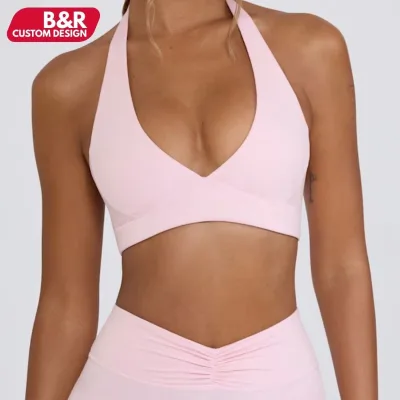
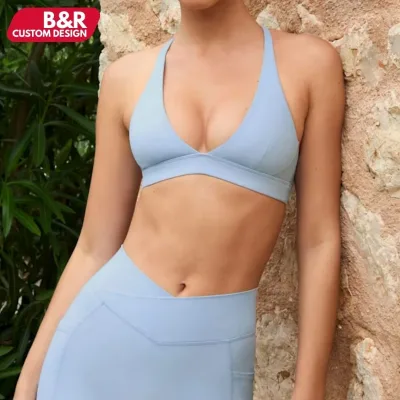


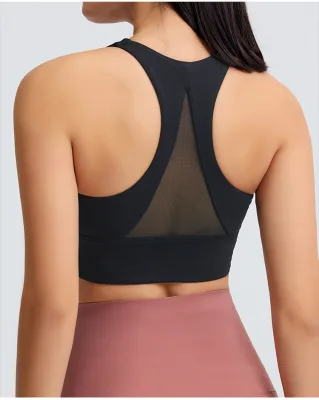
Zipper in Front Sports Bra High Impact Strappy Back Support Workout Top
$4.50 - $5.50
MOQ: 1000 Pieces


Halter Neck Sports Bra with Removable Pads Ribbed Non-Slip Workout Yoga Bra
$8.99 - $16.90
MOQ: 1 Pieces


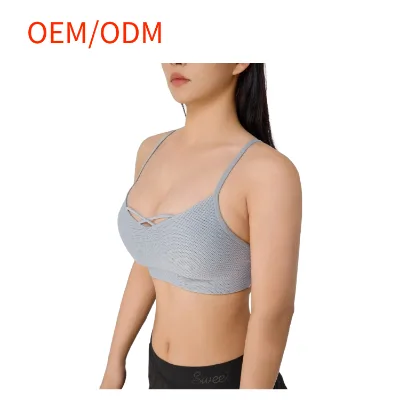


Comprehensive Sourcing Guide
Strategic Sourcing Guide for High Support Breathable Workout Bras
Defining Technical Specifications and Material Performance
When sourcing a High Support Breathable Workout Bra, the primary objective is to balance structural integrity with thermal regulation. The product landscape for this category reveals distinct material compositions that directly influence performance. Buyers must distinguish between blends designed for stretch and recovery versus those prioritizing moisture management. In the observed market data, specific listings indicate a material composition of Spandex and Nylon, which typically offers superior elasticity and a soft hand feel essential for high-impact activities. Conversely, other available options specify 100% Polyester, a fabric choice often selected for its durability and quick-drying capabilities.
The technical specification of fabric weight is a critical differentiator. A listed observation of 220 grams per square meter suggests a mid-to-heavy weight fabric, which often correlates with the compression required for high support. This weight class implies a denser knit that can withstand significant movement without losing shape. Buyers should verify if the fabric weight aligns with the intended activity level; lighter weights may suffice for low-impact yoga, while heavier weights are necessary for running or high-intensity interval training.
Furthermore, the construction techniques play a pivotal role in the "high support" claim. The presence of features such as "Ruched Butt" and "Cut-out" elements in the broader category suggests that design complexity varies. However, for a high support bra, the structural focus should remain on the bust area. The "Halter" strap type observed in the data provides a specific support mechanism by distributing weight across the neck and shoulders, which can be advantageous for certain body types but may cause discomfort for others during prolonged wear. The "Backless" design element, while fashionable, inherently reduces the surface area for support, requiring a buyer to scrutinize the internal band construction to ensure it compensates for the lack of back coverage.
Compliance Standards and Certification Verification
In the global apparel supply chain, compliance verification is non-negotiable, particularly for products intended for athletic use where skin contact is direct and prolonged. The sourcing data indicates a specific attribute regarding "Needle detection: YES." This is a fundamental safety requirement for textile manufacturing, ensuring that no metal fragments remain in the finished garment, which could pose a hazard to the wearer. Buyers must treat this as a baseline requirement rather than a differentiator and request proof of needle detection logs from the supplier.
Regarding production origins, the data presents a complex picture with references to both "Afghanistan" and "China" as places of origin. This discrepancy highlights the necessity for buyers to verify the actual country of manufacture for each specific order. Supply chain transparency is critical for compliance with various international trade regulations and ethical sourcing mandates. A supplier claiming origin in one region while manufacturing in another may be engaging in mislabeling, which can lead to customs delays or legal penalties.
The "prod_standard" field in the data lists specific dimensions (30205cm) and packaging standards (100pcs per carton, 405060cm). While these are logistical standards, they indirectly reflect the supplier's adherence to quality control protocols. Consistent packaging dimensions suggest a standardized production process. Buyers should verify if the supplier holds any specific quality management certifications, such as ISO 9001, though the provided data does not explicitly confirm these. Instead, the focus should be on the supplier's ability to maintain consistent "Needle detection" and "Fabric Weight" specifications across batches.
Cost Drivers and Pricing Structure Analysis
The pricing structure for high support breathable workout bras is influenced by a combination of material costs, labor intensity, and order volume. The observed price range in the market spans from 0.99 to 20 USD, a significant variance that reflects differences in quality, brand positioning, and order quantities. The lower end of this spectrum likely corresponds to basic polyester blends with minimal customization, while the higher end may include complex constructions, premium spandex/nylon blends, and advanced features like moisture-wicking technology.
Minimum Order Quantity (MOQ) is a primary cost driver. The data shows an MOQ range from 1 to 2000 pieces. Suppliers with an MOQ of 100 pieces, as noted in specific listings, often cater to small businesses or startups, potentially charging a higher unit price to cover setup costs. Conversely, suppliers requiring higher volumes may offer more competitive pricing but demand greater capital commitment. Buyers must calculate the total landed cost, which includes the unit price, shipping, and any tariffs, rather than focusing solely on the FOB price.
Customization is another significant factor affecting cost. The data confirms that "Customization: Available" and "Fabric: Customize" are options. Adding custom logos via "Sublimation/Embroidery/Heat Press" or altering the "Logo position" to the "FRONT" adds to the production complexity and cost. The "Sample Time" of 10 days and "Production Time" of 15 days after details are confirmed also impact the overall timeline and cash flow. Buyers should anticipate that custom orders will incur higher costs and longer lead times compared to stock items.
Typical Applications and Design Variations
The versatility of the High Support Breathable Workout Bra is evident in the diverse design elements observed in the market. The "Season: Summer" designation suggests these products are optimized for warm-weather activities, leveraging the "Breathable" and "Quick-Drying" features. The "Moisture-Wicking" attribute is particularly relevant for high-intensity workouts where sweat management is crucial to prevent chafing and discomfort.
Design variations such as "Backless," "Cut-out," and "Ruched Butt" indicate a trend towards fashion-forward athletic wear. While these features enhance aesthetic appeal, they may compromise the functional support required for high-impact sports. Buyers must align the product design with the intended application. For example, a "Backless" bra might be suitable for yoga or pilates but less ideal for running. The "Halter" strap type offers a specific aesthetic and support profile that may appeal to a niche market but requires careful fit testing.
The "2 Piece Set" configuration, often paired with matching bottoms, is a common selling unit. This bundling strategy can increase the average order value and provide a cohesive look for the consumer. However, buyers should verify if the "High Waist" and "Elastic Waist" features of the accompanying bottoms align with the support level of the bra. The "Single package size" of 30X20X5 cm and "Single gross weight" of 0.200 kg are useful metrics for logistics planning, ensuring that the product fits within standard shipping constraints.
Supplier Evaluation and Production Capabilities
Evaluating a supplier for high support workout bras requires a deep dive into their production capabilities and consistency. The data indicates a "Supply Type: In-Stock Items" alongside "Customization: Available," suggesting that some suppliers can fulfill immediate orders while others specialize in made-to-order production. Buyers should prioritize suppliers who demonstrate a clear distinction between these two modes of operation to avoid confusion in order fulfillment.
The "7 days sample order lead time" is a positive indicator of a responsive supply chain. A quick sample turnaround allows buyers to verify the "Fabric Weight," "Material," and "Feature" claims before committing to a larger order. However, the "Sample Time" of 10 days mentioned in other listings suggests variability among suppliers. Buyers should establish a clear timeline for sample approval to prevent delays in the overall procurement process.
The "Production Time" of 15 days after all details are confirmed is a standard benchmark, but buyers must verify if this timeline includes the time for quality control checks. The "Needle detection: YES" attribute should be integrated into the production line, not treated as a post-production add-on. Suppliers who integrate safety checks throughout the manufacturing process are more likely to deliver consistent quality.
Quality Control Protocols and Inspection Criteria
Quality control for athletic wear must be rigorous, focusing on both functional performance and safety. The "Needle detection" requirement is a critical safety checkpoint that must be verified for every batch. Buyers should request a certificate of needle detection or a third-party inspection report to ensure compliance. Additionally, the "Fabric Weight" of 220 grams must be consistent across all units to guarantee the promised "High Support" level. Variations in fabric weight can lead to inconsistent compression and support, resulting in customer returns.
The "Printing Methods: Heat-Transfer Printing" and "Logo: Sublimation/Embroidery/Heat Press" options require specific quality checks. Heat transfer prints must be durable and resistant to washing, while embroidery must be secure and free of loose threads. Buyers should inspect samples for print adhesion and color fastness, especially given the "Quick-Drying" and "Moisture-Wicking" claims which imply frequent washing.
The "Standard" of 30205cm for the single package and 405060cm for the carton size are logistical specifications that also reflect quality control. Consistent packaging dimensions indicate a well-organized production line. Buyers should verify that the "Packing: 1PCS/Polybag" and "prod_packing: by Carton" instructions are followed precisely to prevent damage during transit.
Long-Term Procurement Considerations and Scalability
For long-term procurement, scalability and supply chain resilience are paramount. The "MOQ" range of 1 to 2000 pieces offers flexibility, but buyers should plan for volume growth. Suppliers with lower MOQs may struggle to scale efficiently, while those with higher MOQs may offer better economies of scale. The "Customization" options allow for brand differentiation, but buyers must ensure that the supplier can maintain consistency as order volumes increase.
The "Place of Origin" discrepancy between Afghanistan and China in the data underscores the need for clear communication regarding the manufacturing location. Buyers should specify the country of origin in their contracts to avoid ambiguity. Additionally, the "Lead Time" for samples and production should be factored into inventory planning. A 15-day production time is manageable, but buyers should account for potential delays due to material shortages or logistical issues.
Finally, the "Feature" set including "Breathable," "Quick-Drying," "Moisture-Wicking," and "Body Shape" should be validated through third-party testing if possible. While the data lists these features, buyers should request test reports to confirm that the products meet the claimed performance standards. Long-term partnerships with suppliers who can provide consistent quality and transparent communication are essential for building a reliable product line in the competitive athletic wear market.
FAQs
What material options exist for high support breathable workout bras?
Available materials include Spandex Nylon blends and 100% Polyester. The Spandex Nylon option offers superior elasticity for high impact, while the Polyester variant provides durability and quick-drying capabilities suitable for summer activities.
Can I customize the logo position on these workout bras?
Yes, customization is available with the logo positioned on the front. Buyers can choose from sublimation, embroidery, or heat press methods to apply their branding, though this may extend the production timeline after details are confirmed.
What is the minimum order quantity for these products?
The minimum order quantity ranges from one piece to two thousand pieces depending on the supplier. Some specific listings require a minimum of one hundred pieces, while others support single item orders for immediate stock availability.
How long does production take after confirming all details?
Production typically takes fifteen days after all details have been confirmed. Sample orders may have a lead time of seven to ten days, allowing buyers to verify fabric weight and features before committing to larger batches.
Which safety standards apply to these athletic garments?
The products undergo needle detection to ensure no metal fragments remain in the fabric. This safety protocol is a baseline requirement for all listed items, ensuring the garments are safe for direct skin contact during high-intensity workouts.
What packaging specifications are used for single items?
Single items are packed in polybags with a package size of thirty by twenty by five centimeters. The gross weight per single unit is 0.200 kg, which helps in calculating shipping costs and logistics planning for small orders.
Can I find these bras in specific sizes like XXL?
Yes, the product is available in sizes ranging from XXS to 3XL. This extensive size range ensures that the high waist and elastic waist features fit various body shapes while maintaining the required support and moisture-wicking performance.