Source High Tension Welding Strapping Machine for Beverages, Waste Paper, Steel Coils
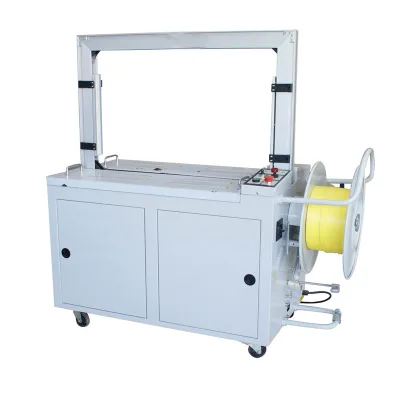
Compare 30 high tension welding strapping machines available from suppliers in China. These electric and pneumatic units support applications in alcoholic beverages, waste paper, and steel coil packaging with customizable strapping widths and thicknesses.
Key considerations
Products List

Adjustable Tension Strapping Machine Adjustable Tension Strapping Machine
$9800.00 - $15900.00
MOQ: 1 Pieces


High Efficiency Steel Coil Strapping Machine with Automatic Tension Control
$80000.00 - $100000.00
MOQ: 1 Sets


Semiautomatic Strapping Machine Adjustable PP Strap Bundling with Tension Control
$255.00 - $270.00
MOQ: 1 Pieces


Heavy-Duty Adjustable Tension Steel Strapping Machine for Packaging
$21600.00 - $28900.00
MOQ: 1 Pieces


19mm/25mm/32mm Steel Strap High Quality Automatic Strapping Machinery
$38000.00 - $115000.00
MOQ: 1 Pieces


$4999.00 - $95000.00
MOQ: 1 Sets
Comprehensive Sourcing Guide
Strategic Sourcing Guide for High Tension Welding Strapping Machines
The global demand for automated packaging solutions has elevated the importance of high tension welding strapping machines in industrial supply chains. These systems are critical for securing heavy loads, ensuring cargo integrity during transit, and optimizing warehouse throughput. For procurement professionals, navigating the market requires a disciplined approach that distinguishes between verified product attributes and generalized market claims. This guide synthesizes available technical data and operational requirements to assist buyers in selecting equipment that aligns with specific production needs, focusing on the mechanical, electrical, and logistical parameters observed in current market listings.
Technical Architecture and Operational Specifications
The fundamental distinction in strapping machinery lies in the strapping mode and the drive mechanism. High tension welding strapping machines typically utilize a welding type strapping mode, which fuses the strap ends through heat or friction to create a bond that can withstand significant tension. This is distinct from mechanical tensioning or friction-based locking methods. The drive type is a primary differentiator, with observed market data indicating both electric and pneumatic configurations. Electric-driven models often feature power ratings around 250W and operate on standard voltages such as 220V/50Hz, making them suitable for facilities with stable electrical infrastructure. Conversely, pneumatic models rely on air pressure, with specific requirements ranging from 0.49 to 0.8 MPa, necessitating a robust compressed air supply system.
The physical dimensions of the machine's throat and height are critical for compatibility with various load sizes. Specifications indicate an effective width through of 1400mm and an effective through height of 1600mm when including pallets. This capacity allows the machine to handle large, bulky items such as steel coils, steel pipes, and waste paper bales. The strapping material itself is typically a strip, with width specifications varying between 6mm and 15mm depending on the specific model. Thickness requirements also vary, with observed ranges including 0.5mm to 0.9mm, 0.6mm to 1.0mm, and 0.7mm to 0.9mm. Buyers must verify that the selected machine's throat dimensions and strap compatibility match the specific geometry of their products.
Cycle time is another vital performance metric. High-performance units demonstrate a single strapping time of approximately 20 seconds, which directly impacts overall line efficiency. The structure of the machine also varies; while some units are classified as basic type strapping or hand strapping devices, others are engineered for automatic or semi-automatic grades. The automatic grade implies a higher level of integration with conveyor systems or automated packaging lines, whereas semi-automatic models may require operator intervention for strap feeding or tensioning. Understanding these structural differences is essential for matching the machine to the desired level of automation.
Compliance, Certification, and Safety Standards
In the realm of industrial machinery, compliance with international safety and quality standards is non-negotiable. While specific certification statuses such as ISO9001 or CE are frequently mentioned in general market contexts, buyers must treat these as verification targets rather than guaranteed attributes of every listing. The procurement process should explicitly require proof of compliance from the supplier. For machinery operating with high tension and welding mechanisms, electrical safety certifications are paramount to prevent hazards associated with high voltage or pneumatic pressure.
The origin of the machinery also plays a role in regulatory alignment. Products listed with origins in regions such as Anhui, Shaanxi, or generally China may adhere to specific national manufacturing standards. Buyers should verify that the equipment meets the safety regulations of their own jurisdiction, particularly regarding noise levels, electrical grounding, and emergency stop functionality. The standard specifications for the machines themselves can vary; some units are built to standard dimensions like 790550780mm or 900570730mm, while others offer customized standard specifications. This variability underscores the need for a rigorous review of the technical datasheet to ensure the machine fits the physical constraints of the installation site and complies with local safety codes.
Cost Drivers and Economic Considerations
The price range for strapping machines in the current market is extensive, spanning from $1 to $115,000. This vast disparity is driven by several key factors, including the level of automation, the complexity of the welding mechanism, and the build quality of the frame. Basic semi-automatic or hand strapping units, which may weigh between 65kg and 90kg and feature simple structures, occupy the lower end of the price spectrum. In contrast, fully automatic systems with advanced tension control, pneumatic integration, and custom configurations command premium prices.
Minimum Order Quantity (MOQ) is another economic variable, with observed ranges from 1 to 100 units. For small to medium enterprises, an MOQ of 1 allows for the acquisition of a single unit for pilot testing or small-scale operations. Larger organizations may benefit from bulk purchasing, though the specific volume discounts are not universally standardized. The packaging method also influences logistics costs; machines are often shipped in wooden pallets, wooden frames, or standard cartons. The weight of the packaged unit, ranging from 80kg to over 100kg depending on the model, impacts freight charges and handling requirements. Buyers should calculate the total landed cost, including shipping, insurance, and potential customs duties, rather than focusing solely on the unit price.
Typical Applications and Industry Suitability
High tension welding strapping machines are versatile tools designed for a wide array of industries. The observed applications include the packaging of alcoholic beverages, waste paper, steel pipes, and steel coils. These heavy-duty applications require the high tension capabilities of welding-type strapping to prevent load shifting during transport. In the consumer goods sector, these machines are equally critical for hair care products, skin care products, cosmetics, household chemicals, and medical supplies. The ability to handle diverse product shapes and weights makes these machines a staple in mixed-use warehouses.
The specific application dictates the required machine configuration. For instance, packaging steel coils may require a machine with a wider effective throat and higher tension capacity, whereas cosmetic boxes might be better suited for a semi-automatic model with a smaller footprint. The strapping material specification must also align with the product; for example, waste paper bales often require thicker straps (up to 1.0mm) to withstand the compressive forces, while lighter cosmetic packages may utilize thinner strips (6-9mm). Understanding the end-use environment is crucial for selecting a machine that balances performance with cost-efficiency.
Supplier Evaluation and Quality Assurance
Evaluating a supplier for strapping machinery requires a focus on transparency and technical capability. Buyers should prioritize suppliers who provide clear documentation regarding the machine's model, origin, and standard specifications. The market data indicates models such as LC-TB, HB-99CL, and HB-semiAutomatic, each with distinct characteristics. A reliable supplier will clearly distinguish between standard specifications and customized options, ensuring that the buyer receives a machine tailored to their specific needs.
Quality control during the manufacturing process is essential. Buyers should request detailed information on the production standards and the materials used in the machine's construction. The weight of the machine, ranging from 65kg to 90kg, is often an indicator of the robustness of the frame and internal components. A heavier machine may suggest a more durable build, but this must be balanced against the specific requirements of the application. Additionally, the color and finish of the machine, which can be customized to black and red or other options, may reflect the supplier's attention to detail and branding capabilities.
Long-Term Procurement and Maintenance Strategy
The long-term success of a strapping machine investment depends on maintenance, spare parts availability, and the flexibility of the system. Customization is a key feature observed in the market, with options available for the product model, standard specifications, and packing methods. This flexibility allows buyers to adapt the machine to future production changes without requiring a complete system overhaul. The strapping material specification, including width and thickness options, should be reviewed to ensure compatibility with future supply chain requirements.
Maintenance protocols should be established early in the procurement process. Buyers need to verify the availability of spare parts, particularly for critical components like the welding head, tensioner, and pneumatic valves. The power and voltage requirements, such as 220V/50Hz or pneumatic pressure ranges, must be compatible with the facility's infrastructure to avoid costly retrofits. Furthermore, the lead time for delivery and the supplier's support for installation and training are critical factors. A comprehensive procurement strategy includes a plan for regular maintenance, operator training, and periodic performance audits to ensure the machine continues to meet efficiency and safety standards over its lifespan.
Comparative Analysis of Machine Configurations
To facilitate decision-making, the following table summarizes the key differences observed in the market data regarding machine configurations, specifications, and applications. This comparison highlights the diversity of options available and aids in matching specific buyer needs to the correct product attributes.
| Feature Category | Configuration A (Heavy Duty) | Configuration B (Semi-Auto) | Configuration C (Light Duty) |
|---|---|---|---|
| Strapping Mode | Welding Type | Basic Type Strapping | Hand Strapping |
| Driven Type | Electric / Pneumatic | Electric | Pneumatic |
| Effective Width | 1400mm | Variable | Variable |
| Strap Width | 6-15mm | 9-15mm | 9-14mm |
| Strap Thickness | 0.5-0.9mm | 0.7-0.9mm | 0.6-1.0mm |
| Typical Application | Steel Coil, Waste Paper | Cosmetics, Medical | Household Chemicals |
| Weight | 90kg | 65kg | 75kg |
| Origin | Anhui / Shaanxi | China | China |
| Packing | Wooden Pallet | Carton Pallet | Wooden Frame |
This comparative overview illustrates that no single machine configuration fits all scenarios. The selection process must be driven by a detailed analysis of the specific load characteristics, production volume, and facility constraints. By adhering to the technical parameters and verification steps outlined in this guide, buyers can mitigate risks and secure high-tension welding strapping machines that deliver optimal performance and reliability.
FAQs
What strapping mode does the High Tension Welding Strapping Machine use?
The machine utilizes a welding type strapping mode to fuse strap ends securely. This method creates bonds capable of withstanding significant tension, making it suitable for heavy loads like steel coils and waste paper bales.
Can the machine operate with both electric and pneumatic drive types?
Yes, the available models include both electric and pneumatic driven types. Electric units typically require 220V/50Hz power, while pneumatic models need an air pressure between 0.49 and 0.8 MPa for operation.
What is the effective width through for handling large loads?
The effective width through is 1400mm, allowing the machine to accommodate large items. This capacity supports the strapping of bulky products such as steel pipes, steel coils, and waste paper bales efficiently.
Which strapping material specifications are compatible with this equipment?
Compatible strap widths range from 6mm to 15mm with thickness options between 0.5mm and 1.0mm. These variations allow the machine to handle diverse applications from light cosmetic packaging to heavy industrial waste paper.
How long does a single strapping cycle take on average?
A single strapping time is approximately 20 seconds for high-performance units. This cycle time directly impacts overall line efficiency and throughput in automated packaging environments.
What are the standard packaging options for shipping the machine?
Machines are typically shipped in wooden pallets, wooden frames, or standard cartons. Some models also offer customized packing solutions to ensure safe transport and handling of the heavy equipment.
Can the product model and standard specifications be customized?
Yes, both the product model and standard specifications are available for customization. Buyers can request tailored dimensions and features to align with specific production needs and facility constraints.
Where are these high tension welding strapping machines manufactured?
The machines originate from regions including Anhui and Shaanxi in China. This origin information helps buyers verify supply chain details and align with regional manufacturing standards.