Source Holographic Chunky Nail Glitter Powder for Nail Polish, Paint, and Ink
Find 30 listings for Holographic Chunky Nail Glitter Powder suitable for nail polish, paint, and ink applications. Buyers can compare specifications, prices, and certifications across multiple suppliers to identify the best fit for their manufacturing needs.
Key considerations
Products List


Spectraflair Glitter Pigments, Holographic Pigment Powder for Nail Polish
$1.01 - $9.03
MOQ: 100 grams










Comprehensive Sourcing Guide
Strategic Sourcing Guide for Holographic Chunky Nail Glitter Powder
Understanding Product Specifications and Technical Attributes
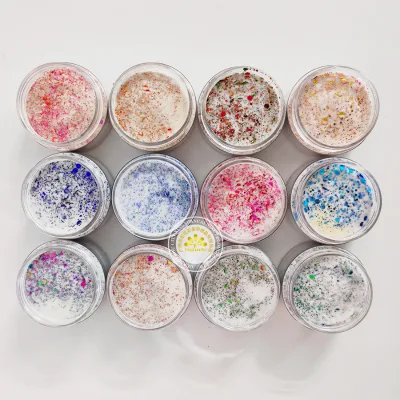
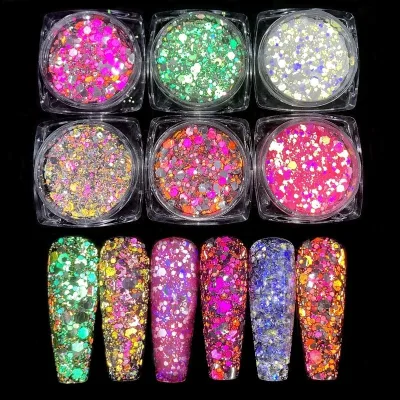
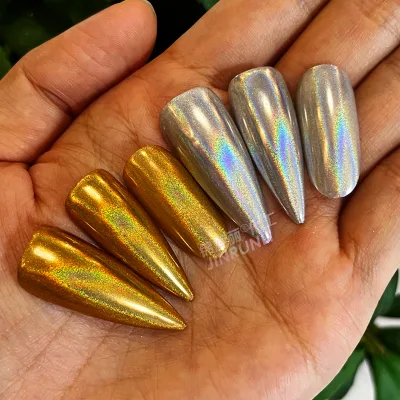
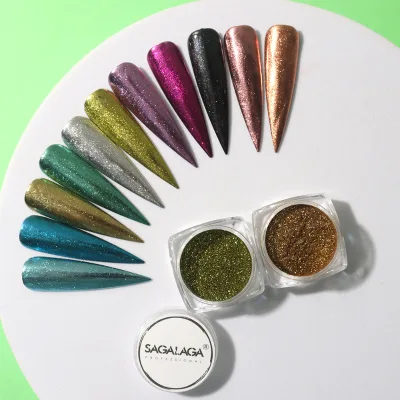
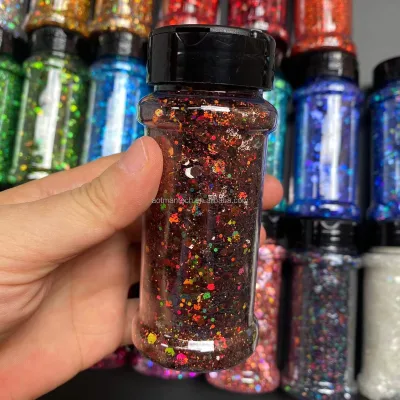
When sourcing Holographic Chunky Nail Glitter Powder, buyers must first distinguish between general pigment classifications and the specific physical properties required for nail art applications. The market offers a diverse array of products, often categorized under names such as "Holographic Pigment Powder," "Spectraflair," and "Chunky Glitter." A critical observation in the current supply landscape is the variation in particle size and shape, which directly dictates the final aesthetic outcome. While some listings describe the product as a fine "800 mesh" powder suitable for creating a smooth, saturated finish, other entries explicitly identify the material as "chunky" or "glitter powder" with particle sizes ranging from 10 to 60 micrometers. This discrepancy highlights the necessity for buyers to verify the exact mesh count or micron range before placing an order, as a fine powder will not replicate the dimensional depth of a chunky glitter.
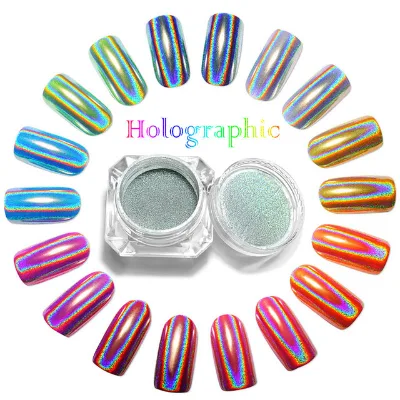
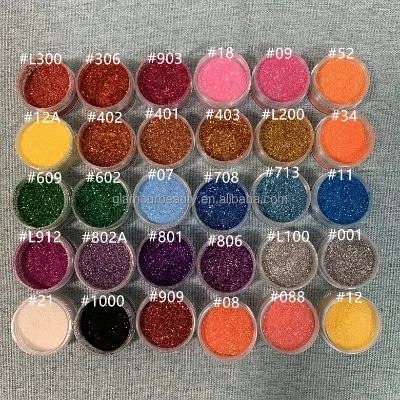
The visual characteristics are equally vital. The observed product attributes frequently include "Silver," "Gold," and "Rainbow Color" options, with specific models designed to offer "Full Cover" capabilities. The holographic effect relies on the interaction of light with the pigment's structure, often described in technical data sheets as having high gloss and color saturation. Buyers should expect the product to be classified as a "Natural" type in some contexts, though the manufacturing process involves specific chemical treatments to achieve the holographic effect. The physical form is typically supplied as a loose powder, though some suppliers offer "3 in 1 dipping powder" formulations that combine the glitter with acrylic bases. The shape of the packaging, whether "Bottle," "Carton," or "Drum," often correlates with the intended volume and the granularity of the product. For chunky varieties, the packing must be robust enough to prevent the larger particles from settling or breaking down during transit, a factor often overlooked in standard fine powder specifications.
Compliance, Certification, and Safety Standards
Safety and regulatory compliance are non-negotiable when sourcing materials intended for cosmetic and nail applications. The supply chain for holographic pigments is heavily scrutinized due to the direct contact these products have with human skin and nails. In the observed market data, several high-confidence facts point to specific certifications that buyers should verify. Products are frequently listed with "SGS," "FDA," and "EEC" certifications, indicating that the supplier has undergone third-party testing for safety and quality. Additionally, "Reach Certification" is mentioned as a standard requirement, particularly for markets in Europe, ensuring the product meets the European Union's regulations on chemicals.
Buyers must also examine the technical documentation provided by the supplier. The presence of an "MSDS" (Material Safety Data Sheet), "TDS" (Technical Data Sheet), and "CoA" (Certificate of Analysis) is a strong indicator of a professional supplier. These documents provide critical information regarding the chemical composition, handling instructions, and storage requirements. The absence of these documents should be treated as a red flag, regardless of the product's visual appeal. While some background information mentions "REACH" as a general standard, the specific requirement for "Reach Certification" in the product attributes suggests that this is a mandatory compliance checkpoint.
Furthermore, the "Non-toxic" attribute is frequently cited as a key advantage. However, this claim must be backed by the aforementioned test results. Buyers should not rely solely on marketing terms like "Non-toxic" or "Safe" without verifying the supporting documentation. The application of these pigments in "Cosmetic," "Nail Polish," and "Coating" sectors requires strict adherence to safety standards. The "EEC" certification specifically addresses the European market's stringent requirements for cosmetic ingredients, while "FDA" compliance is essential for products entering the United States. It is the buyer's responsibility to ensure that the specific batch of holographic powder being purchased carries the valid certificates for the target market, as certifications can vary by region and product line.
Cost Drivers and Pricing Dynamics
The pricing of Holographic Chunky Nail Glitter Powder is influenced by a complex interplay of factors, including raw material costs, certification expenses, and order volume. The observed price range in the market spans from $0.18 to $25.52 USD, a significant variance that reflects differences in product quality, particle size, and packaging. The lower end of this spectrum typically corresponds to bulk purchases of fine powders or smaller quantities of standard colors, while the higher end often reflects specialized "chunky" formulations, custom colors, or products with extensive certification packages.
Minimum Order Quantity (MOQ) is a primary driver of unit cost. The observed MOQ range is between 1 unit and 125 units, with some specific listings offering an MOQ as low as 0.1 kg. This flexibility allows small businesses and individual artisans to test products without significant capital investment. However, for larger commercial buyers, negotiating a lower MOQ or a better price per unit based on volume is essential. The "Customization" attribute being available suggests that buyers can request specific color mixes or particle sizes, which may incur additional costs. Custom orders often require a higher MOQ to justify the setup and production time.
Payment terms also play a role in the overall cost structure. The market supports various payment methods, including "T/T" (Telegraphic Transfer), "Paypal," "L/C" (Letter of Credit), and "Westunion." Buyers should consider the transaction fees associated with each method and the security they offer. For instance, "L/C" is often used for large international transactions to mitigate risk, while "Paypal" is more common for smaller, immediate purchases. The "Delivery Time" of 5 to 20 days further impacts cost, as expedited shipping options will increase the total landed cost. Buyers must balance the unit price against the lead time and shipping costs to determine the true cost of procurement.
Typical Applications and Market Versatility
Holographic Chunky Nail Glitter Powder is a versatile material with applications extending beyond the nail salon industry. While the primary use case is in "Nail Salon Shop" and "Manicure DIY Art," the product's properties make it suitable for a broader range of industries. The observed usage categories include "Paper," "Leather," "Ink," "Paint," "Cosmetic," "Plastic," and "Ceramic." This versatility indicates that the pigment can be integrated into various mediums to create decorative effects. For example, the "Full Cover" attribute suggests that the powder can be used to create opaque, high-impact designs in nail polish, while the "Chrome Powder" appearance indicates its potential use in automotive coatings or industrial paints.
The specific application of the powder depends on the particle size and the binding agent used. In the nail industry, the powder is often mixed with acrylic or gel systems to create 3D effects. The "Fast Dry" and "Long Lasting" features are critical for nail applications, ensuring that the design remains intact for extended periods. The "High Gloss" attribute enhances the visual appeal, making the holographic effect more pronounced. In other industries, such as leather or paper, the powder may be used as a surface coating to add texture and visual interest. The "Non-toxic" nature of the product makes it safe for use in consumer goods, provided it is applied correctly.
Buyers should also consider the "Customization" aspect when planning applications. The ability to customize the product allows for the creation of unique designs that can differentiate a brand in a competitive market. Whether it is a specific "Holo Colorshift" effect or a custom "Rainbow Color" mix, the flexibility of the product enables a wide range of creative possibilities. The "Shape" of the product, whether in a "Bottle" or "Box," also influences its application, as different packaging formats may be more suitable for different types of users, from professional nail technicians to DIY hobbyists.
Supplier Evaluation and Quality Control
Evaluating suppliers for Holographic Chunky Nail Glitter Powder requires a rigorous approach to ensure consistency and reliability. The location of the supplier is a key factor, with major production hubs identified in "Huaian, Jiangsu, China (Mainland)" and "Guangdong, China." These regions have established supply chains for cosmetic and industrial pigments, but buyers should verify the specific capabilities of the supplier. The "Brand Name" "XingXuanCai" is one example of a supplier in the market, but buyers should not rely on a single brand and should instead evaluate multiple suppliers based on their track record and product quality.
Quality control is paramount, especially given the variability in product attributes. Buyers should request samples to verify the "Particle Size," "Color," and "Appearance" before committing to a large order. The "Technical Data" provided by the supplier, including the "MSDS," "TDS," and "CoA," should be reviewed to ensure the product meets the required specifications. The "Standard" of "25 Kgs Per Carton/Drum" is a common packing specification, but buyers should confirm if this aligns with their logistical needs. The "Customization" availability should be confirmed with the supplier to ensure they can meet specific requirements for color, particle size, or packaging.
Buyers should also assess the supplier's ability to meet lead times and handle logistics. The observed "Delivery Time" of 5 to 20 days is a general range, but actual times may vary based on the supplier's workload and the shipping method. The "MOQ" and "Payment" terms should be clearly defined to avoid misunderstandings. A reliable supplier will provide transparent information about their production capacity, quality control processes, and after-sales support. Buyers should look for suppliers who are responsive to inquiries and willing to provide detailed documentation.
Long-Term Procurement Considerations
Sourcing Holographic Chunky Nail Glitter Powder is not just a one-time transaction but a long-term partnership that requires careful planning. The "Customization" attribute suggests that buyers may need to work with suppliers to develop unique products over time. This requires a supplier who is flexible and capable of adapting to changing market trends. The "Lead Time" of 5 to 20 days is a critical factor in inventory management, as delays can disrupt production schedules and customer satisfaction. Buyers should establish a buffer stock to mitigate the risk of supply chain disruptions.
The "Certification" landscape is also evolving, with new regulations and standards being introduced regularly. Buyers must stay informed about changes in "Reach," "FDA," and "EEC" requirements to ensure continued compliance. The "Quality" of the product is a long-term investment, as poor quality can lead to customer dissatisfaction and brand damage. Buyers should prioritize suppliers who demonstrate a commitment to quality and safety, as evidenced by their certifications and technical documentation.
Finally, the "Cost" of procurement should be viewed in the context of the total value provided. While the unit price is important, the overall value includes the reliability of the supply chain, the quality of the product, and the level of support provided by the supplier. Buyers should consider the potential for cost savings through bulk purchasing and long-term contracts, but they must balance this against the risk of overstocking. By maintaining a strategic approach to procurement, buyers can ensure a steady supply of high-quality Holographic Chunky Nail Glitter Powder that meets their business needs and customer expectations.
FAQs
What certifications are required for Holographic Chunky Nail Glitter Powder?
Products typically require SGS, FDA, and EEC certifications for safety compliance. Reach Certification is also frequently listed as a standard requirement for European markets. Buyers must verify that the specific batch includes valid MSDS, TDS, and CoA documents before purchase.
How is the particle size defined for chunky glitter versus fine powder?
Chunky glitter powder has a particle size ranging from 10 to 60 micrometers. Fine powders may be described as 800 mesh for smooth finishes. Buyers must verify the exact micron range or mesh count to ensure the product matches the desired aesthetic outcome.
Can buyers customize the color and particle size of the pigment?
Yes, customization is available for specific color mixes and particle sizes. This flexibility allows for unique designs like Holo Colorshift or Rainbow Color options. Custom orders may require a higher minimum order quantity to justify production setup and time.
What is the typical delivery time for orders of this product?
The standard delivery time ranges from 5 to 20 days depending on the supplier. This timeframe can vary based on the supplier's workload and the selected shipping method. Expedited shipping options will increase the total landed cost for the buyer.
Which packaging formats are used for shipping holographic pigment powder?
Products are commonly packed in cartons or drums with a standard weight of 25 kilograms per unit. Some listings also mention box and bag packaging for smaller quantities. The packaging must be robust enough to prevent larger particles from breaking during transit.
What is the minimum order quantity for purchasing this glitter powder?
The minimum order quantity ranges from 1 unit to 125 units, with some suppliers offering 0.1 kg options. Lower MOQs allow small businesses to test products without significant capital investment. Negotiating better unit prices often depends on increasing the order volume.
Where are the primary manufacturing locations for this product located?
Major production hubs are located in Huaian, Jiangsu, and Guangdong, China. These regions have established supply chains for cosmetic and industrial pigments. Buyers should verify the specific capabilities of the supplier within these locations before placing an order.