Source Holographic Box Sticker for Medicine, Packaging, and Shipping
Compare 30 Holographic Box Sticker options featuring waterproof and anti-counterfeit features from Chinese manufacturers. Buyers can evaluate customization, printing types, and packing details for medicine, beverage, and shipping label applications.
Key considerations
Products List


Custom Box Logo Printing Hologram Sticker Transparent Holographic Label
$0.12 - $0.28
MOQ: 1000 Pieces


Custom Label Printing 3D Holographic Label Flash Holographic Sticker
$1.30 - $1.50
MOQ: 1000 Square Meters


Holographic Stickers / Vinyl Packaging Label Stickers / Custom 3D Labels
$0.00 - $0.15
MOQ: 500 Pieces


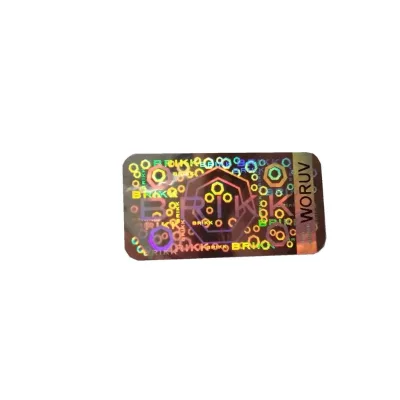


Customized Size Holographic Adhesive Vinyl Roll Custom Sticker Label
$0.85 - $0.98
MOQ: 2000 Square Meters

Vinyl Opaque Rightint Custom Stickers for Box Holographic Sticker Paper
$0.85 - $0.98
MOQ: 2000 Square Meters


Custom Logo Label Holographic Sticker Custom 3D Holographic Sticker Label
$0.06 - $0.18
MOQ: 500 Pieces


Comprehensive Sourcing Guide
Strategic Sourcing Guide for Holographic Box Stickers
The procurement of holographic box stickers represents a specialized segment within the broader adhesive label market, driven by the dual necessity of aesthetic appeal and robust anti-counterfeiting capabilities. For B2B buyers, sourcing these items requires a disciplined approach that distinguishes between generic decorative labels and high-security authentication solutions. The market data indicates a diverse range of product attributes, including specific model numbers such as WDPVa917, WDPVa980, and AMS059-11, alongside various material compositions ranging from paper to vinyl. Understanding these technical variances is the first step in aligning supplier capabilities with specific operational requirements.
Technical Specifications and Material Composition
The foundational element of any holographic sticker is its substrate and the printing technology employed. Observed product data reveals a clear divergence in material choices, with "Paper" and "Vinyl" being the primary categories identified in the supply chain. Paper-based stickers, often associated with models like WDPVa917, are typically suited for applications where cost-efficiency and biodegradability are prioritized, such as pharmaceutical packaging or food labeling. Conversely, vinyl substrates, frequently linked to models like B48 or BQ39, offer superior durability, making them ideal for products exposed to moisture or harsh environmental conditions.
Printing technology is another critical specification. The supply chain supports multiple methods, including Screen Printing, Digital Printing, Flexographic Printing, and Gravure Printing. The choice of printing method directly influences the visual fidelity of the holographic effect. Digital printing is often noted for its ability to handle complex, full-color designs with high precision, while Gravure and Flexographic printing are preferred for high-volume runs where consistency and speed are paramount. Furthermore, the finishing process plays a significant role in the final product quality. Available finishes include Laminated, Matt, Glossy, and Stamping. For holographic applications, a specific lamination or coating process is often required to protect the holographic foil and enhance the visual depth of the image.
| Specification Category | Observed Attributes | Typical Application Context |
|---|---|---|
| Material | Paper, Vinyl | Paper for dry goods; Vinyl for moisture-prone items |
| Printing Type | Screen, Digital, Flexographic, Gravure | Digital for short runs; Flexo/Gravure for mass production |
| Coating | Single Side | Standard for most adhesive applications |
| Finish | Laminated, Matt, Glossy, Stamping | Glossy for high visibility; Matt for premium feel |
| Shape | Customize | Tailored to specific packaging geometry |
| Color | CMYK, Pantone | Ensures brand color accuracy |
Compliance, Certification, and Security Features
When sourcing holographic stickers, particularly for industries like medicine and food, compliance and security features are non-negotiable. The product data explicitly highlights "Anti-Counterfeit" and "Holographic" as key features, alongside "Waterproof" and "Weatherproof" capabilities. These attributes suggest that the intended use cases often involve high-value goods or regulated industries where product authenticity is critical.
Buyers must verify that the supplier can provide evidence of compliance with relevant standards. While specific certification names are not universally listed in the provided data, the presence of standards such as "A4/B5" for certain paper-based products and "According to the batch" for others indicates a need for batch-specific quality control. For medical applications, the "Usage" field explicitly lists "Medicine," implying that the stickers must meet stringent hygiene and safety regulations. Buyers should request documentation confirming that the adhesives and inks used are non-toxic and compliant with food contact regulations if the stickers are applied to food packaging.
The "Anti-counterfeit" feature often involves proprietary technologies that are difficult to replicate. Buyers should inquire about the specific mechanisms used, such as micro-text, optical variable devices (OVDs), or unique serial numbering. The data mentions "Holographic" as a distinct feature, which typically refers to the visual effect created by diffraction gratings. However, the effectiveness of this feature depends on the quality of the holographic foil and the precision of the printing process. It is essential to verify that the supplier has the technical capacity to produce these complex patterns consistently across large production runs.
Cost Drivers and Pricing Dynamics
The cost of holographic box stickers is influenced by a complex interplay of factors, including material selection, printing technology, order volume, and customization requirements. The observed price range in the market spans from 0 to 1.5 USD, a wide spectrum that reflects the diversity of product configurations. Lower-priced items are likely to be standard paper stickers with basic digital printing, while higher-priced items may involve vinyl substrates, advanced holographic foils, and complex finishing processes like stamping.
Order volume is a significant cost driver. The observed Minimum Order Quantity (MOQ) ranges from 2 to 10,000 units, indicating that suppliers cater to both small-batch custom orders and large-scale industrial production. For buyers requiring small quantities, the unit cost will be higher due to the setup costs associated with custom printing and holographic foil application. Conversely, large orders benefit from economies of scale, reducing the per-unit cost significantly.
Customization is another major factor. The data confirms that "Customization" is available and that "Custom Order" is accepted. This includes custom shapes, sizes, and designs. Custom shapes, such as those specified by the "Shape: Customize" attribute, often require die-cutting, which adds to the production time and cost. Additionally, the "prod_packing" attribute shows variations from "in Plastic Bags" to "Pallet," suggesting that packaging requirements can also impact the final price. Buyers should request detailed cost breakdowns to understand how much of the price is attributed to the holographic element versus the base material and printing.
Typical Applications and Usage Scenarios
The versatility of holographic box stickers is evident in the diverse range of applications listed in the product data. The "Usage" field includes "Medicine," "Packaging label," "Adhesive sticker," "Bottled Beverage," "Shipping Labels," "Food," "Price Tags," and "Packaging Film." This breadth of application underscores the importance of selecting the right material and printing method for the specific use case.
In the pharmaceutical industry, holographic stickers serve as a primary tool for anti-counterfeiting. The "Medicine" usage category suggests that these stickers must be durable and resistant to tampering. The "Anti-counterfeit" and "Holographic" features are particularly relevant here, as they provide a visual verification method for consumers and regulators. For the food and beverage industry, the stickers must be safe for contact with food products and resistant to moisture and temperature fluctuations. The "Waterproof" and "Weatherproof" attributes are critical in this context.
Shipping and logistics also rely heavily on holographic stickers for authentication and tracking. The "Shipping Labels" usage indicates that these stickers must adhere securely to various surfaces and withstand the rigors of transportation. The "Adhesive sticker" classification confirms their primary function as a bonding agent for packaging. Additionally, the "Price Tags" usage suggests that these stickers can be used for retail pricing, where durability and visual appeal are important for shelf presentation.
Supplier Evaluation and Geographic Considerations
Evaluating suppliers for holographic box stickers requires a thorough assessment of their technical capabilities, production capacity, and geographic location. The data indicates that suppliers are primarily located in "China," with specific mentions of "Guangdong" and "Guangzhou" as production hubs. These regions are known for their robust manufacturing ecosystems and expertise in printing and packaging.
Buyers should verify the supplier's ability to handle the specific model numbers and specifications observed in the market, such as WDPVa917, AMS059-11, or YS20260122JC00035. The presence of these specific model numbers suggests that suppliers may have established product lines or proprietary designs. Buyers should request samples of these models to assess the quality of the holographic effect, the adhesion strength, and the overall finish.
The "Brand Name" attribute, such as "MC," indicates that some suppliers may offer branded products. However, buyers should also consider the possibility of private labeling, as "Customization" and "Custom Order" are explicitly accepted. This flexibility allows buyers to create unique branding for their products. Additionally, the "Small Orders: Accepted" attribute suggests that suppliers are willing to accommodate smaller quantities, which is beneficial for startups or companies testing new products.
Quality Control and Long-Term Procurement
Maintaining consistent quality is essential for long-term procurement success. The data mentions "Standard: customized" and "Standard: According to the batch," highlighting the importance of batch-specific quality control. Buyers should implement a rigorous quality assurance process that includes visual inspection, adhesion testing, and durability testing. The "Finished" attributes, such as "Laminated/Matt/Gloosy/Stamping," should be verified against the agreed-upon specifications to ensure consistency.
Long-term procurement considerations include the stability of the supply chain and the ability of the supplier to scale production. The "Lead time" and "MOQ" values are critical factors in supply chain planning. Buyers should negotiate terms that allow for flexibility in order quantities while maintaining a steady supply of high-quality stickers. The "Classification: Spot Goods" attribute suggests that some suppliers may have inventory available for immediate shipment, which can be advantageous for urgent orders.
Furthermore, buyers should establish a clear communication channel with suppliers to address any issues that arise during production. The "Customization: Yes" and "Custom Order: Accept" attributes indicate that suppliers are open to collaboration, but clear specifications and regular communication are necessary to ensure that the final product meets expectations. By focusing on these key areas, buyers can build a sustainable and reliable supply chain for holographic box stickers.
Conclusion
Sourcing holographic box stickers requires a nuanced understanding of the technical specifications, compliance requirements, and market dynamics. By carefully evaluating the material, printing technology, and security features, buyers can select the right products for their specific applications. The diverse range of options available, from paper to vinyl and various printing methods, offers flexibility for different use cases. However, the complexity of the holographic effect and the need for anti-counterfeiting capabilities demand a disciplined approach to supplier evaluation and quality control. By adhering to these principles, buyers can ensure a successful procurement process that delivers high-quality, secure, and visually appealing stickers for their products.
FAQs
What materials are used for holographic box stickers?
Holographic box stickers are primarily made from paper or vinyl substrates. Paper is suitable for dry goods like medicine, while vinyl offers durability for moisture-prone items such as bottled beverages.
Which printing methods are available for these stickers?
Available printing methods include screen, digital, flexographic, and gravure printing. Digital printing handles complex designs well, whereas flexographic and gravure printing are preferred for high-volume production runs.
Can I order custom shapes and sizes for these stickers?
Yes, customization is available for shapes, sizes, and designs. Buyers can request specific dimensions and die-cutting to match their packaging geometry, with options for single-side coating and various finishes.
What security features do these stickers offer?
These stickers feature anti-counterfeit, holographic, waterproof, and weatherproof capabilities. They are designed to prevent tampering and ensure authenticity for high-value goods in medicine and food packaging sectors.
How do I find suppliers with low minimum order quantities?
Suppliers accept small orders with minimums ranging from 2 to 10,000 units. Buyers can source vendors who accommodate small batches, allowing for testing new products without committing to large inventory volumes.
What packaging options are provided for these stickers?
Packaging options include plastic bags, boxes, cartons, and pallets. The specific packing method depends on the order size and shipping requirements, ensuring protection during transit for both small and large quantities.