Source Hotel Restaurant Serving Tray for Catering Events
Explore 30 options for the Hotel Restaurant Serving Tray, ranging from bamboo to plastic materials. Buyers can compare specifications, customization options, and MOQs from verified suppliers in China to find the ideal solution for their business needs.
Key considerations
Products List
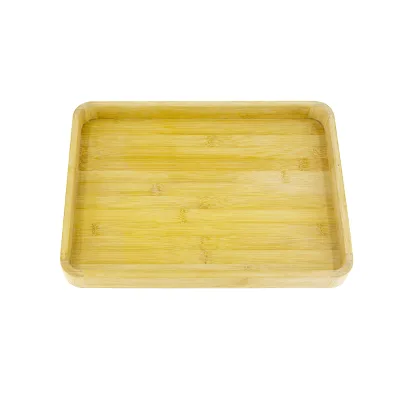
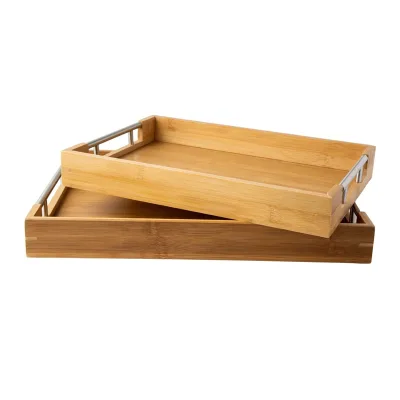


Serving Tray Rectangular Food Other Hotel Restaurant Supply Stainless Steel
$10.00 - $15.00
MOQ: 300 Pieces



Comprehensive Sourcing Guide
Strategic Sourcing Guide for Hotel and Restaurant Serving Trays
Understanding Material Variants and Core Specifications
When sourcing serving trays for hospitality environments, the primary decision point lies in selecting the appropriate material, which dictates durability, aesthetic appeal, and operational longevity. The market presents distinct options, primarily centering on natural bamboo and engineered plastics. Bamboo trays are frequently marketed for their eco-friendly profile and minimalist design, offering a natural aesthetic that aligns well with modern dining trends. These items typically feature a bamboo color and are often associated with specific dimensions, such as a footprint of approximately 34.5 x 25 x 4 cm, which is suitable for standard table service. The manufacturing technique for these items often involves engraving, adding a layer of customization to the natural grain. In contrast, plastic serving trays offer a different set of advantages, often available in colors like white or blue, and are designed for high-volume, high-traffic operations where durability and ease of cleaning are paramount. Plastic variants may come in larger dimensions, such as 41.3 x 30.5 x 2 cm, providing a broader surface area for heavy plating.
Buyers must carefully distinguish between these material classes as they influence the entire procurement strategy. The bamboo category is often associated with a square or rectangular shape and is explicitly categorized as a plate or dish type suitable for home, hotel, and restaurant usage. Conversely, plastic options are defined by their non-disposable nature, indicating they are built for repeated use rather than single-service events. The dimensional tolerance for these products is a critical technical specification; for high-precision manufacturing, tolerances may be maintained within a range of less than ±1mm, ensuring that trays stack uniformly and fit standardized storage racks. Weight tolerance is equally important for logistics and inventory management, with acceptable variances often staying below ±1% to ensure consistent shipping costs and handling characteristics.
Technical Compliance and Certification Verification
In the B2B procurement of food-contact items, verifying compliance with safety and environmental standards is non-negotiable. While specific certification documents are not universally guaranteed for every listed product, buyers must rigorously verify that materials meet the food safety regulations of their target market. For bamboo products, the focus should be on the treatment process to ensure the wood is free from harmful chemicals and safe for direct food contact. The "Eco-Friendly" attribute often cited in product descriptions requires substantiation through third-party testing or specific supply chain audits to confirm that the bamboo is sustainably sourced and processed without toxic preservatives.
For plastic trays, the verification process shifts toward chemical stability and thermal resistance. Buyers should request documentation confirming that the plastic material does not leach harmful substances when exposed to hot foods or cleaning agents. The "Non-Disposable" classification implies a requirement for high durability, which must be validated through impact and stress testing. Furthermore, the origin of the product plays a significant role in compliance. Products originating from regions like Fujian or Guangdong in China are common, but the specific factory's adherence to international standards must be confirmed. Buyers should not assume that a product labeled with a specific model number, such as HYK02020 or SE3002, automatically meets all local regulatory requirements without explicit verification from the supplier. The dimensional tolerance of <±1mm and weight tolerance of <±1% are technical metrics that indicate a high level of manufacturing control, but they do not replace the need for food safety certifications.
Cost Drivers and Economic Factors in Procurement
The total cost of ownership for serving trays is influenced by several variables beyond the unit price. The observed price range in the market spans from $0.20 to $15.00, a wide spectrum that reflects differences in material quality, manufacturing complexity, and order volume. The Minimum Order Quantity (MOQ) is a significant economic driver, with observed ranges extending from 1 unit for sampling up to 2000 units for bulk production. A common MOQ for specialized bamboo trays is 500 pieces, while plastic variants may require orders of 600 to 1200 pieces. These thresholds directly impact the per-unit cost; higher volumes typically yield lower unit prices but require greater capital outlay and storage capacity.
Customization is another major cost factor. Options such as customized logos, specific colors, and tailored packaging are widely available but incur additional expenses. The "Customized Logo" and "OEM & ODM" attributes indicate that suppliers are willing to adapt products to specific branding needs, but this requires a longer lead time and potentially higher setup costs. The single gross weight of items, which can be as high as 9.547 kg for a single package, significantly affects shipping costs. Buyers must calculate the freight charges based on the volume and weight of the shipment, as bulky items like trays with dimensions of 35.2 x 26 x 40.5 cm can consume significant container space. Additionally, the packing method, whether customized or standard cartons containing 60 pieces, influences the efficiency of loading and the protection of goods during transit.
Typical Applications and Operational Fit
The versatility of serving trays makes them suitable for a wide array of hospitality scenarios. The primary applications include hotels, restaurants, and private parties, where the trays serve as essential tools for food presentation and service. The "Minimalist" style and "Plant" pattern types are particularly well-suited for establishments aiming for a natural, organic, or rustic aesthetic. These designs enhance the dining experience by providing a visually appealing base for dishes. In contrast, plastic trays with their "White" or "Blue" color options and robust construction are ideal for high-volume buffet lines, catering services, and institutional dining where speed and hygiene are critical.
The functional design of these trays is often multifunctional, allowing them to be used for serving appetizers, main courses, or beverages. The "Square" shape of bamboo trays and the "Rectangular" design of others provide stable platforms for various dish types. The "Plate Dish" classification confirms their suitability for direct food placement. For events and parties, the aesthetic appeal of the bamboo material adds a touch of elegance, while the durability of plastic ensures reliability in chaotic environments. Buyers should align the tray selection with their specific operational needs; for instance, a fine-dining restaurant might prioritize the aesthetic and eco-friendly attributes of bamboo, whereas a fast-casual chain might opt for the ease of cleaning and stackability of plastic options.
Supplier Evaluation and Relationship Management
Selecting the right supplier requires a thorough evaluation of their capabilities, particularly regarding customization and production capacity. The "OEM & ODM" and "Customization Available" attributes suggest that suppliers are flexible in adapting products to client needs. However, buyers must verify the supplier's ability to maintain consistency across large orders. The "Sample time" of 7-10 days is a standard metric for evaluating responsiveness, but buyers should also inquire about the full production lead time for bulk orders. The "Acceptable" status for OEM and ODM services indicates a willingness to collaborate, but the scope of this collaboration must be clearly defined in the contract.
Geographic origin is another critical factor in supplier evaluation. Products originating from Fujian or Guangdong, China, are common, but the specific location can impact logistics and communication. Buyers should assess the supplier's proximity to ports and their experience with international shipping. The "Customized Packing" option allows for branding on the packaging, which is valuable for retail or corporate gifting, but it requires precise coordination with the supplier to ensure the packaging meets the buyer's specifications. Additionally, the "Single item" selling unit suggests that suppliers may be willing to accommodate small trial orders, which is useful for quality testing before committing to large volumes.
Quality Control and Long-Term Procurement Strategy
Implementing a robust quality control (QC) strategy is essential for maintaining product standards. The technical specifications provided, such as dimensional tolerance of <±1mm and weight tolerance of <±1%, serve as benchmarks for QC inspections. Buyers should conduct pre-shipment inspections to verify that the physical dimensions and weights of the trays fall within these acceptable ranges. For bamboo trays, checking for surface defects, such as splinters or uneven engraving, is crucial. For plastic trays, inspecting for warping, color consistency, and structural integrity is necessary.
Long-term procurement considerations involve building a sustainable supply chain. The "Eco-Friendly" attribute of bamboo trays aligns with growing consumer demand for sustainable products, making it a strategic choice for brands focusing on environmental responsibility. However, buyers must ensure that the "Eco-Friendly" claim is backed by verifiable data. For plastic trays, the "Non-Disposable" nature supports a circular economy approach, reducing waste over time. Buyers should establish clear communication channels with suppliers to address any quality issues promptly and to negotiate favorable terms for repeat orders. The "Customized Logo" and "Customized Color" options allow for brand differentiation, but consistency in these customizations across multiple production runs must be maintained to protect brand integrity.
Comparative Analysis of Product Attributes
To facilitate decision-making, the following table summarizes the key differences between the primary material options observed in the market. This comparison highlights the distinct characteristics that buyers should consider when selecting the most suitable product for their specific needs.
| Attribute | Bamboo Serving Tray | Plastic Serving Tray |
|---|---|---|
| Primary Material | Bamboo | Plastic |
| Typical Color | Bamboo Color | White / Blue / Customized |
| Design Style | Minimalist, Plant Pattern | Functional, Solid Color |
| Shape | Square / Rectangle | Rectangular |
| Typical Size | ~34.5 x 25 x 4 cm | ~41.3 x 30.5 x 2 cm |
| Eco-Friendly | Yes (Natural Material) | Depends on Recyclability |
| MOQ Range | 500 Pcs | 600 - 1200 Pcs |
| Customization | Logo, Engraving | Logo, Color, Shape |
| Origin | Fujian, China | Guangdong, China |
| Usage | Home, Hotel, Restaurant | Food Service, High Traffic |
| Tolerance | <±1mm (Dimensional) | <±1mm (Dimensional) |
This comparison underscores that while both options serve the core function of serving food, they cater to different operational philosophies. The bamboo option leans towards aesthetics and sustainability, while the plastic option prioritizes durability and volume efficiency. Buyers must weigh these factors against their specific brand identity and operational requirements to make an informed procurement decision.
FAQs
What is the typical MOQ for bamboo serving trays?
The typical MOQ for bamboo serving trays is 500 pieces. Some plastic variants may require higher volumes, such as 600 or 1200 pieces, depending on the specific model and customization needs.
Can suppliers provide customized logos on these trays?
Yes, suppliers accept customized logos on both bamboo and plastic trays. This customization is often available alongside other options like specific colors or tailored packaging designs.
How long does it take to receive a sample?
It typically takes 7 to 10 days to receive a sample. This lead time allows buyers to verify product quality and specifications before committing to a larger bulk order.
Which material options are available for these trays?
Available material options include natural bamboo and durable plastic. Bamboo trays often feature a minimalist style and plant patterns, while plastic options come in colors like white or blue.
What are the standard dimensions for these serving trays?
Standard dimensions vary by material, with bamboo trays often measuring 34.5 by 25 by 4 cm. Plastic trays may be larger, such as 41.3 by 30.5 by 2 cm, to accommodate different serving needs.
Where are these trays typically manufactured?
These trays are typically manufactured in China, specifically in regions like Fujian and Guangdong. The origin affects logistics and may influence the specific production capabilities of the supplier.