Source HRC50 Sprocket for Excavator for Hitachi, JCB, and Kubota
Find 30 available options for HRC50 Sprocket for Excavator from suppliers in Fujian, China. Buyers can compare specifications like material grades, surface hardness, and compatible brands such as Hitachi, JCB, and Kubota to select the right undercarriage part.
Key considerations
Products List
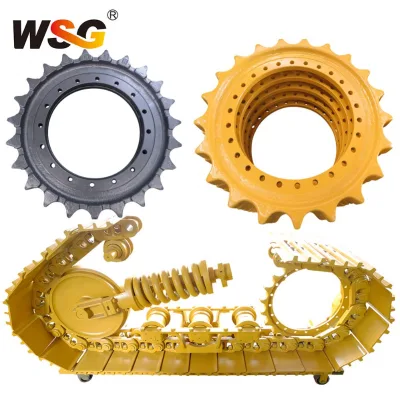
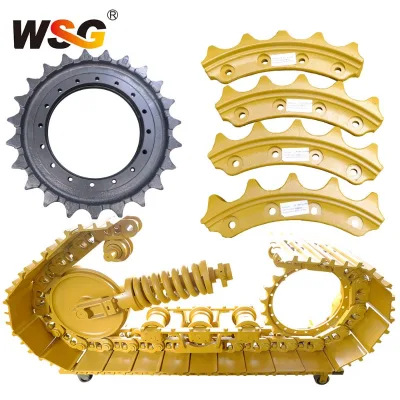
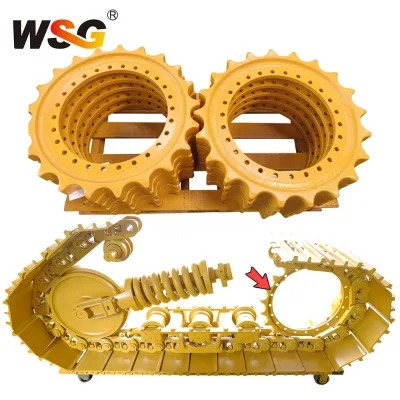
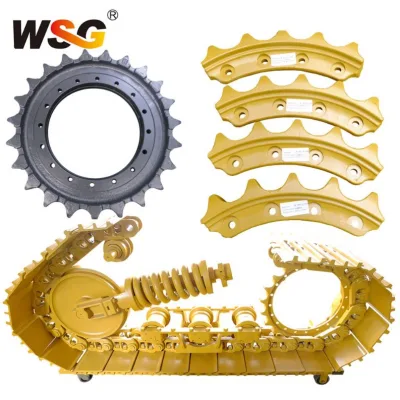




Comprehensive Sourcing Guide
Strategic Sourcing Guide for HRC50 Excavator Sprockets
Understanding Technical Specifications and Material Composition
When sourcing an HRC50 Sprocket for Excavator applications, the primary focus must be on the precise metallurgical composition and the resulting mechanical properties that ensure durability under extreme load. The core requirement of an HRC50 rating indicates a surface hardness between 50 and 52 on the Rockwell C scale, a critical threshold for resisting wear while maintaining sufficient toughness to prevent brittle fracture. Based on available product data, manufacturers utilize specific alloy steels to achieve these performance metrics. Common raw materials observed in this sector include 50MnB, 40Mn, and 35MnB steels. The choice of material directly influences the final hardness profile; for instance, products utilizing 50MnB steel are frequently associated with surface hardness ranges of HRC54-60, while those using 35MnB may target a range of HRC52-58. Buyers must verify that the specific unit selected meets the HRC50 baseline, as variations in alloy content can shift the hardness outside the optimal window for specific excavator models.
The manufacturing process is equally critical to the final product integrity. The supply chain data indicates that sprockets are produced via forging or casting methods. Forging generally offers superior grain structure alignment and tensile strength, which is vital for high-stress components like drive sprockets. The production process must also account for the hardness depth, with observed specifications indicating a case depth of 8-12mm. This depth ensures that the wear-resistant layer extends sufficiently below the surface to protect the core material during prolonged operation. Furthermore, the physical dimensions and model compatibility are non-negotiable. The market features specific model identifiers such as SK50SR-2, KH11, and JCB801, alongside generic designations like "Excavator Sprocket For Hitachi." Buyers must cross-reference these model numbers with their equipment's serial number to ensure a precise fit, as the "Single package size" can vary significantly, with some units packaged in dimensions of 150.00x150.00x150.00 cm, reflecting the heavy and bulky nature of these components.
Compliance, Certification, and Quality Assurance Protocols
In the B2B procurement of heavy machinery parts, verifying compliance with international quality standards is a mandatory step before finalizing any order. The supply data confirms that ISO9001 certification is a standard attribute for reputable suppliers in this category. This certification indicates that the manufacturer adheres to a quality management system that ensures consistent product quality and process control. However, the presence of a certification mark should be treated as a baseline requirement rather than a guarantee of specific performance. Buyers must request current, valid certificates and verify the scope of the certification to ensure it covers the specific manufacturing processes, such as forging and heat treatment, relevant to the sprocket production.
Beyond general quality management, specific inspection protocols are essential for validating the HRC50 claim. The available data highlights "Video outgoing-inspection" as a provided attribute, suggesting that some suppliers offer visual verification of the final product before shipment. This is a valuable tool for remote buyers to confirm that the physical item matches the ordered specifications, including color, packaging, and general condition. Additionally, the "Condition" of the product is listed as "New," which is a fundamental requirement for any replacement part to ensure it has not been previously subjected to wear or stress. The "Warranty" period of 1 Year is another critical compliance metric, offering a safety net for early failures. Buyers should ensure that the warranty terms explicitly cover material defects and workmanship issues related to the hardness and dimensional tolerances.
The "After-sales Service" landscape is also a key compliance factor. Data points to "Video technical support" and "Online support" as standard service offerings. These services are crucial for troubleshooting installation issues or diagnosing premature wear patterns. When evaluating a supplier, procurement teams should confirm that these support channels are active and responsive. The "Place of Origin" is consistently listed as Fujian, China, a region known for its manufacturing capabilities in construction machinery parts. While this location is a factual observation, buyers should be aware that regional manufacturing clusters may have varying levels of regulatory oversight. Therefore, the ISO9001 certification and the specific inspection videos become even more vital as objective evidence of quality control in the absence of on-site audits.
Cost Drivers and Pricing Structure Analysis
The pricing of excavator sprockets is influenced by a complex interplay of material costs, manufacturing complexity, and logistical factors. The observed price range in the market spans from $0.50 to $100,000 USD, a vast disparity that reflects the difference between small, generic components and large, custom-forged assemblies for heavy-duty machinery. For a standard HRC50 sprocket, the cost is primarily driven by the raw material grade. Steels like 50MnB and 40MnB are more expensive than standard carbon steels due to their enhanced alloying elements, which are necessary to achieve the required hardness and toughness. The manufacturing process also adds significant cost; forging is generally more expensive than casting due to higher energy consumption and tooling requirements, but it yields a superior product.
Minimum Order Quantity (MOQ) is another significant cost driver. The market data indicates an MOQ range of 1 to 500 units. Buyers purchasing single items may face a higher per-unit cost compared to those ordering in bulk. However, the "Selling Units" are listed as "Single item," suggesting that suppliers are flexible and can accommodate small orders, albeit potentially at a premium. The "Delivery time" of 1-10 days is relatively short, which can reduce inventory holding costs for buyers but may increase shipping expenses if expedited freight is required. The "Single gross weight" of 1000.000 kg for a single package indicates that shipping logistics are a major cost component. Heavy items like sprockets incur high freight charges, and the "Standard Packaging" or "Standar Packing" must be robust enough to prevent damage during transit, adding to the overall cost.
Buyers must also consider the "Brand Name" and "Compatible Brand" implications on pricing. Products branded as "for Kobelco," "for JCB," or "for Hitachi" often carry a premium due to the perceived compatibility and quality assurance associated with these major OEMs. Conversely, "Optional" branding or generic names like "WSG" may offer cost savings but require more rigorous vetting. The "Color" variations, such as "Black Yellow" or "Black," are primarily aesthetic but can sometimes indicate different coating processes that affect durability and cost. Ultimately, the total cost of ownership should be evaluated, factoring in the initial purchase price, shipping, installation, and the potential cost of downtime if a lower-quality sprocket fails prematurely.
Typical Applications and Equipment Compatibility
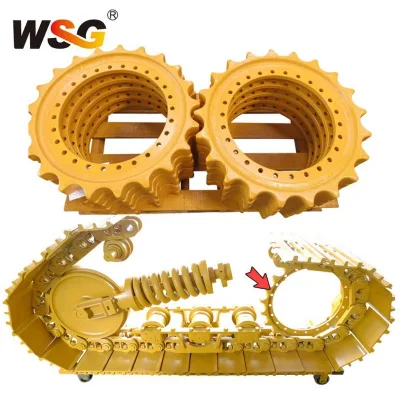
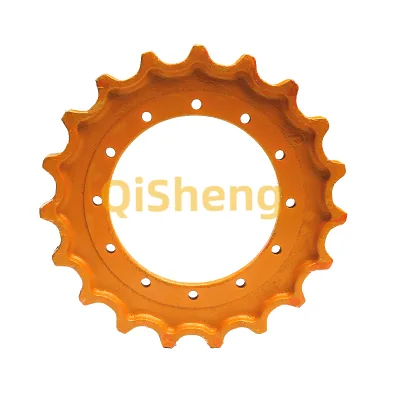
The application of HRC50 sprockets is highly specialized, primarily serving the undercarriage systems of crawler excavators. The "Application" is explicitly defined as "Excavator Undercarriage Parts," and the "Machine type" is categorized as "construction machinery." These components are critical for transmitting power from the final drive to the tracks, ensuring smooth movement and traction. The specific "Type" is often identified as "Mini Excavator Undercarriage Parts" or "Crawler Excavator" components, indicating that the same technical principles apply across different machine sizes, though the dimensions and load capacities vary.
Compatibility is the most critical factor in application selection. The data lists numerous "Compatible Brand" options, including Kobelco, Kubota, Hitachi, and Jcb. Specific model names such as "ZX50 / ZX50U / ZX50-3" and "JCB801" are provided, which serve as direct references for buyers. It is imperative that the buyer matches the sprocket model number exactly to their equipment's requirements. For example, a sprocket designed for a JCB801 Mini Excavator may not fit a larger Hitachi model, even if the general "Application" is the same. The "Keywords" such as "Sprocket," "Drive sprocket," "Chain sprocket," and "Sprocket rim" further clarify the component's function within the undercarriage assembly.
The "Name" of the product, often listed as "Excavator undercarriage parts sprocket" or "Mini Excavator Drive Sprocket," reinforces its specific role. Buyers should also consider the "Surface hardness" requirements relative to the application. An HRC50 rating is suitable for general construction environments, but for highly abrasive conditions, a higher hardness like HRC54-60 might be necessary. The "Material" composition, such as 50MnB or 35MnB, also dictates the suitability for different soil types and operating conditions. Understanding these nuances ensures that the selected sprocket not only fits physically but also performs optimally in the intended operational environment.
Supplier Evaluation and Quality Control Verification
Evaluating a supplier for HRC50 sprockets requires a multi-faceted approach that goes beyond simple price comparison. The "Brand Name" and "Compatible Brand" information can serve as initial indicators of specialization, but the most reliable evaluation criteria are the technical and procedural attributes provided. Buyers should prioritize suppliers who offer "Video outgoing-inspection," as this provides tangible evidence of the product's condition and specifications before it leaves the factory. This visual verification is particularly important for confirming the "Color" and "Package" integrity, ensuring that the "Standard Packaging" is sufficient to protect the heavy component during transit.
Quality control should be verified through the "Certification" status, specifically looking for ISO9001 compliance. While this is a standard requirement, buyers should request detailed documentation to ensure the certification is current and covers the specific manufacturing processes. The "After Warranty Service" and "After-sales Service Provided" options, such as "Video technical support" and "Online support," are also strong indicators of a supplier's commitment to long-term reliability. A supplier that offers robust support is more likely to stand behind their product's quality. Additionally, the "Condition" of the product being listed as "New" is a basic but essential check to avoid purchasing refurbished or used parts.
The "Process" of manufacturing, whether "Forging" or "Casting," should be clearly stated and verified. Forging is generally preferred for high-stress applications due to its superior mechanical properties. Buyers should also verify the "Hardness Depth" of 8-12mm, as this ensures the wear-resistant layer is deep enough to withstand prolonged use. The "Model Number" and "Model Name" consistency across all documentation is crucial to avoid mismatches. Finally, the "Delivery time" of 1-10 days suggests a responsive supply chain, but buyers should confirm that this timeline is realistic for their specific order volume and location.
Long-Term Procurement Considerations and Strategic Sourcing
Sourcing HRC50 sprockets is not merely a transactional activity but a strategic decision that impacts long-term operational efficiency. The "Warranty" of 1 Year provides a baseline for risk management, but buyers should consider the total cost of ownership, including maintenance and replacement frequency. The "Hardness Depth" and "Surface hardness" specifications are critical for determining the lifespan of the sprocket. A sprocket with a deeper case depth and consistent hardness will last longer, reducing downtime and replacement costs. The "Material" choice, such as 50MnB versus 35MnB, also plays a significant role in longevity, with higher alloy content generally offering better wear resistance.
Supply chain resilience is another key consideration. The "Place of Origin" in Fujian, China, indicates a specific manufacturing hub, but buyers should diversify their supplier base to mitigate risks associated with geopolitical issues or logistical disruptions. The "MOQ" range of 1-500 offers flexibility, allowing buyers to adjust their order sizes based on demand fluctuations. However, larger orders may yield better pricing, so buyers should plan their procurement cycles to balance inventory costs with bulk discounts. The "Single package size" and "Single gross weight" of 1000.000 kg highlight the logistical challenges of shipping these heavy components, necessitating careful planning for storage and handling.
Finally, the "After-sales Service" and "Video technical support" capabilities of the supplier are vital for long-term success. A supplier that provides comprehensive support can help diagnose issues early, preventing minor problems from escalating into major failures. The "Keywords" and "Application" data should be used to build a robust inventory management system, ensuring that the correct sprockets are always available for maintenance and repair. By focusing on these long-term factors, buyers can build a sustainable procurement strategy that ensures the reliability and efficiency of their excavator fleet.
FAQs
What material is used for HRC50 excavator sprockets?
Manufacturers use alloy steels like 50MnB, 40Mn, or 35MnB to achieve the required hardness. These specific materials ensure the sprocket meets the HRC50 baseline while maintaining sufficient toughness for heavy-duty construction machinery applications.
Which certifications should I verify for these sprockets?
You should verify that the supplier holds ISO9001 certification as a standard quality management baseline. This certification indicates adherence to consistent product quality and process control, which is essential for validating the manufacturing integrity of the sprocket.
How long is the warranty period for these parts?
The standard warranty period provided for these excavator undercarriage parts is one year. This warranty typically covers material defects and workmanship issues, offering a safety net for early failures related to hardness or dimensional tolerances.
Can I get video inspection before shipment?
Yes, many suppliers provide video outgoing-inspection to verify the final product before it leaves the factory. This visual verification allows you to confirm the physical item matches the ordered specifications, including color, packaging, and general condition.
What is the typical lead time for delivery?
The typical delivery time for these sprockets ranges from one to ten days. This relatively short lead time can reduce inventory holding costs, though expedited freight may be required to meet urgent project schedules.
Which brands are compatible with these sprockets?
These sprockets are compatible with major brands including Kobelco, Kubota, Hitachi, and JCB. Specific model numbers like SK50SR-2, KH11, and JCB801 must be matched exactly to your equipment's serial number to ensure a precise fit.
What is the surface hardness range for these parts?
The surface hardness typically ranges from HRC52 to HRC60 depending on the specific material used. Products utilizing 50MnB steel often achieve HRC54-60, while those using 35MnB may target a range of HRC52-58 to resist wear.