Source Automotive Airbag Teaching Board for Schools, Labs, Workshops
Find 22 Automotive Airbag Teaching Board options for technical schools, training centers, and workshops. Compare steel and aluminum models with CE and ISO certifications to support beginner to advanced student learning; compare the available evidence and request quotations based on your requirements.
Key considerations
Products List


Educational Automobile Automobile Airbag System Electronic Teaching Board
$1593.00 - $2503.00
MOQ: 1 Pieces


Automatic Air-Conditioning Circuit Teaching Board Automotive Educational Trainer
$1000.00 - $3000.00
MOQ: 1 Pieces

Automobile Teaching Instrument Airbag System Teaching Board for School Labs
$2000.00 - $3000.00
MOQ: 1 Pieces

Teaching Instrument Automotive Electronic Cruise System Teaching Board
$2000.00 - $3000.00
MOQ: 1 Pieces

Passat B5 Airbag Teaching Board Automotive Technology Education Equipment
$2000.00 - $3000.00
MOQ: 1 Pieces


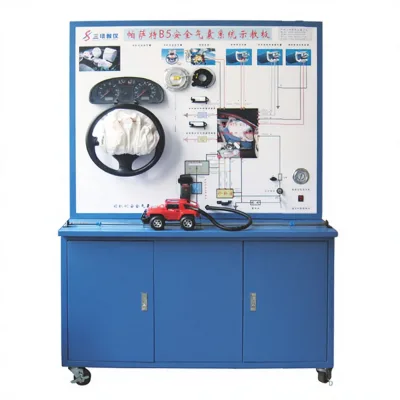


Automotive Airbag Safety Systems Training Board Education Didactic Equipment
$5000.00 - $8000.00
MOQ: 1 Pieces


Vehicle ABS/Ebd/Bas Brake System Training Platform Auto Training Board
$1888.00 - $5888.00
MOQ: 1 Sets

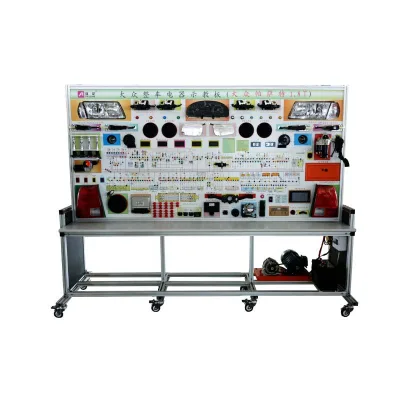
Comprehensive Sourcing Guide
Automotive Airbag Teaching Board Sourcing Guide
Procurement professionals seeking automotive airbag teaching boards must first recognize that these units are specialized training platforms designed for technical education rather than general classroom use. The observed market listings indicate a primary focus on technical schools, training centers, and workshops where hands-on experience with vehicle safety systems is critical. Buyers should expect these units to function as comprehensive teaching tools that bridge the gap between theoretical knowledge and practical application in automotive repair environments.
When evaluating potential listings, it is essential to distinguish between generic educational furniture and purpose-built training boards. The available data suggests that these products often feature customizable interfaces and specific models like the ZC-QCA08C or GZSX-D005, which are tailored for beginner to advanced learning levels. Sourcing decisions should prioritize units that explicitly state their suitability for multimedia machine applications and student learning functions, ensuring the equipment aligns with the specific curriculum requirements of the institution.
Product Scope and Observed Listing Signals
Buyers must carefully analyze the product attributes to ensure the teaching board matches the intended instructional depth. The observed listings frequently highlight features such as "Education Training" and "Teaching Level" ranging from beginner to advanced, which indicates a scalable learning path for students. It is crucial to verify that the specific model selected includes the necessary components, such as the Cruise Control Unit or Electronic Accelerator Pedal, to provide a realistic simulation of modern automotive electronic systems.
The physical configuration of the unit is another critical signal for procurement teams to evaluate. Listings often specify dimensions around 1600mm by 600mm by 1700mm, though variations exist depending on the specific model and manufacturer. Procurement officers should confirm that the packaging, typically described as a wooden box or carton, is robust enough to protect the delicate electronic components during transit. Additionally, the availability of OEM customization for language and interface design should be confirmed to ensure the equipment is usable by the target student demographic without language barriers.
Technical Specifications to Verify
Technical verification begins with confirming the exact model number and physical dimensions against the facility's spatial constraints. The market data shows specific models like ZC-QCD27E and GZSX-D014 with varying standard sizes, such as 1610x600x1810mm or 12608501800mm. Buyers must measure their training rooms to ensure the selected unit fits comfortably while allowing adequate space for student movement and instructor access during practical sessions.
Material composition and functional capabilities are equally vital for long-term durability and educational effectiveness. The observed products utilize materials like steel and aluminum, which provide the necessary structural integrity for repeated handling by students. Procurement teams should verify that the training materials are constructed to withstand the rigors of a workshop environment and that the unit supports the specific teaching functions required, such as demonstrating airbag deployment logic or electronic accelerator pedal operation.
Compliance and Safety Documentation
Safety compliance is a non-negotiable aspect of sourcing automotive training equipment, particularly when dealing with high-voltage or explosive components like airbags. The observed listings frequently cite certifications such as CE, ISO, and ISO9001, which serve as indicators that the manufacturer adheres to recognized quality and safety management systems. Buyers must request current certification documents to verify that the specific batch of equipment meets the safety standards required by local educational regulations and industry best practices.
Beyond general certifications, the documentation must explicitly address the safety protocols for the training board's operation. Since these units are designed for teaching, they must include clear safety warnings and operational guidelines to prevent accidental deployment or injury during student exercises. Procurement officers should ensure that the supplier provides a comprehensive user manual and safety data sheet that details the proper handling procedures for the airbag system training board, ensuring that the educational environment remains secure for all participants.
Cost Drivers and Commercial Terms
The pricing for automotive airbag teaching boards is influenced by the complexity of the electronic systems integrated into the unit and the level of customization required. The observed price range spans from approximately 1000 to over 11,000 USD, reflecting the variance between basic training boards and advanced systems with extensive multimedia capabilities. Buyers should analyze the cost structure to understand whether the price includes the full suite of training materials, software licenses, and necessary accessories for a complete learning experience.
Commercial terms and logistics play a significant role in the total cost of ownership and should be negotiated carefully. The market data indicates that delivery terms often include EXW, FOB, or CIF options, with lead times dependent on shipping methods like sea or air. Procurement teams must calculate the total landed cost by factoring in shipping fees, insurance, and potential customs duties, while also confirming the minimum order quantity, which is typically set at one set or piece for these specialized educational units.
Supplier Qualification and Quality Control
Supplier qualification requires a thorough review of the manufacturer's track record in producing educational automotive equipment. Buyers should verify that the supplier has a history of delivering units that meet the specific functional requirements of technical schools and training centers. The presence of certifications like ISO9001 and ISO14001 suggests a commitment to quality management and environmental standards, but direct verification of these credentials is necessary to ensure they apply to the specific products being purchased.
Quality control processes must be established to ensure that every unit received matches the agreed-upon specifications and performance standards. Since the products are often customized for language and interface, buyers should request pre-shipment inspections or video evidence of the final assembly to confirm that the customization is accurate. It is also advisable to establish a clear protocol for handling defects or discrepancies, ensuring that the supplier is responsive to quality issues that could disrupt the educational schedule.
Long-Term Procurement Checks
Sustainability and support are critical factors when investing in automotive training equipment that will be used for years. Buyers should inquire about the availability of spare parts and the supplier's policy on warranty coverage, which is typically listed as one year for these units. Ensuring that the supplier can provide timely technical support and replacement components is essential for maintaining the operational readiness of the training board throughout its lifecycle.
Future-proofing the procurement strategy involves assessing the supplier's ability to update the training content as automotive technology evolves. Since the field of automotive electronics is rapidly changing, the teaching board should be capable of receiving software updates or hardware modifications to reflect new vehicle models and safety systems. Procurement teams should negotiate terms that allow for future upgrades or expansions, ensuring that the initial investment remains relevant and effective as the curriculum advances from beginner to advanced levels.
FAQs
What certifications do automotive airbag teaching boards typically have?
These training platforms commonly hold CE, ISO, and CCC certifications to ensure safety and quality standards. Many models also feature ISO9001 and ISO14001 compliance for manufacturing processes. Buyers should verify specific certificates listed for each unit, as options vary by manufacturer and product model to meet regional educational requirements.
Can automotive airbag teaching boards be customized for specific schools?
Yes, customization is available for technical schools and training centers. Manufacturers offer OEM services to tailor language, features, and specifications. Buyers can request specific dimensions or functional adjustments to suit their curriculum needs, ensuring the equipment aligns perfectly with their educational goals and workshop environments.
What is the typical MOQ for ordering automotive airbag teaching boards?
The minimum order quantity is generally one set or piece. This low MOQ allows educational institutions to purchase single units for immediate use. It facilitates easy procurement for workshops and labs without requiring bulk commitments, making it accessible for small training programs or individual department upgrades.
How are automotive airbag teaching boards packaged for shipping?
Units are typically packed in wooden boxes or wooden cartons for protection. This sturdy packaging ensures safe transit via sea or air freight. The robust design prevents damage during long-distance shipping from China, preserving the integrity of the steel or aluminum training materials upon arrival at the destination.
What specifications are standard for automotive airbag teaching boards?
Standard dimensions often range around 1600x600x1700mm or 1260x850x1800mm. Models like ZC-QCA08C and GZSX-D005 reflect these common sizes. Buyers should check specific product models for exact measurements, as variations exist to fit different workshop spaces and teaching requirements for beginner to advanced levels.
What warranty is provided for automotive airbag teaching boards?
A one-year warranty is typically provided for new training platforms. This coverage supports technical schools and workshops during the initial operational period. Buyers should confirm warranty terms with suppliers, as conditions may vary slightly between manufacturers and specific product models to ensure long-term educational utility.