Source Fine Plywood Pipe Friction Trainer for Labs
Find 30 Fine Plywood Pipe Friction Trainer options for university fluid mechanics labs. Compare specifications, certifications, and pricing to select the right didactic equipment for your educational institution. Evaluate dimensions, power requirements, and warranty terms to ensure the selected unit meets your specific academic and operational needs for effective student training.
Key considerations
Products List


Pipe Fricton Training Equipment Teaching Equipment Vocational Training Equipment
$1800.00 - $9000.00
MOQ: 1 Pieces


$9.99 - $2999.00
MOQ: 1 Sets

$800.00 - $1200.00
MOQ: 1 Sets


Hot Sale Fitness Equipment Functional Trainer From China Manufacturer Direct Sale
$1296.00 - $1446.00
MOQ: 30 Pieces
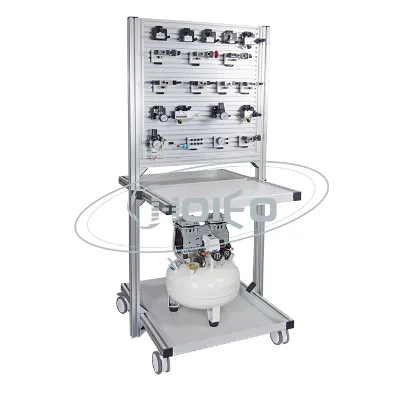
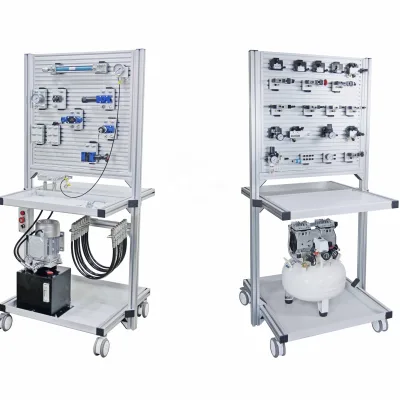


Generator for Plywood Bending with Advanced High Frequency Technology
$7500.00 - $13000.00
MOQ: 1 Pieces
Comprehensive Sourcing Guide
Fine Plywood Pipe Friction Trainer Sourcing Guide
Procuring a Fine Plywood Pipe Friction Trainer requires distinguishing between generic educational models and specialized units designed for precise fluid mechanics instruction. The observed market data indicates a wide variance in product dimensions, ranging from compact 0.1 cubic meter units to substantial 3.5 cubic meter systems, which directly impacts shipping logistics and laboratory space requirements. Buyers must carefully align their specific curriculum needs with the physical footprint of the equipment, as the "fine plywood box" packaging suggests a specific handling requirement that differs from standard wooden pallet shipments.
The core functionality of these trainers often centers on demonstrating pipe friction and Venturi methods, yet the listed specifications reveal a mix of applications including dynamic control systems and general air compressor training. This diversity necessitates a rigorous review of the product model numbers, such as ZF1117A or sr-h408, to ensure the selected unit matches the intended pedagogical goal. Without verifying the exact model against the required teaching syllabus, there is a risk of acquiring a unit that, while structurally similar, lacks the specific instrumentation or flow visualization features necessary for advanced university-level didactic equipment.
Product Scope and Observed Listing Signals
The available inventory signals a broad spectrum of educational hardware, with some units explicitly categorized as "Pipe Friction Training Panels" while others are labeled as "Fluid Mechanics Lab Equipment" or "Teaching Models." This variation suggests that the term "Fine Plywood Pipe Friction Trainer" may encompass a family of related devices rather than a single standardized product. Buyers should scrutinize the "Type" attribute for each listing to confirm the specific hydraulic or mechanical focus, as a unit designed for arm exercise or general gymnasium use would be entirely unsuitable for fluid dynamics instruction despite potential similarities in construction materials.
Listing signals also highlight significant differences in power requirements and operational modes, with some units operating on standard 220V/50Hz power while others are manual or require specific power sources. The presence of "Customized" and "Customization Available" attributes indicates that suppliers may offer tailored configurations, but this flexibility must be balanced against the risk of deviating from standard testing protocols. Procurement teams should verify whether the "Industrial Gray" color and "Wooden Pallet" or "Fine Plywood Box" packaging options are standard or variable, as these details influence the final installation and integration into existing laboratory infrastructure.
Technical Specifications to Verify
Dimensional accuracy is a critical verification step, as the observed data presents conflicting specifications ranging from 20007501600 millimeters to 3.5 cubic meters and even 192010002260 millimeters. Buyers must confirm the exact physical envelope of the unit to ensure it fits within their designated laboratory space and can be maneuvered through standard doorways and elevators. The weight specifications, which vary from 20 kilograms to 320 kilograms, further dictate the need for specialized lifting equipment or structural reinforcement in the installation area, making precise weight verification essential for safety planning.
Material composition and power specifications must also be validated against the intended experimental procedures. While some listings mention "Steel" construction and "220V/50Hz" power inputs, others describe manual operation or different appliance types like gymnasium equipment. It is imperative to confirm that the selected trainer utilizes the correct piping materials and flow measurement instruments required for accurate friction loss calculations. The "Laser Model" designation found in some entries suggests advanced visualization capabilities, but this feature must be explicitly confirmed to ensure it aligns with the specific teaching methodology of the institution.
Compliance and Safety Documentation
Safety compliance is paramount when sourcing didactic equipment, and the observed listings frequently cite ISO9001 and CE certifications as key quality indicators. Buyers should request current certification documents to verify that the manufacturing process adheres to international quality management standards, particularly for equipment involving high-pressure fluid systems or moving mechanical parts. The presence of "CE" marks is a baseline requirement for many markets, but it should be accompanied by specific test reports detailing the structural integrity of the plywood and steel components under operational stress.
Warranty terms provide an additional layer of protection, with observed ranges extending from two to three years depending on the specific model and supplier. A robust warranty should cover not only the structural frame but also the internal instrumentation and flow measurement devices that are prone to wear and tear during frequent student use. Procurement teams must clarify the scope of the warranty, including whether it covers labor costs for on-site repairs or if it is limited to the replacement of defective parts, to avoid unexpected maintenance expenses after the initial installation period.
Cost Drivers and Commercial Terms
The price range for these educational units is exceptionally broad, spanning from 0.1 USD to 42,000 USD, reflecting the vast differences in complexity, size, and included instrumentation. This variance suggests that the final cost is heavily influenced by the specific configuration, such as the inclusion of digital sensors, advanced visualization tools, or custom-built piping networks. Buyers should avoid assuming a standard price point and instead request detailed line-item quotes that break down the cost of the main frame, the hydraulic system, and any optional accessories to ensure budget alignment.
Commercial terms and payment modes also play a significant role in the total cost of ownership, with observed options including FOB, CIF, T/T, and L/C. The choice between FOB and CIF affects the buyer's responsibility for freight insurance and customs clearance, which can add substantial hidden costs if not carefully calculated. Additionally, the minimum order quantity (MOQ) ranges from 1 to 5000 units, meaning that single-unit purchases for small labs may incur higher per-unit costs compared to bulk orders for large university departments, necessitating a strategic approach to procurement volume.
Supplier Qualification and Quality Control
Supplier qualification should focus on verifying the origin and manufacturing capabilities, as the observed data consistently lists "China" or "Cn" as the product origin. Buyers must assess the supplier's track record in producing didactic equipment, specifically looking for experience with fluid mechanics and hydraulic training systems rather than general industrial machinery. The "Customized" attribute implies a level of engineering capability, but it is essential to confirm that the supplier has a dedicated quality control team to manage the customization process and ensure that the final product meets the agreed-upon technical specifications.
Quality control protocols should extend beyond the initial factory inspection to include pre-shipment testing and documentation. Given the precision required for fluid mechanics experiments, the supplier should provide calibration certificates for all flow meters and pressure gauges included in the unit. Buyers should also verify the packaging standards, ensuring that "Fine Plywood Box" or "Carton Box" options are sufficient to protect delicate instrumentation during international transit, as damage during shipping can render the equipment unusable for its intended educational purpose.
Long-Term Procurement Checks
Long-term procurement success depends on establishing a clear maintenance and support framework, as the observed warranty periods of two to three years are finite. Buyers should negotiate service level agreements that extend beyond the warranty period, ensuring access to spare parts and technical support for the lifespan of the equipment. The "2 Year" and "3 Year" warranty options indicate that suppliers are willing to commit to quality, but the terms of renewal and the availability of replacement components for aging systems must be defined in the initial contract to prevent obsolescence.
Finally, the adaptability of the equipment to future curriculum changes is a critical long-term consideration. As educational standards evolve, the ability to upgrade the trainer with new sensors or software interfaces will determine its longevity. Buyers should inquire about the modularity of the system and whether the supplier offers firmware updates or hardware upgrades for models like ZF1117A or sr-h408. Ensuring that the equipment can grow with the institution's needs will protect the initial investment and maintain the relevance of the laboratory for years to come.
FAQs
What is the standard certification for fine plywood pipe friction trainers?
These trainers typically hold ISO9001 and CE certifications to ensure quality and safety compliance. The equipment is designed for didactic use in university laboratories, requiring strict adherence to international standards. Buyers should verify specific certification documents during procurement to confirm the product meets institutional safety requirements for fluid mechanics education.
How is the Fine Plywood Pipe Friction Trainer packaged for shipping?
The unit is securely packed in a fine plywood box to protect sensitive components during transit. This robust packaging ensures the equipment arrives in pristine condition for installation. The wooden pallet or box design facilitates safe handling and storage, minimizing the risk of damage to the delicate hydraulic and measurement systems inside.
What are the typical power requirements for this training panel?
The system generally operates on a 220V/50Hz power supply, which is standard for many laboratory environments. This electrical specification supports the internal pumps and sensors required for fluid mechanics experiments. Buyers must ensure their facility provides compatible power outlets to safely operate the trainer without requiring additional voltage conversion equipment.
Can the Fine Plywood Pipe Friction Trainer be customized for specific labs?
Yes, customization is available to meet specific laboratory requirements or curriculum needs. Manufacturers offer tailored solutions to adapt the training panel for different educational levels or experimental focuses. Buyers should discuss their unique didactic goals with suppliers to ensure the customized unit aligns perfectly with their teaching objectives and spatial constraints.
What warranty coverage is provided for this fluid mechanics equipment?
Warranty periods typically range from two to three years, depending on the specific model and supplier terms. This coverage protects against manufacturing defects and ensures long-term reliability for educational institutions. Buyers should confirm the exact warranty duration and scope during the quotation phase to secure adequate support for their laboratory investment.