Source Humidified Food Display Warmer for Hotels, Dining Rooms, and Catering
Explore 30 options for the Humidified Food Display Warmer suitable for hotels, dining rooms, and catering services. Buyers can compare specifications like power, dimensions, and materials to find the right unit for their needs.
Key considerations
Products List


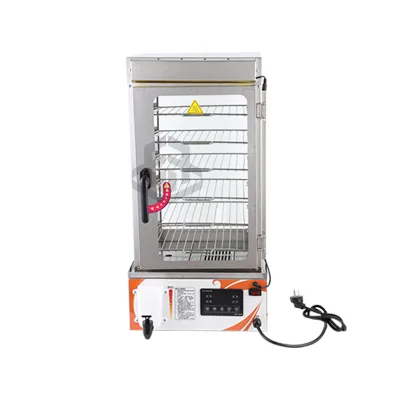

Desktop Food Display Warmer Food Warmer Showcase Thermal Insulation and Moisturizing Display Cabinet
$107.00 - $112.00
MOQ: 1 Pieces

Food Warmer Showcase Thermal Insulation and Moisturizing Display Cabinet of Size of 1.2 Meters Long
$164.00 - $169.00
MOQ: 1 Pieces


High-Quality Warming Food Display Cabinet with Adjustable Temperature Control
$365.00 - $415.00
MOQ: 5 Pieces


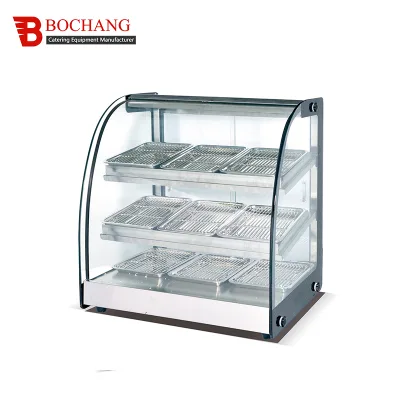


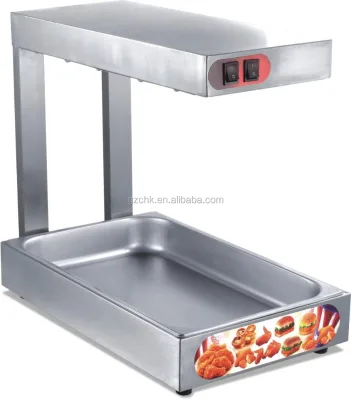
Stainless Steel Food Warmer Tray /fast Food Warmer Display /hot Food Warmer
$50.79 - $507.88
MOQ: 1 Minimum

High Quality Class Food Warmer Display Showcase Warmer Display Food Warming
$85.00 - $94.00
MOQ: 10 Pieces


Comprehensive Sourcing Guide
Strategic Sourcing Guide for Humidified Food Display Warmers
Procuring a Humidified Food Display Warmer requires a nuanced understanding of the intersection between thermal efficiency, material durability, and regulatory compliance. These units are critical for the hospitality and retail sectors, ensuring that prepared foods remain at optimal serving temperatures while retaining moisture to prevent quality degradation. The market presents a diverse array of configurations, ranging from compact countertop models to larger floor-standing units. This guide synthesizes available product data and industry standards to provide a structured approach for buyers evaluating potential suppliers and specifications.
Technical Specifications and Operational Parameters
The core functionality of a Humidified Food Display Warmer relies on precise power management and thermal regulation. Based on observed product data, power consumption varies significantly depending on the unit's capacity and intended usage. Buyers should anticipate power ratings ranging from 0.85kW to 2.8kW. For instance, specific models are documented with power outputs of 2.6kW combined with a 480W auxiliary component, while others operate at 1.2kW or 2kW. Voltage compatibility is another critical technical variable; units are frequently designed for 220-240V systems, though some configurations support 110V/220-240V dual voltage, which is essential for international procurement.
The physical dimensions and weight of the unit are paramount for logistics and floor planning. Standardized dimensions observed in the market include a width of 1500mm, depth of 615mm, and height of 940mm for larger units, while compact models may measure 660mm in width and 500mm in depth. Weight specifications also vary; net weights can range from 20kg for smaller units to 125kg for heavy-duty commercial models. Gross weights, which include packaging, are equally important for freight cost estimation, with observed values ranging from 27kg to 110kg.
Material composition is a primary determinant of longevity and hygiene. The predominant material observed is stainless steel, often paired with acrylic or high-quality tempered glass. This combination ensures resistance to corrosion and ease of cleaning. A specific feature highlighted in several models is the use of high-quality tempered glass for the front panel, which provides durability and safety. Some units also incorporate ceramic plate infrared heating elements, a technology known for efficient heat distribution and energy conservation. Buyers must verify that the "Humidified" aspect of the warmer is supported by the specific heating mechanism, as not all display warmers include active humidity control.
Compliance, Certification, and Safety Standards
In the realm of commercial food equipment, compliance with safety and electrical standards is non-negotiable. While specific certification data in the provided context is limited, the presence of CE marking is noted as a relevant background indicator. Buyers must treat this as a starting point for verification rather than a guaranteed status for every unit. The primary focus should be on verifying that the electrical components meet the voltage requirements of the destination country and that the heating elements comply with local food safety regulations.
Product standards often dictate the physical footprint and structural integrity. Observed standard dimensions such as W1500D615H940mm or W700D900H700mm suggest that manufacturers adhere to specific sizing conventions, likely aligned with industry shelving or counter standards. However, buyers should not assume that a listed dimension applies universally to all models within a category. Instead, verification of the specific model's standard against local building codes and fire safety regulations is required.
Safety features often include thermal cut-offs and stable base structures to prevent tipping. The use of tempered glass is a significant safety attribute, reducing the risk of shattering under thermal stress. When evaluating suppliers, request documentation regarding the testing of these safety mechanisms. The "New" condition of the units implies they are not refurbished, which generally reduces the risk of hidden electrical faults, but this should be confirmed via a pre-shipment inspection.
Cost Drivers and Pricing Dynamics
The pricing of humidified food display warmers is influenced by several key factors, including material quality, power capacity, and customization options. The observed price range in the market spans from $50 to $1,000 USD. This wide variance reflects the difference between basic countertop units and larger, feature-rich commercial models. The inclusion of advanced features such as ceramic plate infrared heating or dual-voltage capabilities typically pushes the price toward the higher end of the spectrum.
Material costs play a substantial role in pricing. Units constructed primarily from stainless steel and tempered glass command a premium over those using lower-grade materials. The "High Quality Tempered Glass" feature, for example, adds to the manufacturing cost but offers superior durability and aesthetic appeal. Additionally, the complexity of the packaging affects the final cost. Products shipped in "Carton with Plywood" or "Wooden Package" configurations incur higher logistics and packaging expenses compared to those in standard cartons.
Customization is another significant cost driver. While some models are listed as "Non-Customized," others offer "Customized" options. Buyers seeking specific dimensions, colors (such as Silver or Black), or tailored power configurations should anticipate a price increase. The Minimum Order Quantity (MOQ) also impacts the unit cost. Observed MOQs range from 1 to 10 units. Smaller orders typically carry a higher per-unit cost due to the fixed costs of production setup and logistics, whereas bulk orders may benefit from economies of scale.
Typical Applications and Usage Scenarios
Humidified food display warmers are designed for environments where food presentation and temperature retention are critical. The primary applications identified include hotels, dining rooms, and various hospitality settings. These units are ideal for buffet lines, salad bars, and pastry displays where food needs to be kept warm and moist for extended periods without drying out.
The style of the unit often dictates its suitability for specific venues. Models described as having a "Simple" or "Modern" style are versatile enough for contemporary dining rooms and hotel lobbies. The "High Quality Tempered Glass Front" ensures that the food remains visible to customers while maintaining a sleek aesthetic. The "Easy Cleaning and Long Life" features are particularly valuable in high-traffic commercial kitchens where hygiene and operational efficiency are paramount.
Usage scenarios also vary based on the unit's size and power. Compact models with a net weight of 20kg are suitable for countertop use in smaller cafes or catering stations. Larger units, weighing up to 125kg, are better suited for permanent installation in hotel dining halls or large-scale catering events. The "Without Timing Device" attribute suggests that these units may rely on manual temperature control or external timers, which buyers should consider when planning operational workflows.
Supplier Evaluation and Selection Criteria
Selecting a reliable supplier for humidified food display warmers requires a rigorous evaluation process. Buyers should prioritize suppliers who provide transparent technical specifications and clear documentation regarding material composition. The origin of the products is a critical factor; the majority of observed units originate from China, specifically Guangdong, a region known for its manufacturing capabilities in commercial kitchen equipment.
When evaluating suppliers, buyers should assess their ability to meet customization requests. The availability of "Customized" options indicates a flexible manufacturing process, which is beneficial for buyers with specific branding or spatial requirements. Additionally, the supplier's packaging standards should be scrutinized. The use of "Foam, Carton, Plywood" or "Wooden Package" suggests a commitment to protecting the product during transit, which is essential for heavy and fragile items like glass-fronted warmers.
Lead times and production capacity are also vital considerations. While specific lead times are not provided in the data, buyers should request this information during the negotiation phase. The ability to meet the observed MOQ range of 1-10 units without compromising quality is a sign of a responsive supplier. Furthermore, buyers should verify the supplier's track record in the hospitality sector, as experience with hotels and dining rooms often correlates with a better understanding of industry-specific needs.
Quality Control and Long-Term Procurement Considerations
Ensuring the quality of humidified food display warmers involves a multi-stage quality control process. Buyers should implement pre-shipment inspections to verify that the units match the specified dimensions, weight, and material composition. The "Condition: New" status should be confirmed to ensure that no refurbished or used units are being sold as new.
Long-term procurement considerations include the availability of spare parts and the durability of the heating elements. The "Ceramic Plate Infrared Heating" feature, for example, offers long life and easy cleaning, but buyers should inquire about the replacement cycle for these components. The "High Quality Tempered Glass" is a durable feature, but it is still susceptible to impact damage; therefore, buyers should assess the supplier's warranty and after-sales support policies.
Sustainability and energy efficiency are increasingly important in procurement decisions. Units with lower power consumption, such as those rated at 0.85kW or 1.2kW, may offer long-term cost savings compared to higher-power models. Buyers should also consider the environmental impact of the packaging materials, preferring suppliers who use recyclable or eco-friendly packaging options where possible.
Comparative Analysis of Key Product Attributes
To facilitate decision-making, the following table summarizes the key attributes observed across different product models. This comparison highlights the diversity in specifications and helps buyers identify the most suitable unit for their specific needs.
| Attribute | Model A (HCD-3) | Model B (HC-6P) | Model C (DH-2P) | Model D (BCG-700) |
|---|---|---|---|---|
| Power | 2.6kw + 480W | 2.8kw | 2kw | 0.85kw / 1 pH |
| Voltage | 220-240V | 220-240V | 110V/220-240V | N/A |
| Material | Stainless Steel | Stainless Steel & Acrylic | Tempered Glass & Stainless Steel | N/A |
| Net Weight | 125kg | 90kg | 28kg | 20kg |
| Gross Weight | N/A | 110kg | 37.5kg | 27kg |
| Dimensions | 1500615940mm | 1500750860mm | 660500620mm | 700900700mm |
| Packing | Carton with Plywood | Wooden Package | Foam, Carton, Plywood | 580490620mm |
| Feature | High Quality Glass | High Quality Glass | Ceramic Plate Heating | N/A |
| Customization | Non-Customized | Customized | N/A | N/A |
This table illustrates the trade-offs between power, size, and material. Buyers must balance these factors against their specific operational requirements. For instance, a high-traffic hotel buffet may require the robust 2.8kw model with stainless steel and acrylic construction, while a small café might prefer the compact 0.85kw unit with a lighter footprint.
Conclusion
Sourcing a Humidified Food Display Warmer involves a careful balance of technical specifications, cost considerations, and supplier reliability. By focusing on the observed data regarding power, materials, and dimensions, buyers can make informed decisions that align with their operational needs. The diversity of models available, from simple countertop units to large commercial display warmers, offers flexibility for various applications. However, the absence of specific certification data and lead times necessitates a proactive approach to supplier verification and quality control. Ultimately, the goal is to secure a unit that ensures food quality, safety, and efficiency while fitting within the buyer's budget and logistical constraints.
FAQs
What power ratings are available for humidified food display warmers?
Power ratings vary from 0.85kW to 2.8kW depending on the model. Some units combine 2.6kW with a 480W auxiliary component, while others operate at 1.2kW or 2kW to suit different heating capacities.
Which materials are commonly used in humidified food display warmers?
Stainless steel is the predominant material, often paired with acrylic or high-quality tempered glass. This combination ensures corrosion resistance and ease of cleaning for commercial kitchen environments.
Can humidified food display warmers operate on different voltage systems?
Yes, many units support dual voltage compatibility. Specific models are designed for 220-240V systems, while others support 110V/220-240V configurations for international procurement flexibility.
How much do humidified food display warmers typically weigh?
Net weights range from 20kg for compact units to 125kg for heavy-duty commercial models. Gross weights including packaging can vary from 27kg to 110kg depending on the specific configuration.
What customization options exist for humidified food display warmers?
Customization is available for specific dimensions, colors like silver or black, and tailored power configurations. Some models are listed as non-customized, while others allow for bespoke manufacturing requests.
Which packaging types are used for shipping humidified food display warmers?
Packaging includes carton with plywood, wooden packages, or foam combined with carton and plywood. These methods protect the fragile glass fronts and heavy stainless steel structures during transit.
What are the standard dimensions for humidified food display warmers?
Standard dimensions vary significantly, with larger units measuring 1500mm in width and compact models around 660mm wide. Specific sizes include W1500*D615*H940mm or W700*D900*H700mm depending on the model.