Source Human Motion Tracking Security Bulb for Corridor, Room, and Office
Find and compare Human Motion Tracking Security Bulb options from 30 verified listings. Evaluate LED sensor lights with PIR and light control features for corridor, room, and office applications. Review specifications including voltage, waterproof ratings, and certifications to select the right solution.
Key considerations
Products List


$1.16 - $1.27
MOQ: 3000 Pieces


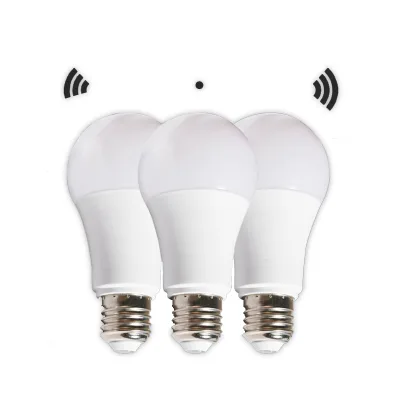
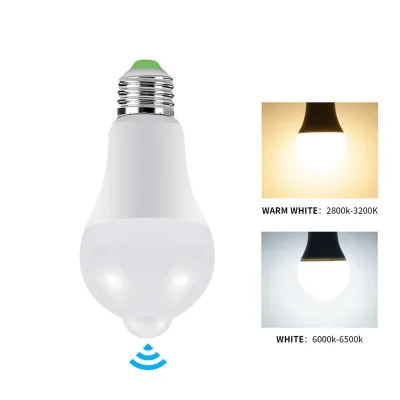
E27 5W 7W 9W 12W Human Body Infrared LED Bulbs PIR Motion Sensor Light Bulb
$1.90 - $2.50
MOQ: 50 Pieces



Comprehensive Sourcing Guide
Human Motion Tracking Security Bulb Sourcing Guide
The integration of human motion tracking into security lighting solutions has transformed how facilities manage perimeter safety and interior monitoring. Buyers seeking these specialized units must distinguish between general motion-activated bulbs and those engineered specifically for security applications, where reliability and response speed are paramount. The observed market data indicates a diverse range of products, from standard LED bulbs with basic PIR sensors to more complex systems incorporating infrared control and dual-battery emergency capabilities. Understanding these distinctions is critical, as the term "security bulb" often encompasses a spectrum of technologies, including sound control, light sensing, and advanced infrared tracking, each suited to different operational environments.
Procurement decisions for this category require a clear definition of the intended deployment environment, whether it be corridors, rooms, offices, or mixed indoor-outdoor spaces. The available product attributes reveal that while some units are designed for indoor use with non-waterproof ratings, others offer waterproof construction suitable for harsher conditions. Buyers must carefully align the sensor technology—such as the observed Light+PIR or Sound Control theories—with the specific security needs of the site. A mismatch between the sensor type and the environment can lead to false alarms or missed detections, undermining the primary security function of the device.
Product Scope and Observed Listing Signals
The current market for human motion tracking security bulbs presents a wide array of configurations, ranging from simple 6W to 10W LED units to more robust emergency lighting solutions. Listings frequently highlight specific models like the HZ05XR, HZ07AR, and various m-series units, each with distinct specifications regarding voltage, size, and material composition. The observed price range of 0.28 to 4.5 USD suggests a highly competitive market with significant variation in quality and feature sets, necessitating a thorough review of individual product attributes rather than relying on average market prices. Buyers should note that while some products are marketed as "Bulb Lights" with E27 bases, others are classified as "LED Sensor Lights" or "Pendant Lamps," indicating different installation requirements and form factors.
A critical signal in product listings is the variation in customization availability and packaging standards. While some suppliers offer box packing as a standard, others provide paper cartons or custom packaging options based on customer requests, which can impact logistics and branding strategies. The observed Minimum Order Quantities (MOQ) vary drastically from as low as 2 units to 3000, reflecting the difference between sample procurement and bulk industrial sourcing. Additionally, the presence of "Dual Battery Emergency Bulb" attributes in some listings indicates a specific subset of products designed to maintain illumination during power outages, a feature that adds significant value for security applications where continuous lighting is non-negotiable.
Technical Specifications to Verify
When evaluating the technical performance of motion tracking security bulbs, the sensor type and control theory are the primary determinants of functionality. The market data confirms the presence of Light+PIR (Passive Infrared) sensors and Sound Control theories, which operate on different principles of detection. Buyers must verify that the selected unit's sensor technology aligns with the specific detection requirements of the site; for instance, PIR sensors are generally effective for detecting body heat and movement, while sound control may be more suitable for specific acoustic triggers. Furthermore, the operating temperature range of -20 to 50 degrees Celsius is a critical specification that must be matched against the environmental conditions of the installation site to ensure reliable operation in extreme weather.
Electrical compatibility and power efficiency are equally vital considerations for long-term procurement. The observed input voltage ranges of 90-230V and 85-265V AC indicate broad compatibility with global power grids, yet buyers must confirm the exact voltage requirements for their specific region to avoid equipment failure. The lamp power, typically observed between 6W and 10W, suggests energy-efficient operation, but the actual luminous output and color temperature (ranging from 3000K to 6500K) should be verified to ensure adequate visibility for security purposes. Additionally, the working time of 50,000 hours for LED components and the emergency time of 2-6 hours for battery-backed units are key metrics that define the operational lifespan and reliability of the security system.
Compliance and Safety Documentation
Regulatory compliance is a non-negotiable aspect of sourcing security lighting, particularly given the electrical nature of the products. The observed certifications include CE, CCC, RoHS, FCC, and UL, which serve as indicators of adherence to various international safety and environmental standards. Buyers must request and verify the validity of these certificates for the specific models they intend to purchase, as the presence of a certification on a general listing does not guarantee that every SKU in a supplier's catalog is compliant. The distinction between CE, CCC, and UL is particularly important, as these certifications correspond to different regional markets and safety requirements, and a product intended for export to North America must specifically carry UL certification.
Beyond electrical safety, material composition and environmental standards play a crucial role in the durability and safety of the security bulbs. The lamp body materials observed include plastic and PC (Polycarbonate), which offer different levels of impact resistance and heat dissipation. Buyers should verify that the materials used meet the necessary fire safety and flammability standards for the intended application, especially in commercial or industrial settings. The waterproof rating is another critical compliance factor; while some products are explicitly marked as waterproof, others are noted as not waterproof, and this distinction must be clearly understood to prevent water damage and potential electrical hazards in outdoor or damp environments.
Cost Drivers and Commercial Terms
The pricing structure for human motion tracking security bulbs is influenced by a complex interplay of factors, including sensor complexity, material quality, and certification costs. The observed price range of 0.28 to 4.5 USD reflects the disparity between basic LED bulbs and advanced units with dual-battery emergency features and specialized sensor arrays. Buyers should be aware that lower-priced items may lack critical features such as waterproofing or extended warranty coverage, while higher-priced units often include comprehensive certifications and longer operational lifespans. Understanding these cost drivers is essential for budgeting and ensuring that the selected product offers the best value for the specific security requirements of the project.
Commercial terms, particularly Minimum Order Quantities (MOQ) and lead times, significantly impact the procurement strategy and cash flow. The observed MOQ range of 2 to 3000 units indicates that suppliers cater to both small-scale testing and large-scale deployment, but buyers must negotiate terms that align with their inventory management capabilities. The warranty period, observed as 2 years for some products, is a key commercial term that provides assurance against manufacturing defects and premature failure. Additionally, the packaging options, ranging from standard box packing to custom requests, can affect shipping costs and product protection, making it a vital component of the overall cost calculation.
Supplier Qualification and Quality Control
Selecting a qualified supplier for human motion tracking security bulbs requires a rigorous assessment of their manufacturing capabilities and quality control processes. Buyers should verify the supplier's origin, with China being the primary source for the observed products, and evaluate their track record in producing certified lighting solutions. The presence of multiple product models and specifications suggests a supplier with a diverse manufacturing capacity, but buyers must ensure that the specific models they order are produced under consistent quality standards. Requesting samples and conducting pre-shipment inspections are essential steps to validate that the physical products match the technical specifications and certifications claimed in the listings.
Quality control extends beyond the initial production run to include ongoing monitoring of product consistency and performance. Buyers should establish clear acceptance criteria based on the observed attributes, such as the working temperature range, waterproof rating, and sensor response time. The use of high-power LEDs and specific materials like PC or plastic should be verified to ensure they meet the durability requirements of the application. Furthermore, suppliers should be required to provide test reports and quality assurance documentation that confirm the product's compliance with the stated standards, ensuring that the security bulbs will perform reliably over their expected 50,000-hour lifespan.
Long-Term Procurement Checks
Sourcing human motion tracking security bulbs is not a one-time transaction but a continuous process that requires ongoing monitoring and evaluation. Buyers must establish a system for tracking product performance over time, including the frequency of sensor failures, battery degradation in emergency units, and the longevity of the LED components. The observed warranty period of 2 years provides a baseline for expected performance, but buyers should plan for post-warranty maintenance and replacement strategies to ensure continuous security coverage. Regular audits of the supplier's quality control processes and certification renewals are necessary to maintain the integrity of the supply chain and prevent the introduction of non-compliant products.
Finally, buyers should remain vigilant regarding changes in market standards and technological advancements that could impact the relevance of their current procurement strategy. The rapid evolution of sensor technology and energy efficiency standards means that products that are optimal today may become obsolete tomorrow. Establishing a relationship with suppliers who are committed to innovation and continuous improvement is crucial for maintaining a competitive edge in security lighting. By regularly reviewing product specifications, certifications, and performance data, buyers can ensure that their security infrastructure remains robust, compliant, and effective in protecting their facilities against evolving threats.
FAQs
What certifications do these LED sensor bulbs have?
These LED sensor bulbs typically hold CE, CCC, RoHS, FCC, and UL certifications. These marks indicate compliance with international safety and electromagnetic compatibility standards. Buyers should verify specific certification documents with suppliers to ensure the products meet local regulatory requirements for their target markets.
Can these bulbs be customized for specific applications?
Yes, customization is available for these LED sensor lights. Manufacturers often allow adjustments to packaging, labeling, or specific technical parameters to suit different corridor or room applications. Buyers should discuss their unique requirements directly with suppliers to confirm the scope of available customization options.
What is the typical input voltage range for these bulbs?
The input voltage range for these bulbs is generally AC 85-265V or 90-230V. This wide voltage tolerance ensures compatibility with various electrical systems globally. It allows the bulbs to function reliably in different regions without requiring additional voltage conversion equipment for standard household or office use.
How long is the warranty period for these LED bulbs?
The standard warranty period for these LED bulbs is typically 2 years. This coverage protects against manufacturing defects and ensures product reliability during initial use. Buyers should confirm the exact warranty terms and conditions with the supplier before placing large orders to understand the support provided.
What sensor technology is used in these motion tracking bulbs?
These bulbs utilize Light and PIR (Passive Infrared) sensor technology for motion detection. Some variants may also feature sound control or infrared control theories. This combination allows for accurate human motion tracking and automatic lighting activation based on ambient light levels and movement detection.
What is the minimum order quantity for these products?
The minimum order quantity varies, with observed ranges from 2 to 3000 pieces. Specific models may have higher MOQs, such as 500 pieces for certain emergency bulb variants. Buyers should check the specific MOQ requirements for their desired model and negotiate terms based on their volume needs.