Source Human Inductive Wall Switch for Home, Hotel, and Lighting
Explore 30 Human Inductive Wall Switch options from verified suppliers. Buyers can compare features like capacitive detection, touch control, and smart connectivity for residential and commercial applications.
Key considerations
Products List


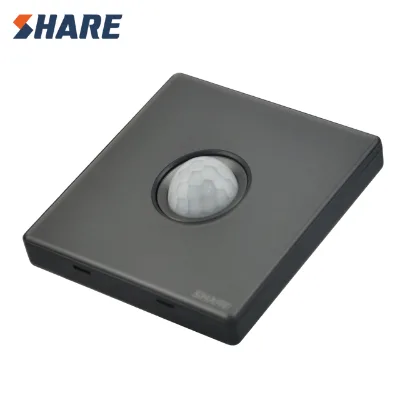


Wall Switch 2 Gang 1 Way White
$0.52 - $0.54
MOQ: 3000 Pieces
WANSHUN ELECTRICAL & INTELLIGENT MANUFACTURE (GUANGDONG) CO., LTD.

Wall Switch 3 Gang 1 Way White
$0.64 - $0.66
MOQ: 3000 Pieces
WANSHUN ELECTRICAL & INTELLIGENT MANUFACTURE (GUANGDONG) CO., LTD.

Ceramic Wall Switch Multi-Color Insulated High-Frequency Ceramic Switch
$1.90 - $3.50
MOQ: 10000 Pieces


Comprehensive Sourcing Guide
Strategic Sourcing Guide for Human Inductive Wall Switches
Understanding the Technical Architecture of Inductive Switching Systems
When sourcing human inductive wall switches, buyers must first distinguish these devices from traditional mechanical toggle or rocker mechanisms. The core differentiator lies in the detection method, which often relies on capacitive principles rather than physical contact. In the current market landscape, specific product attributes indicate a "Capacitive" principle where the switch detects the proximity or touch of a human body to complete a circuit. This technology eliminates the mechanical wear associated with traditional switches, offering a significantly longer operational lifespan.
The physical structure of these units varies, with some models adopting a "Power Built-in Type" configuration, which integrates the control electronics directly within the switch housing. This design choice impacts the internal wiring requirements, often necessitating a "Single Live Line" setup to maintain the sleek, minimalist aesthetic that modern inductive switches are known for. The contact type is frequently specified as "Type c Contact," which suggests a specific configuration for the internal conductive pathways designed to handle the low-voltage signals typical of capacitive sensing.
Furthermore, the functional diversity of these switches is extensive. While some units function as a "Single-pole on-off Switch" or a "Double-pole on-off Switch," others are engineered as "Multi Control Switch" units capable of managing complex lighting scenes. The "Kind" of switch, whether described as "Normal Close" or "Double-pole," dictates the default state of the circuit when no signal is detected. For buyers focusing on high-end applications, the "Feature" set often includes "Rocker" or "Flat" designs, with the latter being particularly popular for modern touch-sensitive interfaces. The material composition is predominantly "Plastic," which provides the necessary dielectric properties for capacitive sensing while ensuring cost-effectiveness and durability.
Compliance Framework and Certification Verification
Navigating the regulatory landscape for electrical components requires rigorous verification of certifications. The market data indicates a wide array of compliance standards that suppliers may claim. Buyers must verify the presence of specific certifications such as "CE," "ISO," "RoHS," "CCC," "IEC," and "Saso." The "CE" mark is frequently observed, indicating conformity with health, safety, and environmental protection standards for products sold within the European Economic Area. Similarly, "ISO" certification suggests adherence to international management system standards, while "RoHS" ensures the product is free of specific hazardous materials.
For markets in China, the "CCC" (China Compulsory Certification) is a critical requirement for electrical products. In regions like the Middle East, "Saso" certification may be necessary for market entry. The presence of "IEC" standards further validates that the product meets international electrotechnical commission guidelines. It is imperative for procurement teams to treat these certifications as observations that vary by supplier and batch, rather than universal guarantees. A supplier claiming "CE" certification must provide valid documentation for the specific model being purchased, as certification status can change or be model-specific.
Additionally, the product standards for dimensions are critical for installation compatibility. Observed standard sizes include "8686mm," "11872.5mm," and "86*146mm." These dimensions correspond to common electrical box sizes in different regions. Buyers must ensure that the "prod_standard" of the purchased switch matches the existing infrastructure in the target installation site. Failure to verify these physical standards can lead to significant installation delays and retrofitting costs. The "prod_packing" is also a compliance factor, with options ranging from "Carton--Plywood Case" to "Standard" packaging, which affects the safety of the goods during international transit.
Cost Drivers and Pricing Dynamics in the Market
The pricing structure for human inductive wall switches is influenced by a complex interplay of factors, including material costs, technological complexity, and supply chain logistics. The observed price range in the market spans from $0.22 to $9.50 USD. This wide disparity reflects the difference between basic mechanical switches and advanced smart inductive units with integrated connectivity. The lower end of the spectrum typically covers standard capacitive switches with basic on-off functionality, while the higher end includes units with "Voice Control," "Remote Control," and "APP Control" capabilities.
Several specific attributes drive these cost variations. The "Feature" set, such as "Flat" vs. "Rocker" designs, can influence tooling costs. The "Kind" of switch, whether "Single-pole" or "Double-pole," affects the internal component count and manufacturing complexity. Furthermore, the inclusion of "Smart" features like "Wi-Fi" connection significantly increases the unit cost due to the added microcontroller and communication modules. The "Gurantee" period is also a cost indicator; products offering a "25years" guarantee likely incorporate higher-grade materials and more rigorous quality control processes compared to those with a "3years" guarantee.
The Minimum Order Quantity (MOQ) is another critical cost driver, with observed ranges from 1 to 10,000 units. Suppliers often offer tiered pricing structures where the unit cost decreases as the order volume increases. For buyers with smaller requirements, the higher per-unit cost may be offset by lower inventory holding costs. Conversely, large-scale procurement projects can leverage the lower end of the price range but must manage the higher capital outlay required by the MOQ. The "Advantage" of "Cheap Price High Quality" suggests that some suppliers compete on value, but buyers must verify that the "High Quality" claim is backed by the aforementioned certifications and material specifications.
Typical Applications and Usage Scenarios
Human inductive wall switches are versatile components suitable for a broad spectrum of applications. The primary usage categories include "Home," "Commercial," "Hotel," "Lighting," "Electronics," and "Home Appliance." In residential settings, these switches are ideal for "Decoration," "Furniture," and general "Appliance" control, offering a modern aesthetic that complements contemporary interior design. The "Flat" and "Rocker" features make them particularly suitable for "Wall Touch Switch" applications in living rooms and bedrooms.
In commercial and hospitality sectors, the durability and ease of use of inductive switches are highly valued. Hotels and apartments often require switches that are intuitive for guests and resistant to vandalism. The "Multi Control Switch" capability allows for complex lighting scenarios in conference rooms and hotel lobbies. The "Detection Method" of "Retro-reflective Mode" or capacitive sensing ensures reliable operation even in environments with varying light conditions or humidity levels.
Industrial applications also benefit from these switches, particularly where hygiene and maintenance are concerns. The non-contact nature of inductive switching reduces the risk of contamination and wear, making them suitable for "Industrial" environments. The "Usage" as a "Control Button" or "Control Switch" extends to electronics manufacturing and automation systems. The "Application" list also includes "Apartment/Villa" and "Lighting," indicating their adaptability to both small-scale residential projects and large-scale commercial developments. Buyers should match the specific "prod_model" to the intended environment; for instance, the "KM4-040" or "KA1-F309" models may be optimized for specific load requirements or environmental conditions.
Supplier Evaluation and Service Capabilities
When evaluating potential suppliers for human inductive wall switches, buyers must look beyond the product specifications to assess the supplier's service capabilities and operational flexibility. The "Customization" attribute is a key differentiator, with many suppliers offering "OEM ODM Is Accepted" services. This capability allows buyers to brand the products or modify specifications to meet unique project requirements. The "Service" offering should be explicitly confirmed, as not all suppliers provide the same level of support for custom designs.
The origin of the product is another critical factor in supplier evaluation. The data indicates origins in "Shenzhen," "Zhejiang, China," and generally "China." Shenzhen is a major hub for electronics manufacturing, often associated with advanced technology and smart home solutions. Zhejiang is known for its robust manufacturing base for electrical components. Buyers should verify the specific location of the manufacturing facility to ensure it aligns with their logistics and quality expectations. The "prod_origin" can also influence lead times and shipping costs, which are vital for project planning.
The "Advantage" of "Fast Deliver Time" is a common claim in the market, but buyers must verify this against actual production schedules and current supply chain conditions. The "Gurantee" period, ranging from 3 to 25 years, is a strong indicator of supplier confidence in their product quality. A longer guarantee period often implies a more rigorous quality control process and a commitment to after-sales support. Buyers should also consider the "prod_packing" options, as "Carton--Plywood Case" offers superior protection for international shipping compared to "Standard" packaging.
Quality Control and Long-Term Procurement Considerations
Ensuring the long-term reliability of human inductive wall switches requires a robust quality control strategy. The "Gurantee" period is a primary metric for assessing product longevity, with options ranging from 3 to 25 years. Buyers should prioritize suppliers who offer extended warranties, as this reflects confidence in the "Capacitive" principle and the durability of the "Plastic" materials used. However, the guarantee terms must be clearly defined in the contract, including coverage for defects, environmental damage, and normal wear and tear.
Quality control should also extend to the testing of the "Detection Method" and "Contact Type." The "Retro-reflective Mode" and "Type c Contact" specifications must be validated through independent testing to ensure they meet the claimed performance standards. Buyers should request test reports that verify the "Standard" dimensions, such as "8686mm" or "11872.5mm," to ensure compatibility with existing electrical boxes. The "prod_standard" and "prod_model" must be consistent across all units in a batch to prevent installation issues.
Long-term procurement considerations include the availability of spare parts and the scalability of the supply chain. The "Customization" and "OEM ODM" capabilities suggest that suppliers can adapt to future design changes, but buyers must ensure that the supplier has the capacity to maintain production volumes as the project scales. The "MOQ" range of 1 to 10,000 units offers flexibility, but buyers should negotiate terms that allow for incremental ordering without compromising on price or quality. Finally, the "Certification" status must be maintained over time, with suppliers providing updated documentation as regulations evolve.
Comparative Analysis of Product Specifications
To facilitate informed decision-making, the following table summarizes key product attributes observed in the market, highlighting the variations available to buyers.
| Attribute Category | Observed Variations | Key Considerations for Buyers |
|---|---|---|
| Principle | Capacitive, Retro-reflective Mode | Verify detection sensitivity and response time for the specific application. |
| Kind of Switch | Single-pole, Double-pole, Multi Control | Match the pole count to the wiring configuration and load requirements. |
| Feature | Rocker, Flat, Voice Control, Remote Control | Select based on aesthetic preference and desired control functionality. |
| Standard Size | 8686mm, 11872.5mm, 86*146mm | Ensure compatibility with existing electrical box dimensions. |
| Certification | CE, ISO, RoHS, CCC, IEC, Saso | Verify valid certificates for the target market and specific product model. |
| Guarantee | 3 years, 25 years | Assess the trade-off between upfront cost and long-term risk mitigation. |
| Material | Plastic | Confirm dielectric properties and fire resistance ratings. |
| Connection | Wi-Fi, Single Live Line | Ensure compatibility with existing smart home ecosystems and wiring. |
| Origin | Shenzhen, Zhejiang, China | Consider logistics, lead times, and manufacturing expertise by region. |
This comparative analysis underscores the importance of aligning specific product attributes with project requirements. Buyers should not assume that all listed products satisfy every attribute; rather, they must select the specific "prod_model" that meets their technical, regulatory, and budgetary needs. By rigorously evaluating these factors, procurement teams can secure high-quality human inductive wall switches that deliver reliable performance and value over the long term.
FAQs
What certifications are available for human inductive wall switches?
Common certifications include CE, ISO, RoHS, CCC, IEC, and Saso. Buyers must verify that specific models hold valid documentation for their target market, as certification status varies by supplier and batch rather than being a universal guarantee.
Which dimensions are standard for these wall switches?
Standard dimensions observed include 86*86mm, 118*72.5mm, and 86*146mm. These sizes correspond to common electrical box configurations, so buyers must ensure the product standard matches existing infrastructure to avoid installation delays.
Can suppliers offer customization for human inductive wall switches?
Yes, customization is available and OEM ODM services are accepted by many vendors. This allows buyers to brand products or modify specifications, though the specific service level must be confirmed directly with the supplier before ordering.
What is the typical price range for these switches?
The observed price range spans from 0.22 to 9.5 USD. Costs vary based on features like smart connectivity, material quality, and guarantee periods, with basic capacitive units at the lower end and advanced smart models at the higher end.
Where are these switches typically manufactured?
Products originate from locations such as Shenzhen, Zhejiang, and generally China. Shenzhen is a hub for electronics while Zhejiang has a strong base for electrical components, influencing logistics and lead times for international buyers.
How long is the guarantee period for these switches?
Guarantee periods range from 3 years to 25 years depending on the model and supplier. A longer guarantee often indicates higher-grade materials and rigorous quality control, but terms must be clearly defined in the purchase contract.