Source IGI Certified Floral Silver Necklace for Retailers, Wholesalers, and Gift Shops
Explore 30 listings for the IGI Certified Floral Silver Necklace suitable for fashion retailers, jewelry wholesalers, and gift shops. Compare materials, plating options, and customization features across suppliers in China to find the best fit for your inventory.
Key considerations
Products List


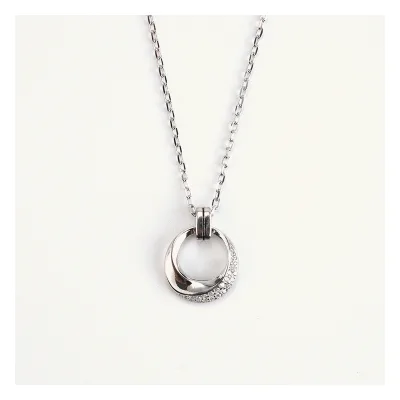
925 Silver Fine Pendant Necklace for Women Elegant and Stylish Accessory
$21.48 - $22.90
MOQ: 50 pieces


Exquisite 925 Sterling Silver Floral Pendant Necklace with Gold Highlights
$10.88 - $12.42
MOQ: 20 Pieces


Comprehensive Sourcing Guide
Strategic Sourcing Guide for IGI Certified Floral Silver Necklaces
Understanding the Product Category and Material Foundations
When sourcing a floral silver necklace, buyers must first distinguish between the aesthetic design and the underlying material composition. The core keyword "floral silver necklace" implies a specific pendant shape or motif, often featuring intricate petal designs, but the material reality varies significantly across the supply chain. Based on available market data, the primary material for high-end pieces is 925 Sterling Silver, a standard alloy containing 92.5% pure silver and 7.5% other metals, usually copper, to enhance durability. However, the market also contains products labeled as "Alloy" or "Cubic Zirconia" based, which serve different price points and quality expectations.
The floral design itself is a critical specification. While some listings describe a "Square" or "Star" pendant shape, the floral category specifically requires a detailed review of the pendant's geometry to ensure it meets the "Unique 3D Design" expectation often found in fashion jewelry. The style is generally categorized as "Fashion" or "Simple," depending on the complexity of the floral engraving or casting. Buyers should note that while 925 Sterling Silver is the dominant standard for quality, the presence of "Alloy" materials in the same search results indicates a need for rigorous filtering to avoid lower-quality alternatives that may tarnish quickly. The weight of a typical silver necklace in this category is observed around 1.7 grams, though this can vary based on the density of the floral design and the thickness of the chain.
Technical Specifications and Design Variations
The technical specifications of a floral silver necklace extend beyond the metal type to include plating, dimensions, and finishing techniques. Plating is a vital component for both aesthetics and longevity. Observed market data indicates that 925 Sterling Silver pieces often undergo Platinum, Gold, Rhodium, or Silver plating. For a floral design, Rhodium plating is frequently preferred on silver to provide a bright, white finish that resists tarnishing, while Gold plating offers a warm contrast. Some products list multiple plating options, such as "Gold, Rhodium, Silver," suggesting that the base metal remains consistent while the surface finish is customizable.
Dimensions are equally critical for procurement. The standard chain length for these necklaces is typically 45cm, a size that accommodates most adult wearers comfortably. However, customization is a prominent feature in this sector, with many suppliers offering "Customized" sizes and "Unique 3D Design" capabilities. The packaging specifications also vary, ranging from individual "1 PCS/Bag" to bulk "Carton" or "OPP Bag" packaging, which impacts the logistics and presentation of the final product. Buyers must verify if the "Carton" packaging is robust enough for international shipping, especially when sourcing from Guangzhou, China, a major hub for this type of jewelry.
The model numbers associated with these products, such as HQZ118167NA, CG20N3135S, and AS22N1723A, serve as unique identifiers for specific designs. While these codes do not inherently guarantee certification, they allow buyers to track specific SKUs across different suppliers. The "Logo" and "OEM" (Original Equipment Manufacturer) attributes indicate that many of these floral necklaces are produced under contract, allowing buyers to add their own branding to the product or the packaging. This flexibility is essential for retailers looking to build a distinct brand identity in the competitive jewelry market.
Compliance, Certification, and the IGI Standard
The core keyword "IGI certified" introduces a specific layer of compliance that requires careful verification. IGI (International Gemological Institute) is a globally recognized gemological laboratory that issues reports on diamonds and gemstones. When a buyer searches for an "IGI Certified Floral Silver Necklace," they are typically looking for a piece where the floral motif is set with diamonds or gemstones that have been graded by IGI. However, the supplied product data does not explicitly confirm IGI certification for every listed item. Instead, it lists standards such as "925 sterling silver," "10K and 14K Gold," and "Customized" standards.
Buyers must understand that the presence of 925 silver does not automatically equate to IGI certification. IGI certification applies specifically to the gemstones (such as Cubic Zirconia or natural diamonds) used in the floral design, not the silver chain itself. The market data mentions "Cubic Zirconia" as a material, which is a lab-created gemstone. While IGI can certify Cubic Zirconia, the certification is not a universal standard for all silver jewelry. Therefore, the procurement strategy must involve a direct request for IGI reports for any gemstones set in the floral pendant.
The standard "925 SILVER" mentioned in the data is a material standard, not a gemological certification. Buyers should verify if the supplier can provide third-party lab reports for the stones. If the product is marketed as "IGI certified," the supplier must be able to produce a matching report number that corresponds to the specific piece. Without this documentation, the "IGI certified" claim remains unverified. The "Custom" standard noted in the data suggests that many suppliers operate on a made-to-order basis, which can complicate the certification process if the stones are not pre-graded. Buyers should insist on pre-graded stones or a clear agreement on how certification will be handled for custom orders to ensure the product meets the expected quality and value proposition.
Cost Drivers and Pricing Dynamics
The pricing of floral silver necklaces is influenced by several distinct factors, including material costs, plating thickness, and the level of customization. The observed price range in the market spans from $0.50 to $318.24 USD, a vast disparity that reflects the difference between alloy-based fashion jewelry and high-end 925 silver pieces with certified gemstones. The lower end of this range likely corresponds to products made from "Alloy" materials with simple plating, while the higher end represents genuine 925 Sterling Silver with complex 3D designs and potentially IGI-certified stones.
Material composition is the primary cost driver. 925 Sterling Silver is significantly more expensive than alloy metals due to the intrinsic value of silver. Additionally, the type of plating affects the price; Platinum and Rhodium plating are generally more costly than standard Gold or Silver plating due to the materials and processes involved. The weight of the necklace, observed at approximately 1.7 grams for some models, also correlates with the silver content and, consequently, the price. Heavier pieces with more intricate floral detailing will naturally command a higher price point.
Customization is another significant cost factor. The data indicates that "Customization" is available, and many suppliers welcome "OEM&ODM" requests. Custom designs, unique 3D structures, and personalized logos add labor and tooling costs to the base price. Furthermore, the Minimum Order Quantity (MOQ) impacts the unit cost. The observed MOQ range is 5 to 1000 units, with some specific listings showing an MOQ of 20 PCS. Higher MOQs typically result in lower per-unit costs due to economies of scale, while low MOQs are suitable for testing the market but come at a premium. Buyers must balance their budget against their volume needs to optimize the cost per piece.
Supplier Evaluation and Operational Capabilities
Selecting the right supplier for IGI certified floral silver necklaces requires a thorough evaluation of their operational capabilities and compliance with international standards. The data indicates that the majority of these products originate from Guangzhou, China, a region known for its extensive jewelry manufacturing ecosystem. When evaluating suppliers, buyers should verify their "prod_origin" and ensure they have the infrastructure to handle international logistics. The "Shipment" options listed, including DHL, UPS, and FedEx, suggest that suppliers are equipped to manage global distribution, but buyers should confirm lead times and shipping reliability.
Quality control is paramount, especially when dealing with certification claims. Suppliers that offer "OEM" and "Customized" services must have robust quality assurance processes to ensure that the final product matches the design specifications and that the gemstones are correctly graded. The "prod_standard" of "925 sterling silver" should be consistently maintained across all production runs. Buyers should request samples to verify the plating quality, the weight of the silver, and the accuracy of the floral design. The "prod_packing" specifications, such as "OPP Bag" or "Strong Carton," should be inspected to ensure they protect the jewelry during transit.
Payment terms are another critical aspect of supplier evaluation. The data lists accepted payment methods including Bank Transfer, Paypal, Western Union, and Money Gram. While these options offer flexibility, buyers should prioritize secure payment methods that offer buyer protection, especially for large orders. The "Suit to" attribute indicates that these products are targeted at "Jewelry Wholesaler" and "Distributor," suggesting that suppliers are experienced in B2B transactions. However, buyers should still conduct due diligence on the supplier's reputation, financial stability, and ability to meet delivery deadlines. The "Remark: Custom Avaliable" suggests a willingness to accommodate specific needs, but this should be formalized in a contract to avoid misunderstandings.
Quality Control and Long-Term Procurement Strategy
Implementing a rigorous quality control (QC) strategy is essential for maintaining the integrity of the floral silver necklace supply chain. Given the variation in materials from "Alloy" to "925 Sterling Silver," buyers must establish clear acceptance criteria for each order. QC checks should include verifying the silver purity, inspecting the plating for uniformity and durability, and confirming the accuracy of the floral design dimensions. For pieces claiming IGI certification, the QC process must include a verification step where the gemstone report is cross-referenced with the physical product to ensure the stones match the certified specifications.
Long-term procurement considerations involve building a sustainable relationship with suppliers who can consistently deliver high-quality products. The "Style: Fashion" and "Simple" attributes suggest that trends may shift, requiring suppliers to be agile in their production capabilities. Buyers should look for suppliers who offer "Unique 3D Design" capabilities and can adapt to changing market demands. The "Customized" nature of many products means that the supply chain must be flexible enough to handle small batch runs and rapid design iterations.
Sustainability and ethical sourcing are increasingly important in the jewelry industry. While the provided data does not explicitly mention ethical standards, buyers should inquire about the sourcing of silver and gemstones. Ensuring that the silver is recycled or ethically mined can add value to the brand. Additionally, the "prod_packing" should be evaluated for environmental impact, with a preference for recyclable materials. By focusing on these long-term factors, buyers can mitigate risks and build a resilient supply chain that supports their brand's growth and reputation in the competitive jewelry market.
Comparative Analysis of Product Attributes
To facilitate decision-making, the following table summarizes the key attributes observed in the market for floral silver necklaces, highlighting the variations in materials, standards, and customization options.
| Attribute | High-End / Certified Segment | Standard / Fashion Segment | Custom / OEM Segment |
|---|---|---|---|
| Material | 925 Sterling Silver | Alloy, 925 Silver | 925 Silver, Alloy |
| Plating | Rhodium, Platinum, Gold | Gold, Silver | Gold, Rhodium, Silver |
| Gemstones | IGI Certified (Diamond/CZ) | Cubic Zirconia (Unverified) | Custom Gemstones |
| Pendant Shape | Floral (3D Design) | Square, Star, Heart | Custom Shapes |
| Standard | 925 Sterling Silver, IGI Report | 925 Silver, Custom | Customized |
| MOQ | 20 - 1000 PCS | 5 - 1000 PCS | Negotiable |
| Origin | Guangzhou, China | Guangzhou, China | Guangzhou, China |
| Packaging | Strong Carton, OPP Bag | 1 PCS/Bag, Carton | As Customer's Requirement |
This comparison underscores the importance of defining clear requirements before engaging with suppliers. The "High-End" segment is suitable for buyers seeking certified quality and premium materials, while the "Standard" segment offers cost-effective options for volume sales. The "Custom" segment provides the flexibility needed for brands looking to differentiate their product lines through unique designs and personalized branding. By understanding these distinctions, buyers can make informed decisions that align with their specific market positioning and budget constraints.
FAQs
What materials are used for floral silver necklaces?
The primary material is 925 Sterling Silver, though some listings use Alloy or Cubic Zirconia. Buyers must verify the specific material standard, as 925 silver is the dominant quality choice for durable floral designs.
Can I customize the plating on these necklaces?
Yes, customization is available for plating options including Gold, Rhodium, and Silver. Some products offer multiple plating types like Platinum or Gold to match specific aesthetic requirements for the floral motif.
What is the typical weight of a silver necklace?
The observed weight for these necklaces is approximately 1.7 grams. This weight varies based on the density of the floral design and the thickness of the chain used in the specific model.
How do I verify IGI certification for the gemstones?
IGI certification applies to the gemstones, not the silver chain itself. Buyers must request a matching lab report for the stones, as the standard 925 silver marking does not automatically guarantee gemological certification.
What are the minimum order quantities for these items?
The minimum order quantity ranges from 5 to 1000 units, with some specific listings requiring 20 pieces. Higher volumes typically reduce the per-unit cost, while lower MOQs suit market testing.
Where are these necklaces manufactured and shipped from?
Most products originate from Guangzhou, China, a major jewelry manufacturing hub. Suppliers typically ship via DHL, UPS, or FedEx, ensuring global distribution capabilities for wholesale orders.