Source Illuminated Waterproof Emergency Stop Button for Industrial, Hotel, and Home
Explore 30 verified listings for the Illuminated Waterproof Emergency Stop Button tailored for industrial, hotel, and home applications. Buyers can compare features like resistive or capacitive principles, IP ratings, and custom options to find the right switch for their specific safety needs.
Key considerations
Products List


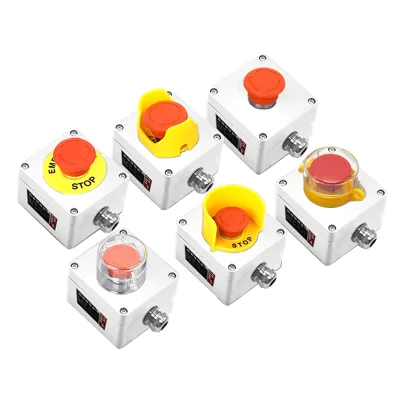
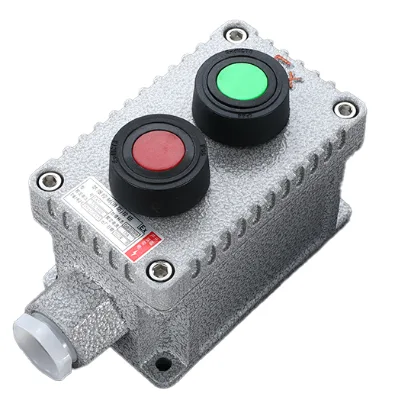

Comprehensive Sourcing Guide
Strategic Sourcing Guide for Illuminated Waterproof Emergency Stop Buttons
Selecting the correct emergency stop button for industrial environments requires a rigorous approach that balances immediate safety compliance with long-term operational reliability. The core keyword, Illuminated Waterproof Emergency Stop Button, represents a critical safety component where failure is not an option. Buyers must navigate a complex landscape of technical specifications, certification requirements, and environmental durability factors. This guide provides a structured framework for evaluating potential suppliers and products, ensuring that procurement decisions are grounded in verified facts and industry best practices rather than marketing assertions.
Technical Specifications and Operational Principles
The foundation of a reliable emergency stop system lies in its mechanical and electrical design. When sourcing these components, buyers must first verify the underlying operating principle. The market offers both resistive and capacitive detection methods, each suited for different application scenarios. Resistive principles typically rely on physical contact to complete a circuit, offering a tactile and definitive stop action. In contrast, capacitive principles may utilize non-contact detection, which can be beneficial in specific hygiene or high-speed environments, though they require careful calibration to prevent false triggers.
The physical structure of the button is equally critical. The "Power Built-in Type" structure indicates that the illumination and switching mechanisms are integrated into the unit, reducing the need for external wiring harnesses and potential points of failure. For emergency applications, the "Single Control Switch" configuration is standard, ensuring a clear, unambiguous signal to halt machinery. The "Single-pole on-off Switch" kind further defines the electrical path, simplifying the integration into existing safety circuits.
Color selection is not merely aesthetic; it serves as a universal safety language. The availability of Red, Green, Yellow, and Black options allows buyers to match the button to specific safety protocols or visual management systems. Red is traditionally reserved for emergency stops, while other colors may indicate different operational states. The wiring configuration, specifically "Null Line and Live Line," must be compatible with the facility's electrical infrastructure to ensure proper installation and function. Furthermore, the "Mechanical" feature classification confirms that the actuation relies on physical movement, a requirement for most safety standards to ensure the stop signal is generated by a deliberate human action.
Compliance, Certification, and Safety Standards
In the realm of industrial safety, compliance is non-negotiable. Buyers must demand documentation that verifies the product meets international safety standards. The "EN ISO13850" standard is a primary reference for the design of emergency stop controls, defining the functional requirements for safety-related parts of control systems. Additionally, "IEC/EN 60947-5-5" provides specific guidelines for low-voltage switchgear and controlgear, detailing the testing and performance criteria for push-buttons and emergency stops.
Certification marks such as "CE" indicate conformity with health, safety, and environmental protection standards for products sold within the European Economic Area. Other certifications like "ISO RoHS" and "GS" (Geprüfte Sicherheit) provide further assurance regarding material safety and general product security. The presence of "RoHS" compliance ensures that the product does not contain restricted hazardous substances, which is increasingly important for global supply chains.
When evaluating a supplier, buyers should request a "Product Standard" document that explicitly references these regulations. For instance, a specific model might adhere to "LA165" or "22mm" dimensional standards, which are crucial for ensuring the button fits into existing control panels. The "Safety Standard" section of a product datasheet should be scrutinized to confirm that the manufacturer has undergone third-party testing. It is vital to note that while some products may claim "IP Rating" for waterproofing, the specific rating (e.g., IP65, IP67) must be verified against the actual environmental conditions of the installation site.
Cost Drivers and Pricing Dynamics
The price of an Illuminated Waterproof Emergency Stop Button is influenced by several tangible factors. The observed market range for such components spans from $0.03 to $100, a wide variance that reflects differences in quality, certification depth, and production volume. The lower end of the spectrum often corresponds to basic mechanical switches with minimal certification, while the higher end includes units with robust waterproofing, advanced illumination, and comprehensive safety certifications.
Minimum Order Quantity (MOQ) is another significant cost driver. The observed MOQ range of 1 to 1000 units allows for flexibility depending on the buyer's scale. Small procurement needs can be met with low MOQs, but larger orders may benefit from economies of scale, potentially lowering the unit cost. However, buyers must be cautious; a low unit price should never come at the expense of safety compliance.
Customization is a key variable in pricing. The "Customization: Available" attribute suggests that buyers can request specific colors, wiring configurations, or branding. While this adds value, it may increase the lead time and unit cost. The "Product Packing" method, whether "Carton," "Paper Box," or "Neutral Packing," also impacts logistics costs. Bulk packaging in cartons is generally more efficient for industrial shipping than individual paper boxes.
Typical Applications and Environmental Suitability
The application environment dictates the specific requirements for the emergency stop button. These components are designed for use in "Industrial" settings, including manufacturing plants, assembly lines, and heavy machinery operations. Specific applications include "Start Button," "Reset Button," and "Control Button" functions, though the primary role remains emergency stopping.
In more specialized sectors, such as forklift operations, the button must be "Suit for Hangcha/Heli Forklift," indicating compatibility with specific vehicle models and their unique control interfaces. The "Apartment/Villa" and "Home Appliance" applications suggest that some models are versatile enough for residential or light commercial use, provided they meet the necessary safety ratings.
Environmental protection is paramount. The "Dust-Proof" and "Waterproof" attributes are essential for facilities exposed to moisture, dust, or harsh chemicals. The "Protection Function: Waterproof" and "IP Rating" ensure that the internal electronics remain operational despite external exposure. For outdoor or washdown environments, the "Durable" classification and "Insulation" properties are critical to prevent short circuits and ensure operator safety. The "Reflection Type" or "Correlation Type" detection methods may be relevant for specific sensor integrations, though mechanical actuation remains the primary safety mechanism.
Supplier Evaluation and Origin Verification
When evaluating potential suppliers, buyers must look beyond the product listing to verify the origin and manufacturing capabilities. The "Product Origin" field indicates that components may originate from "Wenzhou, China" or "Anhui," regions known for manufacturing electrical components. While these locations are hubs for production, buyers should verify the specific factory's quality management systems.
The "Brand Name" "Huanxin" is one example of a manufacturer in this space, but buyers should not limit their search to a single brand. Instead, they should evaluate the supplier's ability to provide an "Operation Manual" and technical support. The availability of an operation manual is a strong indicator of a professional supplier who understands the importance of proper installation and maintenance.
Additionally, the "Condition: New" attribute is a basic requirement, but buyers should also inquire about the "Numerical Control" capabilities if the button is part of a larger CNC system. The "Performance Classification" of "Mid-Range CNC Machine Tools" suggests that some suppliers cater to specific machine tiers. Buyers should ensure the supplier's production process aligns with their specific industry needs, whether it involves "Metal-Cutting," "Metal-Forming," or "Non-Conventional Machine Tools."
Quality Control and Long-Term Procurement
Ensuring long-term reliability requires a robust quality control strategy. The "Process Usage" details, such as "Metal-Cutting CNC Machine Tools," highlight the precision required in manufacturing the contact materials. The "Contact Material: Silver Alloy" is a specific observation that indicates high conductivity and resistance to arcing, which is vital for the longevity of the switch.
Buyers should establish a quality assurance protocol that includes incoming inspection of the "IP Rating" and "Protection" features. Regular testing of the "Mechanical" actuation force and the "Illumination" functionality is necessary to detect wear and tear. The "Neutral Packing" or "Carton" packaging should be inspected for damage during transit, as physical impact can compromise the waterproof seals.
Long-term procurement considerations also involve the availability of spare parts and the supplier's ability to support the product over its lifecycle. The "Customization: Accept" attribute suggests that suppliers may be willing to adapt products for future needs, but this should be documented in a formal agreement. Buyers should also verify the "Lead Time" and "MOQ" flexibility to ensure they can maintain inventory levels without overstocking.
Comparative Analysis of Key Attributes
To facilitate decision-making, the following table summarizes the key attributes observed in the market for illuminated waterproof emergency stop buttons. This comparison helps buyers identify the specific features that align with their operational requirements.
| Attribute Category | Observed Options | Relevance to Procurement |
|---|---|---|
| Detection Principle | Resistive, Capacitive | Determines actuation feel and response time. |
| Protection Level | Dust-Proof, Waterproof, Insulation | Critical for harsh environments and washdown areas. |
| Certification | CE, ISO RoHS, GS, EN ISO13850 | Mandatory for legal compliance and safety assurance. |
| Structure | Power Built-in Type | Simplifies installation and reduces wiring complexity. |
| Color Options | Red, Green, Yellow, Black | Essential for visual safety signaling and standardization. |
| Contact Material | Silver Alloy | Ensures high conductivity and long-term reliability. |
| Origin | Wenzhou, China; Anhui | Indicates manufacturing hub; requires factory audit. |
| Packaging | Carton, Paper Box, Neutral | Affects logistics costs and product protection. |
Conclusion
Sourcing an Illuminated Waterproof Emergency Stop Button is a task that demands precision, diligence, and a deep understanding of safety standards. By focusing on verified technical specifications, rigorous certification checks, and thorough supplier evaluation, buyers can secure components that ensure the safety of their operations. The wide range of available options, from basic mechanical switches to advanced CNC-compatible units, allows for tailored solutions that meet specific industrial needs. Ultimately, the goal is to procure a product that not only functions reliably but also stands the test of time in demanding environments. Buyers must remain vigilant in their verification processes, ensuring that every claim made by a supplier is backed by tangible evidence and adherence to established safety protocols.
FAQs
How does the detection principle affect emergency stop performance?
The detection principle is either resistive or capacitive, determining how the switch completes the circuit. Resistive types rely on physical contact for a tactile stop, while capacitive types use non-contact detection suitable for specific hygiene needs.
Which certifications ensure safety compliance for industrial use?
Products must carry CE, ISO RoHS, and GS certifications to meet international safety standards. Specific models also adhere to EN ISO13850 and IEC/EN 60947-5-5 standards for emergency stop control design and low-voltage switchgear.
Can I customize the color and wiring configuration of the button?
Yes, customization is available for colors including red, green, yellow, and black. The wiring configuration supports null line and live line connections to match your facility's electrical infrastructure requirements.
What is the minimum order quantity for purchasing these buttons?
The minimum order quantity ranges from 1 to 1000 units depending on the supplier and specific model. This flexibility allows buyers to meet small procurement needs or leverage economies of scale for larger industrial orders.
Where are these emergency stop buttons manufactured and shipped from?
Products originate from manufacturing hubs in Wenzhou and Anhui, China. The specific origin depends on the supplier, with packaging provided in cartons, paper boxes, or neutral packing for safe transit.
How do I verify the waterproof and dust-proof protection levels?
Protection features include dust-proof, waterproof, and insulation properties to ensure durability in harsh environments. Some models specify an IP rating for waterproof junction boxes to prevent internal electronics from damage.
Which applications are suitable for these industrial control switches?
These buttons are designed for industrial settings, including forklift operations for brands like Hangcha and Heli. They also serve general control functions in apartments, villas, and home appliances requiring reliable start or reset actions.