Source Imitation Pearl Beads Jade Bracelet for decoration, gift, and health
Find 30 listings for Imitation Pearl Beads Jade Bracelet suitable for decoration, health, and gifting. Buyers can compare styles, materials, and customization options from verified suppliers in China.
Key considerations
Products List


Factory Price Retro Crystal Imitation Pearl Bracelet Ins Niche Design Bracelet
$0.46 - $0.52
MOQ: 1900 Pieces


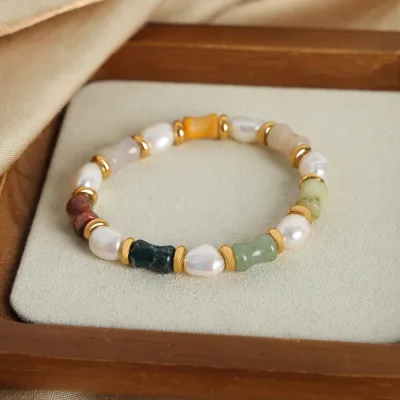
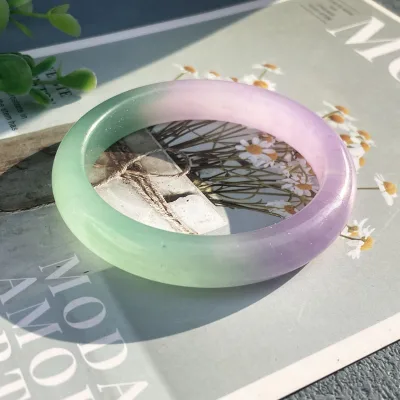
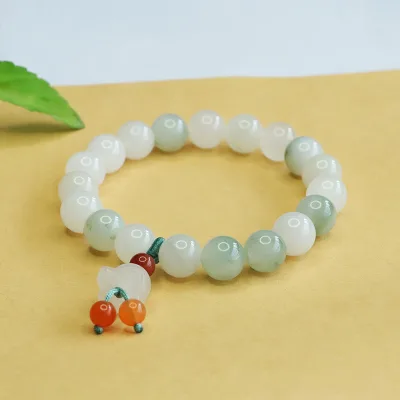


Comprehensive Sourcing Guide
Strategic Sourcing Guide for Imitation Pearl Beads Jade Bracelets
Understanding Product Attributes and Material Composition
When sourcing imitation pearl beads jade bracelets, buyers must first distinguish between the specific material compositions listed in product catalogs and the functional expectations of the final assembly. The market data indicates a diverse range of materials utilized in this category, including crystal, jade, pearl, and alloy. While the core keyword emphasizes "imitation pearl beads" and "jade," the observed product attributes reveal that "Jade" is a distinct material entry, often paired with "Pearl" in other listings. It is critical to understand that "imitation pearl" typically refers to a synthetic or coated material designed to mimic the luster of natural pearls, whereas "jade" in this context may refer to natural stone or high-quality synthetic alternatives depending on the specific supplier's definition.
The product specifications highlight a "Simple" style and "Star Fashion" variations, suggesting that the design language ranges from minimalist to trend-driven. The "Type" is frequently listed as "Bracelets" or "Bangle," which dictates the structural requirements for the sourcing team. For instance, one observed specification lists an inner diameter of 65mm, which is a crucial dimension for fit, while another lists a standard length of 18cm or 30cm adjustable. These variations mean that a single order may require multiple SKUs to accommodate different wrist sizes or style preferences. The "Weigh" attribute varies significantly, from 18g to 56g, indicating that the density of the beads and the thickness of the stringing material will directly impact the shipping cost and the perceived value of the product. Buyers should verify the exact weight specifications for each model to ensure accurate freight calculations and to meet specific weight-based pricing tiers.
Technical Specifications and Dimensional Standards
Precision in technical specifications is paramount when ordering jewelry components that involve mixed materials like jade and imitation pearls. The observed data provides specific model numbers such as JY20211120011, JYB2001, and TRSL0714042, which serve as unique identifiers for inventory management. However, relying solely on model numbers without cross-referencing physical dimensions can lead to discrepancies. The "prod_standard" field offers critical dimensional data; for example, one entry specifies "18CM" while another notes "30CM adjustable." This variability suggests that the sourcing strategy must account for custom sizing requests, especially since the "Customization" attribute is marked as available.
Length and diameter are not merely aesthetic choices but functional constraints. The specification "Inner diameter 65mm" implies a rigid bangle structure, whereas "30CM adjustable" suggests a flexible bracelet design. When evaluating suppliers, procurement teams must confirm whether the "as picture" standard applies to the specific batch or if the supplier maintains a fixed tolerance range. The "Plating" attribute, such as "Gold" plating on alloy components, introduces another layer of technical complexity. Buyers need to verify the thickness of the plating and the base metal composition to ensure durability, especially since the "Testing" attribute confirms "Nickel&Lead Free" status, which is a baseline requirement for safety but does not guarantee plating longevity.
Compliance, Certification, and Safety Verification
In the global jewelry market, compliance is a non-negotiable aspect of the procurement process. The supplied facts explicitly list several high-confidence certifications, including BSCI, SGS, BV, and Intertek. These certifications cover a spectrum of concerns from social compliance in the supply chain to product safety and quality assurance. BSCI (Business Social Compliance Initiative) indicates that the supplier adheres to ethical labor practices, which is increasingly important for brands with corporate social responsibility mandates. SGS, BV, and Intertek are globally recognized testing and inspection bodies that validate product quality and safety.
Specifically, the "Nickel&Lead Free" testing result is a critical safety attribute. Heavy metals like nickel and lead can cause allergic reactions and are strictly regulated in many jurisdictions, including the European Union and the United States. Buyers must ensure that the "Testing" attribute is not just a marketing claim but is backed by recent, batch-specific test reports from one of the listed certifying bodies. The presence of these certifications suggests a higher level of supply chain maturity, but buyers should not assume that every SKU within a supplier's catalog automatically carries the same certification status. Verification of the specific test reports for the "Imitation Pearl Beads Jade Bracelet" model is essential before placing a large order.
Cost Drivers and Pricing Dynamics
The observed price range of 0.46 to 13.9 USD highlights the significant variance in cost drivers within this product category. This wide range is influenced by several factors, including material composition, weight, and the complexity of the design. A product weighing 18g with a simple alloy and gold plating will naturally fall on the lower end of the spectrum, whereas a 56g bracelet featuring jade and pearl beads with intricate packaging will command a higher price. The "Material" attribute is a primary cost driver; jade, depending on its quality and origin, can be significantly more expensive than crystal or alloy. Similarly, the use of "Pearl" beads, whether natural or high-quality imitation, adds to the material cost.
The "MOQ" (Minimum Order Quantity) range of 2 to 4000 units further complicates the cost structure. Suppliers with lower MOQs may charge a premium per unit to cover setup costs, while those requiring higher volumes can offer more competitive pricing. The "Customization" and "OEM&ODM" attributes allow buyers to tailor products, but these services often incur additional costs. For instance, custom packaging like "Plastic Box or Tray" or "Double Layer Corrugated Carton" will increase the unit price compared to standard "One Psc with One OPP Bag" packaging. Buyers must balance the desire for customization with the budget constraints, understanding that higher customization levels will push the price closer to the upper limit of the observed range.
Supplier Evaluation and Operational Capabilities
Evaluating suppliers requires a holistic view of their operational capabilities, including their location, lead times, and service offerings. The data indicates that the "prod_origin" is primarily "Zhejiang, China (Mainland)" or generally "China." Zhejiang is a known hub for jewelry manufacturing, offering a robust supply chain for beads, alloys, and packaging materials. However, buyers should verify the specific factory location to assess logistics efficiency and potential shipping delays. The "Delivery Time" is listed as "Within 30-35days After Getting Deposit," which sets a clear expectation for the production cycle. This lead time is standard for customized orders but may vary for stock items.
The "Service" attribute explicitly welcomes "OEM&ODM," indicating that the supplier is equipped to handle private labeling and custom design requests. This is a significant advantage for buyers looking to build a unique brand identity. Additionally, the "Payment" terms, including T/T, Western Union, PayPal, and Money Gram, offer flexibility but also require careful financial risk management. Buyers should prioritize suppliers who offer secure payment methods and clear terms for deposits and balance payments. The "Package" specifications, ranging from individual OPP bags to double-layer cartons, also reflect the supplier's ability to handle different shipping requirements. A supplier offering "Double Layer Corrugated Carton" demonstrates a commitment to protecting goods during transit, which is crucial for fragile items like beads and jewelry.
Quality Control and Long-Term Procurement Strategy
Implementing a robust quality control (QC) strategy is essential for maintaining product integrity, especially when dealing with mixed materials like jade and imitation pearls. The "Testing" attribute confirms safety standards, but physical inspection is necessary to verify aesthetic quality. Buyers should establish clear acceptance criteria for color consistency, plating adhesion, and bead integrity. The "Style" variations, such as "Natural" or "Star Fashion," require visual verification to ensure the final product matches the design intent. For example, the "Color" attribute lists "Multicolour" and "White," which necessitates strict color matching protocols to avoid batch-to-batch discrepancies.
Long-term procurement considerations involve building a sustainable relationship with suppliers who can consistently deliver high-quality products. The availability of "Customization" and "OEM&ODM" services suggests that suppliers are willing to adapt to changing market trends. However, buyers must ensure that the "prod_standard" remains consistent over time. Regular audits and sample approvals are recommended to maintain quality standards. The "Usage" attributes, such as "Decoration," "Gift," and "Health," indicate that these products are often marketed for specific occasions. Buyers should align their procurement strategy with the intended market segment, ensuring that the product quality meets the expectations of the target audience.
Application Scenarios and Market Positioning
The versatility of imitation pearl beads jade bracelets allows for diverse application scenarios. The "Occasion" attribute lists both "Informal Occasions" and "Formal Occasions," suggesting that these products can be marketed for a wide range of events. For informal settings, the "Simple" style and lower weight (e.g., 18g) make the product suitable for everyday wear. For formal events, the "Natural" style and higher weight (e.g., 56g) with jade and pearl elements can elevate the outfit. The "Usage" as "Gift" is particularly relevant, as the packaging options, such as "Plastic Box" or "Tray," are designed to enhance the gifting experience.
Understanding the market positioning is crucial for successful procurement. The "Jewelry Type" is listed as both "Necklace" and "Bracelet," indicating that suppliers may offer these items as part of a set or as standalone pieces. Buyers should analyze the sales performance of different styles to determine which products to prioritize. The "Type" as "Bangle" or "Bracelets" also influences the marketing strategy, as bangles are often associated with specific cultural or fashion trends. By aligning the product attributes with the intended market positioning, buyers can optimize their inventory mix and maximize sales potential.
Final Procurement Considerations and Risk Mitigation
To conclude, sourcing imitation pearl beads jade bracelets requires a meticulous approach that balances technical specifications, compliance, cost, and supplier reliability. The observed data provides a solid foundation for decision-making, but buyers must remain vigilant in verifying all claims and specifications. The wide range of prices, MOQs, and lead times necessitates a flexible procurement strategy that can adapt to different market conditions. By leveraging the available certifications and customization options, buyers can build a competitive advantage in the jewelry market.
Risk mitigation involves diversifying the supplier base and maintaining open communication channels. Regular quality checks and adherence to safety standards will ensure that the products meet the required specifications. The "Customization" and "OEM&ODM" capabilities offer opportunities for innovation, but they also require careful management to avoid production delays or quality issues. Ultimately, a well-structured sourcing strategy that prioritizes transparency, quality, and compliance will lead to successful long-term partnerships and a strong market presence for imitation pearl beads jade bracelets.
FAQs
What materials are used for imitation pearl beads jade bracelets?
Products utilize materials such as jade, pearl, crystal, and alloy. Some listings specify jade or pearl as the primary component, while others combine these with alloy bases and gold plating to achieve the desired aesthetic and durability for various styles.
Can buyers request customization for these jewelry items?
Yes, customization is available for these products. Suppliers accept OEM and ODM services, allowing buyers to tailor specifications like packaging, dimensions, and design elements to meet specific brand requirements or market preferences.
Which certifications ensure safety and compliance for these bracelets?
High-confidence certifications include BSCI, SGS, BV, and Intertek. Additionally, products are tested to be nickel and lead free, ensuring they meet international safety standards for jewelry and reducing the risk of allergic reactions for end users.
How long is the delivery time for custom orders?
The delivery time is within 30 to 35 days after receiving the deposit. This lead time applies to customized orders, though specific timelines may vary depending on the complexity of the request and the supplier's current production capacity.
What is the typical price range for these bracelets?
The observed price range spans from 0.46 to 13.9 USD per unit. This variance depends on factors such as material composition, weight, customization level, and the specific model selected, with heavier jade or pearl items generally costing more.
Which specifications define the size and weight of the bracelets?
Specifications vary by model, with weights ranging from 18g to 56g and lengths including 18cm, 30cm adjustable, or an inner diameter of 65mm. Buyers should verify the exact prod_standard for each model to ensure proper fit and shipping calculations.