Find Indoor Electronic Thermometer and Hygrometer for homes, offices, and greenhouses
Source 30 models of Indoor Electronic Thermometer and Hygrometer from verified Chinese manufacturers. Buyers can compare features like accuracy, temperature ranges, and power options to select the right device for household or industrial monitoring needs.
Key considerations
Products List


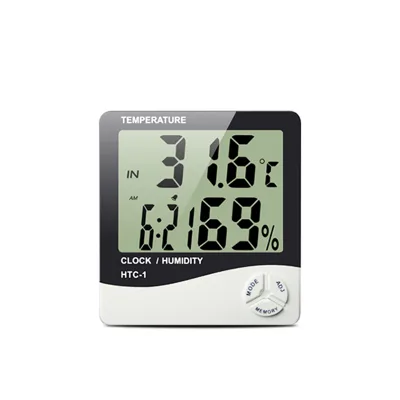
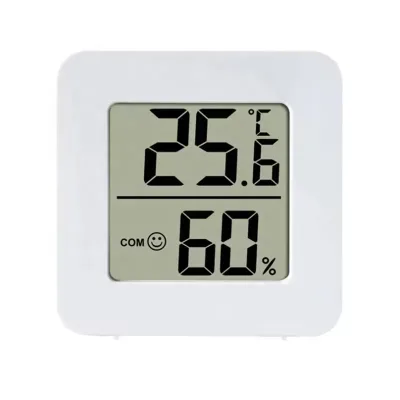
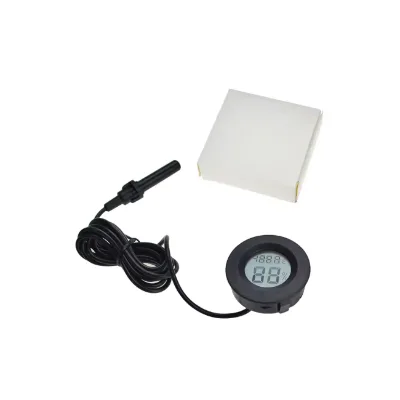
Indoor Room Digital Thermometer Hygrometer Meter for Temperature and Humidity
$1.60 - $2.70
MOQ: 100 Pieces




Comprehensive Sourcing Guide
Strategic Sourcing Guide for Indoor Electronic Thermometers and Hygrometers
Procuring indoor electronic thermometers and hygrometers requires a disciplined approach that balances technical precision with supply chain reliability. These devices are critical for maintaining environmental quality in residential, commercial, and industrial settings. The market offers a diverse array of models, ranging from simple digital displays to multi-functional units with recording capabilities. Buyers must navigate a landscape defined by specific operational ranges, certification requirements, and customization options to ensure the selected products meet their exact environmental monitoring needs. This guide outlines the essential factors for evaluating suppliers and specifications based on observed market data and technical standards.
Technical Specifications and Operational Ranges
The core functionality of an Indoor Electronic Thermometer and Hygrometer relies on its ability to measure temperature and relative humidity with high accuracy. When reviewing product listings, buyers will encounter varying specifications that dictate suitability for different environments. A primary observation in the current market is the existence of specific indoor operating ranges, typically cited as -10°C to 50°C (14°F to 122°F). Some advanced units extend this capability to outdoor conditions, supporting ranges from -50°C to 70°C (-58°F to 158°F), though these are less common for strictly indoor applications.
Accuracy is another critical technical parameter. Standard units often claim an accuracy of ±1°C for temperature and ±5% Rh for humidity. However, specific models may list a temperature accuracy of exactly 1°C or a broader range of -20°C to 60°C. Buyers must verify if the specific model they are sourcing matches the precision required for their application. For instance, a unit with a "Temperature Range: -10~50°C" and "Temperature Accuracy: +-1°C" is suitable for general household use, whereas applications requiring tighter tolerances may need to verify if the supplier can provide units with higher-grade sensors.
The display technology is also a key differentiator. Most modern units utilize LCD (Liquid Crystal Display) technology, which offers clear visibility of digital readings. Features such as dual modes for time display (12h/24h) and changeable temperature units (°C/°F) are common attributes that enhance user experience. Furthermore, the physical dimensions of the device are significant for placement. Observed product standards indicate dimensions such as 1089620mm or 383845cm, depending on the model series. These dimensions influence whether the device is truly "Portable" or designed for fixed wall mounting.
Compliance and Certification Standards
In the B2B procurement of electronic devices, compliance with international safety and environmental standards is non-negotiable. The market data indicates that a significant portion of available products carry RoHS (Restriction of Hazardous Substances) and CE (Conformité Européenne) certifications. These certifications are essential for selling products in the European Union and other markets that align with these regulatory frameworks. Buyers should explicitly request proof of these certifications for every batch ordered, as the presence of these marks on a product page does not guarantee that every unit in a specific shipment is compliant.
Beyond general certifications, specific product standards define the physical and electrical characteristics of the devices. For example, some models adhere to a standard of "Celsius/Fahrenheit" for unit conversion, ensuring global usability. Others may have specific packing standards, such as "Carton" or "Blister" packaging, which can impact logistics and retail readiness. It is vital to distinguish between the product's origin and the location of the testing facility. While many products list their origin as Shenzhen, China, or Zhongshan, China, the certification testing may occur in third-party laboratories. Procurement teams must verify that the supplier's documentation aligns with the specific regulatory requirements of the destination market.
Cost Drivers and Pricing Structures
The pricing of indoor electronic thermometers and hygrometers is influenced by several variables, including the complexity of the sensor, the inclusion of additional features, and the volume of the order. The observed price range in the market spans from $0.10 to $98.00 USD, reflecting a wide spectrum of product quality and functionality. Lower-priced units typically offer basic temperature and humidity readings with standard accuracy, while higher-priced models may include advanced features such as recording functions, extended temperature ranges, or specialized materials like thermocouples.
Minimum Order Quantity (MOQ) is a significant cost driver. The market shows an MOQ range from 1 to 500 units. Suppliers with lower MOQs may charge a premium per unit due to the higher administrative and setup costs associated with smaller batches. Conversely, bulk orders often benefit from economies of scale, reducing the unit cost. Buyers must also consider the cost of customization. Since customization is listed as an available attribute, suppliers may charge additional fees for branding, custom packaging (such as "Giftbox" or "Color Box"), or specific model modifications. The choice of power supply, such as a single Cr2032 battery versus a 1.5V AA battery, can also subtly affect the final cost and the long-term maintenance expenses for the end-user.
Typical Applications and Usage Scenarios
Understanding the intended application is crucial for selecting the right device. The market data highlights "Household" usage as a primary category, where devices are used to monitor comfort levels in living spaces. In these scenarios, accuracy of ±1°C and ±5% Rh is generally sufficient. However, the presence of a "Recording Function" suggests that some units are designed for environments where historical data tracking is necessary, such as museums, server rooms, or agricultural storage facilities.
The "Gas: CO2" attribute found in some listings indicates a potential overlap with air quality monitoring, although this is distinct from standard temperature and humidity measurement. Buyers must ensure that the device they select actually measures CO2 if that is a requirement, rather than assuming a standard thermometer can perform this function. Additionally, the "Hydration" function mentioned in some product attributes points to specialized devices, possibly for personal health monitoring, which differs from environmental monitoring.
The "Portable" attribute is particularly relevant for users who need to move the device between locations or for field testing. Units with "Square" shapes and compact dimensions are often preferred for portability, while larger units with "Carton" packing might be intended for permanent installation. The "Digital" display type is standard across most applications, providing clear and immediate feedback, but the specific layout and backlighting features should be verified based on the lighting conditions of the intended installation site.
Supplier Evaluation and Origin Verification
Evaluating suppliers requires a deep dive into their operational capabilities and geographic origins. The majority of observed products originate from Shenzhen, China, or Zhongshan, China, both of which are major hubs for electronics manufacturing. Shenzhen is particularly known for its high-tech component supply chain, while Zhongshan has a strong presence in home appliance manufacturing. Buyers should verify the specific factory location to ensure it matches the claimed origin, as this can impact shipping times and quality control consistency.
When assessing a supplier, buyers should look for evidence of their ability to handle "Customization." This includes the capacity to modify product models, such as the YEM-20, YEM-70L, or TA318 series, to meet specific client requirements. The availability of different packing options, such as "Blister" for retail or "Color Box" for premium presentation, is another indicator of a supplier's flexibility. It is also essential to confirm that the supplier can provide consistent quality across different production runs, especially when dealing with models that have varying accuracy claims.
Quality Control and Long-Term Procurement
Quality control in the manufacturing of electronic thermometers and hygrometers involves rigorous testing of sensors and assembly processes. Buyers should establish clear acceptance criteria based on the observed accuracy standards, such as ±1°C and ±5% Rh. Regular audits of the production line can help ensure that the "Temperature Range" and "Humidity Range" specifications are consistently met. For instance, verifying that the device operates correctly within the -10°C to 50°C range is essential for indoor units.
Long-term procurement considerations include the availability of replacement parts, such as batteries (e.g., 1PCS Cr2032 or 1*1.5V AA). Suppliers that offer a stable supply chain for these consumables reduce the risk of device downtime. Additionally, the durability of the "Material," such as thermocouples or plastic casings, should be evaluated to ensure the device can withstand the intended environment. Buyers should also consider the lead times associated with different models and customization requests. While specific lead times are not provided in the general data, the complexity of the model (e.g., adding a recording function) may extend the production cycle. Establishing a partnership with a supplier who can provide consistent quality and reliable delivery schedules is key to successful long-term procurement.
Comparative Analysis of Key Product Attributes
To facilitate decision-making, the following table summarizes key attributes observed across different product models, highlighting the diversity in specifications and features available in the market.
| Attribute | Model Series A (e.g., YEM) | Model Series B (e.g., TA318) | Model Series C (e.g., HY-6) |
|---|---|---|---|
| Primary Function | Temperature & Humidity | Temperature & Humidity | Hydration / Multi-function |
| Temperature Range | -10°C ~ 50°C | -10°C ~ 50°C | -20°C ~ 60°C |
| Accuracy | ±1°C, ±5% Rh | 1°C | 1°C |
| Display Type | Digital (LCD) | Digital | LCD |
| Power Source | Battery (1*1.5V AA) | Battery (1PCS Cr2032) | Battery |
| Certification | RoHS, CE | CE, ROHS | CE, RoHS |
| Packing | Carton | Blister | Giftbox |
| Origin | Shenzhen, China | China | Zhongshan, China |
| Customization | Available | Available | Available |
This comparison illustrates that while the core function remains consistent, the specific implementation of power, accuracy, and packaging varies significantly. Buyers must align these attributes with their specific project requirements. For example, a project requiring long-term battery life might prioritize the Cr2032 model, while a retail-focused project might prefer the "Giftbox" packaging.
In conclusion, sourcing indoor electronic thermometers and hygrometers demands a thorough understanding of technical specifications, regulatory compliance, and supplier capabilities. By carefully evaluating the observed data and verifying claims through direct communication with suppliers, buyers can secure high-quality products that meet their environmental monitoring needs. The flexibility of the market, with options for customization and a wide range of price points, allows for tailored solutions that balance cost, performance, and reliability.
FAQs
What certifications do indoor electronic thermometers and hygrometers typically have?
Most units carry RoHS and CE certifications for safety and environmental compliance. Buyers should verify these marks on specific batches, as product pages list them as standard attributes for models like YEM-20 and TA318.
How accurate are the temperature and humidity readings on these devices?
Standard accuracy is typically ±1°C for temperature and ±5% Rh for humidity. Some models specify exactly 1°C accuracy, while others offer broader ranges like -20°C to 60°C depending on the sensor type.
Which temperature ranges are suitable for indoor and outdoor use?
Indoor units generally operate between -10°C and 50°C, while outdoor-capable models extend to -50°C and 70°C. Buyers must select the specific range based on whether the device is for household comfort or field testing.
Can these devices be customized for specific branding or packaging needs?
Yes, customization is available for models such as YEM-70L and HY-6. Suppliers can often modify packaging options like Giftbox or Color Box and adjust product models to meet specific client requirements.
What power sources are commonly used for these digital thermometers?
Devices typically use batteries such as a single Cr2032 or a 1.5V AA battery. The power supply choice affects long-term maintenance costs and should be verified against the specific model's specifications.
Where are these electronic thermometers and hygrometers primarily manufactured?
Most products originate from Shenzhen or Zhongshan in China. These locations are major hubs for electronics and home appliance manufacturing, offering a diverse supply chain for various product models.