Source Indoor Outdoor Baby Wooden Swing for parks, homes, and resorts
Find and compare 30 listings for Indoor Outdoor Baby Wooden Swing options suitable for parks, homes, and resorts. Buyers can review specifications, materials, and pricing to select the right swing for their commercial or residential needs.
Key considerations
Products List
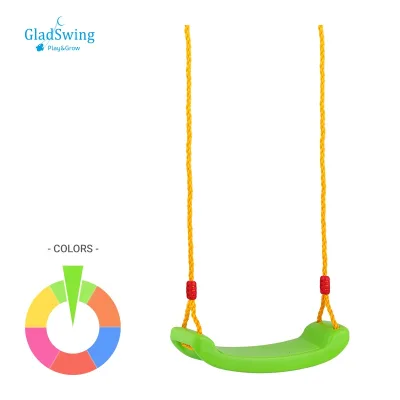
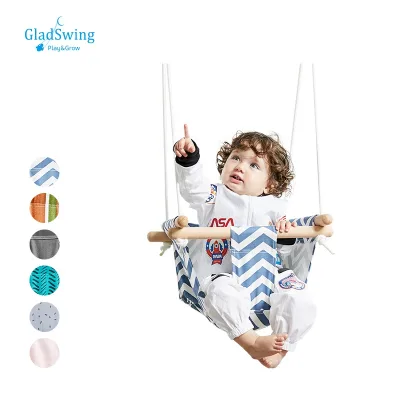
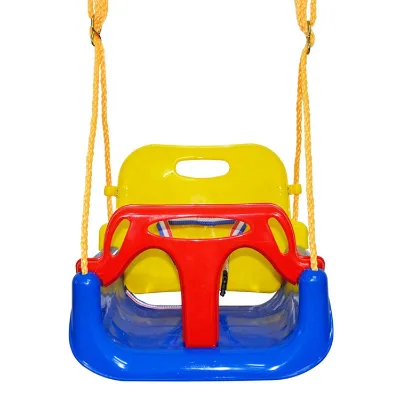


Playground Outdoor Indoor Garden Patio Tree Platform Round Child Swing
$16.50 - $16.80
MOQ: 100 Pieces


Custom Design Natural Pine Comfort Natural Kids Outdoor Garden Wooden Swing Seat
$4.00 - $4.10
MOQ: 200 Pieces


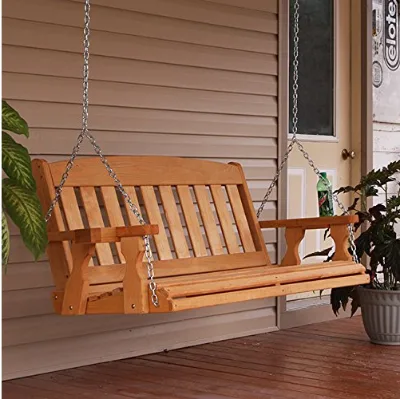




Comprehensive Sourcing Guide
Strategic Sourcing Guide for Indoor and Outdoor Baby Wooden Swings
The global market for children's play equipment has seen a significant shift toward durable, aesthetically pleasing, and versatile solutions that bridge the gap between indoor comfort and outdoor resilience. For procurement professionals and facility managers seeking "Indoor Outdoor Baby Wooden Swing" solutions, the current landscape offers a diverse array of products ranging from simple plastic seats to complex multi-material assemblies. This guide synthesizes observed market data to provide a disciplined framework for evaluating suppliers, understanding technical specifications, and mitigating procurement risks. The focus remains on products that utilize wood as a primary structural or aesthetic component while ensuring safety and durability for young children.
Technical Specifications and Material Composition
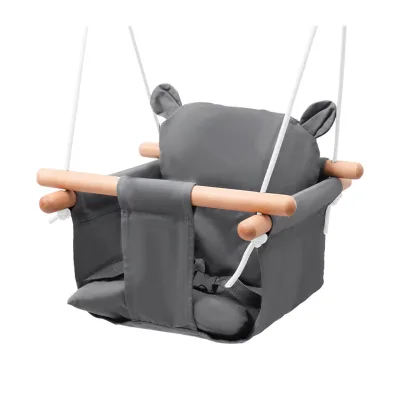
When sourcing wooden swings, the primary distinction lies in the material composition and structural design. The market presents a clear divergence between products that are entirely wooden, those that are plastic, and hybrid models that combine wood with other materials like cotton canvas or PE rope. For a buyer specifically targeting "wooden" swings, it is critical to verify the exact material listing. Some observed listings describe products with "Wood Bar" specifications, such as a diameter of 2.2 cm and a length of 30 cm, paired with cotton canvas and PE rope. This hybrid approach is common for "baby fabric swings" intended for indoor use, where the wood provides the hanging structure while the fabric ensures comfort.
In contrast, other products in the category are labeled as "kids plastic swing" with a weight of 1.8 kg and a maximum loading capacity of 50 kg. While these are not wooden, they are often compared by buyers due to their similar form factor. For a strict wooden swing requirement, the buyer must look for specifications indicating "Wood" as the primary material. One observed product, the "2 in 1 plate baby swing," lists wood as the material but also notes a bearing weight of 80 kg, which is significantly higher than the 50 kg limit found in other plastic or hybrid models.
Dimensional specifications are equally vital for installation planning. Observed sizes vary widely, from compact units measuring 4216.58.5 cm to larger packages reaching 434038.5 cm. The weight of the units also fluctuates, with some listing a net weight of 1.8 kg and others a gross weight per batch of 10.000 kg. These discrepancies often stem from packaging differences or the inclusion of multiple components. Buyers must distinguish between the product weight and the shipping weight to accurately calculate logistics costs. Furthermore, the "Type" attribute often distinguishes between "Indoor" and "Outdoor" usage, though many products are marketed as suitable for both environments, including applications in patios, gardens, and commercial amusement parks.
Compliance, Certification, and Safety Standards
Safety is the paramount concern when procuring equipment for children, particularly for the "baby" demographic. While the provided data mentions "ASTM F2088" as a standard, it is categorized as low-confidence background information. Therefore, procurement teams should not assume any listed product automatically complies with this or any other specific standard without direct verification from the supplier. Instead, buyers must treat compliance as a verification step rather than an inherent attribute.
When evaluating a supplier, the procurement team should request specific test reports relevant to the intended market. For products marketed for use in "indoor commercial amusement parks," "resort places," or "city parks," the equipment must withstand rigorous usage cycles. The "Allowable Passenger" count is a critical safety metric; observed listings consistently indicate a limit of 1 passenger per swing, which aligns with standard safety practices to prevent collisions. Additionally, the "Max loading" capacity varies, with some units rated for 50 kg and others for 80 kg. For babies and toddlers, a capacity of 50 kg is generally sufficient, but for older children or mixed-age usage, the higher 80 kg rating offers a safer margin.
Buyers should also scrutinize the "Condition" of the product. All observed listings specify "New," but this does not guarantee the absence of defects. The "Feature" attribute often highlights "Strong Swing Seat," which implies a focus on structural integrity. However, "Strong" is a subjective claim. To validate this, buyers should ask for evidence of load testing or material strength analysis. The "Inflatable" attribute is consistently "No," which simplifies the safety profile by removing the risk of sudden deflation, but it necessitates a focus on the rigidity of the wooden and rope components.
Cost Drivers and Pricing Dynamics
The pricing for wooden swings is influenced by a complex interplay of material costs, manufacturing complexity, and shipping logistics. The observed price range in the market is extensive, spanning from $2.50 to $7,000. This vast disparity indicates that the category includes everything from simple, single-item plastic or fabric units to large-scale commercial installations. For a specific "baby wooden swing," the price is likely to fall in the mid-range, driven by the cost of treated wood, high-quality canvas, and durable rope.
Minimum Order Quantity (MOQ) is another significant cost driver. The observed MOQ range is 1 to 500 units. Suppliers with an MOQ of 1 are ideal for small-scale projects, such as a single home installation or a small pilot program in a residential area. However, these units often carry a higher per-item cost. Conversely, suppliers requiring an MOQ of 500 are typically geared toward large commercial deployments, such as a "kids café" or a "trampoline park." Buyers should note that some products are sold in "Selling Units" of multiple items, such as a "Multiple of 4," which can affect the total order cost and inventory management.
Packaging details also impact the final landed cost. Some products are shipped in a "gift box or brown box with color sticker," while others use standard "brown box with color sticker" packaging. The "Gross weight per batch" of 10.000 kg for certain items suggests that shipping volume and weight will be a major factor in the total cost. Buyers should calculate the cost per unit including freight, as the "Place of Origin" is listed as "Zhejiang, China," which implies international shipping costs that vary based on volume and destination.
Typical Applications and Usage Scenarios
The versatility of wooden swings allows them to be deployed in a wide variety of settings. The observed "Occasion" attributes reveal a broad spectrum of use cases, from "indoor commercial amusement park" and "kids café" to "outdoor public playground," "resort place," and "camping area." This versatility is a key selling point for buyers looking to standardize equipment across different locations. For instance, a resort might use the same model for its "garden" and "indoor kids zone," simplifying maintenance and replacement parts.
The "Application" field further clarifies the intended environment, listing "Patio," "Garden," "Cottage," "Courtyard," "Beach," and "Indoor." This suggests that the materials used, particularly the wood and rope, are treated to withstand various weather conditions if used outdoors. However, buyers must verify the specific treatment of the wood, as not all wooden products are suitable for direct exposure to rain or sun without degradation. The "Type" attribute, which includes both "Indoor" and "Outdoor," supports this dual-purpose capability, but the "Inflatable" status of "No" confirms that these are rigid structures requiring secure installation.
For commercial buyers, the "Usage" in "training center" or "sports park" indicates that these swings may be used for developmental play or physical therapy. The "Gender" is listed as "Unisex," ensuring broad appeal. The "Age" specification is critical; while some products are for "above 36-months kids," others are specifically for "2Years" or "3Years." This age specificity helps buyers match the equipment to their target demographic, ensuring that the swing size and load capacity are appropriate for the intended users.
Supplier Evaluation and Verification
Evaluating suppliers for wooden swings requires a rigorous approach to ensure product quality and reliability. The "Brand Name" "Gladswing" is one observed entity, but buyers should not limit their search to a single brand. Instead, they should focus on the supplier's ability to provide detailed product attributes. Key verification points include the "Model Number" (e.g., SW133), which allows for precise tracking of specific product iterations.
Buyers should request a detailed breakdown of the "Material" composition. While "Wood" is a common listing, the type of wood (e.g., pine, oak, bamboo) and the finish (e.g., varnish, paint) are often omitted in general listings. Similarly, the "Rope" material, listed as "PE ROPE" in some cases, should be verified for UV resistance and tensile strength. The "Customization" attribute is marked as "Available" for some products, which is a significant advantage for buyers looking to brand the equipment or modify dimensions. However, customization often increases the lead time and cost, so this must be factored into the procurement timeline.
The "Place of Origin" is consistently "Zhejiang, China," a major manufacturing hub. While this indicates a high volume of production, it also means that buyers must be vigilant about quality control. The "Packaging Details" should be inspected to ensure that the product arrives without damage, especially given the "Wood Bar" components which can be prone to cracking if not packed correctly. The "Condition" being "New" is a baseline requirement, but buyers should also ask for photos of the actual production batch to verify consistency.
Quality Control and Long-Term Procurement Considerations
Quality control for wooden swings involves a multi-stage process, from raw material inspection to final packaging. The "Feature" of a "Strong Swing Seat" suggests that the manufacturer prioritizes structural integrity, but this must be validated through third-party testing. Buyers should insist on a quality assurance plan that includes load testing, material durability checks, and finish adhesion tests. The "Max Capacity" of <50kg or <100kg (depending on the specific product) must be strictly adhered to, and the supplier should provide documentation proving that the product meets these limits under stress.
Long-term procurement considerations include the availability of replacement parts and the durability of the finish. Wooden swings exposed to outdoor elements may require periodic maintenance, such as re-varnishing or rope replacement. Buyers should inquire about the supplier's policy on spare parts and the expected lifespan of the product. The "Selling Units" of "Single item" or "Multiple of 4" also impact inventory management; buyers should plan their stock levels based on the expected turnover rate in their specific application, whether it is a "home kids zone" or a "commercial amusement park."
Finally, the "Rotary" attribute, listed as "Fixed," indicates that the swing does not rotate, which simplifies the installation and reduces the risk of entanglement. This is a crucial safety feature for baby swings. Buyers should ensure that the installation instructions provided by the supplier are clear and that the necessary hardware for mounting is included. By focusing on these technical and operational details, procurement professionals can secure high-quality wooden swings that meet the safety and performance needs of their specific projects.
FAQs
What materials are used for indoor outdoor baby wooden swings?
Some models combine wood bars with cotton canvas and PE rope, while others use solid wood or plastic. Buyers must verify the specific material listing as some products are entirely plastic rather than wooden.
Which age group is suitable for these baby swings?
Products are designed for children above 36 months, with specific models targeting ages 2 or 3 years. The allowable passenger count is consistently one child per swing to ensure safety.
Can these swings be used in commercial amusement parks?
Yes, they are suitable for indoor commercial amusement parks, kids cafes, and resort places. They also fit outdoor applications like city parks, gardens, and camping areas.
What is the maximum weight capacity for these swings?
Maximum loading capacities vary, with some units rated for 50 kg and others up to 80 kg. Buyers should check the specific product bearing weight before purchase.
Are these swings customizable for specific branding needs?
Customization is available for certain models, allowing for modified dimensions or branding. However, this may affect the lead time and requires confirmation with the supplier.
What is the typical packaging for these swing units?
Units are typically shipped in brown boxes with color stickers or gift boxes. Packaging dimensions vary, with some batches weighing up to 10 kg gross weight.