Find Industrial Automation PLC Power Supply for factories, warehouses, and control rooms
Source 30 verified Industrial Automation PLC Power Supply units with varying output types, voltage ranges, and communication interfaces. Buyers can compare specifications like PWM modulation, protection features, and packaging options from suppliers in Zhejiang, China.
Key considerations
Products List


Heavy Duty 20kw DC Power Supply for PLC and Industrial Automation Equipment
$428.00 - $280000.00
MOQ: 1 unit


High-Efficiency 5kw DC Regulated Power Supply for Industrial Automation & Testing
$428.00 - $280000.00
MOQ: 1 unit


High Voltage Automatic Power Supply Switch for Industrial Applications
$2500.00 - $4900.00
MOQ: 1 Sets


Programmable DC Power Supply with Scpi Protocol for Industrial Automation
$387.00 - $389.00
MOQ: 1 Pieces

High-Precision Programmable DC Power Supply for Lab & Industrial Automation
$388.00 - $448.00
MOQ: 1 Pieces


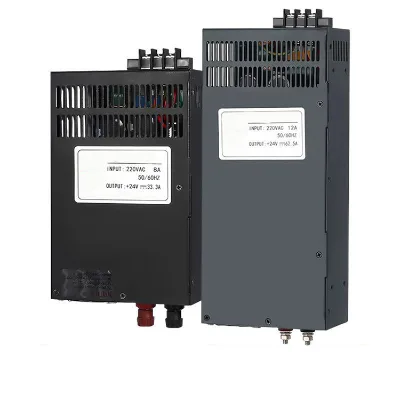


$6000.00 - $9000.00
MOQ: 1 Pieces


Automate Programmable PLC Control PLC
$99.72 - $150.62
MOQ: 1 sets
Ji' Nan Tian Chuan Zhong Cheng Electricity Equipment Co., Ltd.


Comprehensive Sourcing Guide
Strategic Sourcing Guide for Industrial Automation PLC Power Supply
Understanding Technical Specifications and Output Requirements
When sourcing industrial automation power supplies, the primary objective is to ensure stable, reliable energy delivery to Programmable Logic Controllers (PLCs) and associated control systems. The market offers a diverse array of configurations, ranging from compact single-output units to high-capacity rack-mounted systems. A critical first step in the evaluation process is identifying the specific output type required for the application. Many industrial units are designed with a single output configuration, which simplifies wiring and reduces the risk of cross-circuit interference in sensitive control environments. However, for more complex automation setups, multi-output or dual-output systems may be necessary to power both the logic controller and peripheral I/O modules simultaneously.
The input voltage requirements are equally pivotal. Standard industrial environments often operate on 220V AC, but the robustness of the power supply against grid fluctuations is a key differentiator. Some units are engineered with a full-range input capability, allowing them to operate reliably across a wide spectrum of voltages and frequencies, typically spanning 47Hz to 63Hz. This flexibility is essential for facilities that may experience variable power quality or operate in regions with less stable grid infrastructure. In contrast, units with fixed input voltage ratings may require additional conditioning equipment, adding to the overall system cost and complexity.
Communication interfaces represent another layer of technical complexity. Modern industrial power supplies often integrate digital communication protocols to facilitate remote monitoring and control. Buyers should look for units that support standard interfaces such as RS232, RS485, and LAN, which allow for seamless integration into existing SCADA or DCS networks. Some advanced models also include analog signaling capabilities, such as 0-5V outputs, alongside digital ports. The presence of a GPIB interface in certain high-end units further enhances compatibility with legacy test and measurement equipment. The choice of interface depends heavily on the specific automation architecture and the level of data granularity required for predictive maintenance and system diagnostics.
Compliance, Certification, and Safety Standards
In the industrial sector, compliance with international safety and quality standards is non-negotiable. Procurement teams must verify that potential suppliers adhere to recognized certification frameworks. Common certifications observed in the market include ISO, CE, and CCC. These marks indicate that the product has undergone rigorous testing for electrical safety, electromagnetic compatibility, and environmental performance. The ISO certification generally signifies adherence to quality management systems, ensuring consistent manufacturing processes. The CE mark demonstrates conformity with health, safety, and environmental protection standards for products sold within the European Economic Area, while CCC is a mandatory certification for products sold in China.
Beyond general certifications, specific technical standards provide a deeper layer of assurance. While some background information references standards such as EN 61010-2-201, EN 55011, UL 61800-5-1, and EN 50155, buyers should treat these as benchmarks for verification rather than guaranteed attributes of every listed product. It is crucial to request current test reports and certification documents directly from the supplier to confirm that the specific model under consideration meets these standards. For instance, EN 55011 relates to the limits and methods of measurement of radio disturbance characteristics of industrial, scientific, and medical (ISM) radio-frequency equipment, ensuring that the power supply does not interfere with other sensitive electronics. Similarly, UL 61800-5-1 addresses the safety of adjustable speed electrical power drive systems, a critical consideration for drives often paired with PLCs.
Protection mechanisms are an integral part of compliance and safety. A robust power supply must include comprehensive protection features against over-voltage, over-current, over-temperature, and short-circuit conditions. These safeguards prevent catastrophic failure of the power supply and protect the connected PLC and machinery. The presence of these features is often a prerequisite for passing safety audits and maintaining operational continuity. Buyers should explicitly verify that the protection circuits are active and that the system includes automatic recovery or shutdown protocols to minimize downtime during fault conditions.
Cost Drivers and Pricing Structures
The pricing of industrial automation power supplies is influenced by a complex matrix of factors, including output power, form factor, communication capabilities, and certification levels. The observed market range is extensive, spanning from as low as $0.03 to $420,000. This vast disparity reflects the difference between small, low-power components and large, high-capacity rack-mounted systems designed for heavy industrial applications. Understanding these cost drivers is essential for budgeting and value analysis.
Low-cost units typically feature single outputs, basic protection mechanisms, and limited communication interfaces. They are often suitable for small-scale automation tasks or backup applications where high reliability is not the primary concern. Conversely, high-end units command premium prices due to their advanced features, such as high power outputs exceeding 500W, precise voltage and current regulation, and extensive communication protocols. These units often come in standardized rack formats, such as 4U, 6U, or 9U, which require precise manufacturing and high-quality materials to ensure structural integrity and thermal management.
Minimum Order Quantity (MOQ) is another significant cost driver. The market shows an MOQ range from 1 to 2000 units. Suppliers with lower MOQs are ideal for prototyping, small-scale deployments, or projects with uncertain demand, as they reduce upfront capital expenditure. However, higher volume orders often benefit from economies of scale, resulting in a lower unit cost. Buyers must balance the need for flexibility with the desire for cost efficiency. Additionally, packaging requirements can impact the total landed cost. Units shipped in wooden boxes or specialized cartons (e.g., 57.531.527.5cm/50PCS) may incur higher shipping and handling fees compared to those in standard PE bags or simple white boxes.
Typical Applications and Operational Environments
Industrial automation power supplies are deployed across a wide spectrum of applications, from discrete manufacturing to process control. The specific operational environment dictates the required specifications. In environments with high electromagnetic interference (EMI), such as those containing large motors or variable frequency drives, power supplies with robust filtering and shielding are essential to prevent signal corruption in the PLC. Units featuring frequency modulation types and PWM modulation systems are particularly effective in maintaining stable output under such stressful conditions.
The cooling method is another critical factor tied to the application. Fan-forced cooling is common in high-power applications where heat dissipation is a priority. However, in clean rooms or environments with high dust content, the reliance on fans may introduce maintenance issues or contamination risks. In such cases, buyers should evaluate whether the design allows for alternative cooling strategies or if the fan system includes filtration mechanisms.
Form factor also plays a role in application suitability. Standardized rack-mount units, adhering to dimensions like 482265650mm or 482399650mm, are ideal for centralized control cabinets where space is at a premium and modularity is required. These units are often used in large-scale data centers or utility control rooms. On the other hand, compact units with dimensions around 21cm * 28cm * 15cm are better suited for embedded applications or space-constrained machinery where a full rack mount is impractical. The ability to customize the product, including packing and specific output configurations, allows suppliers to tailor solutions to unique application needs, further expanding the range of potential use cases.
Supplier Evaluation and Geographic Considerations
Selecting the right supplier is as important as selecting the right product. Geographic origin is a primary indicator of supply chain dynamics. Many industrial power supplies originate from manufacturing hubs in Zhejiang, China, and other regions in China. This concentration of manufacturing capability often results in competitive pricing and a wide variety of models. However, buyers must conduct thorough due diligence to ensure that the supplier maintains consistent quality control and adheres to the claimed certifications.
Supplier evaluation should extend beyond the product specifications to include their customization capabilities. The availability of customization options, such as specific packing configurations or tailored output voltages, indicates a supplier's flexibility and willingness to collaborate on unique project requirements. Buyers should assess the supplier's ability to provide detailed technical documentation, including datasheets, wiring diagrams, and compliance certificates. A supplier that is transparent about their manufacturing processes and quality assurance protocols is more likely to deliver reliable products.
Furthermore, the warranty terms are a critical component of supplier evaluation. A standard one-year warranty is common, but the scope of coverage and the process for claims should be clearly defined. Buyers should inquire about the supplier's support infrastructure, including technical assistance and spare parts availability. A supplier with a robust support network can significantly reduce downtime and maintenance costs over the lifecycle of the equipment.
Quality Control and Long-Term Procurement Considerations
Quality control is paramount in industrial automation, where power supply failures can lead to costly production stoppages and safety hazards. Buyers should implement a rigorous quality control strategy that includes pre-shipment inspections and post-delivery testing. Key performance indicators to monitor include voltage regulation, which should ideally be within ±0.1% of the full-scale value, and current regulation, which should be precise to 0.001A. Ripple coefficients should be kept low, typically below 2%, to ensure clean power delivery to sensitive electronic components.
Long-term procurement considerations involve evaluating the total cost of ownership (TCO) rather than just the initial purchase price. Factors such as energy efficiency, maintenance requirements, and expected lifespan contribute to the TCO. Units with advanced features like digital displays showing Vrms, Arms, frequency, wattage, and Pfc (Power Factor Correction) can help operators optimize energy usage and identify potential issues before they become critical. The presence of a five-digit digital display for voltage and current further enhances the ability to monitor system health in real-time.
Additionally, the physical durability of the unit is a long-term consideration. Units with net weights around 30kg and gross weights up to 42kg often indicate robust construction, which is beneficial for long-term reliability. However, the increased weight also impacts shipping costs and installation logistics. Buyers must balance the need for durability with the practicalities of handling and installation. Finally, the availability of spare parts and the supplier's commitment to product lifecycle management should be verified to ensure that the power supply can be maintained or replaced seamlessly as the automation system evolves.
Comparative Analysis of Key Product Attributes
To facilitate decision-making, the following table summarizes key attributes observed across different product models, highlighting the diversity in specifications and capabilities.
| Attribute Category | Model Example 1 | Model Example 2 | Model Example 3 |
|---|---|---|---|
| Product Model | YSI-80 | GLO | DS1020-150-150 |
| Output Type | Single | Variable | One-Output |
| Input Voltage | 220V | Full Range | Full Range |
| Communication | RS232/RS485 | RS232/RS485/LAN/USB | RS232/485/Gpib |
| Protection | Over Voltage/Current/Temp | Over Voltage/Current/Temp | Over Voltage/Current/Temp |
| Display | Five-Digit Digital | Vrms Arms Fre Wattage | Vrms Arms Fre Wattage |
| Standard | N/A | 6U 482265650 | 482399650 9U |
| Certification | ISO, CE, CCC | ISO, CE, CCC | ISO, CE, CCC |
| Origin | Zhejiang, China | China | China |
| Warranty | 1 Year | 1 Year | 1 Year |
This comparison illustrates that while core safety features like protection mechanisms and certifications are consistent across models, the form factor, communication interfaces, and display capabilities vary significantly. Buyers should use this matrix to align product selection with their specific technical requirements and system architecture. By carefully evaluating these attributes, procurement teams can ensure they select power supplies that not only meet immediate operational needs but also support the long-term reliability and scalability of their industrial automation systems.
FAQs
What certifications do industrial automation plc power supplies typically have?
Products typically hold ISO, CE, and CCC certifications. These marks indicate adherence to quality management systems and safety standards for electrical equipment sold in various regions including Europe and China.
How is the input voltage handled in these power supply units?
Units often support a full range input voltage or specific ratings like 220V. Some models operate reliably across frequencies from 47Hz to 63Hz to handle grid fluctuations in industrial environments.
Which communication interfaces are available for remote monitoring?
Standard interfaces include RS232, RS485, and LAN with analog signaling options. Advanced models may also feature GPIB interfaces for compatibility with legacy test and measurement equipment.
Can the product be customized for specific packing requirements?
Yes, customization is available for various packing configurations. Options include PE bags, white boxes, cartons with specific dimensions, or wooden boxes depending on the shipping and protection needs.
What protection features are included in the power supply design?
The system includes protection against over voltage, over current, over temperature, and short circuits. These safeguards prevent catastrophic failure and ensure operational continuity in demanding industrial settings.
Where are these industrial power supplies typically manufactured?
Many units originate from manufacturing hubs in Zhejiang, China. This location offers competitive pricing and a wide variety of models suitable for global industrial automation needs.
What is the standard warranty period for these products?
A standard one-year warranty is commonly provided for these units. Buyers should verify the scope of coverage and support infrastructure to ensure reliable long-term maintenance.