Source Industrial Automation Digital Output Module for PLCs, Workstations, and Control Systems
Find 30 Industrial Automation Digital Output Module options with varying specifications like 16 channels and 24VDC operation. Compare features such as IP ratings, power consumption, and certifications to select the right component for your automation needs.
Key considerations
Products List


Industrial Digital Input Output Remote Plastic I/O Module with Ethernet
$133.44 - $176.47
MOQ: 1 Pieces

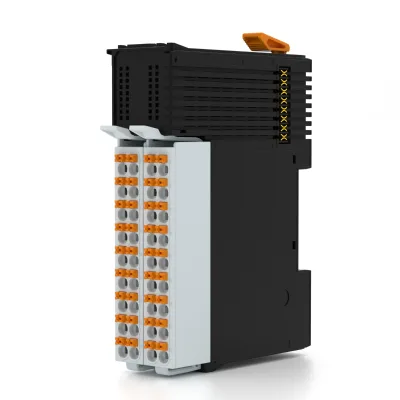
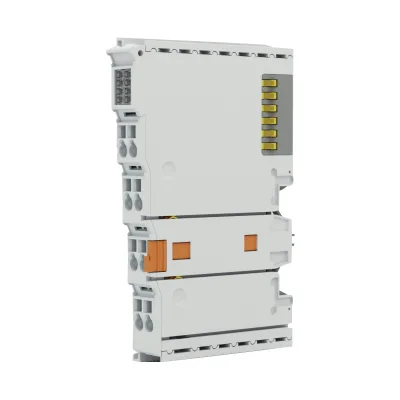

Industrial Expansion IO Module for Automation with Multi-Protocol Options
$45.00 - $249.00
MOQ: 1 Pieces


$50.00 - $100.00
MOQ: 1 Pieces


$50.00 - $100.00
MOQ: 1 Pieces


$120.00 - $1180.00
MOQ: 1 Sets

Original New Digital Input/Output Modules PLC
$38.00 - $57.00
MOQ: 1 Pieces
Ji' Nan Tian Chuan Zhong Cheng Electricity Equipment Co., Ltd.

H1X Original New Digital Input/Output Modules PLC
$38.00 - $57.00
MOQ: 1 Pieces
Ji' Nan Tian Chuan Zhong Cheng Electricity Equipment Co., Ltd.

Siemens PLC Modules - Digital Analog Input Output Expansion Modules with HMI Compatibility
$1000.00 - $1100.00
MOQ: 1 Pieces


Comprehensive Sourcing Guide
Strategic Sourcing Guide for Industrial Automation Digital Output Modules
Selecting the right digital output module is a critical decision for any procurement team managing industrial automation infrastructure. These components serve as the bridge between a controller's logic and the physical world, directly actuating valves, motors, and indicator lights. The market presents a wide array of options, ranging from compact discrete units to integrated multi-channel systems. Buyers must navigate a landscape defined by varying voltage standards, channel counts, and environmental tolerances. This guide outlines the essential factors for evaluating digital output modules, ensuring that the selected hardware aligns with operational requirements, safety standards, and long-term maintenance strategies.
Technical Specifications and Performance Parameters
The foundation of a successful procurement decision lies in a rigorous analysis of technical specifications. When evaluating a digital output module, the primary focus must be on voltage compatibility, current handling capabilities, and channel configuration. In the observed market, specific models demonstrate distinct electrical characteristics that dictate their suitability for different applications. For instance, certain units operate with an opening voltage range of 9 to 24VDC and a turn-off voltage between 0 and 3VDC, ensuring reliable signal detection across a broad spectrum of industrial power supplies.
Current consumption is another vital metric. Modules often specify power requirements such as a maximum draw of 70mA at 5.0VDC per channel. Buyers must calculate the total load to ensure the power supply unit can handle the cumulative demand of all connected outputs. Furthermore, the switching speed of the module impacts the overall system responsiveness. High-performance units may feature switching delays as low as 5 microseconds for opening and 3 microseconds for closing, which is essential for high-speed automation processes. Filtering time, typically set at a default of 10ms, helps mitigate noise in electrically noisy environments, while a sampling frequency of 500Hz ensures rapid data acquisition.
Physical dimensions and weight also play a role in system integration. Some modules are designed with a compact footprint, weighing as little as 0.200 kg, while others may be heavier, around 1 kg, depending on the internal circuitry and housing material. The structure of the module, whether it is a combination type or a dedicated input/output unit, determines how it fits into the rack or panel. Additionally, the presence of pilot lamps, such as 16-channel input lights, provides immediate visual feedback on the status of each output, aiding in rapid troubleshooting and maintenance.
Compliance, Certification, and Safety Standards
In the industrial sector, compliance with international safety and environmental standards is non-negotiable. Procurement teams must verify that digital output modules carry recognized certifications. Common certifications observed in the market include RoHS (Restriction of Hazardous Substances) and ISO: CE, which indicate adherence to European safety and environmental directives. The CE mark, in particular, is a prerequisite for selling products within the European Economic Area and often serves as a baseline for quality assurance globally.
Beyond general certifications, the Class of Protection (IP rating) is a critical safety parameter. Modules designed for harsh environments often feature an IP20 rating, protecting against solid objects larger than 12.5mm, while others may achieve an IP67 rating, offering complete protection against dust and temporary immersion in water. This distinction is vital for applications in outdoor settings or areas with high moisture content. Buyers should also check for specific standards regarding operating temperatures and ambient humidity. A robust module should typically operate within a temperature range of -40°C to 85°C and withstand humidity levels from 5% to 95% without condensation, ensuring reliability in extreme conditions.
Cost Drivers and Pricing Dynamics
The pricing of industrial automation components is influenced by a complex interplay of factors, including channel count, build quality, and brand reputation. Market observations indicate a significant variance in unit costs, with prices ranging from approximately $4 to over $1,300. This wide spectrum reflects the difference between basic discrete modules and sophisticated, multi-channel systems with advanced networking capabilities.
Several key drivers influence the final cost. First, the number of channels is a primary determinant; a module with 16 channels will inherently cost more than a single-channel unit due to the increased component count and complexity. Second, the inclusion of advanced features such as Ethernet support, IO-Link ports, or high-speed switching capabilities adds to the manufacturing cost. Third, the quality of the housing and the robustness of the internal components, such as the use of high-grade semiconductors and protective coatings, directly impact the price.
Minimum Order Quantity (MOQ) also affects the effective cost per unit. While some suppliers may offer an MOQ of just one unit, others might require a minimum of two or more, influencing the initial capital outlay. Buyers should consider the total cost of ownership, which includes not only the purchase price but also the potential costs associated with downtime, maintenance, and replacement. In some cases, a higher initial investment in a more durable module may result in lower long-term costs due to reduced failure rates and extended service life.
Typical Applications and System Integration
Digital output modules are ubiquitous in modern industrial automation, serving a wide range of applications across various sectors. Their primary function is to convert digital signals from a programmable logic controller (PLC) or similar control system into physical actions. Common applications include the control of solenoid valves in fluid power systems, the activation of motor starters in conveyor belts, and the operation of indicator lights and alarms in manufacturing plants.
The specific type of module selected often depends on the nature of the load being controlled. For instance, modules with a "Wired" type and support for "Ethernet" are ideal for workstations requiring high-speed data exchange and remote monitoring. These units are particularly useful in smart factory environments where real-time data analysis is crucial for predictive maintenance. Conversely, modules with a "Combination" structure and "Continuous" signal output are better suited for applications requiring steady-state control, such as maintaining a constant pressure or temperature in a process vessel.
Integration into existing systems is another critical consideration. Buyers must ensure that the module's communication protocol and physical interface are compatible with their current infrastructure. Some modules support specific network standards, such as IO-Link, which allows for detailed diagnostic data and parameterization. The packaging and dimensions of the module, such as a standard size of 20x20x15cm or a compact 30x20x10mm footprint, must also align with the available space in the control cabinet or rack.
Supplier Evaluation and Product Verification
When evaluating potential suppliers, buyers should prioritize transparency and the availability of detailed product documentation. A reliable supplier will provide clear information regarding the part number, model number, and technical specifications. For example, verifying that a product matches the model "CC-PDOB01 DO - 24V" or "DIO280" ensures that the buyer receives the exact component required for their application.
Stock availability is another crucial factor. Suppliers who list products as "In Stock" can significantly reduce lead times, which is essential for maintaining production schedules. However, buyers should also be aware that "New" condition items may have varying degrees of packaging, ranging from individual boxes to bulk cartons or pallets. The packaging standard, such as "1201575mm" or "302010," should be checked to ensure safe transport and storage.
Furthermore, the origin of the product, often listed as "China" for many industrial components, should be considered in the context of supply chain resilience. While the country of origin does not inherently dictate quality, it can influence lead times and shipping costs. Buyers should also verify the warranty terms, as a standard one-year warranty provides a baseline level of protection against manufacturing defects.
Quality Control and Long-Term Procurement Considerations
Ensuring the quality of digital output modules requires a proactive approach to quality control. Buyers should request test results or certification documents that verify the module's performance against the stated specifications. This includes verifying the input impedance, which should be greater than 7.5kΩ, and confirming the switching delay times. Regular quality audits of the supplier's manufacturing process can also help mitigate the risk of receiving defective units.
Long-term procurement considerations extend beyond the initial purchase. Buyers should evaluate the supplier's ability to provide consistent supply over time, especially for legacy systems where replacement parts may be difficult to source. The availability of technical support and spare parts is equally important. A supplier that offers comprehensive documentation, including wiring diagrams and programming guides, can significantly reduce the time required for installation and troubleshooting.
Finally, buyers should consider the scalability of their procurement strategy. As automation systems grow, the need for additional modules or upgrades may arise. Establishing a relationship with a supplier that can accommodate volume increases and provide consistent quality will ensure the long-term stability of the automation infrastructure. By focusing on these key areas, procurement teams can secure high-quality digital output modules that meet the demanding requirements of modern industrial automation.
Comparative Analysis of Key Product Attributes
To facilitate a clearer understanding of the differences between available options, the following table summarizes key attributes observed in the market. This comparison highlights the diversity in specifications, certifications, and packaging standards that buyers must evaluate.
| Attribute | Model A (CC-PDOB01) | Model B (DIO280) | Model C (6ES7223) | Model D (GK-100-16DIP) |
|---|---|---|---|---|
| Part Number | Cc-Pdob01 Do - 24V | Dio280 | 6es7223-1bh32-0xb0 | GK-100-16DIP |
| Weight | 1kg | Not Specified | 0.200 Kg | Not Specified |
| Certification | Not Specified | Not Specified | RoHS, ISO: CE | CE |
| Channels | Not Specified | Not Specified | 16 Channels | 16 Channels |
| Protection | Not Specified | Not Specified | IP20 | IP67 |
| Packing | Box | Not Specified | 8.80 X 10.80 X 5.70 | Cartons/Pallets |
| Standard Size | 20x20x15cm | 302010 | Not Specified | 1201575mm |
| MOQ | Not Specified | Not Specified | 2 | Not Specified |
| Origin | China | China | China | China |
This table illustrates that while some models share similar channel counts and protection ratings, their physical dimensions, certifications, and packaging standards vary significantly. Buyers must carefully match these attributes to their specific application requirements to ensure optimal performance and compatibility. By adhering to these guidelines and conducting thorough due diligence, procurement teams can make informed decisions that enhance the reliability and efficiency of their industrial automation systems.
FAQs
What certifications do industrial automation digital output modules have?
Modules often carry RoHS and ISO: CE certifications to ensure safety and environmental compliance. Some specific models also display the CE mark, which is required for sale in the European Economic Area and serves as a baseline for global quality assurance.
Which voltage range is typical for opening and turning off signals?
Typical units operate with an opening voltage range of 9 to 24VDC and a turn-off voltage between 0 and 3VDC. This range ensures reliable signal detection across various industrial power supplies and supports standard 24VDC system requirements.
How many channels are available in standard digital input modules?
Standard configurations often include 16 channels to handle multiple signals simultaneously. These multi-channel units provide pilot lamps for each channel, offering immediate visual feedback on the status of every input for rapid troubleshooting.
Can these modules operate in extreme temperature conditions?
Yes, robust modules typically function within a temperature range of -40°C to 85°C. They are also designed to withstand ambient humidity levels from 5% to 95% without condensation, ensuring reliability in harsh industrial environments.
What is the minimum order quantity for purchasing these modules?
Minimum order quantities vary, with some suppliers requiring as few as one unit while others set a minimum of two. Buyers should verify specific MOQ values to align with their initial capital outlay and inventory needs.
Which protection ratings are common for industrial automation hardware?
Common protection ratings include IP20 for indoor use and IP67 for harsh environments with dust or water exposure. The IP67 rating offers complete protection against dust and temporary immersion, making it suitable for outdoor or wet applications.
What is the switching delay time for high-speed automation processes?
High-performance units may feature switching delays as low as 5 microseconds for opening and 3 microseconds for closing. This speed is essential for high-speed automation processes that require rapid system responsiveness and precise timing control.