Source Industrial Checkweigher Conveyor Scale for food, pharma, and packaging
Compare 30 Industrial Checkweigher Conveyor Scale options from verified Chinese suppliers. These units feature pusher-bar sorting, touch screens, and SUS304 frames for food, beverage, and pharmaceutical applications with accuracies ranging from ±0.1g to ±0.5g.
Key considerations
Products List


Industrial Conveyor Belt Checkweigher Scale Check Weighers Machine
$2380.00 - $4870.00
MOQ: 1 Pieces
Qingdao Zhongkang Printing and Packaging Machinery Co., Ltd.

High Accuracy Industrial Conveyor Check Weigher Checkweigher Price
$2380.00 - $4870.00
MOQ: 1 Pieces
Qingdao Zhongkang Printing and Packaging Machinery Co., Ltd.

Hot Sale Industrial Dynamic Scales Automatic Conveyor Check Weigher
$3350.00 - $5680.00
MOQ: 1 Pieces
Qingdao Zhongkang Printing and Packaging Machinery Co., Ltd.


High Efficiency Part Conveyor Checkweigher Industrial Weighing Machine
$3000.00 - $3800.00
MOQ: 1 Pieces

Industrial Conveyor Belt Weight Scale Machine Check Weigher for Food
$3300.00 - $3800.00
MOQ: 1 Pieces


Automatic Checkweigher Machine Conveyor Belt Scale Industrial Check Weigher
$4700.00 - $5200.00
MOQ: 1 Pieces


Industrial Conveyor Check Weight Machine Checkweigher Scales for Food
$2400.00 - $3680.00
MOQ: 1 Pieces


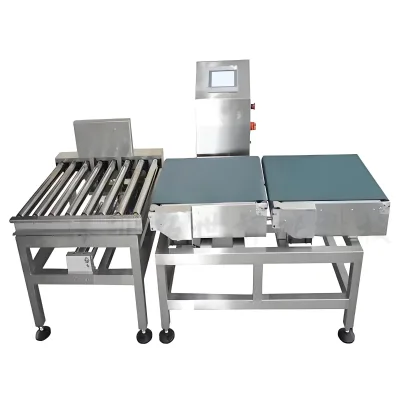


High Speed Weighing Conveyor Scale Weight Checker for Aquatic Industry
$5000.00 - $10000.00
MOQ: 1 Pieces

Weight Check Weighing Dynamic Weighting Sorting Food Conveyor Belt Scale Checkweigher
$4650.00 - $5500.00
MOQ: 1 Pieces

High Speed Factory Food Industry Conveyor Scales Belt Check Weigher with CE
$4399.00 - $4700.00
MOQ: 1 Pieces
Comprehensive Sourcing Guide
Industrial Checkweigher Conveyor Scale Sourcing Guide
Selecting the right Industrial Checkweigher Conveyor Scale requires a careful balance of precision, speed, and integration capabilities. These machines are essential for maintaining quality control in high-volume production lines, ensuring that every package meets strict weight tolerances before leaving the facility. Buyers must evaluate not just the hardware, but the software interface, belt configuration, and environmental durability to ensure the equipment aligns with their specific operational demands.
The market offers a diverse range of models, from universal series units to high-precision continuous weighing systems. Understanding the distinction between these types is critical for making an informed procurement decision. This guide outlines the key technical specifications, compliance requirements, and commercial considerations necessary to source reliable checkweighers that deliver consistent performance and long-term value.
Product Scope and Observed Listing Signals
The current market for industrial checkweighers includes a variety of configurations tailored to different industries, with a strong presence in the food and beverage sector. Listings frequently highlight features such as touch screen interfaces, which facilitate easy operation and data monitoring. These digital controls allow operators to adjust settings quickly, making the equipment suitable for environments where product changes occur frequently. The availability of customization options further expands the scope, allowing buyers to tailor the machine to specific line layouts or product shapes.
Observed listing signals indicate a wide range of model numbers, such as the TDX-3KG, TDX-1KG, and various CW series units like CW-200 and CW-400. These models often differ in their physical dimensions and weight capacities, reflecting their specialized applications. For instance, some units are designed for high-precision tasks with accuracy levels below ±0.1g, while others focus on robust industrial weighing with broader detection ranges. The presence of pusher-bar sorting methods suggests that many systems include automatic rejection mechanisms, which are vital for maintaining line efficiency without manual intervention.
Technical Specifications to Verify
Accuracy and detection speed are the primary technical metrics that define the performance of a checkweigher. Buyers should verify the stated accuracy, which can range from ±0.3g to less than ±0.1g depending on the model and application. High-precision series units are often required for small, high-value items, while standard industrial units may suffice for bulkier products. It is also important to check the maximum detection speed, as some models support up to 250 pieces per minute, ensuring that the scale does not become a bottleneck in fast-moving production lines.
The physical dimensions and belt specifications are equally critical for integration into existing conveyor systems. Input belt lengths and weighing belt widths vary significantly, with some models offering a weighing belt width of 200-300mm. Buyers must ensure that the machine’s footprint, such as the 13508001420mm standard for certain models, fits within their available floor space. Additionally, the frame material, often SUS304 stainless steel, plays a crucial role in durability and hygiene, particularly for food-grade applications where corrosion resistance and ease of cleaning are paramount.
Compliance and Safety Documentation
Certification is a non-negotiable aspect of sourcing industrial equipment, ensuring that the machinery meets international safety and quality standards. Buyers should request documentation for certifications such as CE, which indicates compliance with European health, safety, and environmental protection standards. Additionally, ISO 9001 certifications, including versions like 2008 and 2000, demonstrate that the manufacturer adheres to rigorous quality management processes. These certifications provide assurance that the product has been tested and validated against established industry benchmarks.
Electrical and environmental specifications must also be verified to ensure safe operation in the buyer’s facility. Voltage requirements typically include options for 110V or 220V, allowing for flexibility in different regions. The operating temperature range, often specified as 10℃ to 40℃, and relative humidity limits are crucial for maintaining the electronic components’ longevity. Buyers should confirm that the power consumption, such as 0.5kw for certain models, aligns with their facility’s electrical capacity to avoid overloading circuits or incurring excessive energy costs.
Cost Drivers and Commercial Terms
The price of industrial checkweighers varies widely based on precision, features, and build quality. Observed price ranges in the market span from approximately $1,158 to $10,000, reflecting the diversity of available options. Lower-priced models may offer basic functionality and standard accuracy, while higher-end units provide advanced touch screen interfaces, higher detection speeds, and superior build materials. Buyers should align their budget with their specific operational needs, avoiding over-specification for simple tasks or under-specification for critical quality control points.
Minimum Order Quantities (MOQ) and packaging details are also significant commercial factors. Many suppliers list an MOQ of one unit, making it accessible for small businesses or pilot projects. Packaging is typically handled with care, using wooden cases or standard wooden boxes to protect the equipment during transit. Buyers should clarify whether the quoted price includes installation, training, and initial calibration, as these services can add substantial value and reduce downtime during the commissioning phase.
Supplier Qualification and Quality Control
Evaluating the supplier’s location and after-sales support is essential for long-term reliability. Many manufacturers are based in industrial hubs such as Shanghai, Dongguan, and Jiangsu in China, regions known for their advanced manufacturing capabilities. Buyers should verify the supplier’s ability to provide comprehensive after-sales service, including online support and warranty coverage. A standard one-year warranty is common, but buyers should inquire about the availability of extended warranty options and the responsiveness of technical support teams.
Quality control processes should be transparent and documented. Suppliers should provide clear information about the testing scope, such as 12-1200g for certain models, and the detection accuracy achieved during factory tests. Buyers may request third-party inspection reports or factory audit results to verify the manufacturer’s quality management systems. Ensuring that the supplier has a robust quality control process helps mitigate the risk of receiving defective units or machines that do not meet the specified performance criteria.
Long-Term Procurement Checks
Maintenance and spare parts availability are critical considerations for minimizing downtime. Buyers should assess the ease of accessing wear parts, such as belts and sensors, and verify the supplier’s inventory of spare components. A well-designed checkweigher should allow for quick maintenance without requiring specialized tools or extensive training. Additionally, the availability of software updates and firmware upgrades can extend the machine’s lifespan and improve its functionality over time.
Integration with existing factory systems is another long-term factor to consider. Buyers should ensure that the checkweigher can communicate with other line equipment, such as metal detectors or packaging machines, through standard protocols. The ability to export data for quality analysis and regulatory compliance is increasingly important in regulated industries. By prioritizing these long-term aspects, buyers can ensure that their investment in industrial checkweighers continues to deliver value and support operational efficiency for years to come.
FAQs
What customization options are available for industrial checkweigher conveyor scales?
Customization is available for these industrial checkweigher conveyor scales to meet specific production needs. Buyers can request tailored specifications such as belt width, detection speed, or integration with existing feeding systems to ensure optimal performance in their facility.
Which accuracy levels are offered for the TDX series checkweighers?
The TDX series offers high accuracy levels ranging from less than plus or minus 0.1g to less than plus or minus 0.5g depending on the specific model. These precision levels ensure reliable weight checking for products within the 1 to 999g range in food and beverage applications.
How is the frame material constructed for durability in industrial environments?
The frame is constructed from SUS304 stainless steel to ensure durability and resistance to corrosion in industrial environments. This material choice supports hygiene standards required in the food and beverage industry while maintaining structural integrity under continuous weighing and feeding operations.
Can these checkweighers operate at high speeds up to 250 pieces per minute?
Yes, these checkweighers can operate at maximum detection speeds of up to 250 pieces per minute. This capacity allows for efficient processing in high-volume production lines while maintaining a detection accuracy of plus or minus 0.3g for consistent quality control.
What certifications do the Suhong brand checkweighers hold for safety compliance?
The Suhong brand checkweighers hold ISO 9001:2008, ISO 9001:2000, and CE certifications for safety and quality compliance. These certifications verify that the manufacturing processes and product standards meet international requirements for industrial weighing equipment used in various global markets.
Which packing methods are used to protect the equipment during shipping?
The equipment is packed in wooden cases or standard wooden boxes to ensure protection during shipping. This robust packaging method secures the Industrial Checkweigher Conveyor Scale against damage while transporting it from the origin in China to the buyer's facility.