Source Industrial Insulating FKM Rubber Sheet for Flooring Printing
Find 30 listings for Industrial Insulating FKM Rubber Sheet suitable for flooring, printing, and general industrial applications. Compare specifications including tensile strength, hardness, and working temperature ranges from verified Chinese manufacturers.
Key considerations
Products List




Comprehensive Sourcing Guide
Strategic Sourcing Guide for Industrial Insulating FKM Rubber Sheets
Understanding the Core Product and Material Composition
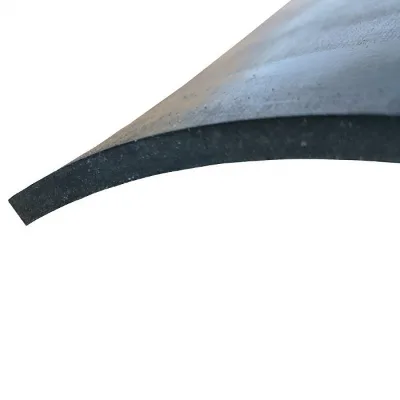
Sourcing an industrial insulating FKM (Fluorocarbon Rubber) sheet requires a precise understanding of the material's inherent properties and the specific variations available in the global market. The core keyword "Industrial Insulating FKM Rubber Sheet" points to a specialized elastomer designed for high-performance environments where standard rubber compounds would fail. Based on available product data, the material composition is primarily defined as Fluorocarbon Rubber, often derived from synthetic rubber bases. This material class is distinct from general-purpose rubbers due to its exceptional chemical resistance and thermal stability.
The physical characteristics of these sheets vary significantly depending on the specific model and intended application. Observed specifications indicate a density range typically falling between 1.9 and 2.1 g/cm³, with specific product lines noting a density of 1.95 g/cm³. This density is critical for buyers calculating weight per square meter for logistics and structural support planning. The hardness of the material is another pivotal variable, with observed values ranging from Shore 38° to 65° in certain industrial grades, while others specify a tighter range of 55-75 Shore A or specific durometer points like 60, 70, 75, and 80+/-5 Shore A. This variance allows procurement teams to select sheets that balance flexibility with structural rigidity.
Furthermore, the tensile strength of FKM sheets is a key performance indicator. Data suggests a broad spectrum of mechanical strength, with some industrial grades offering 6-9 MPa, while high-performance variants reach 8-12 MPa or even 7-12 MPa. Elongation capabilities also vary, with observed ranges spanning from 200% to 450%, indicating the material's ability to stretch without permanent deformation under stress. The working temperature range is particularly notable for FKM materials, with some specifications citing a functional range of -40°C to 320°C, making them suitable for extreme thermal environments.
Technical Specifications and Dimensional Variability
When evaluating technical specifications, buyers must navigate a wide array of dimensional options that cater to diverse industrial needs. The width of available rubber sheets is not uniform; observed data shows widths ranging from 1 meter to 2 meters (1-2m), with some industrial slabs extending up to 2200mm. Thickness is equally variable, with product lines offering sheets from 1mm up to 50mm, while other specific models may be limited to a 1-20mm range. Length specifications also differ, with some products available in lengths of 1-20 meters, while others are supplied in rolls or custom-cut sizes.
The surface finish and processing capabilities are equally important for integration into machinery or flooring systems. Surface textures observed include smooth finishes, smooth surfaces combined with impression fabric, and double-impressed fabric patterns. These surface variations are not merely aesthetic; they influence friction coefficients and adhesion properties. For instance, a smooth surface is often preferred for sealing applications, while fabric-embedded surfaces may be required for conveyor belts or high-wear flooring. The insertion type, which refers to the reinforcement layer, is another critical specification. Options range from "None" (pure gum) to 1-ply or 2-ply fabric insertions, which significantly enhance tensile strength and dimensional stability.
| Specification Category | Observed Range / Options | Application Implication |
|---|---|---|
| Thickness | 1-20mm, 1-50mm | Determines load-bearing capacity and insulation thickness. |
| Width | 1-2m, 500-2200mm | Affects cutting efficiency and waste reduction during installation. |
| Hardness | Shore 38°-65°, 55-75 Shore A, 60-80+/-5 Shore A | Dictates flexibility vs. rigidity for sealing or flooring. |
| Tensile Strength | 6-9 MPa, 7-12 MPa, 8-12 MPa | Critical for applications involving mechanical stress or tension. |
| Working Temp | -40°C to 320°C | Defines suitability for extreme heat or cryogenic environments. |
| Surface Finish | Smooth, Smooth/Fabric, Double Impression | Influences grip, wear resistance, and bonding capabilities. |
Compliance, Certification, and Quality Verification
Verifying compliance and quality is a non-negotiable step in sourcing industrial rubber sheets. While the market offers products labeled with various standards, buyers must exercise caution regarding specific certification claims. Some product listings indicate compliance with CE standards, while others mention "Custom Size" as a standard, implying flexibility rather than a specific regulatory body. It is essential to distinguish between general quality grades, such as "Industrial Grade" or "FDA Grade," and specific regulatory certifications. The presence of FDA Grade status suggests suitability for food-contact applications, which is a significant differentiator for certain industries.
Buyers should not assume that all listed products meet specific international standards like ASTM D1418, ASTM D297, or DIN 53508 unless explicitly verified in the product documentation. These standards are often cited in background knowledge but require confirmation against the specific batch or model number being procured. Instead of relying on generic claims, procurement teams should request test reports that validate the material's performance against the specific requirements of their application. For instance, if the application involves high-temperature insulation, the buyer must verify the thermal stability data rather than relying solely on the stated working temperature range.
Quality verification also extends to the raw materials used. The supply chain should be transparent regarding the use of synthetic rubber and pad materials. The distinction between "Pure Gum Rubber Sheet" and "Metal Frame Layer Rubber Sheet" or "Fabric" insertions must be clear in the technical data sheet. This distinction affects the electrical insulation properties, which are crucial for the "Insulating Rubber Slab" classification. Buyers should ensure that the "Insulating" claim is backed by specific dielectric strength data if the application involves high-voltage environments.
Cost Drivers and Procurement Economics
The cost of industrial insulating FKM rubber sheets is influenced by a complex matrix of factors, including material composition, dimensional specifications, and processing requirements. The raw material cost of Fluorocarbon Rubber is inherently higher than that of general-purpose rubbers, driven by the complexity of the polymerization process and the scarcity of specific fluorine-based compounds. Consequently, the price per square meter or kilogram will fluctuate based on the specific grade of FKM used.
Dimensional specifications play a significant role in pricing. Custom sizes, while offering flexibility, often incur higher costs due to the inefficiencies of cutting standard rolls to non-standard dimensions. The observed product models, such as JK-93881, JK-9667, and 3A5007, suggest that different model numbers may correspond to different price tiers based on their specific attributes like thickness, hardness, or reinforcement. Thicker sheets and those with higher tensile strength or wider widths generally command a premium.
Packaging and logistics also contribute to the total cost of ownership. Observed packaging methods include PE Film and Pallets, Standard Export Packages, and Packing in Rolls and Pallets. The choice of packaging affects the protection of the material during transit and the ease of handling upon arrival. Furthermore, the Minimum Order Quantity (MOQ) varies widely, ranging from 1 unit to 2000 units. This variability allows buyers to scale their orders based on budget and storage capacity, but it also means that unit costs may decrease significantly with larger volume purchases. Lead times, typically observed at 2-3 weeks, must be factored into the procurement timeline to avoid production delays.
Typical Applications and Industry Use Cases
The versatility of industrial insulating FKM rubber sheets makes them suitable for a wide range of applications across multiple sectors. The primary use cases identified include Industrial Rubber Slab, Rubber Floor Covering, and general Industrial flooring. In these contexts, the material's wear-resistant, corrosion-resistant, and impact-resistant properties are leveraged to create durable surfaces that can withstand heavy machinery and harsh chemical environments.
Beyond flooring, these sheets are utilized in printing applications, where the smooth surface and precise thickness are critical for maintaining print quality and machine operation. The "Insulating" property is particularly valuable in electrical applications, where the sheets serve as protective barriers against electrical shock. The high temperature resistance (-40°C to 320°C) makes them ideal for use in thermal processing equipment, such as gaskets, seals, and linings in ovens or reactors.
The specific model numbers and material grades allow for targeted application matching. For example, a "Pure Gum Rubber Sheet" might be preferred for applications requiring high chemical purity, while a "Metal Frame Layer Rubber Sheet" could be selected for structural reinforcement in heavy-duty machinery. The "Printing" application specifically highlights the need for surface consistency and dimensional stability, which are provided by the smooth or fabric-impressed surface finishes.
Supplier Evaluation and Quality Control Protocols
Evaluating suppliers for FKM rubber sheets requires a rigorous approach that goes beyond simple price comparison. Buyers should prioritize suppliers who provide transparent technical data sheets that align with the observed specifications, such as the specific density, hardness, and tensile strength ranges. The origin of the product, often listed as China or specific regions like Anhui, China, should be verified for logistical consistency and quality control standards.
Quality control protocols should be established to ensure that the delivered product matches the ordered specifications. This includes verifying the "Custom Size" claims against actual measurements and checking the "Surface" finish for consistency. The presence of "Processing Service: Cutting" indicates that suppliers may offer value-added services, which should be evaluated for accuracy and efficiency. Buyers should also assess the supplier's ability to handle the "Insertion" types, ensuring that the fabric or metal layers are correctly integrated.
Given the variability in product models (e.g., JK-9102, JK-9573, BY023), buyers should request samples of the specific model they intend to purchase. This allows for physical testing of the material's properties, such as elongation and hardness, before committing to a large order. The "Quality" attribute, whether listed as "Industrial Grade" or "FDA Grade," must be substantiated with documentation. Finally, the lead time of 2-3 weeks should be confirmed with the supplier to ensure it aligns with the buyer's production schedule, and the "Standard Export Package" should be inspected to ensure the material arrives without damage.
Long-Term Procurement and Lifecycle Management
Long-term procurement of industrial insulating FKM rubber sheets involves more than just the initial purchase; it requires a strategy for lifecycle management and supply chain stability. The "Customization" availability suggests that suppliers can adapt to changing needs, which is beneficial for long-term partnerships. However, buyers should ensure that the customization process is documented and standardized to avoid quality inconsistencies over time.
The durability of FKM rubber is a key factor in long-term cost savings. While the initial cost may be higher than alternative materials, the resistance to corrosion, wear, and extreme temperatures often results in a lower total cost of ownership due to reduced replacement frequency. Buyers should monitor the performance of the installed sheets over time, tracking any signs of degradation or failure. This data can inform future procurement decisions, allowing for adjustments in material selection or supplier choice.
Furthermore, the "Working Temperature" range and "Elongation" properties should be periodically re-evaluated as the application evolves. If the operational environment changes, such as an increase in temperature or chemical exposure, the current rubber sheet may no longer be suitable. Maintaining a relationship with a supplier who can provide updated technical support and alternative models is essential for adapting to these changes. Finally, the "Packing" method should be reviewed to ensure that storage conditions remain optimal, preventing premature aging or damage to the rubber sheets before they are deployed.
FAQs
What are the standard working temperature limits for these sheets?
The working temperature range is typically -40 to 320 degrees Celsius. This allows the material to function in extreme thermal environments while maintaining its insulating properties and structural integrity.
Which hardness options are available for industrial rubber slabs?
Hardness values range from Shore 38 to 65 degrees, with specific grades offering 55 to 75 Shore A or 60 to 80 Shore A. Buyers can select the durometer that best balances flexibility and rigidity for their application.
How is the material density defined for these fluorocarbon rubber sheets?
The density is observed between 1.9 and 2.1 grams per cubic centimeter, with specific models noting 1.95 grams per cubic centimeter. This value is critical for calculating weight per square meter during logistics planning.
Can buyers request custom sizes for these industrial rubber sheets?
Yes, customization is available with options for custom sizes and processing services like cutting. This flexibility allows procurement teams to match specific dimensional requirements without relying solely on standard roll widths.
What is the typical lead time for delivery of these rubber products?
The delivery time is generally 2 to 3 weeks from order confirmation. This lead time should be factored into procurement timelines to ensure production schedules are not delayed by shipping logistics.
Which certifications or quality grades are associated with these sheets?
Products are available in Industrial Grade and FDA Grade quality levels, with some listings indicating CE standard compliance. Buyers should verify specific batch documentation to confirm suitability for food-contact or electrical applications.