Source Industrial Straight-Line Gas Cutting Nozzle for welding, CNC, and metal fabrication
Explore 30 listings for the Industrial Straight-Line Gas Cutting Nozzle designed for welding torches, CNC machines, and general metal fabrication. Buyers can compare specifications, certifications, and pricing from verified Chinese manufacturers.
Key considerations
Products List


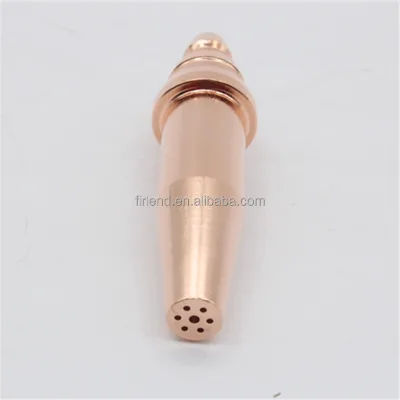
2025uweld Hot Selling Gas Cutting Nozzles Industrial Grade Cutting Nozzle
$2.68 - $3.58
MOQ: 500 pieces




Comprehensive Sourcing Guide
Strategic Sourcing Guide for Industrial Straight Line Gas Cutting Nozzles
Procuring industrial straight line gas cutting nozzles requires a disciplined approach that balances technical precision with supply chain reliability. These components are critical for maintaining cut quality, gas efficiency, and operator safety in metal fabrication environments. The market offers a diverse array of options, ranging from standard propane tips to specialized CNC-machined jets. Buyers must navigate a landscape where product names, models, and specifications vary significantly between suppliers. This guide outlines the essential factors for evaluating potential sources, ensuring that the selected equipment meets rigorous operational demands without relying on unverified marketing claims.
Technical Specifications and Material Composition
The performance of a gas cutting nozzle is fundamentally dictated by its material composition and geometric tolerances. In the current market, suppliers offer nozzles constructed from various metals, including stainless steel, brass, carbon steel, and aluminum. The choice of material often correlates with the intended application and the specific gas being used. For instance, brass is frequently cited for its thermal conductivity and resistance to corrosion, while stainless steel may be preferred for durability in high-abrasion environments.
Precision is another critical technical parameter. High-quality nozzles for straight-line cutting often feature CNC machining capabilities to ensure consistent orifice geometry. Tolerances are vital; observed data indicates that precision nozzles can achieve tolerances as tight as +/- 0.05mm. Deviations beyond this range can lead to uneven flame patterns, increased gas consumption, and poor cut edges. Buyers should verify the machining capabilities of the supplier, specifically looking for evidence of CNC processes rather than standard casting or stamping.
Furthermore, the design of the nozzle affects the gas flow dynamics. Some products are described as "two-piece" designs, which may offer advantages in maintenance or gas mixing efficiency. The model numbers associated with these nozzles, such as ANME, 6290NFF, 261, PNM, and GPN, suggest a wide variety of specific configurations available. It is essential to match the nozzle model to the specific torch system and gas pressure requirements of the cutting machine. The application is typically listed as "Metal Cutting Machine," but the specific compatibility with propane or other fuel gases must be confirmed on a case-by-case basis.
Compliance, Certification, and Regulatory Standards
Navigating the regulatory landscape is a non-negotiable aspect of industrial procurement. Suppliers often list a range of certifications to demonstrate their commitment to quality and safety. Commonly observed certifications in the product listings include CCC, CE, RoHS, and ISO9001. The presence of ISO9001, specifically the 2008 version or similar iterations like ISO9001:2008, suggests a baseline for quality management systems. Additionally, some listings mention TS16949, which is a technical specification for automotive quality management, indicating a high level of process control if applicable to the buyer's industry.
The CE mark is another frequent indicator, often linked to the product standard "CE." This implies that the product meets EU safety, health, and environmental protection requirements. However, buyers must distinguish between the product standard and the manufacturer's certification. While some listings state "China made" as a standard, this is a geographic descriptor rather than a technical standard. Buyers should request valid certification documents for any claimed standard, such as ISO 9013 or ISO 9001:2015, noting that the latter is a background reference and may not be explicitly confirmed in all product data.
It is crucial to verify that the certifications are current and applicable to the specific nozzle model being purchased. A supplier may hold a general ISO9001 certificate for their facility, but this does not automatically guarantee that every batch of nozzles meets the same rigorous standards. The "Customized" attribute is also relevant here; if a buyer requires a custom design, the supplier's ability to maintain certification compliance during the customization process must be assessed.
Cost Drivers and Pricing Dynamics
The pricing of industrial gas cutting nozzles is influenced by several variables, including material costs, manufacturing complexity, and order volume. The observed price range in the market spans from $0.40 to $500.00 USD. This wide disparity reflects the difference between basic, single-item units and specialized, high-precision, or bulk-packaged systems. The lower end of the spectrum likely corresponds to standard, off-the-shelf nozzles made from common materials like brass or carbon steel. The higher end may involve custom-machined units, specialized alloys, or complete kits with advanced features.
Minimum Order Quantity (MOQ) is a significant factor in the total cost of ownership. The observed MOQ range is between 1 and 2000 units. Buyers purchasing small quantities for prototyping or maintenance may face higher per-unit costs but benefit from lower upfront capital expenditure. Conversely, large-scale industrial operations can leverage bulk purchasing to reduce unit costs, provided they can meet the higher MOQ thresholds. The "Selling Units" are often listed as "Single Item," which facilitates small orders, but the "Export Package" or "Polybag+Carton" configurations may influence shipping costs for larger orders.
Additional cost drivers include customization options. Products marked as "Customized" or offering "OEM, ODM Support" often carry a premium due to the engineering and tooling required. The "Neutral Packing" versus "Export Package" or "Color Box" options can also impact pricing, as specialized packaging adds to the production cost. Buyers should analyze the total landed cost, including shipping from ports like Ningbo, Zhejiang, or other origins in Jiangsu and Zhejiang, rather than focusing solely on the unit price.
Typical Applications and Operational Context
Industrial straight line gas cutting nozzles are primarily designed for use in metal cutting machines, including CNC plasma and oxy-fuel systems. The "Application" field consistently points to "Metal Cutting Machine," indicating their role in precision fabrication. These nozzles are essential for creating clean, straight cuts in various metal thicknesses. The "Condition" is typically listed as "New," ensuring that buyers receive components free from wear or damage that could compromise cut quality.
The operational context often involves the use of propane gas, as indicated by product names like "Cutting Nozzle for Propane Gas" and "Pnme Propane Gas Cutting Tip." However, the specific gas compatibility must be verified, as some nozzles are optimized for acetylene or other fuel gases. The "Control Mode" is frequently "Manual," suggesting that these nozzles are often used in manual cutting operations or as consumables for automated systems where the nozzle itself is a replaceable part.
The "Keyword" associations, such as "Welding Torch" and "Gas Welding Torch," highlight the dual nature of some equipment. While the primary function is cutting, the design principles often overlap with welding torches, requiring similar attention to gas flow and heat management. The "System No" (e.g., 1c001-0002) suggests that these nozzles may be part of a larger system or catalog, which can aid in identifying compatible accessories and replacement parts.
Supplier Evaluation and Geographic Origins
Evaluating suppliers requires a careful analysis of their geographic origins and logistical capabilities. The observed "Place of Origin" is predominantly Jiangsu Changzhou, with some entries citing Zhejiang, China. Changzhou is a known industrial hub for manufacturing, and the concentration of suppliers in this region suggests a mature supply chain for metalworking tools. The "Fob Port" is often listed as Ningbo, Zhejiang, which is a major shipping hub, facilitating efficient export logistics.
Suppliers should be assessed based on their ability to provide consistent quality and timely delivery. The "Delivery" time varies, with observed ranges of 5-15 days, 7-20 days, and a specific instance of 20 days. These lead times can fluctuate based on order volume, customization requirements, and seasonal demand. Buyers should confirm the current lead time for their specific order size before committing to a purchase.
The "Brand Name" and "OEM" acceptance are also key evaluation criteria. Some suppliers operate under their own brands, such as "Uweld," while others offer OEM and ODM support, allowing buyers to private label products. The "Warranty" period, observed as 1 year in some listings, provides a safety net for quality issues. However, buyers must verify the terms of the warranty, including what constitutes a defect and the process for claims. The "Customized" attribute and "OEM, ODM Support" indicate flexibility, but buyers should ensure that the supplier has the technical capacity to execute custom designs without compromising quality.
Quality Control and Long-Term Procurement Considerations
Quality control is paramount when sourcing consumable components like gas cutting nozzles. The "Tolerence" of +/- 0.05mm is a specific benchmark that buyers should request verification for. Consistency in manufacturing is essential to ensure that every nozzle performs identically, which is critical for automated cutting processes. The "Packing" methods, ranging from "Polybag+Carton" to "Export Package," play a role in protecting the nozzles during transit. Damage during shipping can render a nozzle unusable, so robust packaging is a key quality indicator.
Long-term procurement considerations involve building a relationship with a reliable supplier. The "Customization" availability suggests that suppliers can adapt to changing needs, but buyers should establish clear communication channels for future orders. The "Condition" being "New" is a baseline expectation, but buyers should also consider the lifespan of the nozzle. While specific wear rates are not provided, the material choice (e.g., stainless steel vs. brass) will influence longevity.
Buyers should also consider the "Standard" of the product. While "CE" and "China made" are listed, the actual manufacturing standard should be verified. The "Certificate" list includes ISO9001:2008 and TS16949, which are strong indicators of a quality management system. However, buyers must ensure that these certifications are valid and that the supplier adheres to them consistently. The "Keyword2" and "Keyword1" associations with welding torches suggest that the supplier may have expertise in related areas, which could be beneficial for future sourcing needs.
Summary of Key Procurement Parameters
To facilitate a streamlined decision-making process, the following table summarizes the key parameters observed in the market for industrial straight line gas cutting nozzles. This comparison highlights the variability in specifications and the importance of verifying details before purchase.
| Parameter | Observed Range / Options | Verification Requirement |
|---|---|---|
| Material | Stainless Steel, Brass, Carbon Steel, Aluminum | Confirm material grade and suitability for specific gas. |
| Tolerance | +/- 0.05mm (specific high-precision models) | Request calibration certificates or inspection reports. |
| Certification | CCC, CE, RoHS, ISO9001, TS16949 | Verify current validity of certificates for the specific model. |
| Origin | Jiangsu Changzhou, Zhejiang China | Confirm factory location and audit reports if required. |
| Delivery Time | 5-15 Days, 7-20 Days, 20 Days | Confirm lead time based on order volume and customization. |
| MOQ | 1 to 2000 Units | Negotiate MOQ based on project scale and budget. |
| Packing | Neutral, Export Package, Polybag+Carton | Ensure packaging protects against shipping damage. |
| Customization | Available (OEM/ODM Support) | Define technical requirements clearly for custom orders. |
In conclusion, sourcing industrial straight line gas cutting nozzles requires a meticulous approach that prioritizes technical specifications, verified certifications, and reliable supplier performance. By focusing on the observed data and avoiding unverified claims, buyers can secure high-quality components that enhance operational efficiency and safety in metal cutting applications. The diversity of models, materials, and origins offers flexibility, but the responsibility lies with the buyer to validate each parameter against their specific operational needs.
FAQs
What certifications do industrial straight line gas cutting nozzles typically have?
These nozzles commonly hold CCC, CE, RoHS, and ISO9001 certifications. Some listings also reference TS16949 for automotive quality management. Buyers should verify that the specific model matches the required certification standards before purchasing.
How long is the delivery time for these cutting nozzles?
Delivery times typically range from 5 to 20 days depending on the supplier and order specifics. Some standard models ship within 5 to 15 days, while others may require up to 20 days. Custom orders or large volumes might extend this timeline further.
Which materials are used to manufacture these gas cutting nozzles?
Manufacturers use stainless steel, brass, carbon steel, and aluminum for these components. Brass is often chosen for its thermal conductivity, while stainless steel offers durability. The material selection depends on the specific application and gas type being used.
Can buyers request custom designs for these cutting nozzles?
Yes, customization is available with OEM and ODM support offered by many suppliers. Buyers can request specific models like ANME or 6290NFF with tailored specifications. Custom packaging options like neutral packing or export packages are also frequently available.
What is the minimum order quantity for these industrial nozzles?
The minimum order quantity ranges from 1 to 2000 units depending on the supplier. Single item purchases are possible for testing, while bulk orders may require higher quantities. Buyers should check specific supplier terms to confirm the exact MOQ for their needs.
Where are these gas cutting nozzles primarily manufactured?
Most products originate from Jiangsu Changzhou and Zhejiang, China. These regions are established industrial hubs for metalworking tools. Shipping often departs from ports like Ningbo in Zhejiang to facilitate international logistics.
What precision tolerances are achievable for these CNC machined nozzles?
High-quality CNC machined nozzles can achieve tolerances as tight as plus or minus 0.05mm. This precision ensures consistent orifice geometry for better cut quality. Buyers should verify this tolerance level when selecting suppliers for critical applications.