Source Industrial Surface Mounted Plug for Factories, Warehouses, and Construction
Compare 30 verified listings for the Industrial Surface Mounted Plug designed for factory, warehouse, and construction environments. Buyers can evaluate models with IP44 or IP67 ratings, voltage up to 400V, and certifications like CE and CCC from Chinese manufacturers.
Key considerations
Products List




Comprehensive Sourcing Guide
Strategic Sourcing Guide for Industrial Surface Mounted Plugs
Procuring industrial surface mounted plugs requires a rigorous approach that balances technical compatibility with regulatory compliance and supply chain reliability. These components serve as critical interface points in industrial and commercial environments, where failure can lead to operational downtime or safety hazards. The market offers a diverse array of configurations, ranging from standard AC plugs to multifunctional industrial sockets. Buyers must navigate a landscape defined by varying voltage ratings, current capacities, and protection degrees to ensure the selected hardware meets the specific demands of the installation site. This guide outlines the essential factors for evaluating industrial surface mounted plugs, focusing on verified specifications, certification requirements, and cost drivers derived from current market data.
Technical Specifications and Configuration Analysis
The foundation of a successful procurement strategy lies in a precise understanding of technical specifications. Industrial surface mounted plugs are not generic components; they are engineered for specific electrical environments. The nominal voltage is a primary differentiator, with observed market data indicating ratings such as 400V for heavy-duty industrial applications and 250V for general commercial or lighter industrial use. Selecting a plug with an incorrect voltage rating can result in insulation breakdown or equipment damage.
Current capacity is another critical parameter. The available product range demonstrates a wide spectrum of current ratings, including 16A, 32A, 63A, and 125A. The choice between these ratings depends entirely on the load requirements of the connected machinery. For instance, a 16A rating may suffice for control circuits, whereas 125A is necessary for high-power motor drives or large-scale power distribution units. Furthermore, the pole configuration varies significantly, with options including 3-pole, 4-pole, and 5-pole arrangements. The selection must align with the phase requirements of the power supply system, typically 3-phase systems requiring 4 or 5 poles (including neutral and earth).
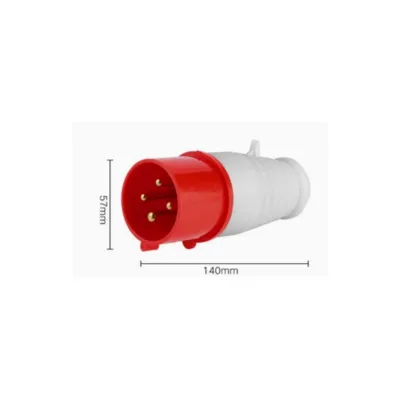
The physical interface and shape are equally vital for compatibility. Market observations reveal that plugs adhere to specific shape standards, such as En/IEC and EP configurations. These shapes ensure that plugs only mate with compatible sockets, preventing the dangerous connection of incompatible voltage or current systems. The interface type is predominantly AC, though some multifunctional models support AC/DC conversion. Additionally, the mounting style is a defining characteristic of the "surface mounted" category. These units are designed to be fixed directly onto walls or panels, often utilizing a robust housing to protect internal contacts from environmental factors.
Compliance and Certification Verification
In the industrial sector, regulatory compliance is not merely a formality but a prerequisite for safety and legal operation. Buyers must verify that suppliers provide products with recognized certifications. The observed market data highlights several key certifications, including CCC (China Compulsory Certification), CE (Conformité Européenne), CB (Certification Body), VDE (German Association for Electrical, Electronic & Information Technologies), and PSE (Product Safety of Electrical Appliances & Materials). The presence of these marks indicates that the product has undergone specific testing protocols relevant to the target market.
Standards compliance is equally important. Products in this category often adhere to European Standards and specific IEC standards, such as EN/IEC 60309-2. This standard governs industrial connectors, ensuring uniformity in dimensions, electrical characteristics, and color coding across different manufacturers. Some suppliers also reference British, German, South African, and Italian standards, reflecting the global nature of industrial power distribution. When sourcing, buyers should explicitly request documentation proving that the specific model, such as the QX-368 or HM-035 series, complies with the relevant standard for the destination country. Relying on a supplier's general claim of compliance without specific model verification can lead to non-conforming goods.
Cost Drivers and Pricing Dynamics
Understanding the cost structure of industrial surface mounted plugs is essential for budgeting and negotiation. The price range in the current market is extensive, spanning from approximately 0.4 USD to 1500 USD. This wide variance is driven by several factors, including the current rating, voltage class, material quality, and certification complexity. A basic 16A, 250V plug will naturally cost significantly less than a 125A, 400V unit designed for harsh industrial environments.
Material composition is a primary cost driver. High-quality industrial plugs often utilize durable thermoplastics or metal alloys to withstand mechanical stress and environmental exposure. The IP rating, which indicates the degree of protection against dust and water, also influences cost. Products with an IP44 rating are standard for many indoor industrial applications, while those with IP67 ratings, offering complete dust tightness and temporary immersion protection, command a premium. Additionally, the complexity of the internal contact mechanism and the inclusion of features like locking mechanisms or grounding pins can increase the unit price.
Minimum Order Quantity (MOQ) is another significant factor affecting the total cost of ownership. The observed MOQ range spans from 1 unit to 10,000 units. For small-scale projects or prototyping, suppliers with low MOQs are essential, though the per-unit cost may be higher. Conversely, large-scale industrial deployments can leverage high-volume orders to negotiate better pricing, provided the buyer can meet the higher MOQ thresholds. Packaging also plays a role; variations such as "5 PCS/Box," "1 PCS/Box," or bulk carton packing affect logistics costs and handling efficiency.
Typical Applications and Usage Scenarios
Industrial surface mounted plugs are deployed in a variety of settings, each imposing unique demands on the hardware. The primary application categories include industrial use and commercial use. In industrial environments, these plugs are frequently used for power supply connections to heavy machinery, temporary power distribution on construction sites, and equipment maintenance. The rugged nature of these applications requires plugs that can withstand vibration, dust, and potential chemical exposure.
Commercial applications often involve similar requirements but may focus more on aesthetics and ease of use. For example, wall-mounted sockets in commercial facilities or data centers may require specific color coding or branding. The "Multifunctional" nature of some models allows them to serve as both male plugs and female sockets, offering flexibility in system design. Specific models, such as those with a 400V rating and 32A capacity, are ideal for powering large motors or HVAC systems. Meanwhile, lower voltage options like 250V units are suitable for lighting circuits or control panels.
The shape and interface type further dictate application suitability. Round shapes are common for industrial plugs due to their robustness and ease of mating. The "Male Plug" and "Wall Mounted Socket" configurations allow for versatile installation, enabling either permanent wall fixtures or portable connection points. Buyers should assess the specific environmental conditions of the installation site, such as humidity levels or temperature extremes, to select the appropriate IP rating and material durability.
Supplier Evaluation and Quality Control
Evaluating suppliers requires a focus on their ability to deliver consistent quality and adhere to stated specifications. The market includes brands such as Qixing, Elendax, and Cowinelec, alongside OEM and ODM capabilities. When assessing a potential supplier, buyers should verify their production capabilities and quality control processes. The presence of certifications like CE, VDE, and CCC is a strong indicator of a supplier's commitment to compliance, but it must be backed by valid test reports.
Quality control should extend beyond the final product to the manufacturing process. Buyers should inquire about the supplier's adherence to standards like EN/IEC 60309-2 and their internal testing protocols for current carrying capacity and insulation resistance. The origin of the products, often cited as Zhejiang, China, provides insight into the supply chain dynamics, but it does not guarantee quality on its own. It is crucial to request samples for independent testing before committing to a large order.
Packaging standards also reflect the supplier's attention to detail. Variations in packing, from individual polybags to bulk cartons containing 20 boxes, indicate different levels of logistical sophistication. A supplier that offers robust packaging ensures that the delicate internal contacts of the plugs are not damaged during transit. Additionally, the availability of after-sales service is a key differentiator. Suppliers offering comprehensive support can assist with troubleshooting, warranty claims, and technical queries, which is vital for maintaining operational continuity in industrial settings.
Long-Term Procurement Considerations
Sourcing industrial surface mounted plugs is a long-term investment that requires careful planning for sustainability and scalability. Customization is a key feature available in the market, allowing buyers to tailor products to specific brand or functional requirements. This flexibility can be crucial for large enterprises that need uniform branding or specialized interfaces across their facilities. However, customization often involves higher MOQs and longer lead times, which must be factored into the procurement timeline.
Future-proofing the supply chain involves considering the availability of spare parts and the longevity of the product design. Industrial equipment often has a lifespan of decades, and the associated electrical components must remain available for replacement. Buyers should prioritize suppliers who demonstrate a commitment to maintaining product lines and providing long-term support. The ability to source compatible accessories, such as covers or adapters, is also important for maintaining system integrity.
Finally, buyers must remain vigilant about regulatory changes. Standards and certification requirements evolve over time, and a product that is compliant today may not meet future regulations. Establishing a relationship with a supplier who stays updated on international standards ensures that the procurement strategy remains valid and compliant. By focusing on verified specifications, robust certifications, and reliable supplier partnerships, buyers can secure a steady supply of high-quality industrial surface mounted plugs that meet the demanding needs of modern industrial and commercial infrastructure.
Comparative Overview of Key Product Attributes
To assist in the decision-making process, the following table summarizes the key attributes observed in the current market for industrial surface mounted plugs. This comparison highlights the diversity of options available and the specific parameters buyers should verify.
| Attribute Category | Observed Specifications | Verification Requirement |
|---|---|---|
| Nominal Voltage | 250V, 400V | Confirm compatibility with local grid voltage. |
| Current Rating | 16A, 32A, 63A, 125A | Match to the maximum load of the connected equipment. |
| Poles | 3p, 4p, 5p | Ensure alignment with the phase configuration (e.g., 3-phase). |
| IP Rating | IP44, IP67 | Select based on environmental exposure (dust/water). |
| Certifications | CCC, CE, CB, VDE, PSE | Verify validity for the specific destination market. |
| Standards | EN/IEC 60309-2, European Standard | Confirm adherence to local or international safety codes. |
| Shape | En/IEC, EP, Round | Ensure mechanical compatibility with mating sockets. |
| Origin | Zhejiang, China | Assess supply chain logistics and lead times. |
| MOQ Range | 1 to 10,000 units | Align order quantity with budget and storage capacity. |
This structured approach to evaluating industrial surface mounted plugs ensures that buyers make informed decisions based on concrete data rather than assumptions. By rigorously checking these attributes against project requirements, organizations can mitigate risks and ensure the reliable operation of their electrical systems.
FAQs
What certifications are available for industrial surface mounted plugs?
Products commonly carry CCC, CE, CB, VDE, and PSE certifications. These marks indicate compliance with specific regional safety standards. Buyers must verify that the specific model matches the required certification for their target market before purchasing.
Which voltage ratings are available for industrial surface mounted plugs?
Available nominal voltage ratings include 250V and 400V. The 400V rating is typical for heavy-duty industrial applications, while 250V suits general commercial use. Selecting the correct voltage is critical to prevent equipment damage or safety hazards.
Can these plugs be customized for specific brand requirements?
Yes, customization is available for industrial surface mounted plugs. Buyers can request specific branding or functional modifications from manufacturers. This option usually requires meeting higher minimum order quantities and may extend lead times for production.
What current capacities are offered for industrial surface mounted plugs?
The product range includes current ratings of 16A, 32A, 63A, and 125A. The appropriate capacity depends on the load requirements of the connected machinery. Higher current ratings are necessary for large motors or power distribution units.
Which protection degrees are available for industrial surface mounted plugs?
Protection degrees range from IP44 to IP67 for these industrial plugs. IP44 offers protection against splashing water, while IP67 provides dust tightness and temporary immersion resistance. The choice depends on the environmental conditions of the installation site.
What is the typical minimum order quantity for industrial surface mounted plugs?
The observed minimum order quantity ranges from 1 to 10,000 units. Small projects may utilize low MOQ options, while large deployments benefit from bulk pricing. Buyers should confirm the specific MOQ with the supplier before finalizing the order.
Where are these industrial surface mounted plugs manufactured?
Products originate from Zhejiang, China. This location is a known hub for electrical component manufacturing. Buyers should verify the specific factory details and quality control processes when sourcing from this region.