Source Inflatable Flower Arch for Events, Festivals, and Advertising
Explore 30 verified listings for the Inflatable Flower Arch, comparing features like material, size, and printing methods. Buyers can evaluate options for event decoration, outdoor activities, and advertising applications from suppliers in China.
Key considerations
Products List
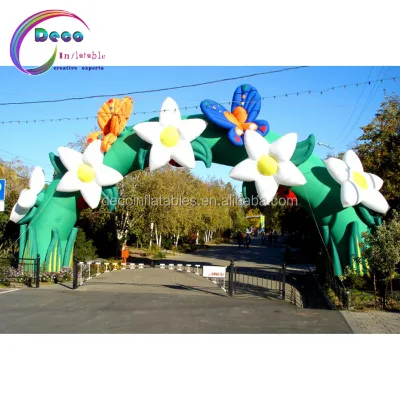
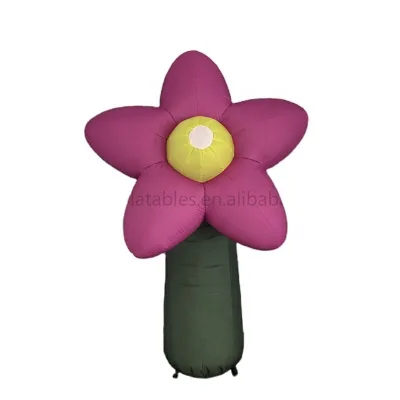


Stage Inflatable Flower Archway Music Festival Entrance Inflatable Arch with Flower
$159.00 - $1599.00
MOQ: 1 Pieces


Smooth Wedding Runner Decorative Artificial Flowers Orange Flower Runner Arch
$117.00 - $119.00
MOQ: 10 Pieces




Comprehensive Sourcing Guide
Strategic Sourcing Guide for Inflatable Flower Arch Procurement
Understanding Product Variants and Core Specifications
The market for inflatable flower arches presents a diverse landscape where buyers must distinguish between general event decorations and specialized structural inflatables. Based on current product observations, the core keyword "Inflatable Flower Arch" encompasses items ranging from 2-meter high polyester fabric structures to customized PVC oxford fabric solutions. A critical first step in sourcing is defining the specific material composition required for the intended environment. The observed product data indicates a split between durable PVC oxford fabric, PVC tarpaulin, and Rip Stop Nylon, alongside polyester options. These materials dictate the arch's resistance to weather, its weight, and its suitability for water-based applications. For instance, specific listings highlight "Air-Tight Inflatable Finish Line Floating on Water," suggesting that not all flower arches are designed for ground-level events; some are engineered for aquatic festivals or water parades.
Size customization is a dominant feature in this category. While some standardized models appear with a fixed height of 2.5 meters, the majority of suppliers offer "Customized Size" as a primary specification. This flexibility allows procurement teams to tailor the arch to specific venue constraints, whether for a grand entrance or a compact garden display. The single package size is frequently standardized at 30x30x30 cm for shipping efficiency, though this can vary based on the final inflated dimensions. Buyers should verify the "Single gross weight," which has been observed at 68.000 kg for certain heavy-duty units, as this significantly impacts freight costs and handling requirements. The model numbers, such as "NO-DECO-arch-Linda013" or "No-Deco-241217," serve as unique identifiers for specific design iterations, ensuring that the ordered unit matches the visual prototype exactly.
Technical Construction and Operational Mechanics
The operational integrity of an Inflatable Flower Arch relies heavily on its construction techniques and inflation systems. The data confirms that "Hot Welding" is a prevalent technic used to seal seams, ensuring the structure remains airtight under pressure. This method is crucial for maintaining the shape of the flower petals and the arch's curvature without relying on stitching, which can be a point of failure under wind load. For visual customization, suppliers utilize "Thermal Transfer Printing" and "Dye Sublimation Printing." These methods allow for high-fidelity, full-color floral designs that are embedded into the fabric rather than printed on the surface, preventing peeling or fading during outdoor exposure.
The inflation mechanism is universally described as "Air" based, requiring standard electric blowers. Compliance with electrical standards is a non-negotiable technical requirement. Products are observed to support dual voltage systems, specifically "CE 220V-240V / 110V-120V," with matched plugs provided for the destination region. This dual-voltage capability is essential for international procurement, reducing the need for external transformers. The "Inflation Gas" is strictly air, meaning no specialized gas cylinders are required, which simplifies logistics and safety protocols. However, the blower must be sized correctly to maintain pressure against wind forces, a factor that varies with the arch's surface area and the local climate conditions.
Compliance, Certification, and Safety Standards
Navigating the compliance landscape for inflatable structures requires careful verification of regional safety standards. While the product data lists "CE" as a standard attribute, it is critical for buyers to understand that this designation applies to the electrical components (the blowers) and potentially the manufacturing process, rather than a blanket certification for the entire inflatable structure's structural integrity. The background information references standards such as "EN14960" and "ASTM F2374," which are relevant to inflatable amusement devices and safety guidelines. However, these should not be assumed as automatically met by every listing. Buyers must explicitly request test reports or certificates of conformity that align with the specific safety regulations of their target market.
Safety features observed in the product attributes include "Durable, Water and Fire Proof" characteristics. These claims require validation through third-party testing data, particularly regarding fire retardancy, which is often a legal requirement for event structures in public spaces. The "Warranty" period is noted as 3 years for certain high-end units, indicating a manufacturer's confidence in the material's longevity. This warranty typically covers defects in material and workmanship, such as seam failures or fabric degradation, but may exclude damage caused by extreme weather or improper anchoring. Procurement teams should scrutinize the warranty terms to understand what constitutes a valid claim and the process for replacement or repair.
Cost Drivers and Pricing Dynamics
The pricing for inflatable flower arches is highly variable, with observed ranges spanning from 5 to 2000 USD. This wide disparity is driven by several key factors, primarily material quality, size, and customization complexity. A basic 2-meter polyester arch will sit at the lower end of the spectrum, while a large-scale, custom-designed PVC oxford fabric arch with complex thermal transfer printing will command premium pricing. The "MOQ" (Minimum Order Quantity) is observed to be as low as 1PC for many suppliers, making this category accessible for single-event purchases. However, bulk orders often benefit from economies of scale, though specific discount tiers are not universally standardized in the provided data.
Freight costs represent a significant portion of the total landed cost. The "Single gross weight" of 68.000 kg for certain units, combined with the "Single package size" of 30x30x30 cm, suggests that shipping volume and weight are critical cost drivers. Buyers must evaluate the shipping method—Sea, Air, or Express (DHL)—based on urgency and budget. Air freight offers speed but at a higher cost per kilogram, while sea freight is more economical for large, heavy orders but involves longer lead times. The "Packaging Details," which include bubble wrap, cloth bags, and carton boxes, are designed to protect the product during transit, but the robustness of this packaging can influence the risk of damage and subsequent insurance costs.
Supplier Evaluation and Manufacturing Capabilities
When evaluating potential suppliers, buyers should focus on their manufacturing location and technical capabilities. The primary origin for these products is identified as "Shandong, China," a region known for its textile and inflatable manufacturing clusters. Suppliers in this region often possess the infrastructure for "Digital Printing" and "Hot Welding," which are essential for high-quality finishes. The ability to offer "OEM" (Original Equipment Manufacturer) services and "Custom Design" options is a strong indicator of a supplier's flexibility and capacity to meet unique branding requirements.
Key evaluation criteria should include the supplier's response to "Customization" requests. Can they accommodate specific color choices, as "Color" is listed as "Customized" or "Optional"? Do they have the capacity to produce "Custom Shape" arches that deviate from standard floral patterns? The "Application" field, which includes "Advertisement" and "All Accept," suggests versatility, but buyers should verify if the supplier has experience with their specific use case, such as "Event decoration" or "Festival Celebrations." Additionally, the "Craftsmanship" level, indicated by terms like "Digital Printing" versus standard printing, should be assessed through sample requests or detailed product photography.
Quality Control and Long-Term Procurement Strategy
Implementing a robust quality control (QC) protocol is essential for mitigating risks associated with inflatable structures. Buyers should establish clear acceptance criteria for material thickness, seam strength, and print fidelity before production begins. The "Feature" of being "Water and Fire Proof" must be verified through independent testing, especially for outdoor events where weather exposure is unpredictable. Regular inspections during the production phase can identify issues with "Hot Welding" seams or "Dye Sublimation" color consistency early in the process.
For long-term procurement, building a relationship with suppliers who offer a "3 Years" warranty can provide significant value. This warranty period suggests a commitment to product durability and after-sales support. Buyers should also consider the "Shipping" options available, ensuring that the supplier can reliably deliver via "Sea.by Air.by Express" depending on the project timeline. The "Packing" method, utilizing "Carton Box" and "PVC Bags," should be evaluated for its ability to withstand multiple handling cycles if the arch is intended for reuse across multiple events.
Typical Applications and Usage Scenarios
The versatility of inflatable flower arches makes them suitable for a wide array of applications. The primary use case is "Event decoration," where they serve as grand entrances for weddings, corporate galas, and trade shows. The "Type" classification as "Event & Party Supplies" reinforces this primary function. Beyond standard events, these structures are increasingly used for "Advertisement" purposes, acting as high-visibility branding tools at festivals and public gatherings. The "Usage" category of "Festival Celebrations" highlights their role in creating immersive environments for cultural and seasonal events.
Specific niche applications include "Outdoor activities decoration" and "Flower Inflatable Arch" designs for gardening shows. The ability to float on water, as noted in the "Air-Tight Inflatable Finish Line" description, opens up opportunities for aquatic festivals and river parades. The "Customized Size" and "Custom Shape" options allow these arches to be adapted for unique venue layouts, ensuring they fit seamlessly into the event design. Whether for a small private party or a large-scale public festival, the Inflatable Flower Arch offers a dynamic and eye-catching solution that combines structural stability with aesthetic appeal.
Final Procurement Considerations
In conclusion, sourcing an Inflatable Flower Arch requires a balanced approach that considers technical specifications, compliance, cost, and supplier reliability. Buyers must navigate the wide range of materials from polyester to PVC oxford fabric, ensuring the selected option matches the environmental demands of the event. Verification of electrical standards, specifically the dual-voltage capability, is critical for international deployments. While the observed price range is broad, the final cost will be determined by customization levels, shipping methods, and the specific weight and dimensions of the unit. By focusing on suppliers with proven manufacturing capabilities in Shandong, China, and those who offer robust warranty and customization services, buyers can secure high-quality inflatable arches that meet their specific event needs. The key to success lies in rigorous quality control, clear communication of design requirements, and a thorough understanding of the logistical implications of shipping large, heavy inflatable structures.
FAQs
What materials are used for inflatable flower arches?
These arches are constructed from PVC oxford fabric, PVC tarpaulin, Rip Stop Nylon, or polyester. The specific material choice depends on whether the event requires water resistance or standard outdoor durability.
Can the size of the Inflatable Flower Arch be customized?
Yes, the size is fully customizable to fit specific venue requirements. While some models have fixed heights like 2.5 meters, most suppliers offer tailored dimensions for unique event layouts.
How is the inflation gas supplied for these structures?
The arches are inflated using standard air supplied by an electric blower. No specialized gas cylinders are needed, and the system supports dual voltage plugs for 110V or 220V regions.
What is the minimum order quantity for these products?
The minimum order quantity can be as low as one piece for many suppliers. This low MOQ makes the product accessible for single-event purchases without requiring bulk commitments.
Which printing methods are used for the floral designs?
Suppliers utilize thermal transfer printing, dye sublimation printing, and digital printing techniques. These methods ensure high-fidelity colors that are embedded into the fabric to prevent fading.
Where are these inflatable arches typically manufactured?
The primary manufacturing origin for these products is Shandong, China. This region hosts specialized factories equipped for hot welding and digital printing of inflatable structures.
What warranty is provided for the Inflatable Flower Arch?
Certain high-end units come with a three-year warranty covering material and workmanship defects. This warranty typically protects against seam failures but may exclude damage from extreme weather.