Source Insulated 40oz Travel Tumbler with Lid and Straw for Home, Office, and Gym
Explore 30 options for the Insulated 40oz Travel Tumbler with Lid and Straw, featuring double-wall vacuum technology and leak-proof designs. Buyers can compare stainless steel and aluminum models with various lid types and customization options for home, office, and outdoor use.
Key considerations
Products List


Portable Travel Mug 40 Oz Stainless Steel Insulated Tumbler with Lid and Straw
$4.80 - $5.20
MOQ: 500 Pieces


Cupholder Friendly Travel Mug Insulated 40oz Tumbler with Handle and Straw Lid
$5.00 - $5.50
MOQ: 1000 Pieces


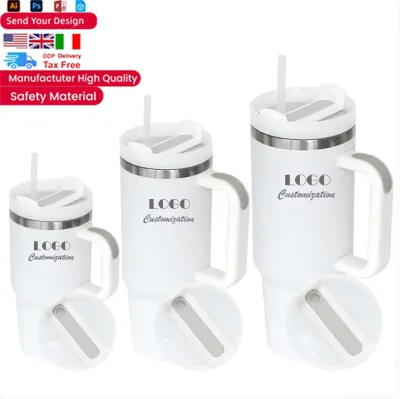


40oz Stainless Steel Insulated Tumbler with Handle & Straw Leakproof Travel Mug
$3.05 - $4.28
MOQ: 100 Pieces

40oz Insulated Tumbler with Handle Leakproof Travel Mug Reusable Cup with Lid
$3.05 - $4.28
MOQ: 100 Pieces
Comprehensive Sourcing Guide
Sourcing Guide for Insulated 40oz Travel Tumblers with Lid and Straw
Understanding Technical Specifications and Material Integrity
When sourcing an insulated 40oz travel tumbler with a lid and straw, the primary technical focus must be on the construction of the vessel and the integrity of its insulation system. The core product category typically involves double-wall vacuum insulation, a feature explicitly observed in the available product data. This design is critical for maintaining temperature retention, ensuring that hot beverages stay hot and cold drinks remain chilled for extended periods. The material composition is a decisive factor in both safety and durability. The supplied context identifies two primary material configurations: Food Grade Stainless Steel, specifically 304 grade for the handle and inner layers, and a dual-composition option where the inner wall is 304 stainless steel while the outer shell may be 201 or 304 stainless steel. Additionally, some listings reference Aluminum as a material option, which requires specific verification regarding the food-grade coating and structural integrity.
The capacity of 40oz is a standard specification for this category, often cited as a key product attribute. However, buyers must verify the exact internal volume versus the external dimensions, as the "standard" listed in the data varies significantly between models. For instance, one model specification lists a standard dimension of 10x10x17cm, while another references a 40oz capacity with a standard of 45x65x35cm. This discrepancy highlights the need for precise dimensional verification during the sampling phase. The lid system is equally complex; the observed data points to a "Multi-Function Lid" and a "Removable Straw Lid" or "SIP Lid System." These lids often feature a secure locking mechanism with a silicone sealing ring to ensure a leak-proof design, a claim that must be validated through physical testing rather than relying solely on marketing descriptions. The handle design is another critical technical element, with observations noting an ergonomic, portable handle made from 304 stainless steel, which adds to the overall weight and balance of the unit.
Compliance, Certification, and Safety Standards
Navigating the regulatory landscape for food-contact products is essential for any B2B procurement strategy involving drinkware. The supplied product data lists a robust set of certifications, including FDA, CE / EU, CIQ, LFGB, and EEC. These certifications indicate that the manufacturer claims compliance with food safety standards in major markets such as the United States, the European Union, and China. However, procurement teams must treat these as observations of the supplier's current status rather than universal guarantees for every unit in a production run. The presence of FDA and LFGB certifications is particularly relevant for ensuring that the materials, such as the stainless steel and any plastic components in the lid, are free from harmful substances like BPA.
Safety features are explicitly mentioned in the data, including "BPA-Free," "Food Grade Materials," and "Non-Toxic Drinking" assurances. The lid safety features also include a "Lockable Flip Top with Anti-Accidental Opening Design," which is crucial for preventing spills during transport. When evaluating suppliers, buyers should request current, valid certificates for the specific models they intend to purchase. The data also notes a "Standard" of 10x10x17cm and 45x65x35cm, which likely refers to packaging or product dimensions rather than a regulatory standard. Buyers should verify if the product meets specific regional standards for thermal retention and pressure resistance. For instance, the "Double Wall" and "Vacuum" attributes suggest a specific manufacturing process that must be consistent across batches to prevent insulation failure. It is vital to confirm that the "Food Grade" designation applies to all contact surfaces, including the straw and the silicone sealing rings, which are often the points of highest wear and potential contamination.
Cost Drivers and Pricing Dynamics
The pricing structure for insulated 40oz tumblers is influenced by several variables, including material grade, customization level, and packaging requirements. The observed price range in the market data spans from $0.99 to $6.70 USD. This wide variance suggests significant differences in product quality, brand positioning, and order volume. Lower-priced items in this range may utilize 201 stainless steel for the outer shell, simpler lid mechanisms, or minimal packaging, whereas higher-priced units likely feature full 304 stainless steel construction, advanced powder coating or matte finishes, and more complex lid systems with multiple functions.
The Minimum Order Quantity (MOQ) is another critical cost driver, with observed ranges between 20 and 3000 units. Suppliers with lower MOQs, such as 20 units, may charge a premium per unit due to the inefficiency of small-batch production. Conversely, orders approaching the 3000-unit threshold typically benefit from economies of scale, reducing the per-unit cost significantly. Customization is a major factor in pricing; the data confirms that "Customized" options and "Logo Printing" (via laser engraving, silk screen, or UV printing) are available. These value-added services will increase the unit cost and often require a higher MOQ to be economically viable. Packaging also impacts the final landed cost. The data shows variations from simple "Paper Box" or "Carton Box" to more elaborate "Color Box" or "Poly Bag and White Box" combinations. Each layer of packaging adds material and labor costs, which must be factored into the total procurement budget.
Typical Applications and Usage Scenarios
The versatility of the 40oz insulated tumbler makes it suitable for a wide array of usage scenarios, as indicated by the product attributes. The data explicitly lists "Home Kitchen," "Outdoor Camping," "Travel," "Office," "Gym," and "Commuting" as primary use cases. The "Leak Proof" and "Vacuum" features make these tumblers ideal for active lifestyles where spills must be avoided, such as in a gym bag or a vehicle cup holder. The "Portable" nature of the design, often enhanced by the ergonomic handle, supports its use in outdoor activities like camping or hiking.
The "Style" of the product also influences its application. The data notes both "Simple" and "Sport" styles, suggesting that buyers can source tumblers that align with specific brand identities or target demographics. The "Multicolor" and "Colored" options, along with "Printed" designs, allow for customization that appeals to corporate branding or promotional campaigns. The "Double Wall" and "Vacuum" technology ensures that the tumbler functions effectively in extreme temperatures, making it a practical choice for both winter outdoor use and summer hydration. The "Easy to Clean" attribute, often linked to dishwasher safety, is a significant advantage for home and office environments where convenience is paramount. Buyers should consider the specific environment in which their customers will use the product when selecting the finish and lid type; for example, a gym-goer may prefer a secure locking lid, while an office worker might prioritize a sleek, minimalist design.
Supplier Evaluation and Sourcing Strategy
Evaluating suppliers for this category requires a rigorous approach to verifying their capabilities and consistency. The data indicates that the products originate from specific regions in China, including Zhejiang and Anhui. While these regions are known for manufacturing, buyers should not assume uniform quality across all suppliers in these locations. The "Advantage" attributes listed, such as "Leak Proof and Dishwasher Safe," should be treated as claims that require validation. A robust supplier evaluation process should include requesting samples to test the "Leakproof Design" under various conditions, such as shaking the tumbler with liquid inside or exposing it to different temperatures.
The "Surface Treatment" options, including "Powder Coating," "Matte Finish," and "Spray Painting," are areas where quality can vary significantly. Buyers should inspect samples for adhesion, scratch resistance, and color consistency. The "Logo Printing" methods mentioned, such as "Laser Engraving" and "Silk Screen Printing," also require quality checks to ensure the branding does not flake or fade over time. The "Certification" status should be verified directly with the issuing bodies or through third-party audits to ensure the claims of FDA, CE, and LFGB compliance are current and applicable to the specific product model. Additionally, the "Customization" capabilities should be assessed based on the supplier's ability to handle complex designs and their turnaround times. A supplier's ability to provide consistent "Food Grade Material" across different production batches is a key indicator of reliability.
Quality Control and Long-Term Procurement Considerations
Implementing a strict quality control (QC) protocol is essential for maintaining the integrity of the supply chain. Given the wide range of observed specifications, such as the differing dimensions (10x10x17cm vs. 45x65x35cm) and material compositions, QC must begin at the design and sampling stage. Buyers should establish clear acceptance criteria for the "Leak Proof" performance, the "Vacuum" insulation efficiency, and the durability of the "Handle" and "Lid." The "Dishwasher Safe" claim requires testing to ensure that the finish and insulation do not degrade after repeated wash cycles.
Long-term procurement considerations involve building a relationship with suppliers who can scale production while maintaining quality. The observed MOQ range of 20 to 3000 units suggests that suppliers are flexible, but buyers should negotiate terms that allow for gradual scaling without compromising on material quality. The "Standard" of "101017CM" or "456535" should be strictly enforced in production contracts to prevent dimensional drift. Furthermore, the "Product Name" and "Model" (e.g., DA-111SS, BM442) should be clearly defined in purchase orders to avoid confusion between different product lines. Buyers should also consider the environmental impact of the "Packing" materials, as the data shows options ranging from simple boxes to complex multi-layer packaging. Ensuring that the supplier adheres to sustainable practices can be a differentiator in the market. Finally, continuous monitoring of the "Safety Feature" claims, such as the "BPA-Free" status, is necessary to ensure ongoing compliance with evolving global regulations. By focusing on these technical and procedural details, buyers can secure a reliable supply of high-quality insulated 40oz travel tumblers that meet the demands of their specific market.
FAQs
What certifications do these tumblers hold for food safety?
The products hold FDA, CE, LFGB, CIQ, and EEC certifications. These indicate compliance with food safety standards in major markets like the US and EU, ensuring materials are BPA-free and non-toxic for drinking.
How is the handle constructed on the 40oz tumbler?
The handle is made from 304 stainless steel and features an ergonomic design. This material ensures durability and safety, providing a secure grip for portable use in various scenarios like camping or commuting.
Which lid types are available for leak-proof performance?
Available options include a removable straw lid and a SIP lid system with a secure locking mechanism. These lids feature silicone sealing rings to prevent accidental opening and ensure a leak-proof design during transport.
Can I customize the logo on these stainless steel bottles?
Yes, customization is available with options for laser engraving, silk screen printing, or UV printing. These methods allow for branding on the powder-coated or matte-finished surfaces of the food-grade stainless steel vessels.
What is the minimum order quantity for these tumblers?
The minimum order quantity ranges from 20 to 3000 units depending on the supplier and customization needs. Lower MOQs may incur higher per-unit costs, while larger orders benefit from economies of scale.
How does the double-wall vacuum insulation work?
The double-wall vacuum construction maintains temperature retention for hot and cold beverages. This feature ensures drinks stay hot or cold for extended periods, making the tumbler suitable for outdoor and office use.
Are these tumblers safe to clean in a dishwasher?
Yes, the products are advertised as dishwasher safe for easy cleaning. This convenience is paired with durable finishes like powder coating or matte spray painting that resist wear during repeated wash cycles.