Source Instrument Cable for heating, underground, and speaker applications
Find 30 verified listings for Instrument Cable designed for heating, underground, and speaker applications. Buyers can compare copper conductor types, insulation materials like XLPE and PVC, and packaging options from suppliers in China.
Key considerations
Products List


Multi Core Cable Instrument Cable Copper Control Cable 4X2.5mm2 3X2.5mm2 4X4mm2 4X16mm2
$0.05 - $5.00
MOQ: 1000 Meters


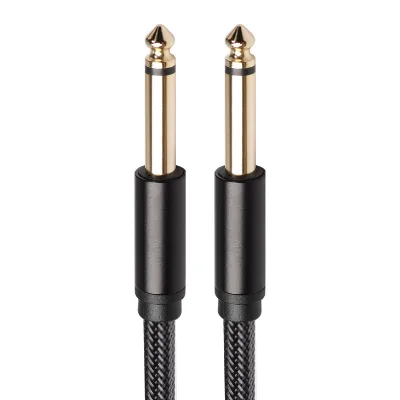
Wiring Harness Instrument Cable with Audio Connector 6.35mm 1/4" Jack (FGC12)
$1.50 - $3.00
MOQ: 300 Pieces




Comprehensive Sourcing Guide
Strategic Sourcing Guide for Instrument Cables
Understanding Technical Specifications and Conductor Architecture
When sourcing instrument cables, the primary focus must be on the conductor architecture and insulation materials, as these define the signal integrity and environmental resilience of the product. Based on available market data, instrument cables are predominantly constructed with copper conductors, which serve as the standard for conductivity and reliability. Buyers should verify whether the specific cable configuration utilizes solid or stranded conductors, as this choice dictates the application environment. Solid conductors are often observed in fixed installations where flexibility is less critical, while stranded conductors are preferred for applications requiring movement or routing through tight bends.
The insulation and sheath materials are equally critical determinants of performance. The market offers a variety of insulation options, including Cross-Linked Polyethylene (XLPE) and Polyethylene (PE), each offering distinct thermal and electrical properties. The outer sheath is frequently composed of Polyvinyl Chloride (PVC), providing necessary mechanical protection and flame resistance. For specialized applications, such as those involving extreme temperatures or specific chemical exposures, buyers must confirm if the cable meets refractory or flame-retardant requirements. The physical form factor is typically round wire, with cross-sectional areas ranging from 0.75 mm² up to 630 mm², though instrument cables often utilize smaller gauges like AWG 24, 22, 20, 16, and 8 for signal transmission.
| Feature Category | Common Observations | Verification Requirement |
|---|---|---|
| Conductor Material | Copper (Solid or Stranded) | Confirm purity and stranding count for flexibility needs. |
| Insulation Material | XLPE, PE | Verify thermal rating and dielectric strength for the specific frequency. |
| Sheath Material | PVC | Check for flame retardancy and UV resistance if used outdoors. |
| Cross-Section | 0.75 mm² to 630 mm² | Match gauge to current load and signal attenuation limits. |
| Shielding | Combination shielding | Ensure shielding type (e.g., braided, foil) matches EMI/RFI environment. |
Compliance and Certification Verification Protocols
Navigating the regulatory landscape is a non-negotiable aspect of sourcing instrument cables, particularly for international trade. The supply chain for these components is heavily concentrated in China, with specific manufacturing hubs noted in regions such as Henan, Huizhou, and Guangdong. When evaluating potential suppliers, buyers must demand proof of compliance with recognized international and regional standards. Common certifications observed in the market include RoHS (Restriction of Hazardous Substances), CE (Conformité Européenne), CCC (China Compulsory Certification), and ISO standards.
For export markets, specific regional certifications are often mandatory. For instance, cables destined for European markets must strictly adhere to CE marking requirements, while those for the Chinese domestic market require CCC certification. Additionally, VDE (Verband der Elektrotechnik) certification is a critical benchmark for high-quality electrical components, particularly in Germany and surrounding regions. Buyers should not assume that a supplier's general "ISO" claim covers the specific ISO standard relevant to their industry; the exact standard number must be verified against the product datasheet.
The presence of SGS (Société Générale de Surveillance) standards in product listings indicates a third-party verification of quality and safety. However, buyers must ensure that the SGS certification applies to the specific model and batch of the Instrument Cable being purchased. It is also essential to check for material-specific certifications, such as those confirming the use of bare copper or nickel-plated connectors, which are often specified for low-noise applications. The absence of these certifications can lead to customs delays, rejection of goods, or safety liabilities in the end-user application.
Cost Drivers and Pricing Dynamics
The pricing structure for instrument cables is influenced by a complex interplay of raw material costs, manufacturing complexity, and order volume. The observed price range in the current market spans from approximately $0.05 to $19.90 per unit, reflecting the vast diversity in cable types, from simple signal wires to complex, shielded, multi-conductor assemblies. The primary cost driver is the conductor material; copper prices fluctuate frequently, directly impacting the base cost of the cable. Cables utilizing higher purity copper or specialized alloys like Tc/Bc/CCS (Tinned Copper/Bare Copper/Copper Clad Steel) will command a premium over standard copper conductors.
Order volume is the second significant factor. The Minimum Order Quantity (MOQ) varies widely, ranging from as low as 10 units to as high as 3,000 units. Buyers seeking to minimize inventory costs must identify suppliers capable of accommodating smaller MOQs, which are often marked as "Small Orders Accepted." However, smaller orders typically incur a higher unit price due to the fixed costs of production setup and logistics. Conversely, larger orders allow for economies of scale, reducing the per-unit cost significantly.
Packaging and logistics also contribute to the final landed cost. Standard packaging includes drums, coils, or export wooden drums, with specific configurations like polybags and cartons for smaller components. The dimensions and weight of the packaging, such as a carton measuring 53x28x34 cm with a gross weight of 15.6 kg, affect shipping calculations. Buyers should request detailed Incoterms and packaging specifications to accurately forecast total procurement costs, as shipping bulky drums can be more expensive than compact coil packaging.
Typical Applications and Performance Requirements
Instrument cables serve a diverse range of applications, necessitating a clear understanding of the operational environment before selection. The core function of these cables is to transmit low-level signals with minimal interference, making them essential in audio, multimedia, and measurement systems. Specific applications identified in the market include microphone connections, multimedia interfaces, and speaker systems. In these contexts, the cable must provide extremely low-noise performance, often achieved through advanced shielding techniques and high-quality insulation.
Beyond consumer electronics, instrument cables are critical in industrial and infrastructure settings. Applications such as heating systems, underground installations, and overhead lines require cables with robust mechanical protection and environmental resistance. For underground applications, the cable must withstand moisture and soil pressure, often necessitating a flame-retardant or refractory sheath. In heating applications, the insulation must maintain integrity at elevated temperatures, which is where materials like XLPE often outperform standard PVC.
The versatility of these cables is further highlighted by their use in signal transmission for various industrial controls. The "signal cable" designation often implies a focus on data integrity rather than power delivery. Buyers must match the cable's shielding capabilities to the electromagnetic environment of the application. For instance, in areas with high electromagnetic interference (EMI), a combination shielding approach is required to prevent signal degradation. The ability to customize the cable, including color (e.g., black) and connector plating (e.g., nickel-plated), allows for tailored solutions that meet specific aesthetic or functional requirements.
Supplier Evaluation and Geographic Considerations
Evaluating suppliers requires a deep dive into their operational history, geographic location, and export experience. The majority of Instrument Cable manufacturers are located in China, with significant production clusters in Henan, Huizhou, and Guangdong. These regions offer established supply chains and manufacturing expertise, but buyers must verify the specific capabilities of the factory. A supplier claiming "15 years of producing experience" provides a baseline for reliability, but this should be corroborated with references or case studies from similar projects.
Export experience is a crucial metric for assessing a supplier's ability to handle international logistics and compliance. Suppliers with a track record of exporting to markets such as Malaysia, the Philippines, Indonesia, Australia, Russia, France, the USA, Holland, and Vietnam have demonstrated an understanding of diverse regulatory environments and shipping requirements. This experience often translates to better documentation practices and fewer delays during customs clearance. Buyers should prioritize suppliers who can provide a clear history of successful deliveries to their target market.
Customization capabilities are another key differentiator. Many suppliers offer "Available" customization, allowing buyers to specify conductor types, insulation materials, and packaging formats. The ability to produce cables with specific model numbers, such as "JS-TS8L-TS 14" or "D70C," indicates a flexible manufacturing process. However, buyers must ensure that customization does not compromise the supplier's ability to meet quality standards or lead times. A supplier that accepts small orders and offers flexible packaging (e.g., coil, drum, or customer-requested formats) is generally more adaptable to the needs of smaller procurement teams.
Quality Control and Long-Term Procurement Strategy
Implementing a robust quality control (QC) strategy is essential for mitigating the risks associated with Instrument Cable procurement. Given the critical nature of signal transmission, even minor defects in insulation or shielding can lead to system failures. Buyers should insist on pre-shipment inspections that verify conductor continuity, insulation resistance, and shielding effectiveness. The presence of certifications like SGS or ISO suggests a commitment to quality, but these should be validated through independent testing reports for the specific batch being purchased.
Long-term procurement considerations extend beyond the initial purchase price. Buyers should evaluate the supplier's capacity for consistent supply, especially in light of global supply chain disruptions. Suppliers with a history of stable production and a wide range of standard sizes (e.g., 0.75, 1.0, 1.5, 2.5, 4, 6, 10, 16 mm²) are better positioned to handle fluctuating demand. Additionally, the availability of technical support and after-sales service is vital. A supplier that offers detailed specifications, including outer diameter (e.g., 5.5mm) and connector details, demonstrates a higher level of professionalism and support.
Sustainability and future-proofing are also emerging factors. As regulations tighten regarding hazardous substances, suppliers who proactively adhere to RoHS and other environmental standards are more likely to remain compliant in the future. Buyers should also consider the longevity of the cable materials; for instance, XLPE insulation generally offers better long-term thermal stability than standard PVC. By selecting suppliers with a proven track record of quality, compliance, and flexibility, buyers can ensure a reliable supply chain that supports their operational needs for years to come.
FAQs
What certifications are available for instrument cables?
Common certifications include RoHS, CCC, CE, ISO, and VDE. Buyers should verify that specific models carry these marks to ensure compliance with international safety standards and regional regulations for export markets.
Which conductor types are used in these cables?
Both solid and stranded copper conductors are available. Solid types suit fixed installations, while stranded options provide flexibility for applications requiring movement or routing through tight bends in industrial settings.
Can I customize the cable specifications and packaging?
Yes, customization is available for conductor types, insulation materials, and packaging formats like drums or coils. Suppliers often accept requests for specific model numbers and colors to meet unique project requirements.
What is the typical price range for instrument cables?
Prices range from 0.05 to 19.9 USD per unit depending on the cable type and order volume. Higher costs often reflect specialized materials like nickel-plated connectors or advanced shielding for low-noise applications.
Where are these cables manufactured and exported to?
Manufacturing occurs in China, specifically in regions like Henan, Huizhou, and Guangdong. Export experience covers diverse markets including the USA, France, Australia, Russia, and various Southeast Asian countries.
What insulation materials are used for signal cables?
Insulation materials typically include XLPE and PE, while the outer sheath is often PVC. These materials provide necessary thermal resistance, dielectric strength, and mechanical protection for underground or overhead installations.
What are the minimum order quantities for these products?
MOQs range from 10 to 3000 units depending on the supplier and product configuration. Some vendors accept small orders, though larger volumes generally yield lower per-unit costs due to economies of scale.